How to choose the right scooter in Oman
Learn how to choose the right scooter in Oman. Compare engine size, comfort, fuel efficiency, and features to make the right buying decision.
07 Sep 2026
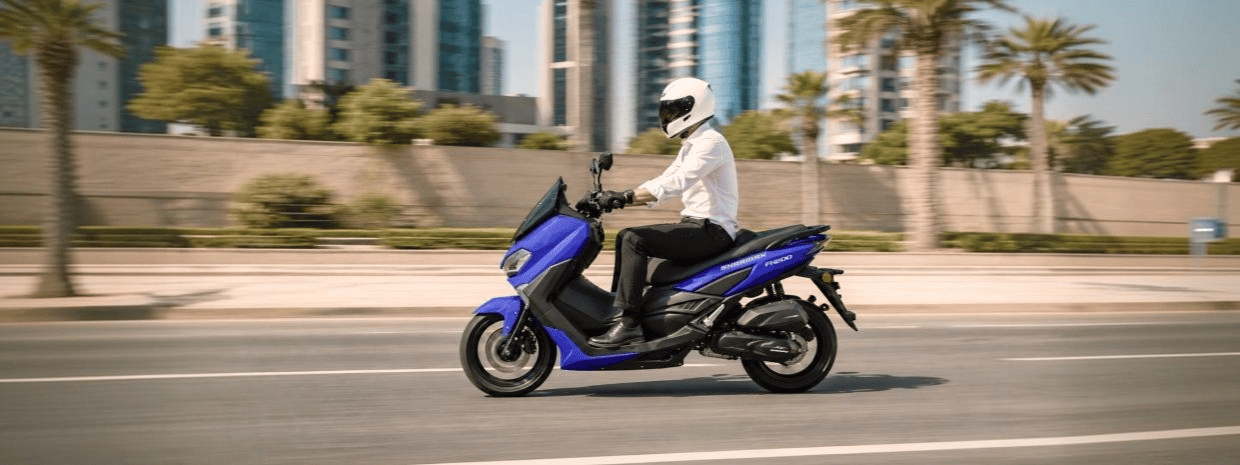
Scooters may seem like one of the simplest types of two-wheelers, but the category is more varied than it first appears. A model that works well for short city trips may feel completely different on faster roads or longer daily commutes. That is why choosing one can be less straightforward than it looks.
If you are browsing scooters for sale, it helps to understand what actually separates one model from another. In this scooter buying guide, we will explain how to choose the right scooter, look at the details that matter in everyday use, and compare several models suited to city riding and trips beyond it in Oman.
Why scooters work so well for everyday riding
Scooters keep things simple, and that's basically the whole pitch — no clutch, no gear changes, nothing standing between you and just getting where you're going. The most useful scooter features tend to be the quiet, practical ones, not the flashy specs.
What actually makes them good for daily riding:
They're light and easy to manage. New riders get on a scooter and feel in control within minutes, and finding parking in a crowded area stops being a fight.
Engine sizes run from small city units all the way up to bigger, faster-road-capable options — mounted toward the rear of the frame either way.
The riding position does a lot of quiet work. Sitting upright with feet forward, plus the front bodywork taking the hit from wind, dust, and road spray, adds up over a long commute even if you don't notice it day to day.
Fuel use stays low — a small scooter can sip around 2–2.5 litres per 100 km, though that number moves depending on the engine and how you actually ride.
There's usually somewhere to put your stuff. A helmet, a small bag, whatever you're carrying that day — most scooters have a compartment under the seat for exactly this.
No manual shifting means slow traffic is just slow, not exhausting.
Scooter performance in this class is tuned for predictable acceleration rather than outright speed, which is honestly the safer choice for weaving through daily traffic anyway.
None of this demands much gear-wise, either — a short commute doesn't need a full touring kit, though proper protective clothing is still the smarter call, and a certified helmet isn't optional no matter how short the ride is.
This mix of easy handling and everyday practicality is really the whole reason scooters stay so popular for city riding. Before settling on one, though, it's worth understanding how to choose a scooter that actually fits your routine, starting with the categories below.
Types of scooters in Oman
If you're working out the best scooter type for your needs, showrooms here generally split scooters into four groups, and the differences matter more than they might look on paper.
Classic scooters
Compact, light and usually built for city riding. Engine sizes often range from 50 cc to 150 cc. In design, they often resemble the familiar classic Vespa-style scooter, with rounded bodywork and a more retro look.
Standard urban scooters
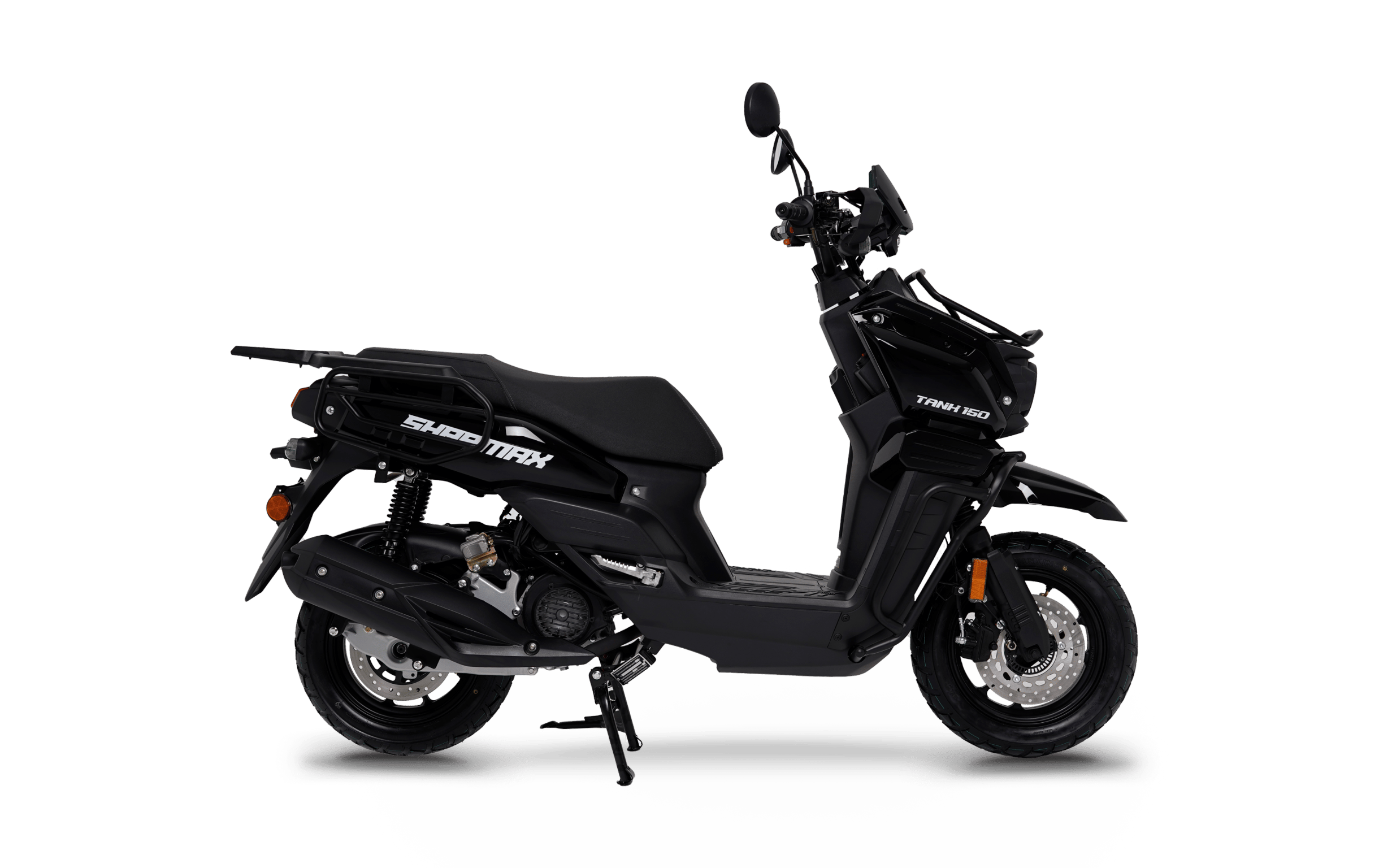
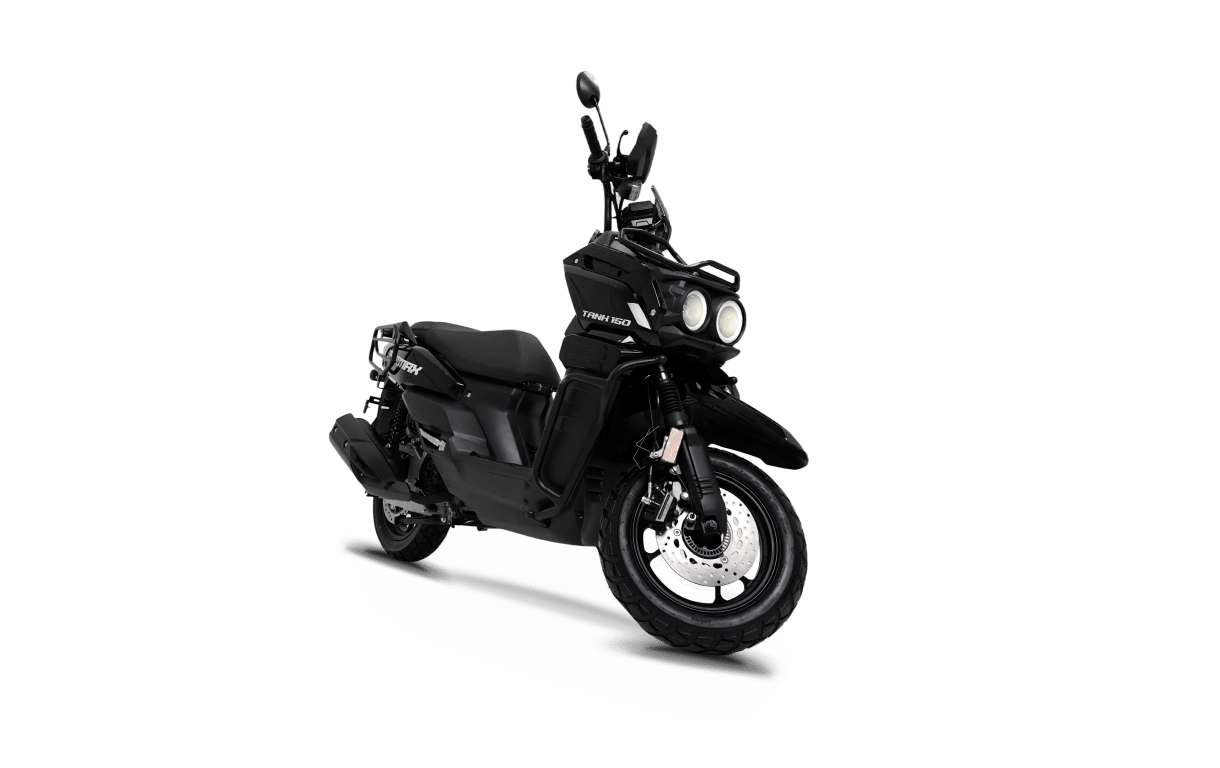
Nothing flashy, just easy to handle and easy to park. Built for commuting, not performance. The Sharmax Scooter Tank 150 fits squarely into this group.
Maxi scooters
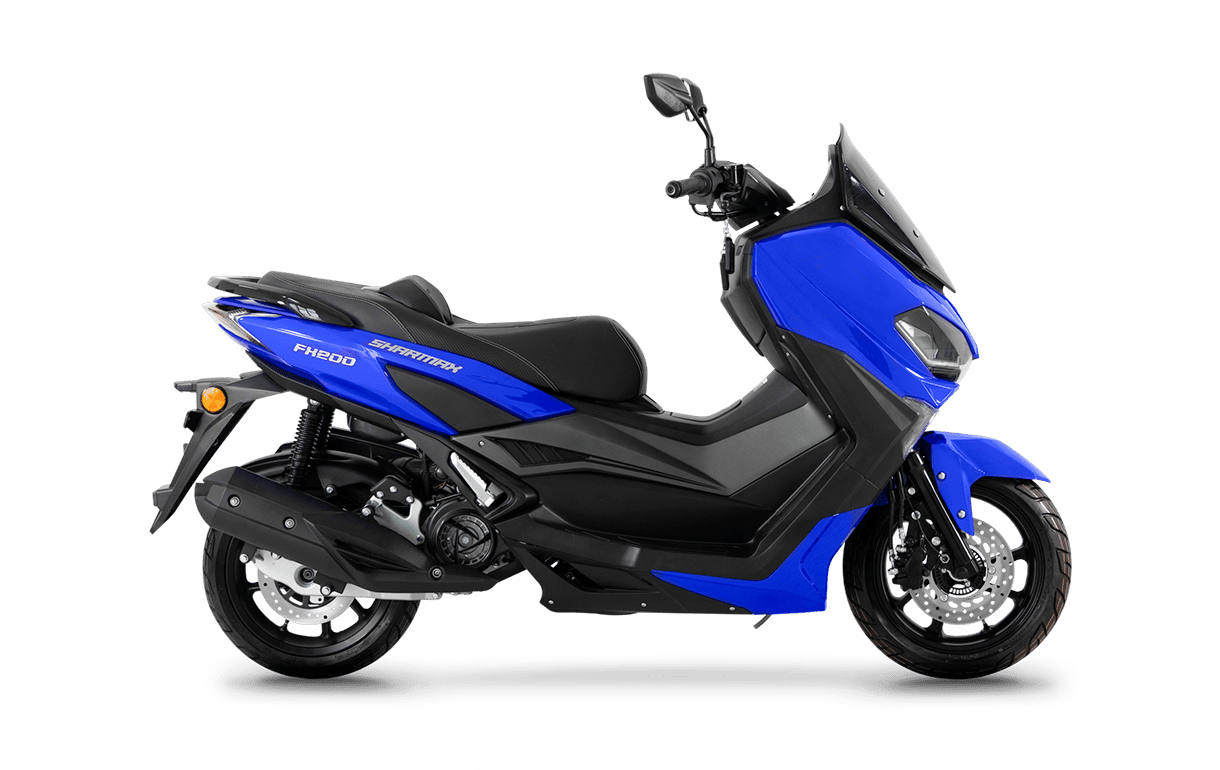
Bigger, more power, more room to actually sit comfortably, better wind protection. This is where you land once your commute stretches out or faster roads get involved. The Sharmax FX 200 maxi scooter represents this category well.
Electric scooters
Quiet, low-maintenance, best suited to short trips around town. Some current models manage roughly 100 km on a charge, though that shifts a lot depending on speed and battery size.
Knowing the types of scooters on offer gives you a real starting point, but the final call still comes down to your actual route and how you ride day to day.
What to consider when choosing a scooter
The right scooter really just comes down to matching the machine to how you'll actually use it — engine type, size, cooling, power, transmission, how many people you're carrying, and what you're willing to spend. All of it feeds into scooter performance and how pleasant the thing is to actually live with day to day.
Engine setup
First fork in the road: two-stroke or four-stroke. Two-strokes are simpler and cheaper to buy, but you pay for that later — more fuel and oil burned, more noise, and they wear out faster than four-strokes do. Four-strokes run quieter and smoother, use around 30% less fuel, and generally last a lot longer. Every Sharmax scooter in Oman runs a four-stroke engine, which is really the better call if you're riding one daily rather than occasionally.
Engine size and fuel consumption
Bigger engine, more power, more fuel burned — that part's not complicated. What matters more is figuring out where you actually fall.
A 45–50cc engine is genuinely enough if your riding stays inside the city — think 3–4 hp, and fuel use that tops out around 2.5 litres per 100 km. Once you're heading outside the city or dealing with rougher roads, something in the 70–125cc range gives you more to work with. And if speed and real acceleration matter to you, 150cc and up is where that conversation starts.
None of this means bigger is automatically better, though. If most of your riding is short hops through slow traffic, a bigger engine mostly just means paying for power you're not using.
Cooling system
The engine usually sits under the seat, tucked under bodywork, and heat builds up fast once you're under load for a while. Two-stroke scooters typically rely on air cooling. Four-stroke models split between air-and-oil setups or full liquid cooling.
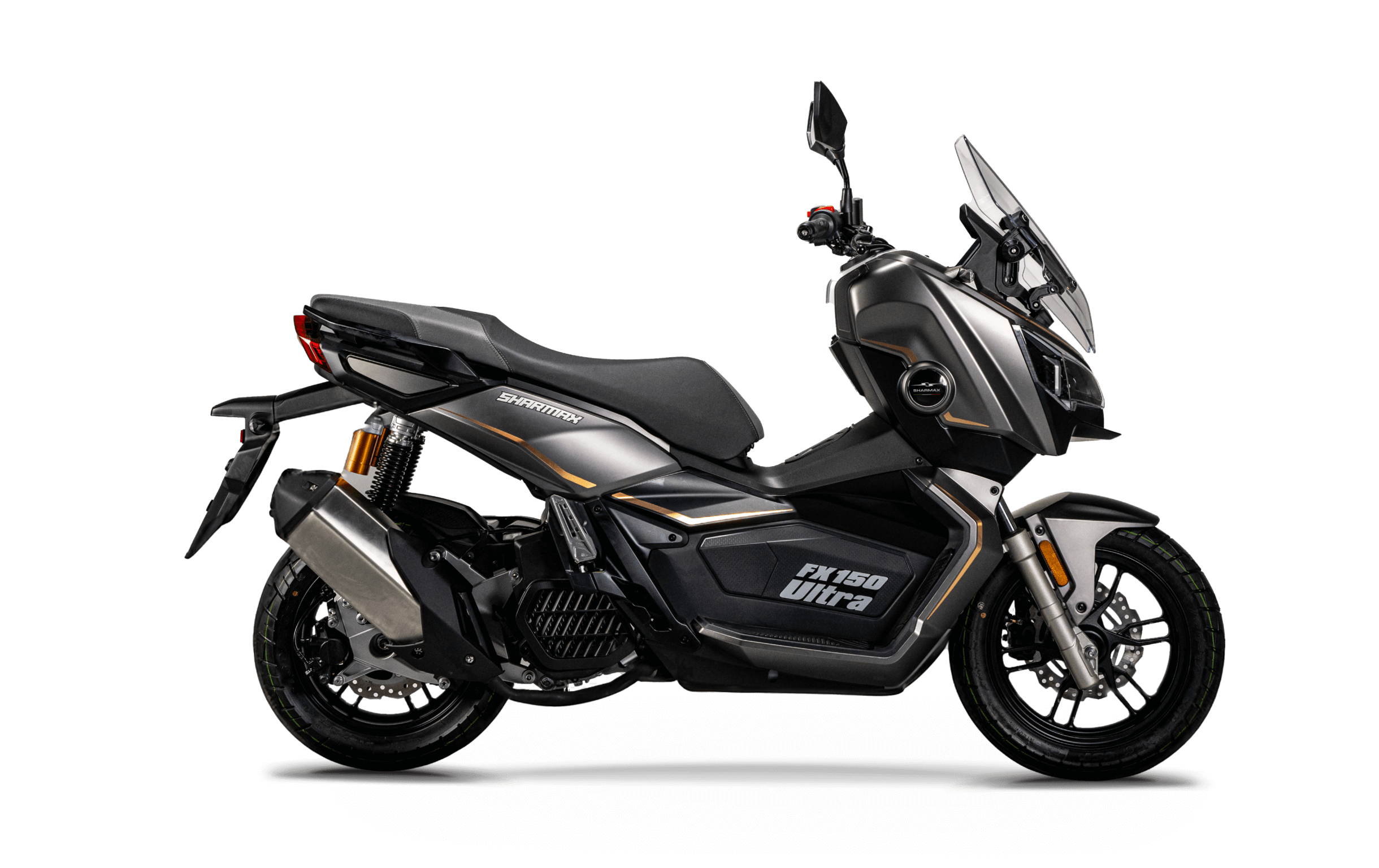
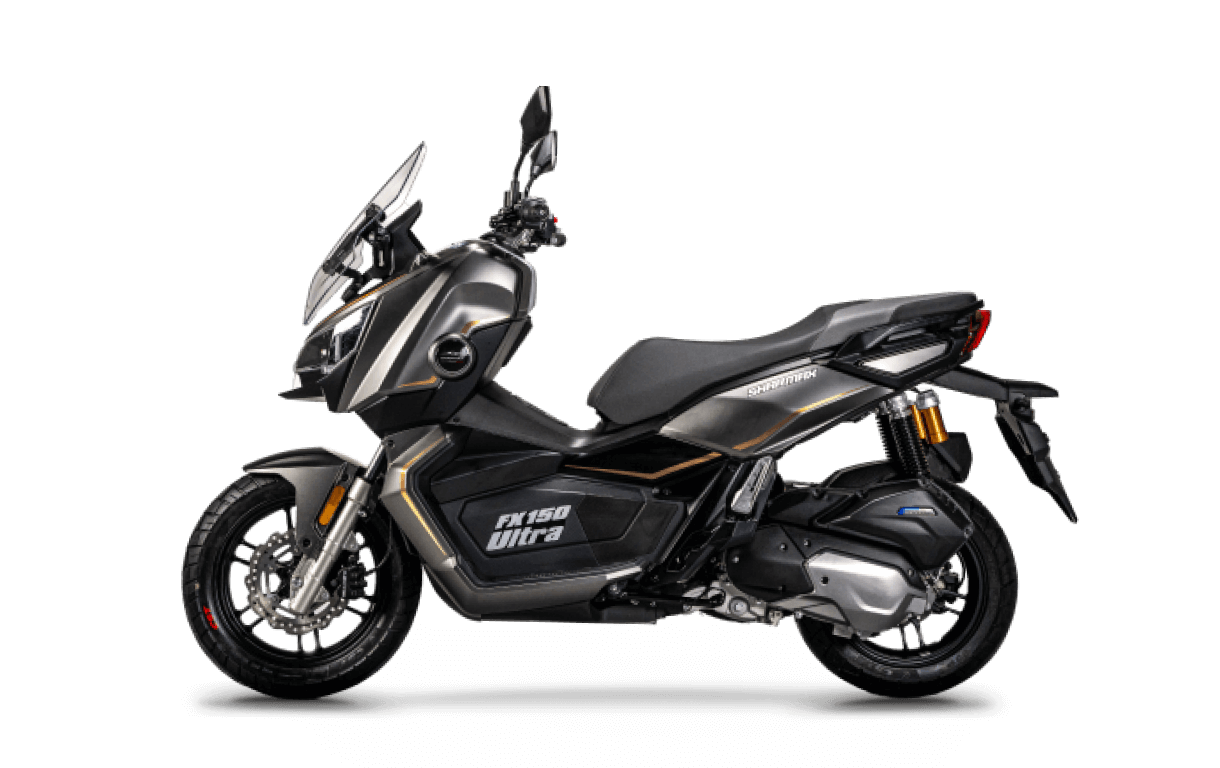
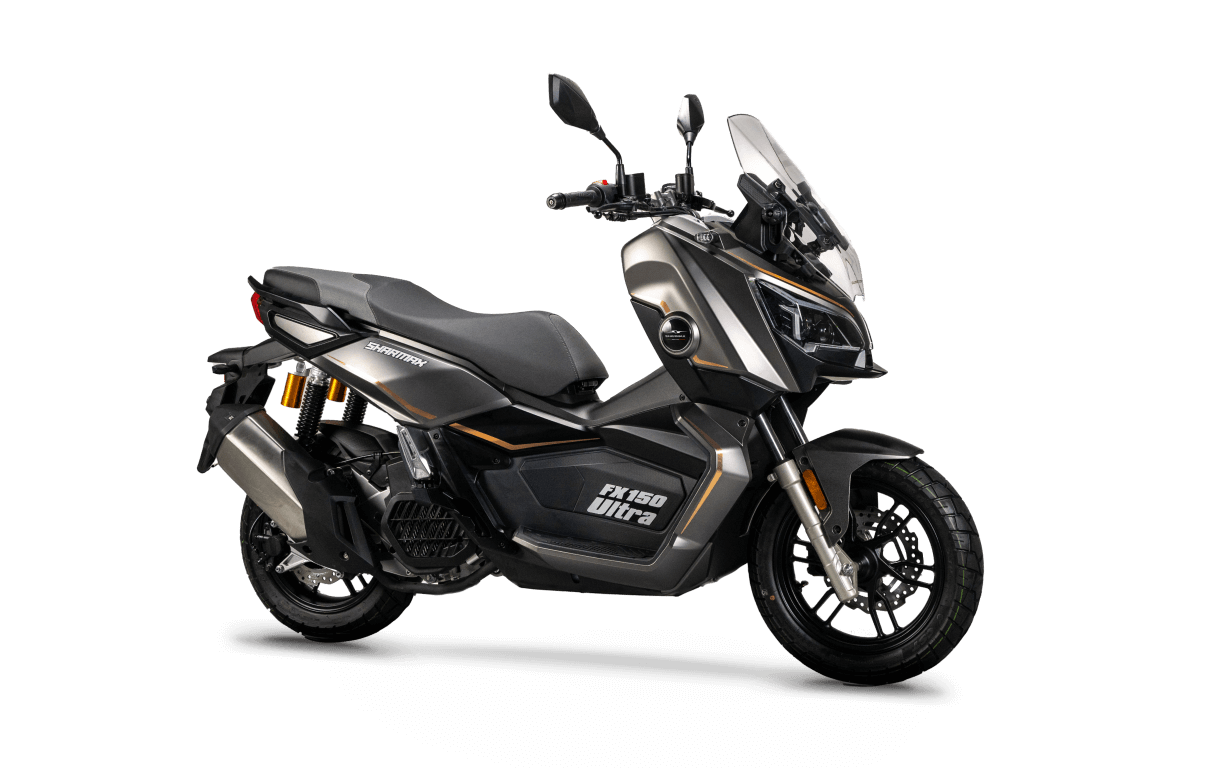
For Oman specifically, liquid cooling is the smarter option — particularly if you're spending real time stuck in traffic or riding through peak heat. It just keeps engine temperature steadier and gives the motor more of a buffer against overheating than air cooling manages here. For example, the FX 150 Ultra EFI features a strong liquid-cooled engine.
Speed and power
Riding daily calls for something with at least around 6 hp — enough to actually feel responsive without being overkill. If you're newer to riding, scooters up to about 3 hp are easier to get comfortable on, and they'll still hit roughly 50 km/h, which covers plenty of short urban trips just fine.
One thing worth remembering: horsepower on its own doesn't tell the whole story. Weight matters just as much — the less each horsepower has to haul around, the more responsive the scooter actually feels on the road. That's really the honest way to judge scooter performance: power and weight together, not power alone.
Transmission
Most scooters run automatic CVT transmissions — twist the throttle, it accelerates smoothly, no clutch or gear changes involved. A few models still use semi-automatic setups with a foot lever for shifting. It all comes down to preference in the end, though automatic is generally just easier for daily traffic.
Number of seats and load capacity
Riding solo, a compact single-seat scooter does the job. Planning to carry a passenger regularly? You'll want a proper two-seat layout with the load capacity to match — around 140 kg is a reasonable benchmark for two people, and it's worth checking even if you usually ride alone, especially if you're on the larger side yourself. The FX 200, for instance, can carry up to 150 kg without much strain.
Budget
Price ends up deciding a lot of these choices in practice, so it helps to know what different budgets actually buy. In the Sharmax Oman range, the more affordable end starts at roughly $1,500–$2,100: the Scooter Tank 150 is about $1,530, while the FX 200 comes to around $2,050. Step up to the FX 150 Ultra EFI and you are looking at roughly $3,900, while the more powerful FX 350 Ultra reaches about $7,250. The jump in price reflects the move toward stronger performance, more advanced equipment and a more substantial maxi-scooter setup.
The real trick is not paying extra for power or scooter features you're never going to use.
Best scooter models to choose in Oman
If you are comparing models and wondering how to choose a scooter, these four options cover everything from light city use to more capable maxi-scooter riding.
1. Scooter Tank 150
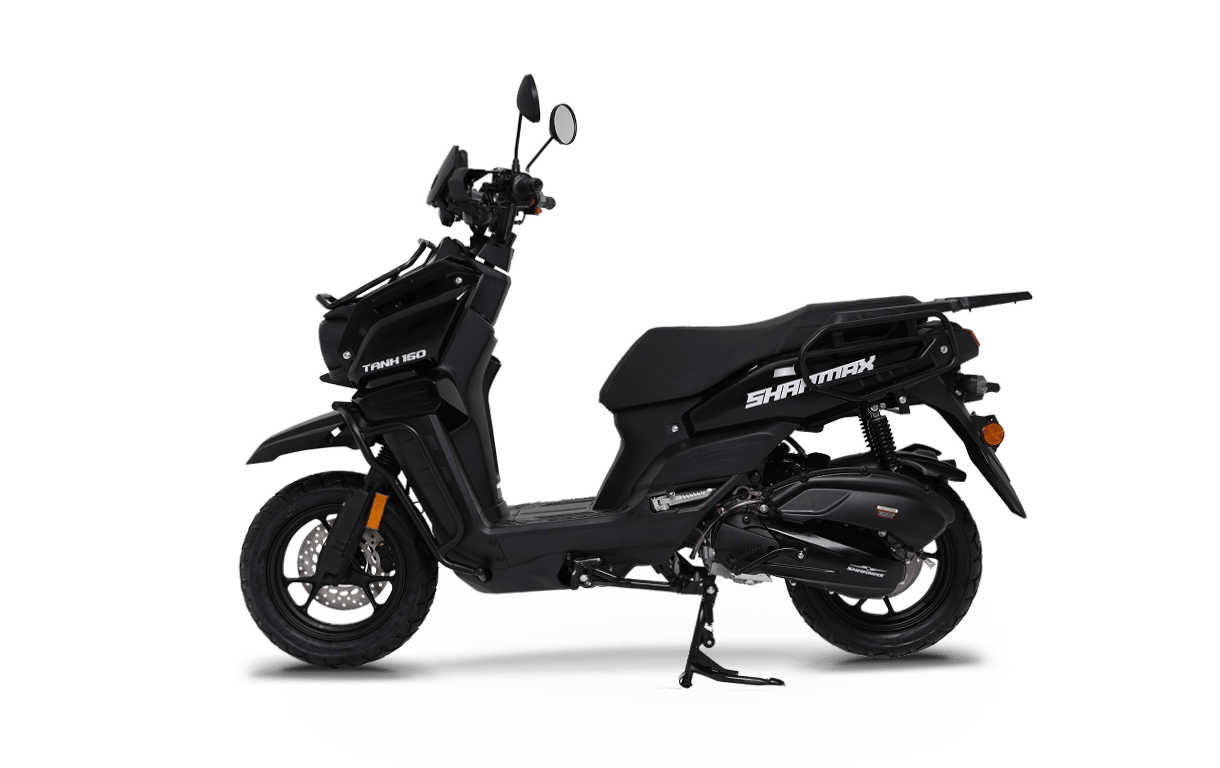
The Scooter Tank 150 is the lightest model in this group at 94 kg, which makes it easy to manage in city traffic. Its 150 cc four-stroke engine produces 10 hp and can take the scooter up to 90 km/h. The engine is air-cooled and carbureted, with both electric and kick starting available. A 7-liter fuel tank gives it useful range for everyday rides.
Max speed (km/h)
90
Displacement (cc)
150
Curb weight (kg)
94
Fuel tank capacity (L)
7
Power (hp)
10
2. FX 150 Ultra EFI
The FX 150 Ultra EFI shows how much difference the setup can make even within the 150 cc class. Its four-stroke engine produces 15 hp and reaches up to 85 km/h, while Bosch EFI and liquid cooling help keep performance stable and fuel use down to around 2 L/100 km.
At 132 kg, it is heavier than a basic city scooter, but the firmer suspension and responsive engine-transmission setup give it a more planted feel on the road. Keyless access and a digital dashboard with Bluetooth smartphone connectivity also make it one of the more feature-rich options in the range.
Max speed (km/h)
85
Displacement (cc)
150
Power (hp)
15
Curb weight (kg)
132
Fuel tank capacity (L)
8
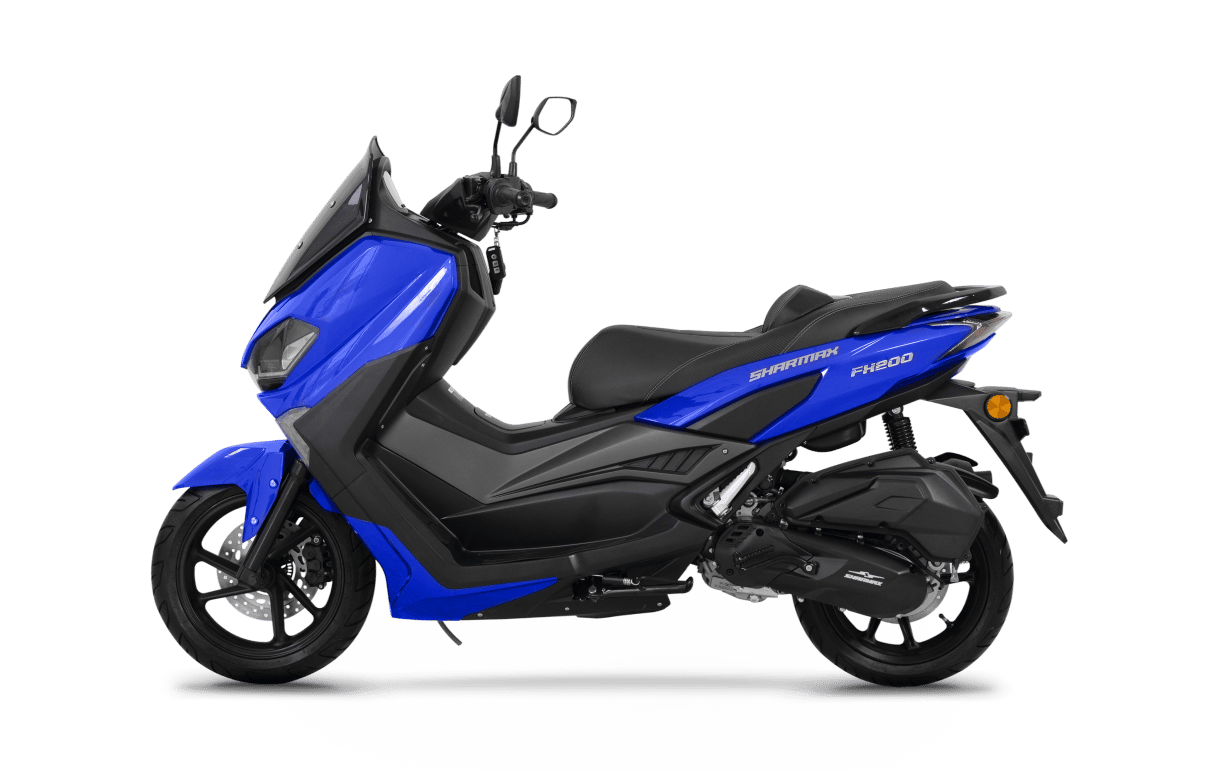
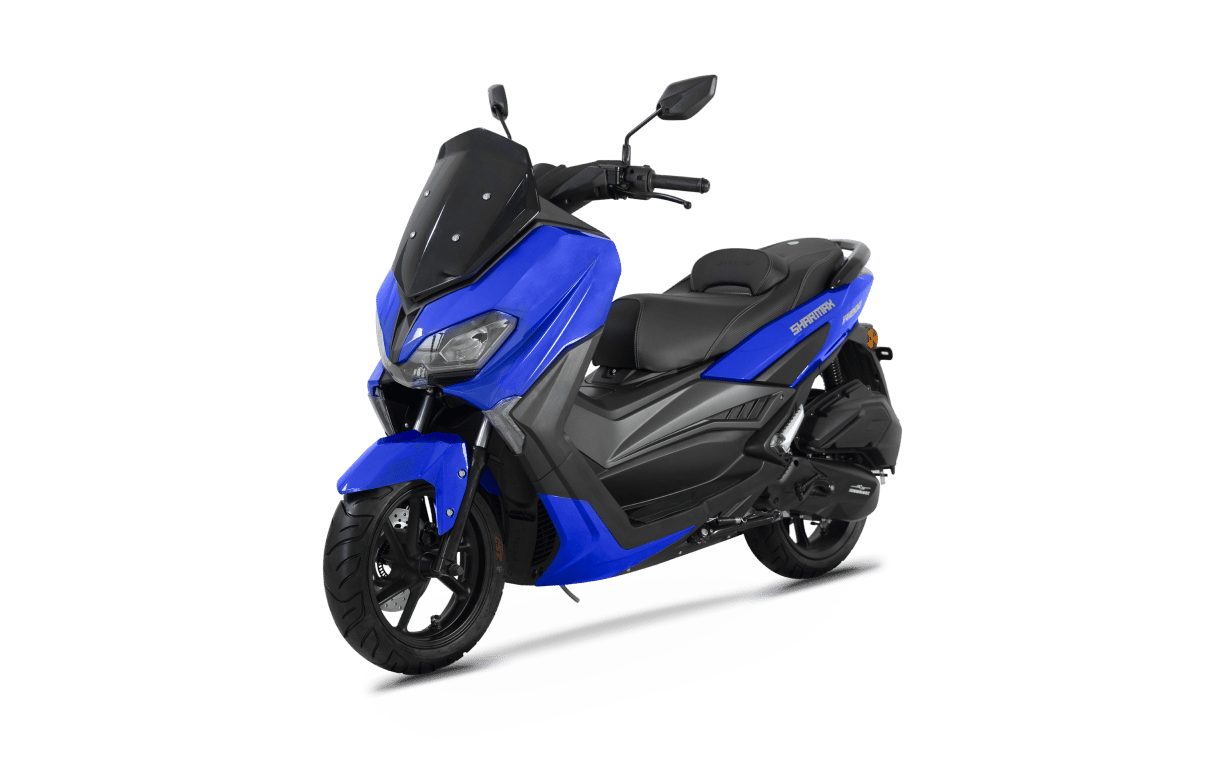
3. FX 200
The FX 200 is a larger, more substantial option. It still uses a 150 cc four-stroke engine, but output rises to 18 hp and top speed to 85 km/h. At 128 kg, it feels more planted than the Tank 150, while the wider two-seat layout and stronger wind protection make it better suited to longer commutes.
Its 7,1-liter tank means fewer fuel stops, and practical scooter features include a USB charging port, LED lighting and disc brakes at both ends.
Max speed (km/h)
85
Displacement (cc)
150
Power (hp)
18
Curb weight (kg)
128
Fuel tank capacity (L)
7.1
4. FX 350 Ultra
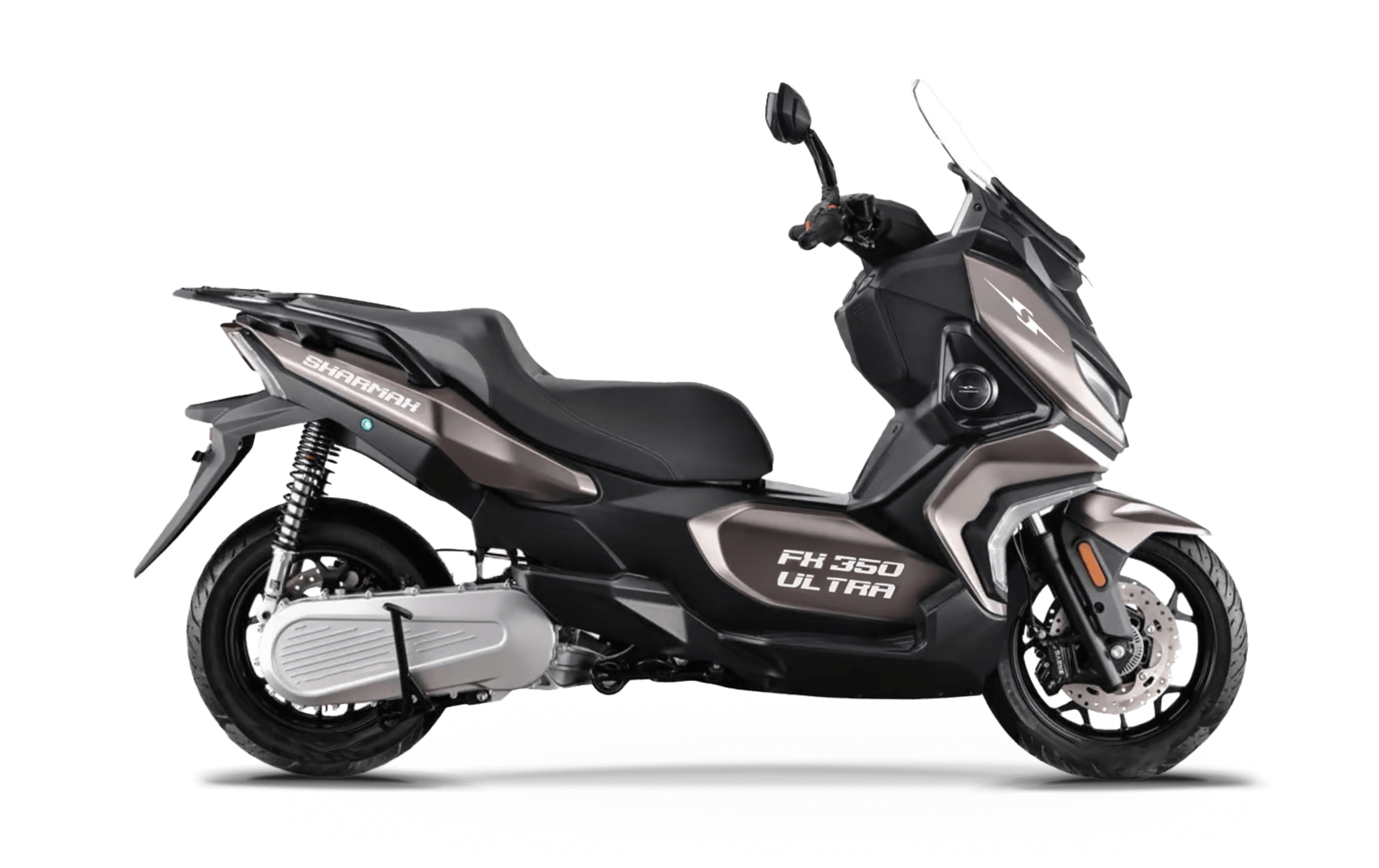
The FX 350 Ultra sits at the top of the Qatar maxi-scooter range. Its 350 cc liquid-cooled engine gives it much stronger scooter performance, making it better suited to longer routes and stretches of highway. A 14-liter fuel tank also gives it more range between stops.
The maxi-scooter layout adds more space for the rider and passenger, while features such as Bosch EFI, CVT transmission, keyless access and a digital dashboard make it a more complete long-distance option. This is the model to look at if comfort and stronger performance matter more than keeping the scooter light and compact.
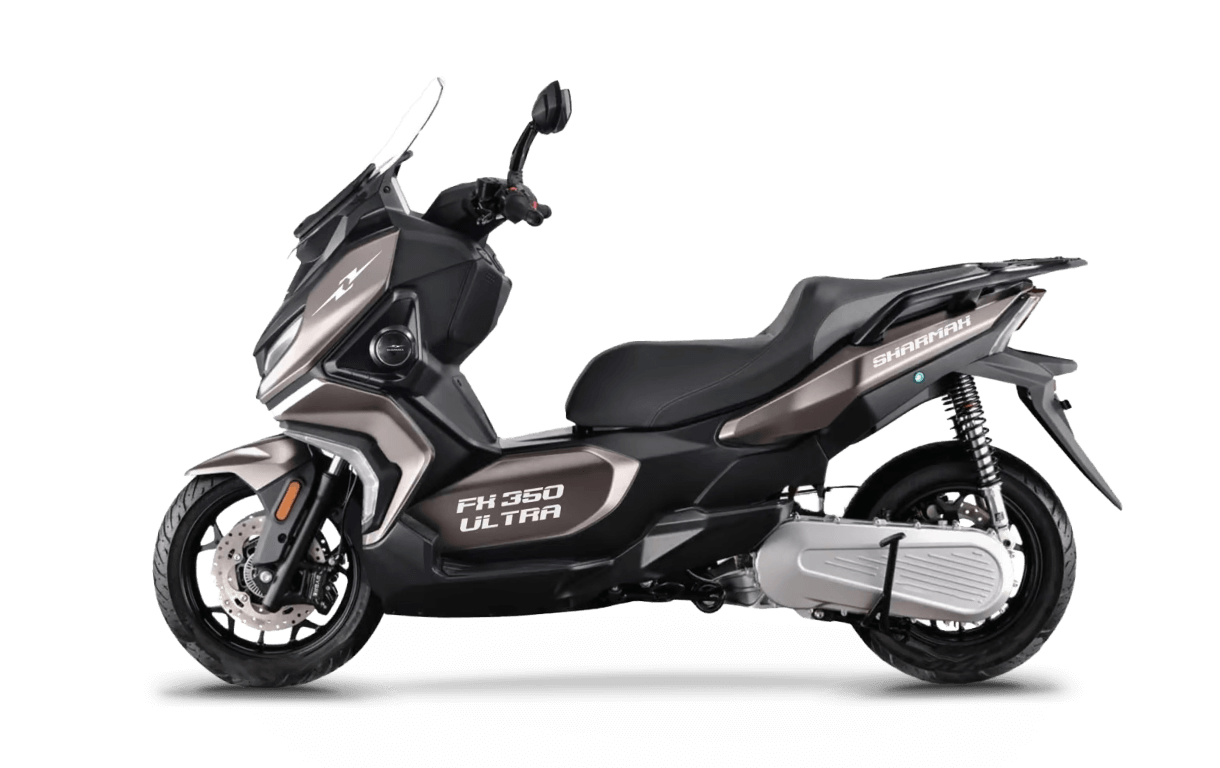
Max speed (km/h)
100
Displacement (cc)
350
Curb weight (kg)
195
Power (hp)
33
Fuel tank capacity (L)
14
What else to check when choosing a scooter?
Specs only tell you so much — a few practical things worth confirming before you actually commit to any scooter, and part of genuinely knowing how to choose a good scooter is looking past the numbers on a spec sheet:
Warranty
Find out exactly what's covered and for how long, especially on the engine and CVT — the parts most likely to see real wear. Sharmax, for example, provides up to three years of official manufacturer warranty on its models, which is a genuinely useful benchmark to compare other dealers against. A dealer that's vague about warranty terms, or offers noticeably less coverage, is worth being cautious about.
Spare parts
Popular models are far easier to service quickly, since shops are more likely to stock common parts. Less common imports can leave you waiting weeks for something simple, so it's worth asking a dealer how easy parts actually are to source locally before you buy.
Reviews
Owner feedback tends to reveal things a spec sheet won't — how a scooter actually holds up after a year of daily use, whether the brakes stay reliable, how it handles in real heat rather than lab conditions. Worth a quick search before you decide, not after.
None of this takes long to check, and together it tells you a lot more about long-term ownership than horsepower or top speed ever will.