HomeBlog / Articles

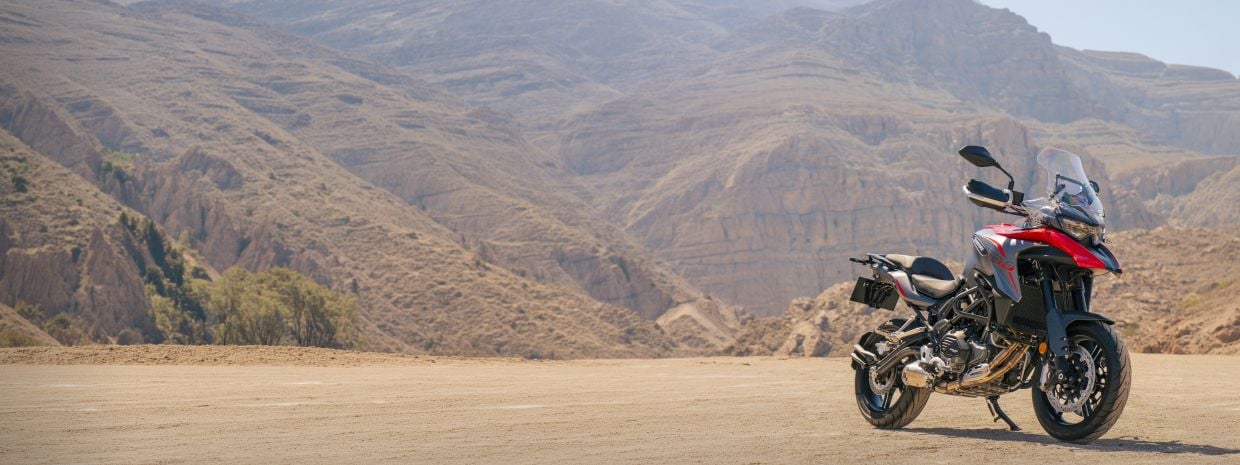
GL 570 Ultra vs GL 991 Ultra: which touring motorcycle is better in Oman

GL 570 Ultra vs GL 991 Ultra: which touring motorcycle is better in Oman

Compare GL 570 Ultra and GL 991 Ultra in Oman. Discover differences in power, comfort, touring range, and long-distance performance.

14 Sep 2026

GL 570 Ultra vs GL 991 Ultra: which touring motorcycle is better in Oman

Many motorcycle classes can work for long-distance travel, from adventure bikes to large road motorcycles. Sharmax, however, has developed an entire GL lineup specifically around touring, with models created with extra long-distance capacity in mind.

For riders exploring on-road motorcycles for sale, the GL series offers several different interpretations of that touring formula. Two of the most interesting are the GL 570 Ultra and GL 991 Ultra.

This GL 570 Ultra vs GL 991 Ultra comparison guide looks first at what makes a strong touring motorcycle, then walks you through GL 570 Ultra and GL 991 Ultra specs side by side to see how these two models approach the same task in different ways.

What should you expect from a good touring motorcycle?

What actually makes a touring bike good is predictable handling hundreds of kilometers in, enough power left over for an overtake or a climb, a tank that doesn't run dry every hour, and a chassis that doesn't fall apart the moment you add a passenger and a week's worth of luggage.

A few things worth actually checking on a spec sheet before you decide a bike is up to the job.

Ground clearance

Damaged asphalt, a gravel patch, a steep ramp into a gas station — none of it should worry you if the bike sits high enough. 190mm or more gives real breathing room. It won't turn a touring bike into an off-roader, but it means you're not white-knuckling every rough patch worried about scraping the underside.

Engine output

Around 60 horsepower is a decent line in the sand for a full-size tourer. That's enough to sit comfortably at highway speed, pull off an overtake without drama, climb a long grade, and still have something left over once you've loaded up luggage and a passenger.

Horsepower on its own doesn't tell the whole story, though. What matters just as much is torque low and mid-range — a bike that has to be wound out near redline just to feel responsive gets tiring fast on a long ride.

Wheels and tires

There's no universal right answer here — it depends entirely on where you actually ride.

  • 17/17-inch setups lean road-focused
  • 19/17-inch is the practical middle ground for mixed surfaces
  • 21/18-inch shows up on bikes built with a real off-road bias

If your riding regularly wanders off good tarmac, a bigger front wheel genuinely makes gravel and rough roads easier to live with.

Touring range

Nobody wants to plan a trip around where the next fuel station is. A reasonable target is 350 km or more between stops — though actual range shifts with speed, load, wind, and traffic, so tank size and fuel consumption together are the honest way to estimate it, not either number alone.

Suspension

Loaded with luggage or carrying a passenger, suspension has to absorb repeated hits without getting unsettled. Longer travel helps on mixed roads, and adjustable preload and damping let you dial things in as the load changes from one ride to the next.

Liquid cooling

Hours at highway speed, stop-and-go traffic, heat, extra weight — all of it adds thermal stress an engine has to deal with. Liquid cooling keeps operating temperature steadier through all of that, which matters a lot more on a touring bike than it does on something built for short rides.

Strong brakes with ABS

Long descents, wet roads, heavy traffic, the extra weight of a loaded bike — touring conditions ask a lot of brakes. Solid hydraulic discs paired with ABS is the combination that actually holds up, cutting the risk of a locked wheel when you're braking hard with more weight on board than usual.

Wind protection and rider comfort

The longer the ride, the more comfort actually matters. Look for real wind protection, some shielding from spray and road grime, a riding position that doesn't fight you, and low vibration at cruising speed. Small ergonomic annoyances that barely register in the first hour start to wear you down by hour five.

Load capacity for luggage and a passenger

Payload matters a lot more here than on a bike meant for short solo rides. A touring machine often has to carry the rider, a passenger, luggage, riding gear, and travel equipment all at once — so payload capacity and weight distribution for two-up riding are worth checking, not assuming.

GL 570 Ultra vs GL 991 Ultra comparison: what they have in common

Before looking at the differences, it is worth understanding how much the two motorcycles have in common. Comparing GL 570 Ultra features against GL 991 Ultra features, the two follow the same basic GL touring architecture, with several major systems built around the same engineering approach.

A common engine setup

The engines differ substantially in displacement and output, but their underlying configuration is similar. Both motorcycles use:

  • a two-cylinder layout;

  • eight valves;

  • DOHC valve control;

  • Bosch electronic fuel injection;

  • liquid cooling;

  • a six-speed manual transmission;

  • chain final drive.

The two-cylinder layout strikes a practical balance between smooth, predictable power delivery and mechanical simplicity, without the added weight and complexity of a four-cylinder setup.

Bosch fuel injection adds to that consistency, metering fuel precisely across different conditions and altitudes, which keeps throttle response predictable whether you're crawling through city traffic or holding a steady highway pace for hours.

So, the GL 570 Ultra vs GL 991 Ultra comparison shows that, at first glance, the two bikes share the same mechanical formula — just tuned to very different performance levels.

The same chassis

Both motorcycles are built around a steel tubular frame and follow the same basic suspension layout: inverted telescopic fork at the front + swingarm with a monoshock at the rear.

Their dimensions are not identical, however. The larger motorcycle stretches and raises this basic formula to suit its greater output and more substantial touring role.

Brembo braking system with ABS

The similarities extend to braking hardware. Both bikes use Brembo components with dual 320 mm front discs, a 260 mm rear disc and ABS at both ends.

That is particularly relevant on a touring motorcycle, where braking performance has to remain predictable on long descents, with luggage, or when carrying a passenger.

The difference between GL 570 Ultra and GL 991 Ultra

GL 570 Ultra vs GL 991 Ultra performance

The engine performance is where the difference between the two models becomes most obvious.

When comparing the GL 570 Ultra or GL 991 Ultra engine, the key difference is performance reserve.

The GL 991 Ultra's torque peaks nearly 1,000 rpm later than the GL 570's, which means its power delivery stays stronger further up the rev range — useful for sustained overtaking or two-up riding at speed.

With almost double the torque at a higher rpm, the 991 is better suited to carrying a passenger and luggage without losing composure on long hauls, while the 570 stays more comfortable revving through its narrower, lower-output band.

The gap in top speed (150 vs 220 km/h) reflects more than raw displacement — it points to a chassis and gearing setup on the 991 built specifically for sustained high-speed stability, not just outright acceleration.

SpecificationGL 570 UltraGL 991 Ultra
Engine displacement554 cc904 cc
Maximum power48 hp at 7,500 rpm92 hp at 9,000 rpm
Maximum torque51 Nm at 5,500 rpm90 Nm at 6,500 rpm
Top speed150 km/h220 km/h

Wheels and chassis

This may actually tell us a lot about how the two bikes are intended to feel.

The 570 runs the classic 17-inch setup front and rear — a road-oriented wheel size that favors quick, precise steering and a planted feel on smooth tarmac.

The 991 swaps in a 19-inch front wheel while keeping the 17-inch rear. That larger front wheel rolls over surface irregularities more smoothly than a 17-inch one does, which matters once the road gets rougher or less predictable. Combined with the bike's greater 210mm ground clearance, it points toward a mixed-road, adventure-touring geometry rather than a pure road setup.

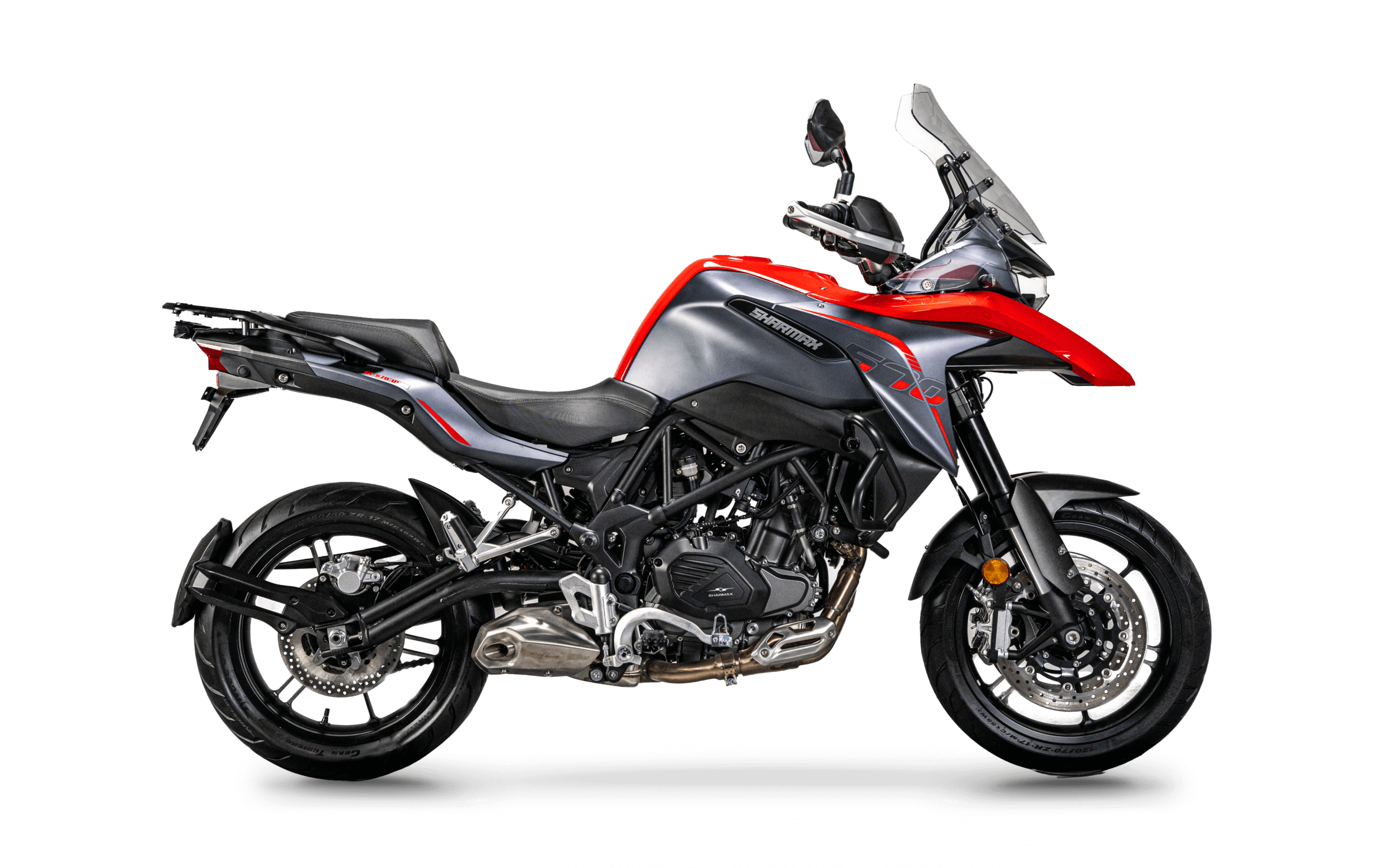
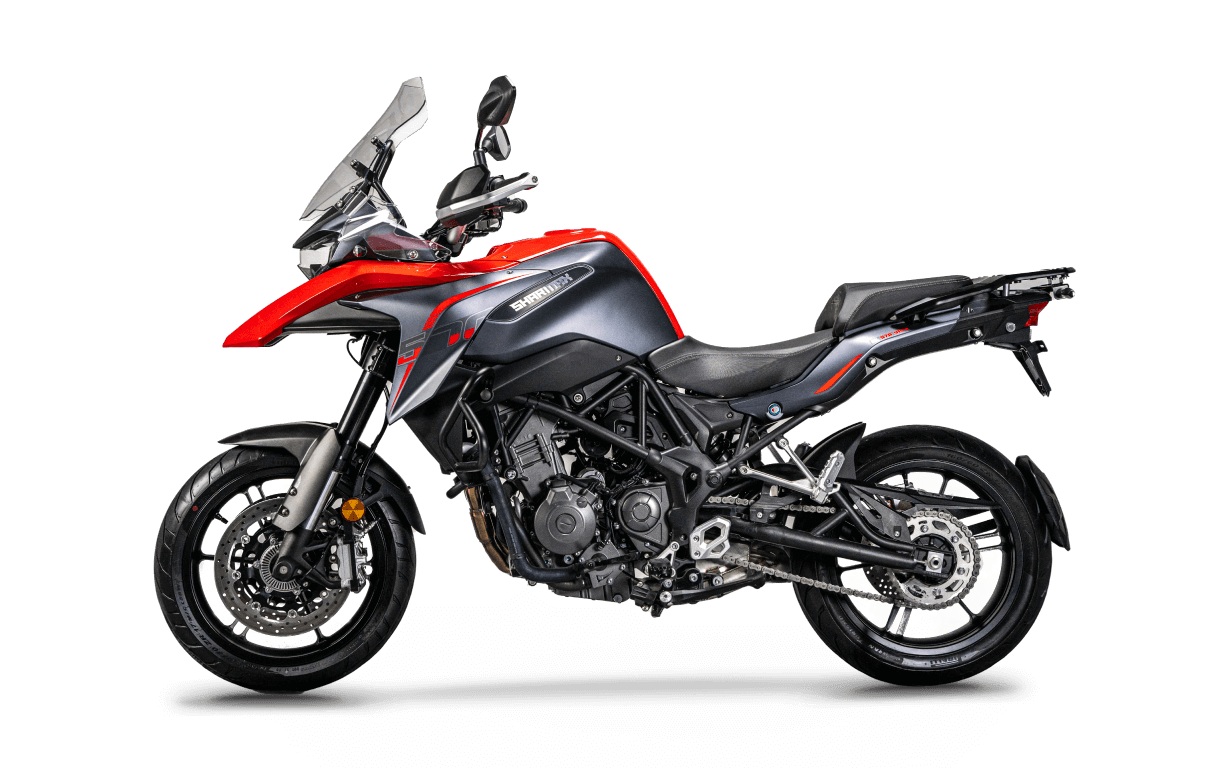
GL 570 Ultra — a more road-focused touring configuration: lower seat, lighter overall weight, 17-inch front wheel built for confident handling on paved roads.

GL 991 Ultra — a larger, long-distance adventure-touring setup: 19-inch front wheel, extra ground clearance, longer wheelbase, and substantially more engine performance to match its broader intended range of terrain.
Wheels and chassis
SpecificationGL 570 UltraGL 991 Ultra
Front tire120/70-17110/80-19
Rear tire160/60-17150/70-17
Wheel sizes17" / 17"19" / 17"
Ground clearance190 mm210 mm

Size and handling

The dimensional differences reinforce the same idea.

The 570 is 29 kg lighter, 40 mm lower at the seat and 35 mm shorter in wheelbase.Those differences should make it the more approachable option, particularly at low speeds. Its 795 mm seat height also makes it the more approachable option for shorter riders.

The GL 991 Ultra, with its 835 mm seat height and larger overall dimensions, is better suited to taller riders or those who prioritize long-distance capability, additional load capacity, and a more substantial touring platform.

When it comes down to GL 570 Ultra or GL 991 Ultra comfort, it's really a question of body size and riding style rather than one bike being objectively more comfortable than the other.

SpecificationGL 570 UltraGL 991 Ultra
Length2,200 mm2,250 mm
Wheelbase1,505 mm1,540 mm
Curb weight235 kg264 kg
Seat height795 mm835 mm

Touring range

Fuel range is one area where both motorcycles comfortably meet the demands of long-distance riding.

The GL 991 Ultra actually burns more fuel per 100 km, but its larger tank more than makes up the difference — the numbers work out to roughly 47 km, or about 11%, of extra range over the 570, despite the higher consumption. In practice, that means fewer fuel stops on a long ride, even though the bigger engine is working harder the whole way.

SpecificationGL 570 UltraGL 991 Ultra
Tank capacity19.5 L24 L
Fuel consumption4.5 L/100 km5 L/100 km
Theoretical range~433 km~480 km

Passenger and luggage capacity

Touring often means carrying much more than the rider alone, and this is another area where the two models begin to serve different needs.

The GL 570 Ultra has a listed maximum load of 180 kg.

The GL 991 Ultra increases this to 220 kg.

That 40 kg difference can become significant once a second rider, luggage, riding equipment, and accessories are added.

For predominantly solo touring or lighter luggage, the 570's capacity may be entirely sufficient. For frequent two-up travel or longer journeys with more equipment, the 991 provides substantially more headroom.

GL 570 Ultra vs GL 991 Ultra price

In Oman, the GL 570 Ultra is listed at OMR 2,790, while the GL 991 Ultra is listed at OMR 4,690. That makes the difference of OMR 1,900.

That extra amount isn't paying for a dressed-up version of the same motorcycle. It brings a larger 904cc engine, more power and torque, a 24-liter fuel tank, higher load capacity, greater ground clearance, and a 19-inch front wheel — genuine differences in what the bike is capable of, not just its price tag.

The GL 570 Ultra remains the more accessible option. It shares the same core touring architecture and Brembo braking setup, but in a lower, lighter, more road-focused package.

Which is better: GL 570 Ultra or GL 991 Ultra?

There is no universal winner because the two motorcycles solve slightly different touring problems.

GL 570 Ultra

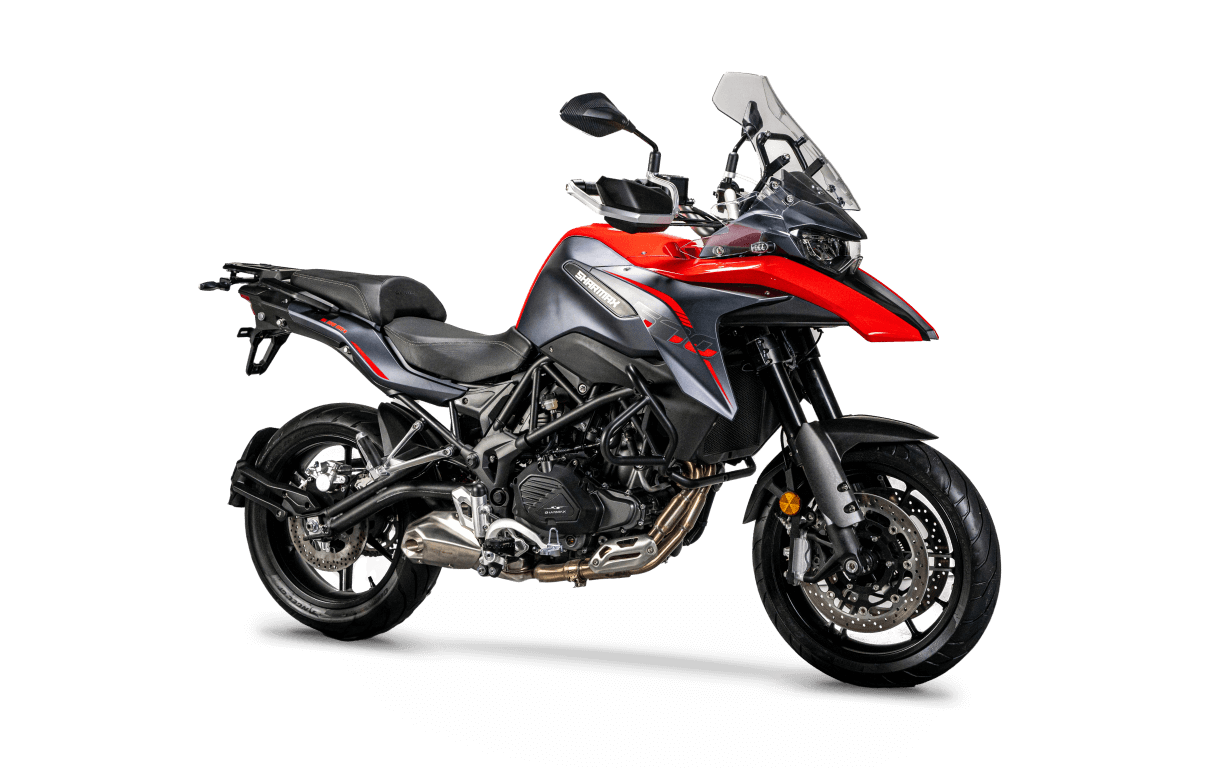
The 570 takes the core GL touring architecture and packages it in a more accessible form.

GL 570 Ultra image 01
GL 570 Ultra image 02
GL 570 Ultra image 03

Curb weight (kg)

235

Displacement (cc)

554

Ground clearance (mm)

190

Max torque (N·m)

51.00

Seat height (mm)

795

Power (hp)

48

Fuel tank capacity (L)

19.5

Choose the GL 570 Ultra if you want:

  • primarily road-based touring;
  • a lower 795 mm seat;
  • less weight to manage;
  • a 17/17 road-oriented wheel setup;
  • sufficient touring power without moving to a near-liter-class engine;
  • more than 400 km of theoretical range.

GL 991 Ultra

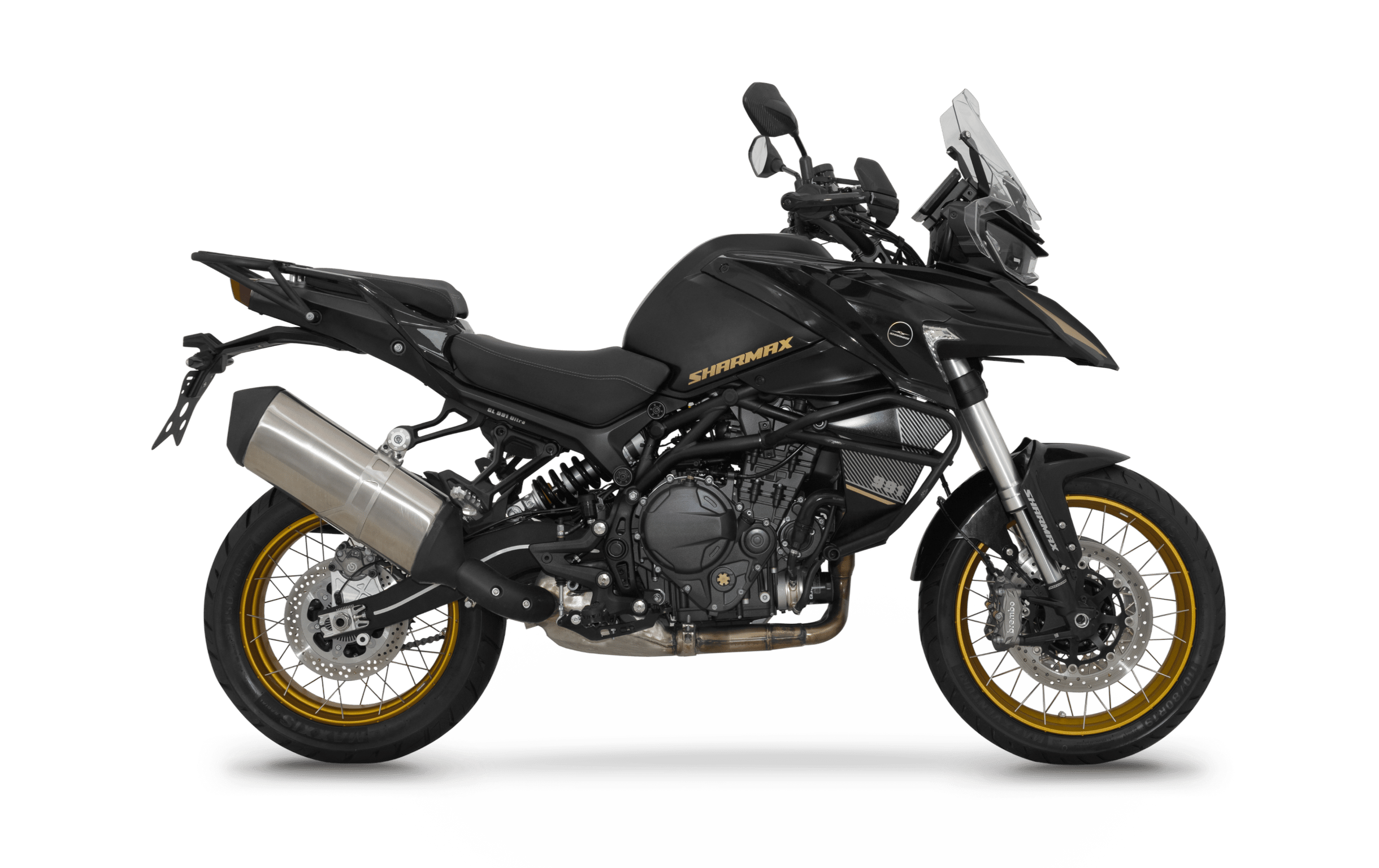
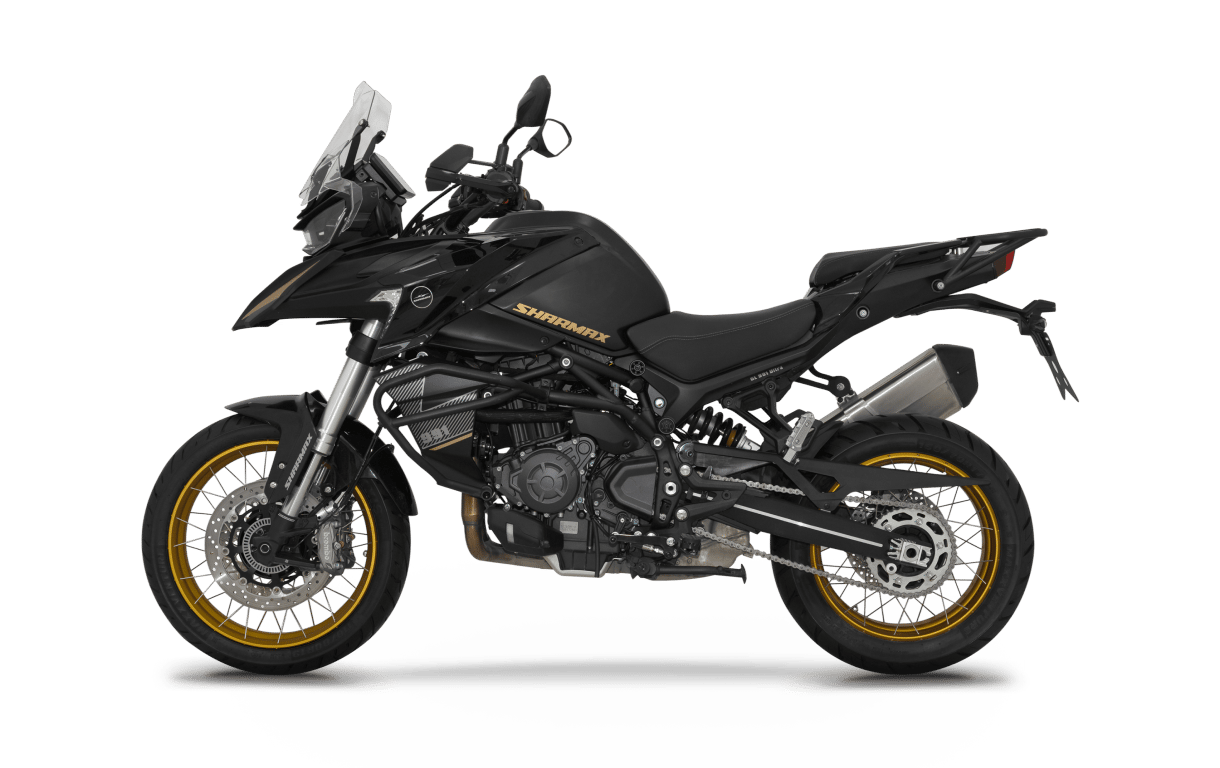
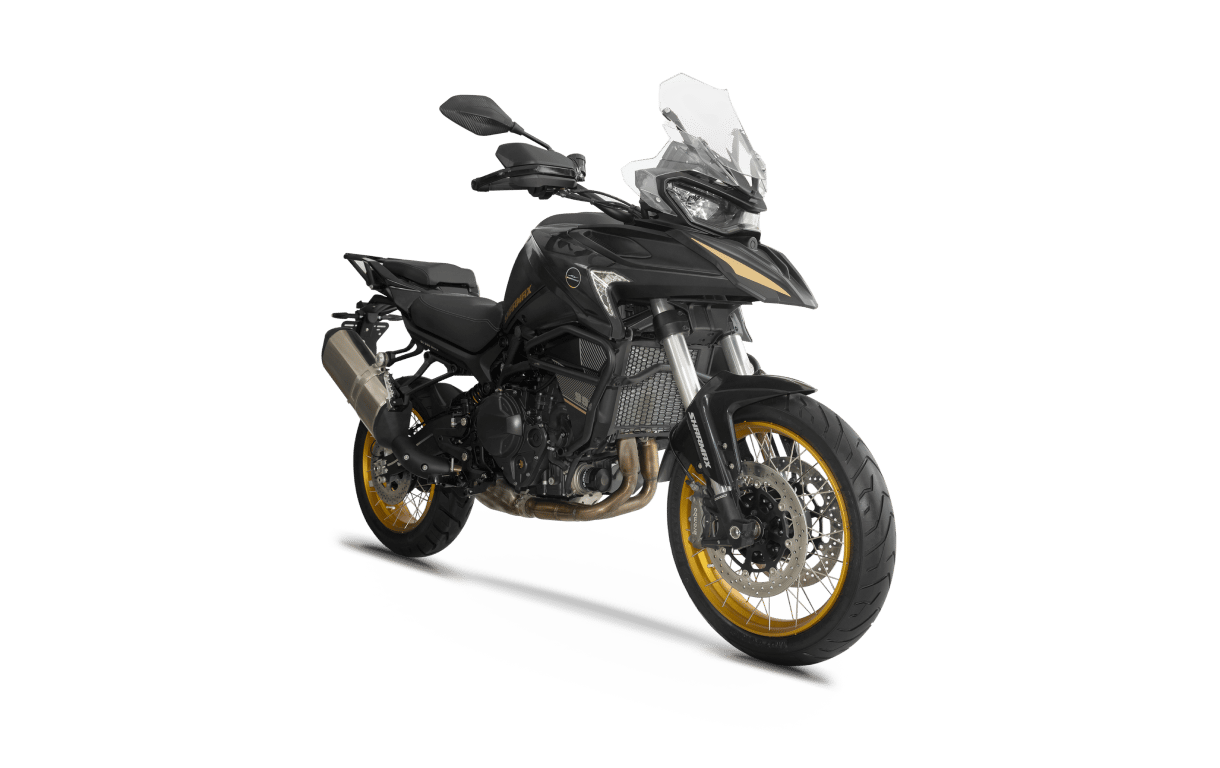
The 991 takes the same fundamental touring idea further. It is bigger, heavier, and more demanding, but those changes bring more carrying ability, range, ground clearance, and performance.

GL 991 Ultra image 01
GL 991 Ultra image 02
GL 991 Ultra image 03

Displacement (cc)

904

Ground clearance (mm)

210

Max torque (N·m)

90.00

Seat height (mm)

835

Power (hp)

92

Curb weight (kg)

264

Fuel tank capacity (L)

24

Choose the GL 991 Ultra if you want:

  • substantially more power and torque;
  • stronger performance with passenger and luggage;
  • a higher 220 kg load limit;
  • longer theoretical range;
  • 210 mm ground clearance;
  • a 19-inch front wheel for more mixed-surface flexibility;
  • greater reserve for high-speed and long-distance riding.

Ultimately, which is better, GL 570 Ultra or GL 991 Ultra, depends on what touring means to the rider. For predominantly paved routes and a lighter, lower motorcycle, the GL 570 Ultra offers the more balanced package. For riders expecting heavier loads, longer distances, rougher roads, and significantly more performance, the GL 991 Ultra is the stronger fit.

Find your touring match at Sharmax

The best way to choose between the GL 570 Ultra and GL 991 Ultra is to see how each motorcycle feels in person.

You are welcome to visit the Sharmax showroom, compare both touring models up close, check the riding position, and speak with the team about the best option for their routes, riding style, and load requirements.

Book a test ride and experience the GL series on the road before making your final choice.

14 Sep 2026

Did you like the article?