Best types of buggies for riding in Oman
Discover the best types of buggies for riding in Oman. Compare sport, utility, and recreational models for different terrains.
31 Aug 2026
Choosing between different types of buggies can be confusing for first-time buyers, especially if they are not yet familiar with how these vehicles are classified. Looking at all the buggies for sale, it may be difficult to know what to compare beyond size and engine power. Those factors certainly matter, but they are only part of the picture. Most buggies are designed with a specific purpose in mind, and that intended use should be the main guide when choosing between them.
This buggy classification guide explains the main categories, which features matter in Middle Eastern conditions, and how to choose among the best types of buggies for riding in the region.
Main buggy types explained
The terms buggy, side-by-side, and UTV are often used somewhat interchangeably, but the vehicles can differ significantly in purpose.
The easiest way to understand the main buggy types is to divide them by intended use:
recreational buggies and youth models;
sports and performance buggies;
utility and versatile UTVs.
There are further differences within each group, including engine size, seating capacity, drivetrain, suspension setup, and overall dimensions.
For riders comparing UTV types, intended use is more important than the name attached to the category.
Recreational off-road buggies
Recreational models are generally designed for leisure riding rather than maximum performance or heavy work.
This is the largest and most varied group, and where most weekend riders end up. These machines are purpose-built for unpaved terrain — sand, mud, and rocky tracks — with an emphasis on suspension travel, ground clearance, and driver engagement over hauling capacity. If you're comparing best buggy models for riding purely for recreation, this category is where most of the strong options live.
In the Sharmax current range, this group can includes:
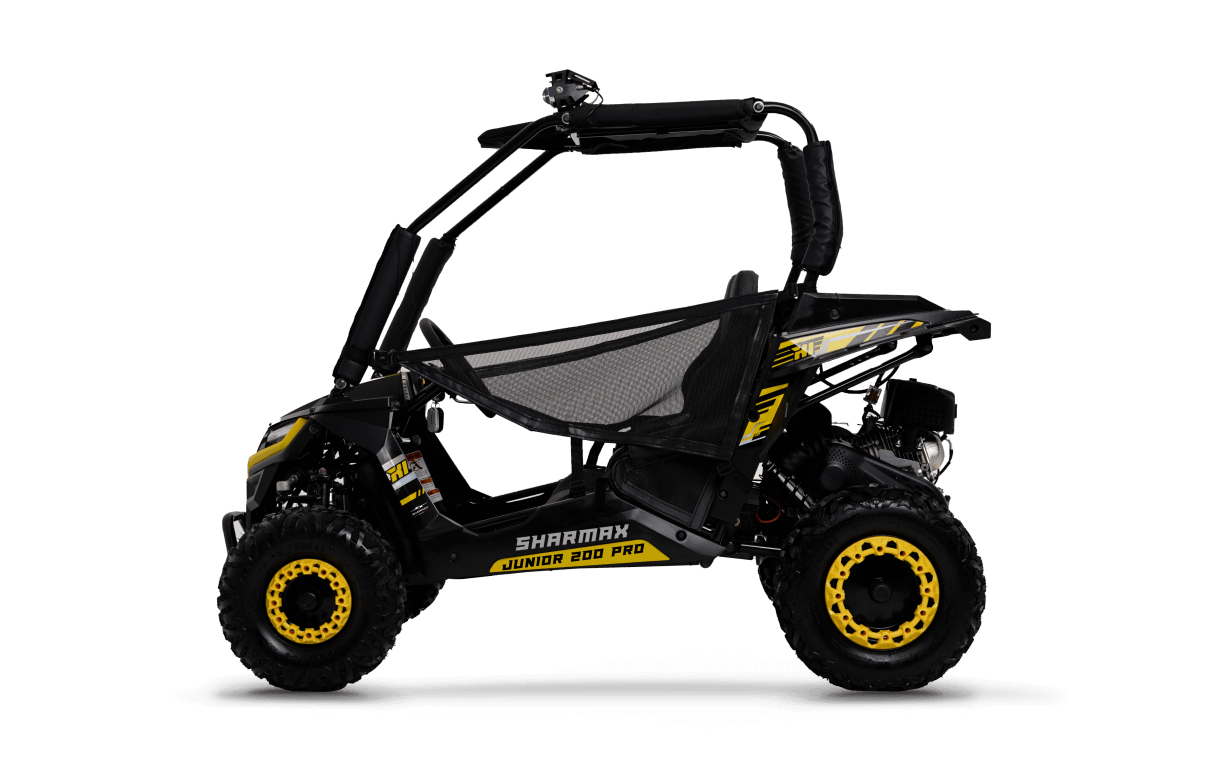
Junior 200 PRO
Off-road buggy for young riders with easy control and safe, confidence-building handling
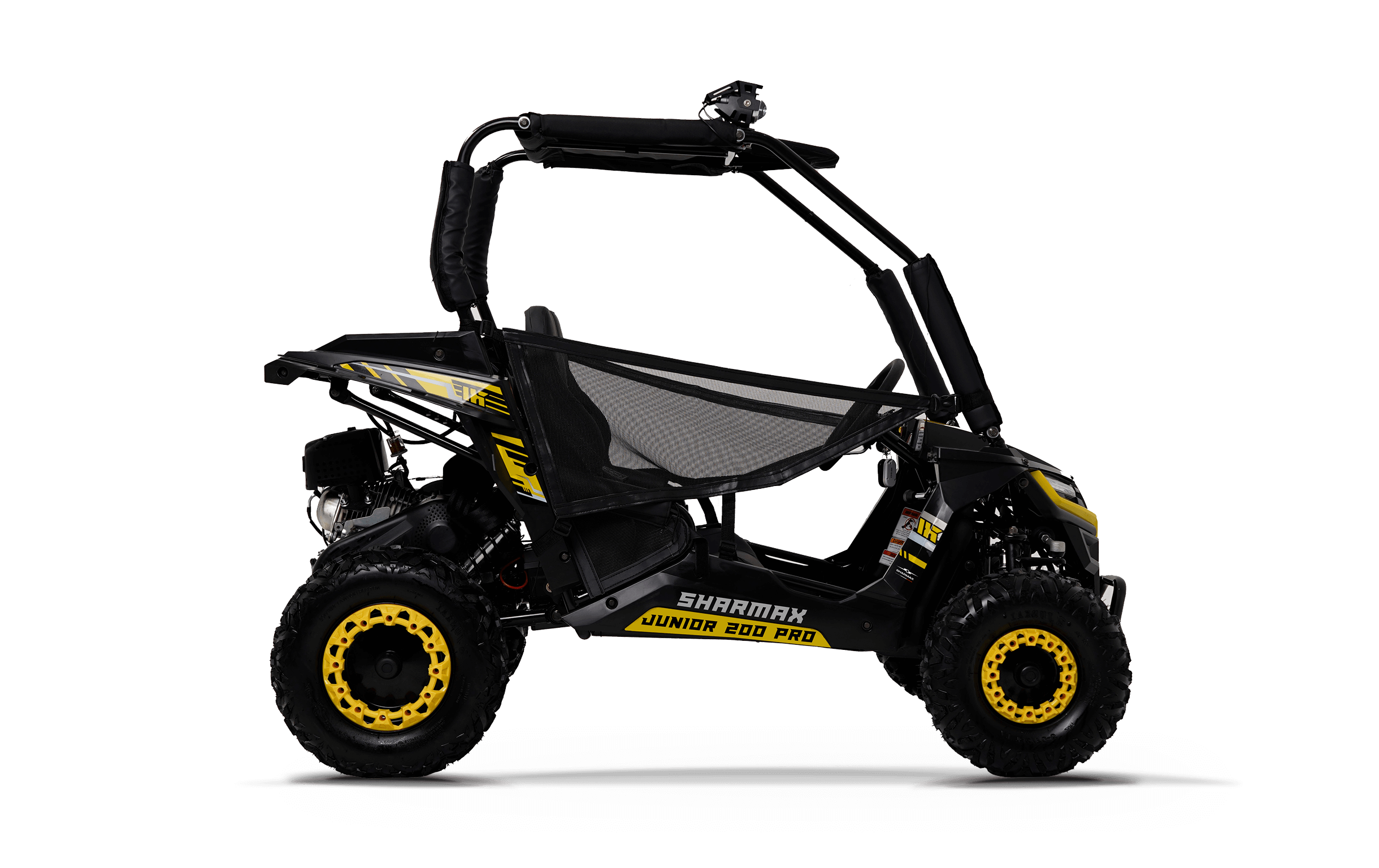
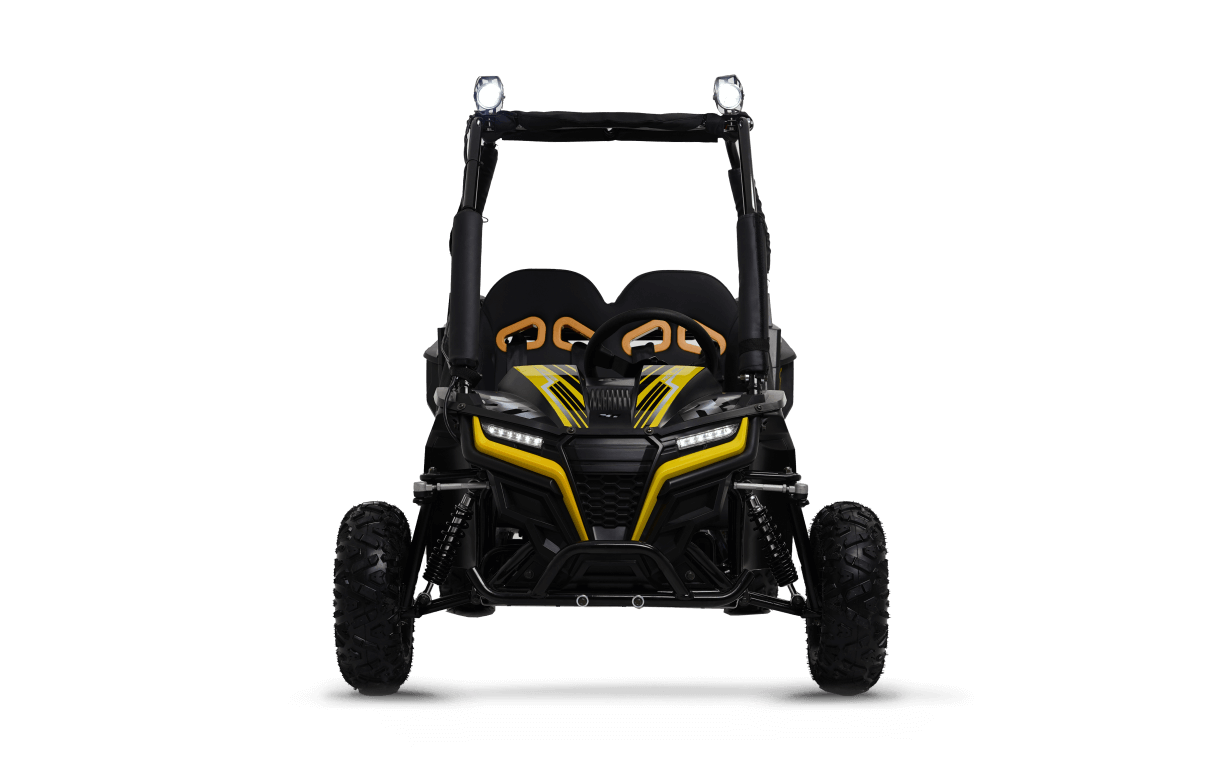
Power (hp)
7
Displacement (cc)
163
Ground clearance (mm)
90
Rear suspension
Single shock absorber
Seating capacity
2
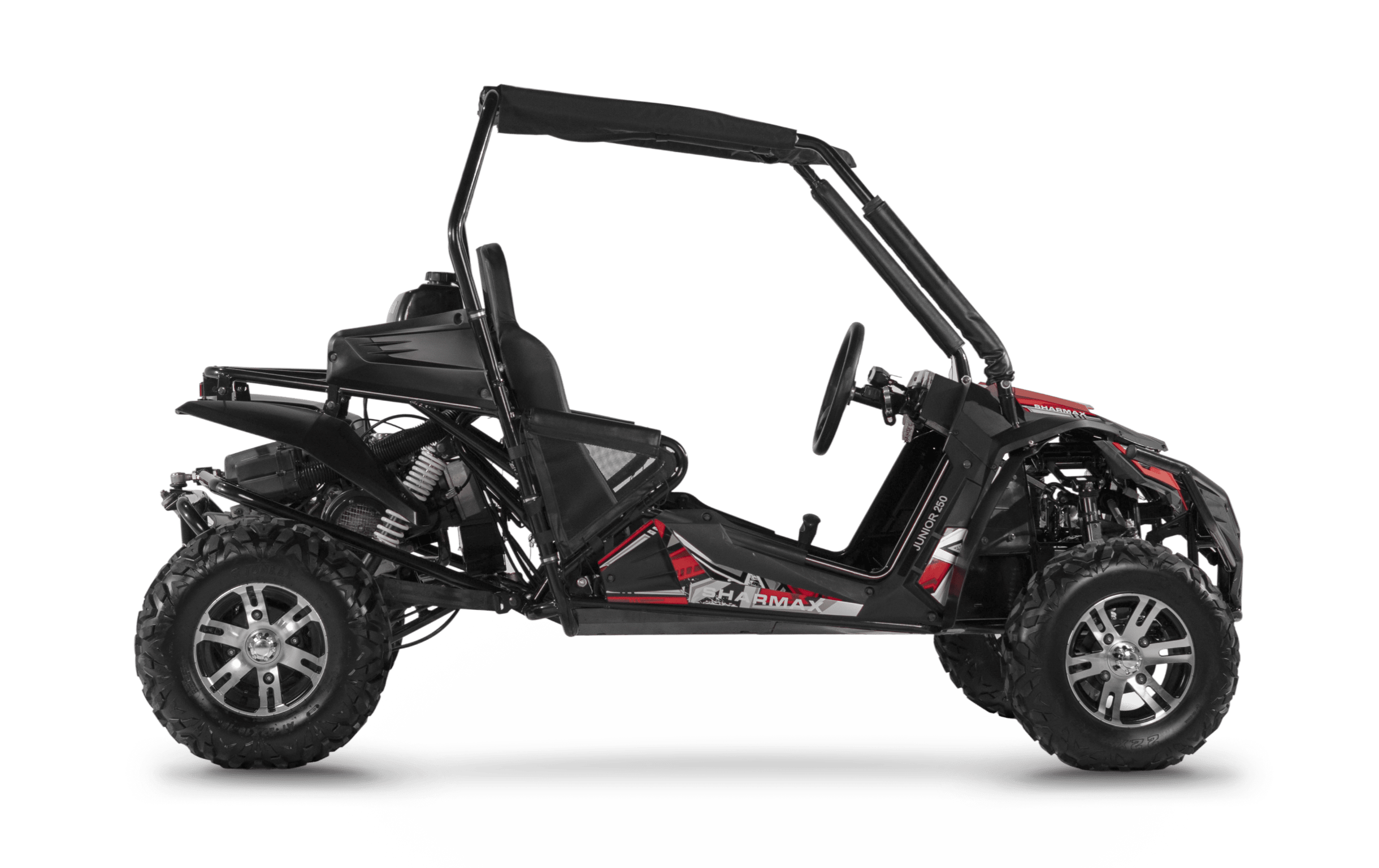
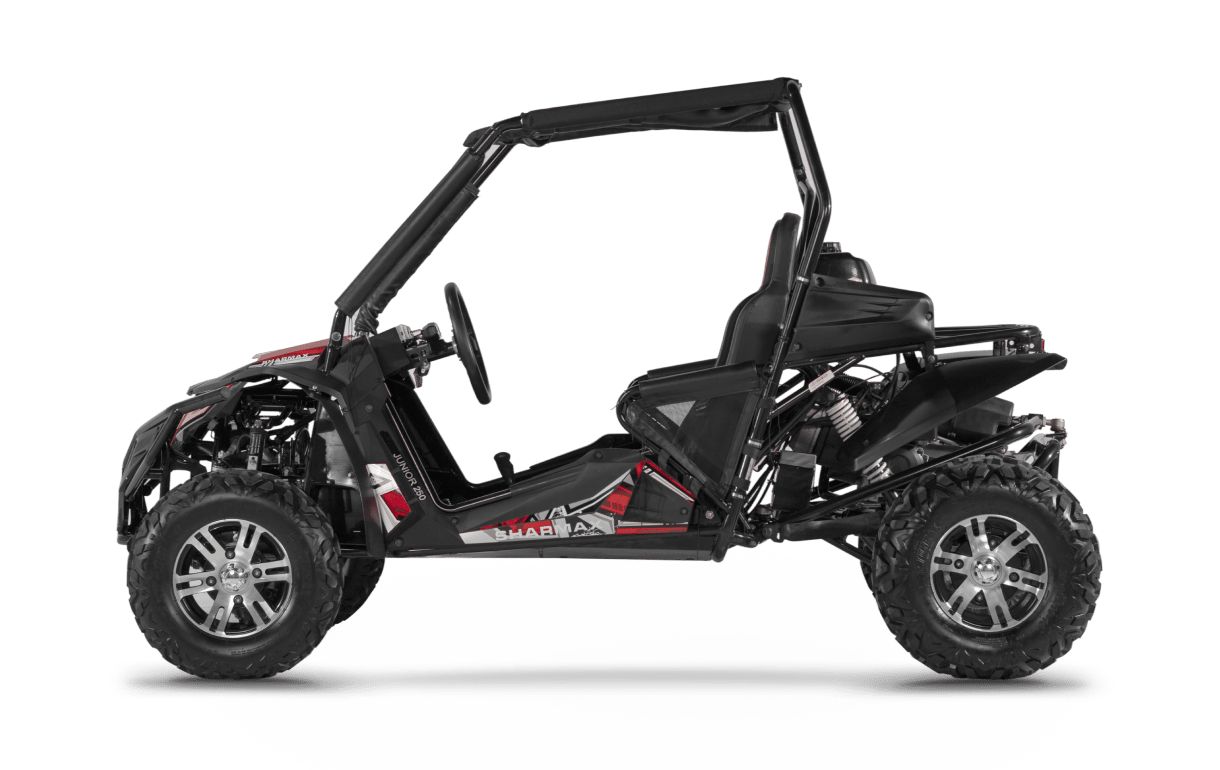
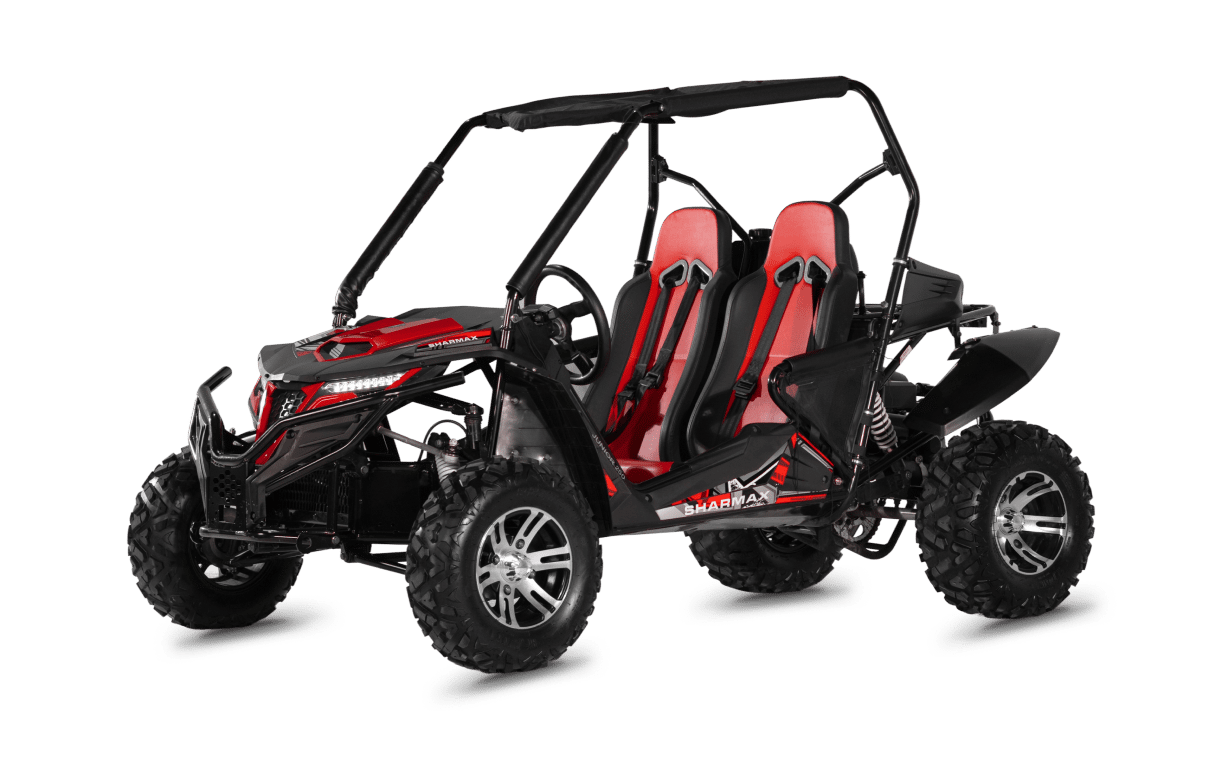
Junior 250
Compact off-road buggy for young riders who need more space, stable handling, and a confident step into active outdoor driving
Displacement (cc)
169
Ground clearance (mm)
150
Rear suspension
Double A-arms with shock absorbers
Power (hp)
17
Seating capacity
2
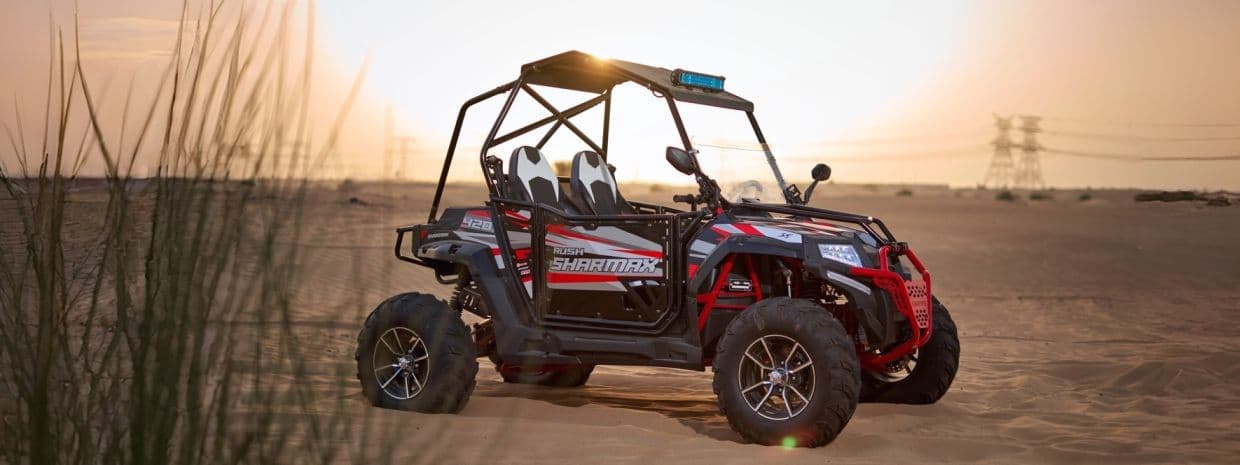
Predator 420 2-Seater
Two-seat buggy built for sand tracks and rough routes with high clearance, wide tires, and shared riding comfort
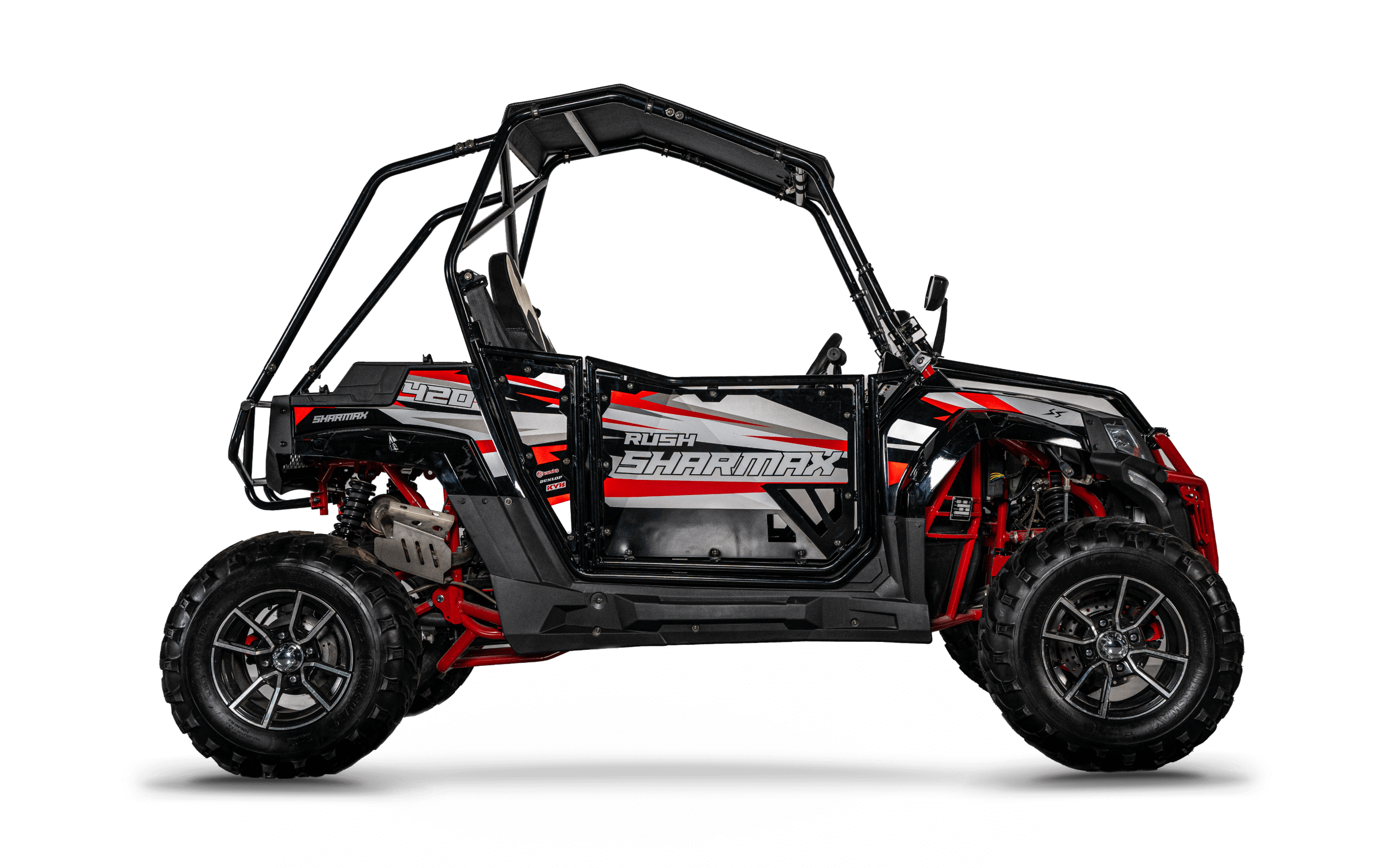
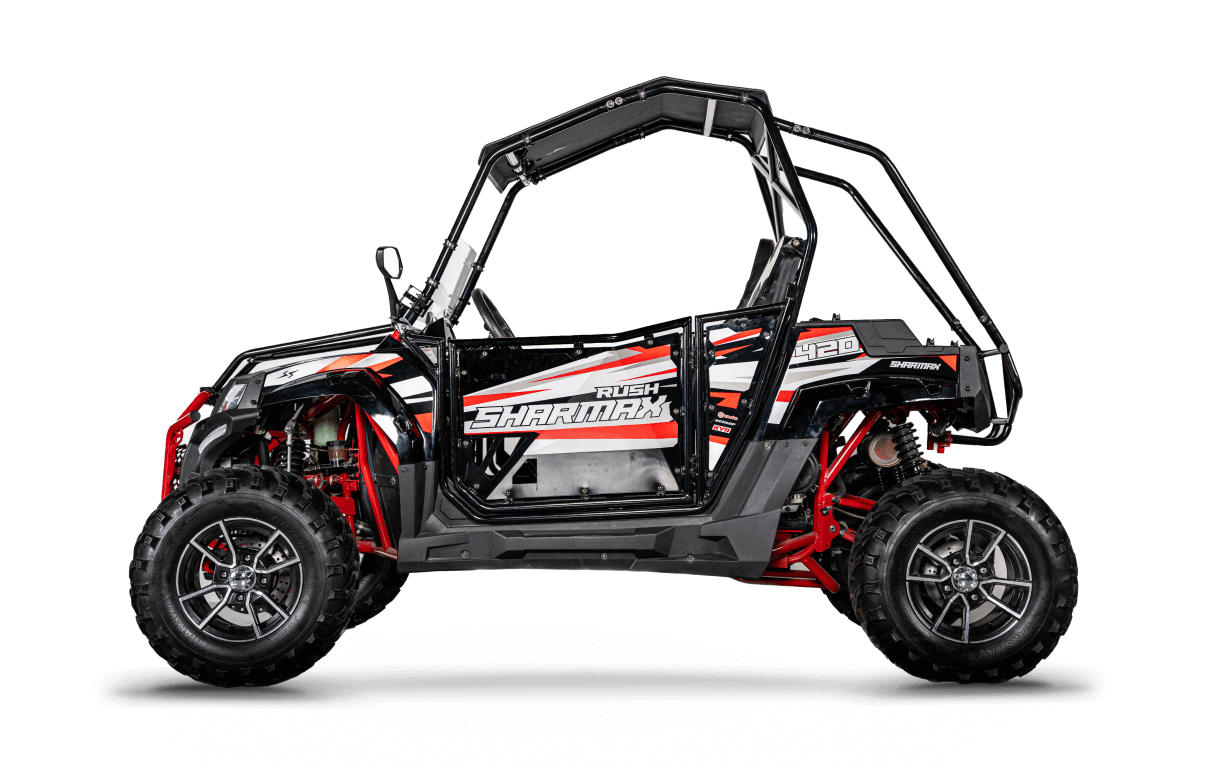
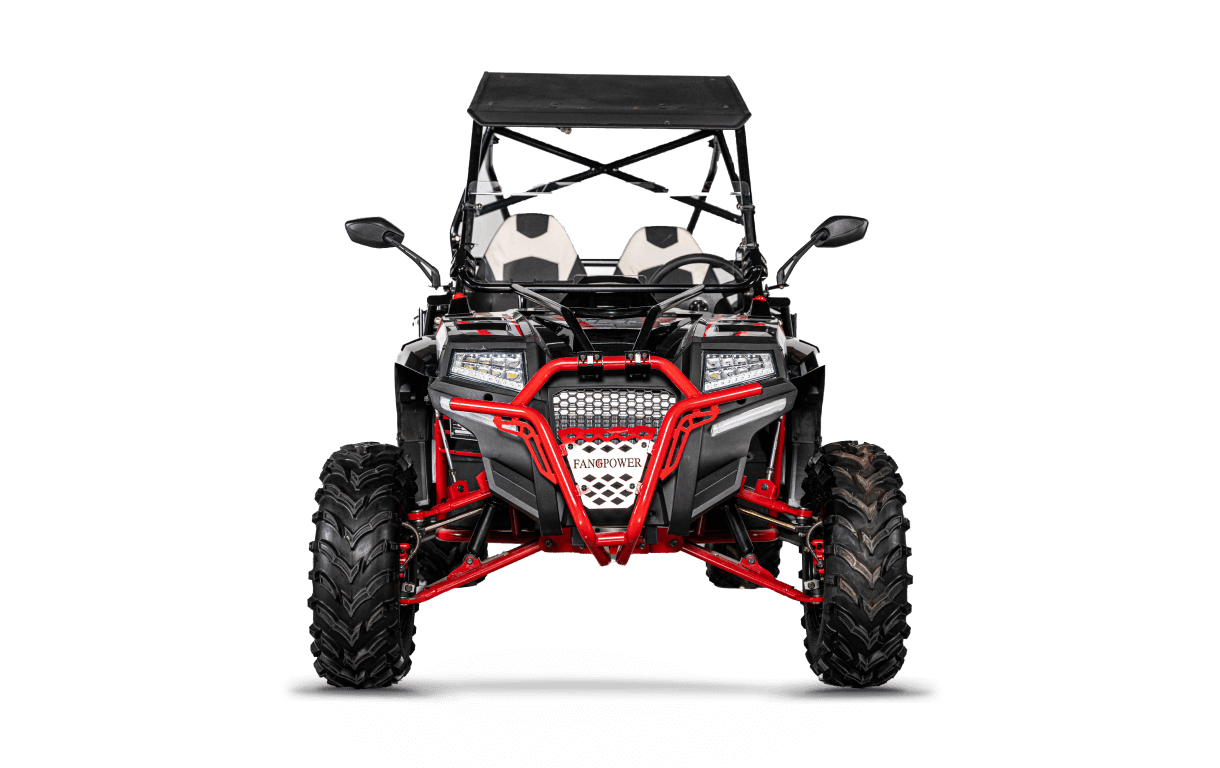
Displacement (cc)
400
Ground clearance (mm)
300
Rear suspension
Fang Power 4-Link
Power (hp)
25
Seating capacity
2
The first two models are the perfect beginner buggy types for teenagers and kids, while the Predator buggy is optimal for mid-experience riders or those building the skill.
Utility and versatile UTV types
These lean toward work capability over outright fun. Expect a stronger focus on towing capacity, cargo space, and steady, controllable power delivery rather than high-speed thrills. Among UTV types, this is the category built to handle payload and rougher, mixed terrain rather than dedicated dune running.
Within the Sharmax range, these models fit into the utility/versatile category:
Jump 1100 2 Seater
The Jump 1100 offers considerably more performance, so it sits closer to the boundary between utility and high-performance off-road use.
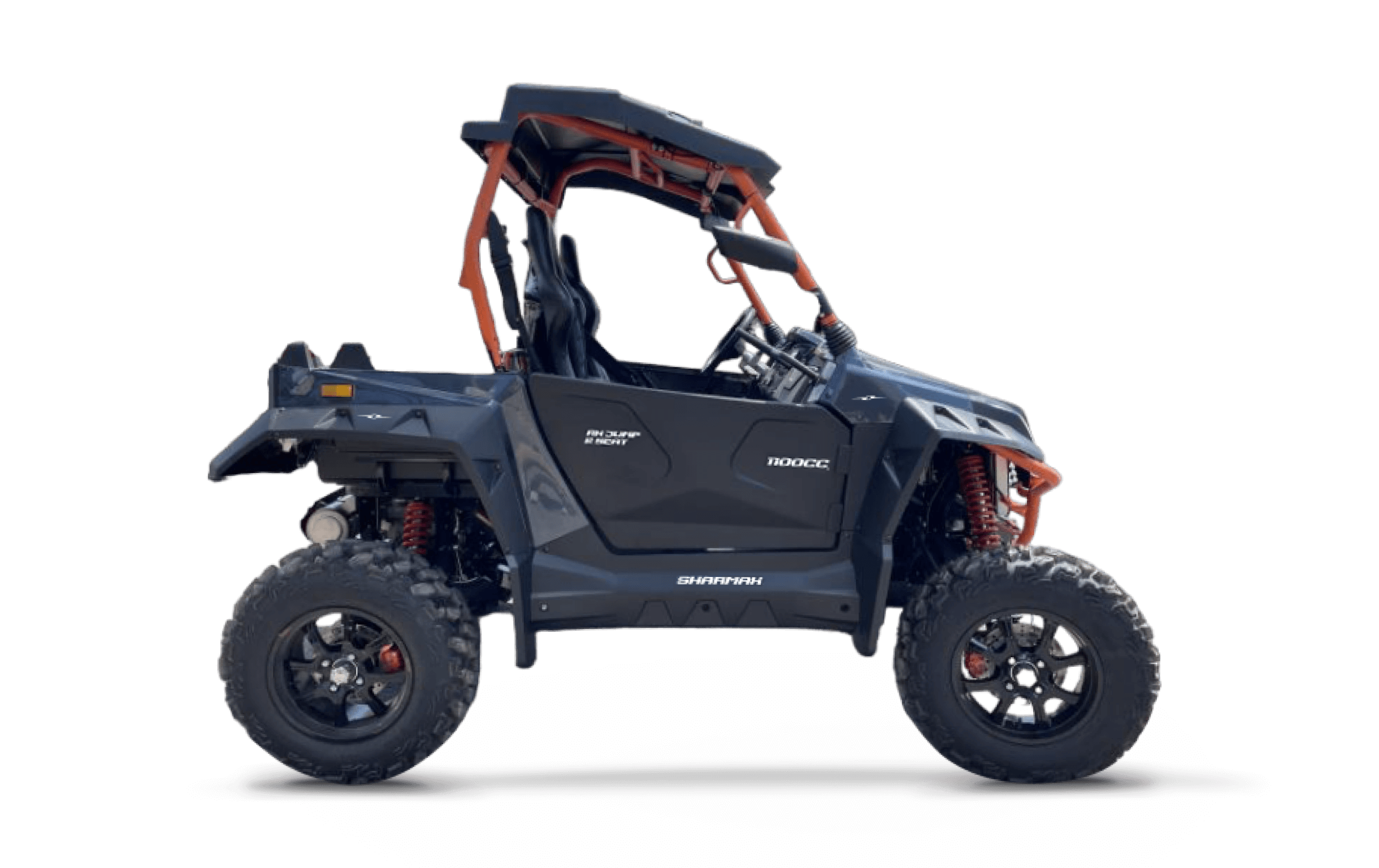
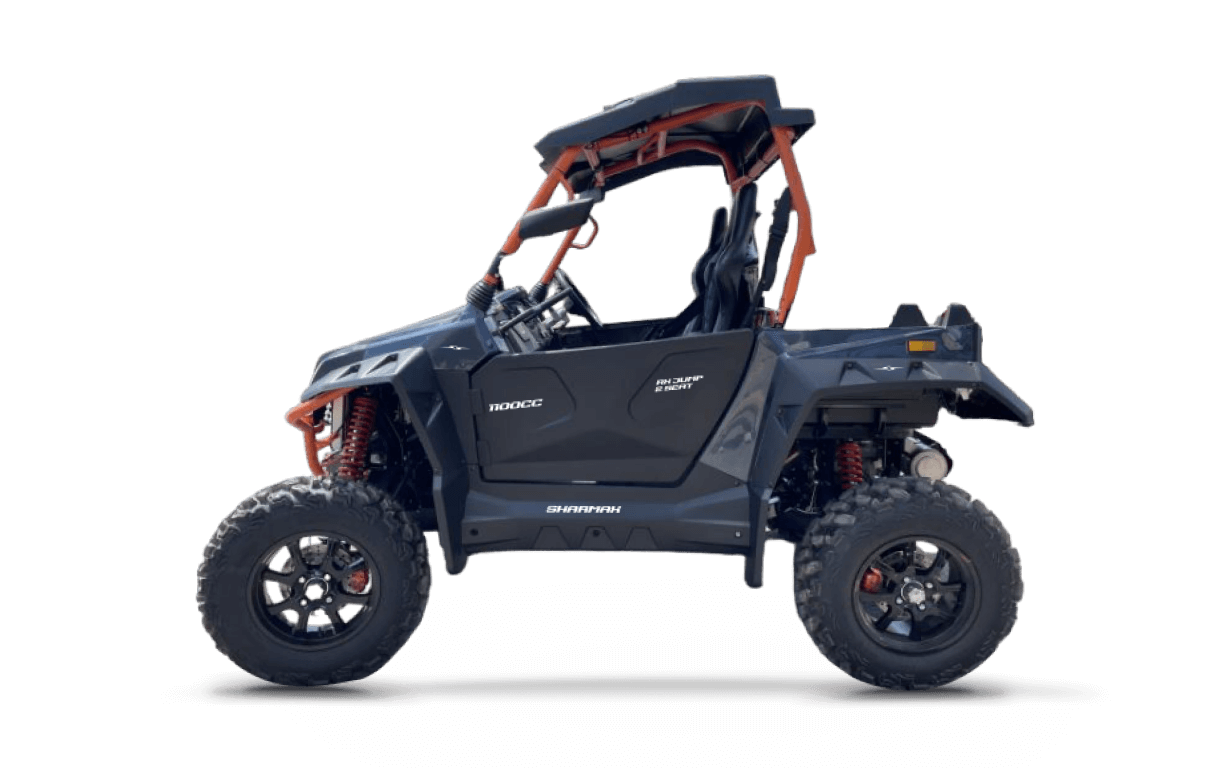
Power (hp)
85
Displacement (cc)
976
Ground clearance (mm)
100
Two-seat vs four-seat buggies
Another useful way to compare types of buggies is by seating capacity.
Two-seaters
The most common configuration by a wide margin, generally referred to as "side-by-side" because of how the seats are arranged next to each other rather than one behind the other. Two-seaters tend to be lighter and more agile, which matters directly on soft sand — less weight means less tendency to bog down.
Models like the Predator 420 and the Jump RX 1100 fall into this group, offering a balance of manageable size and enough power for dune riding.
Four-seaters
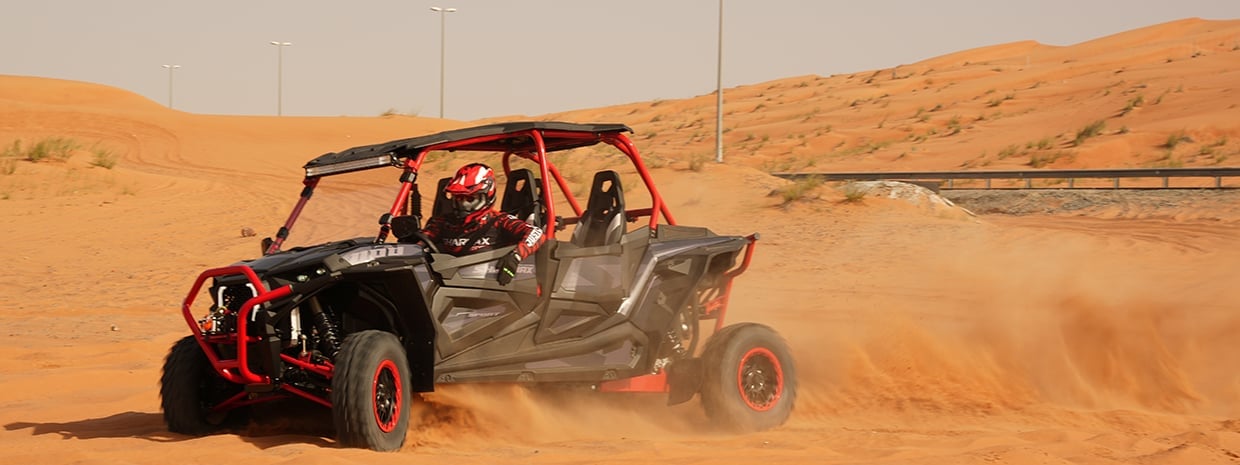
Built for groups, these are larger, heavier, and generally more powerful to compensate for the added load. They trade some of the agility of a two-seater for the ability to bring more people along, which makes them a natural fit for family outings or group desert trips rather than solo dune running. The XForce 1100 Sport x4 is a good example — a genuinely capable machine, but noticeably more vehicle to manage than its two-seat sibling.
Buggy classification by rider level
Beyond terrain and seating, one of the most useful ways to sort the market is by rider experience, and this is where beginner buggy types genuinely differ from performance-oriented machines in ways that matter for safety, not just fun.
| Rider Level | Typical Displacement | Typical Power | Example Category |
|---|---|---|---|
| Youth / new rider | 150–250cc | Roughly 7–17 hp | Junior-class models |
| Intermediate | 250–500cc | Roughly 20–30 hp | Basic/mid-range buggies |
| Experienced | 500cc+ | 30–90+ hp | Professional-grade buggies |
Starting in the wrong tier is one of the most common mistakes new buyers make — a machine with too much power for the rider's experience is genuinely more dangerous on sand than one with too little, since high power with limited throttle control makes a buggy far easier to roll on a soft dune face.
Youth and entry-level buggies
Smaller displacement, lower top speed, and simplified controls make this tier the right starting point for new or younger riders. The Junior 200 PRO and Junior 250 are representative of this category — enough performance to be genuinely engaging, without the power that makes a mistake costly. This is generally the safest entry point for anyone building sand-riding experience for the first time.
Mid-range and basic buggies
Sitting between entry-level and full-performance machines, this tier suits riders who've outgrown a youth model but aren't yet chasing serious dune performance. The Jump 1100 2 Seater is a solid example — enough capability for real desert riding, without the steep learning curve of a top-tier performance buggy.
What specifications matter most for riding in sand?
Whatever buggy classification you choose, several specifications deserve particular attention in the Middle East.
Tire width and traction
For sand, larger and wider off-road tires help spread the buggy’s weight over a bigger contact area. Full-size recreational and performance buggies often use tires around 25–30 inches in diameter and 8–10 inches wide. This helps reduce sinking in loose sand and makes it easier to maintain momentum. Tire pressure also matters, but it should always stay within the safe range specified for the vehicle and tires.
Engine power and displacement
Recreational buggies often sit around the 400–600 cc range, while performance models can approach 1,000 cc. For example, the Sharmax Predator 420 uses a 400 cc, 25 hp engine, while the XForce 1100 Sport reaches 93 hp from 976 cc. More power helps maintain momentum in deeper sand and on steeper dunes. Still, power works best together with suitable tires, suspension, and vehicle weight.
Ground clearance
For desert riding, around 250–300 mm of ground clearance is a useful starting point. The Sharmax Predator 420 offers 300 mm, while the XForce 1100 Sport reaches 360 mm. Extra clearance helps the buggy cross ruts, dune transitions, and uneven ground without catching the underbody. This becomes even more useful on mixed sand-and-rock routes.
Suspension
Suspension becomes more important as speed and terrain difficulty increase. For recreational riding, the main goal is to absorb ruts and smaller dune transitions without frequent bottoming out. Performance buggies need more suspension travel and better damping to stay stable over repeated bumps and dune crests. When possible, compare actual front and rear suspension travel rather than relying only on labels like “off-road suspension.”
Cooling system
Cooling matters especially in Gulf conditions, where summer temperatures can exceed 40°C. Slow dune climbing can put the engine under heavy load while limiting natural airflow through the radiator. For larger buggies, liquid cooling with a radiator and electric fan is therefore particularly useful. The more powerful the engine, the more important stable temperature control becomes.
Buggy types comparison by terrain
The easiest way to choose among the different types of buggies is to match the vehicle to the main purpose:
| Buggy Type | Best Terrain | Strengths | Trade-offs |
|---|---|---|---|
| Youth/entry-level | Flat, open sand, gentle trails | Easy to control, forgiving of mistakes | Limited power for steep dunes |
| Two-seat recreational | Dunes, mixed desert terrain | Light, agile, good power-to-weight | Limited passenger capacity |
| Four-seat | Group outings, mixed terrain | Room for passengers, strong power | Heavier, less nimble on steep dunes |
| UTV/utility models | Rocky trails, mixed-use riding | Towing capacity, cargo room | Less dedicated dune performance |
This kind of side-by-side comparison is really the fastest way to shortcut a buggy types comparison down to just the two or three models that actually fit your riding plans, rather than working through a full catalog one machine at a time.
How to choose the best buggy for Oman riding
A useful motor vehicle classification guide should ultimately come back to three questions: who will drive, where the vehicle will be used, and how demanding that use will be.
For relaxed outings, recreational models offer the simplest entry point. Sports buggies make more sense for riders who prioritize dune performance and faster off-road driving. Utility-oriented models provide a broader balance for those who expect to combine recreation with longer routes or practical tasks.
Sharmax's catalog currently covers all three directions, from the Junior and Predator ranges to the Race 580 and high-performance XForce models. The professional section alone currently includes the Jump 1100, Race 580, XForce 1100 Sport, and XForce 1100 Sport x4.
It is also worth checking the common mistakes to avoid when buying a buggy before making a final choice, especially if this is your first UTV purchase.
The best types of buggies for riding in the Middle East are therefore not defined simply by engine size. The better choice is the machine whose tires, suspension, clearance, power, and capacity match the terrain and the way you actually plan to use it.