HomeBlog / Articles

ATV maintenance tips for beginners in Oman

ATV maintenance tips for beginners in Oman

Discover essential ATV maintenance tips for beginners in Oman. Learn simple checks and servicing routines to keep your ATV reliable.

03 Aug 2026

ATV maintenance tips for beginners in Oman

As invincible and rugged as they may seem, quad bikes still need care and attention. They take on some of the harshest off-road conditions with lots of beating on the way. So, even the toughest ATVs for sale are vulnerable to the wear-and-tear influence of sand and dirt. Knowing when and how to maintain your ATV properly will help it run longer and with fewer breakdowns on the way. In this ATV maintenance guide, we will cover the recommended service intervals and the main parts that need your regular attention.

Basic ATV maintenance

We have put together a set of practical ATV maintenance tips covering the main systems of your quad, so you can spot problems early and keep small issues from turning into expensive repairs.

Engine oil and oil filter

For most quad bikes, the service schedule recommends changing the oil:

  • every 2,000–2,500 km
  • after around 100 engine hours
  • at least once a year

Use whichever limit comes first. These figures are a useful general guide, but always check the manual for your specific model.

Replace the oil filter at the same time. There is little point in pouring fresh lubricant into the engine and then sending it through a filter already holding debris from the previous service interval.

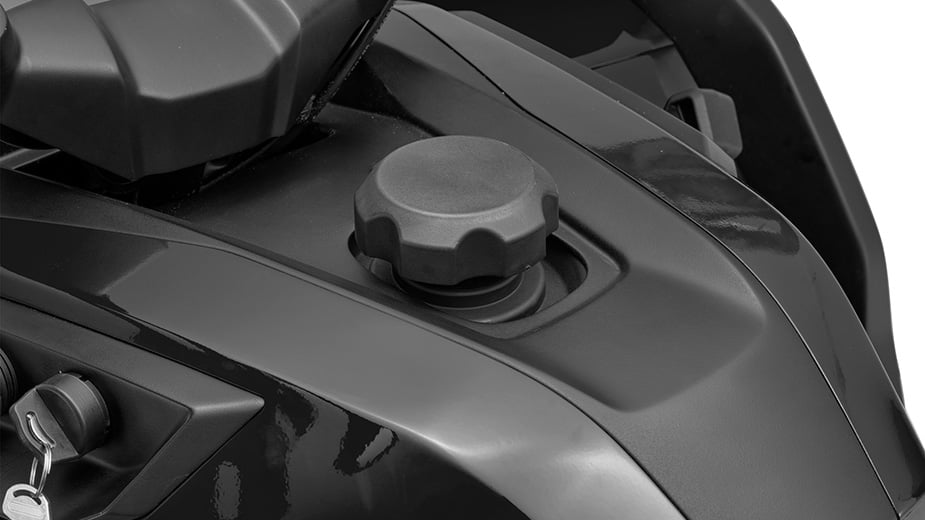
Engine oil and oil filter

Check the oil after every ride, especially after water crossings. A cloudy or milky appearance, foam, or visible emulsion may indicate water contamination. Catching it early can prevent rapid engine wear and costly repairs.

Note: Even when you have barely covered any distance during the season, do not leave used oil in the engine during long-term storage. Combustion residue and fine metal particles may begin to build up inside the oil system and restrict oil circulation later.

Suspension and drivetrain

Suspension and drivetrain checks are an important part of ATV preventive maintenance, especially if the quad regularly sees rocks, water crossings, or deep sand.

Check for play, cracks, and leaks

Before setting off, check the steering rods, suspension arms, shock absorbers, and driveshafts for excessive play. Rock each wheel by hand and listen for knocks or clicking sounds.

Also inspect the following:

  • CV-joint boots for cracks or tears
  • shock absorbers for oil leaks
  • suspension joints for loose fasteners
  • driveshafts for unusual movement or damaged boots
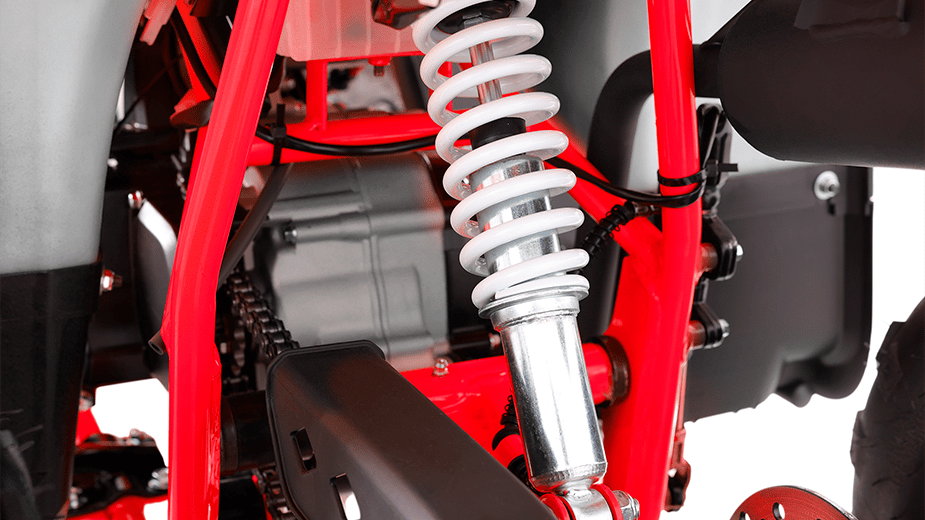
Suspension and drivetrain

A damaged CV boot may look like a small issue, but once sand gets inside, it mixes with the grease and acts like grinding paste. Replacing the boot early is much cheaper than replacing the joint.

CVT belt and variator

The CVT belt deserves a regular place on any ATV service checklist because its damage can leave the engine running while the quad refuses to move. Before the season starts, blow out the variator housing with compressed air. Inspect the drive belt every six months or every 500 km — whichever comes first. Full replacement intervals vary by model but typically fall every few thousand kilometres. Replace it earlier if you notice any of these:

  • Slow acceleration from a standstill
  • Slipping, especially at low rpm
  • Engine revs rise when you open the throttle but the ATV does not move
  • Smell of burning rubber or smoke coming from the variator housing

When inspecting, remove the variator cover, spread the pulleys, and pull the belt off. It should have consistent width with no cracking, peeling, fraying, or grease contamination. Any of those defects means the belt needs replacing before the next ride.

Suspension arm grease

The suspension arms run on a thick grease that washes out easily. After any water crossing, deep puddle, or heavy rain, the grease needs replacing. Under dry conditions, change it every 300 km. For beginner ATV maintenance, the easiest rule to remember is simple: if the suspension has been through deep water, inspect and grease the joints soon afterwards.

Most ATVs have grease nipples on each suspension arm — typically four, one per arm, though some models have more. Your owner's manual tells you exactly where they are, which grease to use, and how much to apply.

Engine, fuel system, and cooling

This is where sustained heat, fine sand, and dust do the most damage over time. A solid ATV maintenance guide for the Middle East pays extra attention here, because the conditions accelerate wear on every component in this section faster than the manufacturer's baseline ratings assume.

Carburetor cleaning

For carbureted ATVs, the carburetor needs regular cleaning with a dedicated carburetor cleaner spray. Left unattended, fuel residue and fine dust particles build up in the jets and passages, causing rough idling, poor throttle response, and difficult cold starting.

To clean it properly: remove the carburetor, disassemble the float bowl, and spray cleaner through every jet and passage. Use a soft brush for stubborn deposits — never wire or abrasive tools that can damage the soft metal. Check that the float needle and seat are clean and seating properly, as a worn needle causes fuel overflow and rich running. Reassemble, adjust the idle screw if needed, and reinstall. If the ATV runs on EFI rather than a carburetor, this step is replaced by periodic fuel injector inspection — less frequent but equally important.

Air filter

Air-filter care is one of the most important parts of ATV maintenance for beginners, and especially in the Middle East, where it becomes a once-a-month job. Fine desert sand and dust are significantly more abrasive than the mud and leaf debris the filter schedule was designed around. A clogged air filter makes the engine run louder and weaker, and in serious cases, allows particles through that damage the piston and cylinder walls in ways that are expensive to fix.

Check the air filter every 500 km as a baseline. If you are riding in sandy or dusty conditions regularly, check it every few rides. The good news is that replacement is rarely necessary — wash the filter in warm soapy water, rinse it thoroughly, let it dry completely before reinstalling, and it is ready to go again. Never reinstall a damp filter.

While the filter is out, check the condition of the intake hoses, seals, and connections for cracks or loose fittings. Any gap in the intake path bypasses the filter entirely.

Cooling system

Cooling-system checks belong on every ATV maintenance checklist in hot climates. Check the coolant level regularly and inspect the radiator after sandy or muddy rides. Sand, dry grass, and mud can block the fins and reduce airflow through the radiator.

Use low-pressure water or compressed air from the back of the radiator to push debris outward. Avoid placing a pressure-washer nozzle close to the fins, as they bend easily.

In extreme heat, slow riding can be harder on the cooling system than fast riding because less air passes through the radiator. If the temperature warning appears, stop and let the engine cool rather than trying to "ride through it."

Spark plugs

The spark plug ignites the fuel-air mixture in the combustion chamber. By the manufacturer's schedule, plugs typically need replacing every 6000 km. Replace them earlier if you notice:

  • The engine takes multiple attempts to start
  • Throttle response feels hesitant or uneven
  • The ATV has lost noticeable acceleration
  • Fuel consumption has increased on familiar routes

The number of plugs matches the number of cylinders. When replacing, gap each new plug to the specification in the owner's manual before installing — the gap affects ignition timing and combustion efficiency. Use the correct heat range for your model and conditions. In sustained high-temperature riding, a plug that runs slightly cooler than stock can reduce the risk of pre-ignition. Always torque plugs to spec — overtightening damages the thread in the cylinder head.

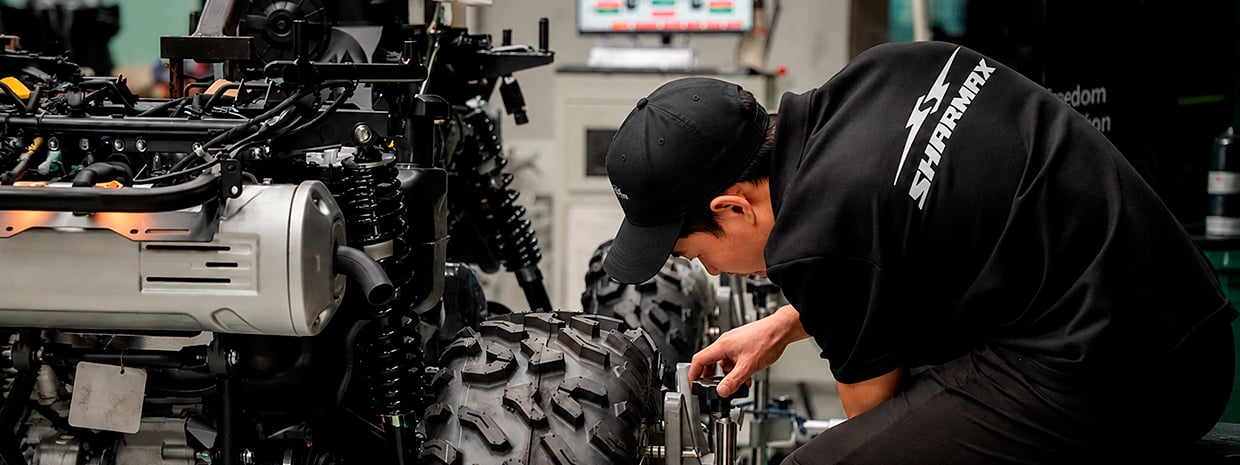
Tires and brakes

Tire condition

Good basic ATV maintenance also means paying attention to wheels. Worn tires affect braking, handling, and off-road traction, all of which matter more in loose or sandy terrain where grip is already reduced.

Check for:

  • cuts or exposed cords
  • cracked sidewalls
  • missing tread blocks
  • uneven wear
  • damaged valve stems
  • tread worn down to the indicator
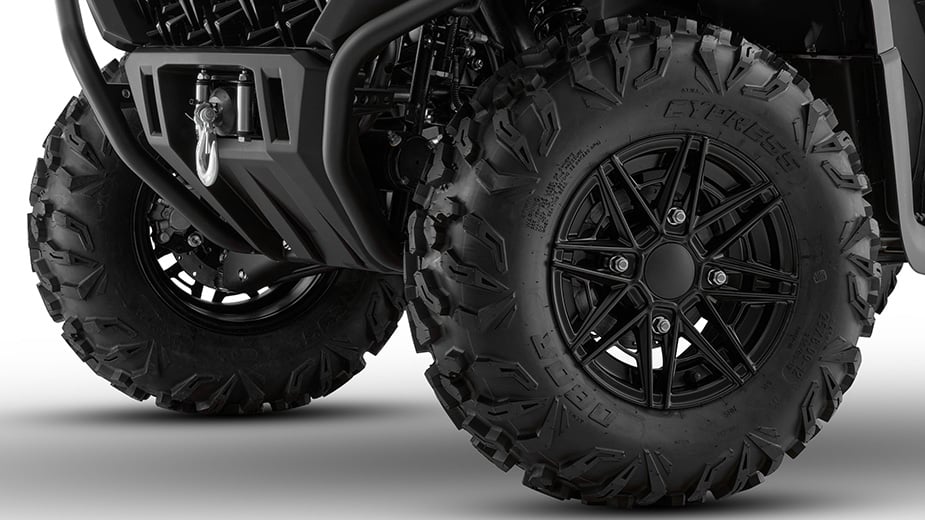
Tires and brakes

Depending on the manufacturer, the wear indicator may appear as raised bars inside the tread grooves, printed numbers, or coloured markings.

Tire pressure

Check pressure before every ride. It takes two minutes and tells you immediately if there is a slow puncture developing. Keep a record of each tire's pressure — a single tire consistently lower than the others is the earliest warning of a leak.

Pressure also affects performance. Slightly deflated tires improve traction on sand, soft ground, and loose terrain by increasing the contact patch. On hard tarmac or gravel, run them at the recommended pressure — underinflated tires on hard surfaces handle poorly, heat up faster, and wear unevenly. The maximum pressure rating is marked on the tire sidewall.

Brake pads

Replace brake pads when you hear squealing under braking or notice the ATV taking longer to slow down. Pad life varies considerably by riding style and terrain — aggressive riding in deep sand or mud can wear pads in 300–600 km, while steady riding on dry ground can take them past 1000 km.

Always replace pads in pairs — left and right together on the same axle. Replacing only one side creates uneven braking force that pulls the ATV sideways. The front pads wear faster than the rear and should be checked more frequently as part of any ATV service checklist.

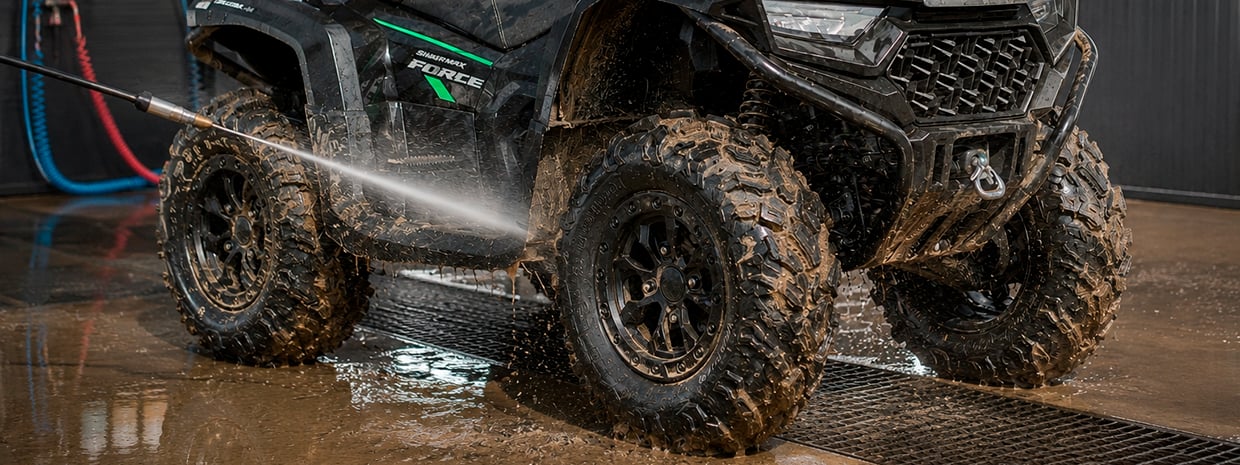
ATV covered in mud and sand after an off-road ride

Cleaning your ATV

Cleaning is part of ATV preventive maintenance, but does an ATV really need a full wash after every sandy ride? Not always. A light layer of dry dust is less urgent than wet mud, salt, or sand packed around the radiator and suspension. However, the ATV should still be inspected after each outing and cleaned whenever debris begins to collect around moving or heat-sensitive parts.

After a typical sand ride, focus on:

  • the radiator and cooling openings
  • the airbox area
  • suspension joints
  • brake calipers
  • the CVT intake and outlet
  • the chain or exposed drivetrain parts

When using a pressure washer, keep the nozzle at a safe distance. Do not direct a concentrated jet at the radiator fins, switches, electrical connectors, control cables, decals, lamps, seals, or air intake.

After washing, dry the ATV with a microfibre towel and blow trapped water out of switches and connectors with low-pressure compressed air. Lubricate the required grease points, then start the engine and allow it to idle for around five minutes so residual moisture around warm components can evaporate.

ATV maintenance schedule

A clear ATV maintenance schedule helps separate quick post-ride checks from jobs that only need attention every few months. The intervals below provide a general starting point, but the owner's manual should always take priority.

TaskAfter every rideEvery monthEvery six months or 500 kmOnce a year or as specified
Check engine oil level and condition   
Change engine oil and filter  Every 2,000–2,500 km or 100 engine hoursAt least once a year
Inspect air filterAfter very dusty rides Replace when required
Check tires and pressure   
Test brake operation Inspect brake padsReplace when worn
Inspect suspension, steering, and CV boots Lubricate and inspect 
Check CVT belt  Replace when worn
Check coolant level and radiatorAfter demanding rides Replace coolant as specified
Inspect spark plug  Replace as specified
Check electrical connectorsAfter deep-water use  Full inspection
Coolant level and hoses  Replace coolant as specified

This is a general ATV maintenance checklist. Always cross-reference with your owner's manual as manufacturer intervals take priority over general guidelines.

Closing thoughts: Be consistent with maintenance checks

The how to maintain an ATV question has a straightforward answer: consistently, and before something breaks rather than after.

Good ATV maintenance comes down to a few consistent habits.

  • Check tire pressure before and after every ride. After wet or muddy outings, wash the quad and lubricate the suspension points specified by the manufacturer.
  • Consumable parts also need periodic replacement. These include the engine oil and oil filter, CVT belt, air filter, tyres, spark plugs, and brake pads. Inspect the electrical connections roughly once a season, especially when the ATV regularly crosses water.

Following this simple ATV maintenance checklist helps you catch wear early and keep the machine ready for the next ride.

FAQ

03 Aug 2026

Did you like the article?