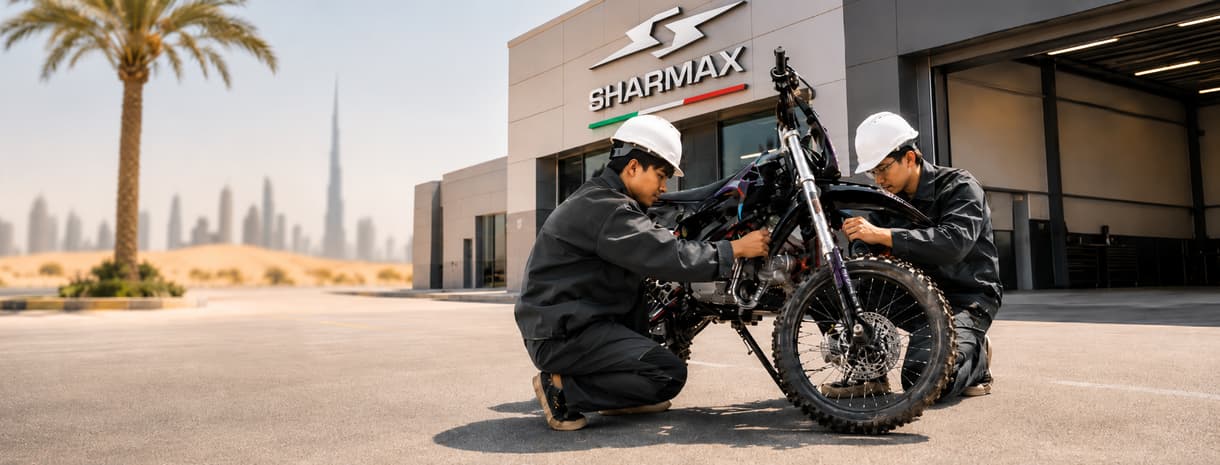
The do’s and don'ts of motorcycle cleaning for riders in the UAE
Learn the dos and don’ts of motorcycle cleaning in the UAE. Keep your bike spotless, protect key parts, and avoid common mistakes that cause damage.
17 Jul 2026
After every sandstorm, so common in the Middle East, you look at your bike, thinking, “Do I need to wash it again?” We say yes – even for a city motorcycle, cleaning is crucial, not to mention motocross and enduro bikes. Sand and dirt get into small gaps, block filters, and can make bolts, joints, and mechanisms seize over time. We have prepared a quick guide on motorcycle care tips so that you know how to clean your motorcycle without damage.
Why a pressure washer is not always the best answer
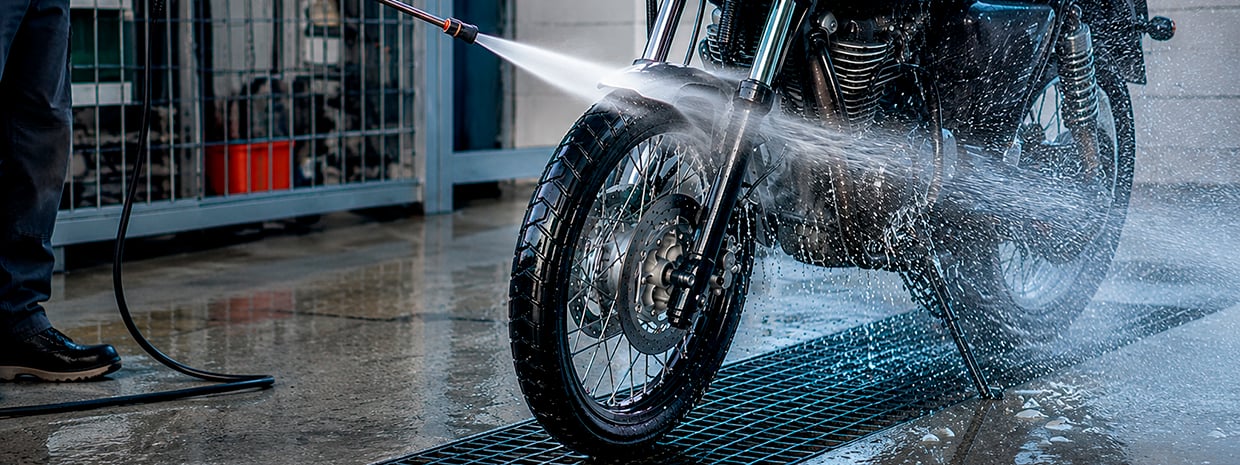
When riders look for advice on how to clean a motorcycle, they often hear, "Just use a pressure washer and don’t worry about it, the stream will remove everything.” Unfortunately, such tips can be harmful if you randomly apply the stream without knowing what you are doing. The thing with motorcycles is that, unlike cars, they have more exposed parts that do not welcome moisture. Strong pressure can force water into places where it should not go. Besides, along with the dirt, it can easily knock off the seals or affect electrical connectors.
The best approach here is to use this tool wisely, prepare the bike before washing, and follow the tips below.
Motorcycle washing do’s and don'ts
These basic motorcycle cleaning tips will help you clean it properly without creating new problems.
Prepare for the cleaning
Don't wash the motorcycle just anywhere. Check local rules first. In some areas, washing vehicles outside approved places is restricted because oil, fuel residue, and cleaning chemicals can enter the soil or drainage system. A proper wash bay with wastewater collection is the safer option.
Protect the air intake. Before washing, cover the air intake and airbox area. If there is no special cover, use water-resistant material over the filter and close the airbox properly.
Plug the exhaust. Use a proper exhaust plug before washing. This prevents water from entering the pipe, especially during pressure washing or deep cleaning.
Close the fuel tank properly. Make sure the fuel cap is tightly closed. It is a basic step, but it helps keep water away from the fuel system.
Remove extra accessories. Take off side bags, soft luggage, phone mounts, cameras, and any removable electronics. Rain is one thing; direct water pressure from a washer is another.
Don't wash the motorcycle while it is hot. Let the engine and metal parts cool down first. Cold water on hot metal can cause cracks or damage to protective coatings. After all, you are washing a motorcycle, not trying to forge a sword.
How to clean motorcycle parts without causing damage
Start with the chain
Do: clean the chain before washing the rest of the bike. If you wash the frame first and then attack the chain, oily dirt can splash back onto already clean surfaces. Start by removing heavy dirt with a brush, then use a proper motorcycle chain cleaner.
Don't: blast the chain with high pressure. A chain collects whole "curtains" of mud and grease, and the sprockets grow their own dirty fringe too. But a pressure washer is not a magic wand here. Strong pressure can push past seals, remove lubricant, and speed up chain wear. If the dirt is stubborn, clean it by hand instead of shooting it with water like it owes you money.
Protect sensitive areas
Don't: flood electrical parts, air filters, carburetors, or the radiator. Yes, it sounds like "thanks, Captain Obvious," but water gets sprayed into exhausts, connectors, and filter areas more often than you'd think. One of the main motorcycle cleaning tips is simple: avoid direct pressure on switches, wiring, spark plug areas, carburetors, radiators, bearings, and seals.
Don't: spray water under pressure into the exhaust pipe. The exhaust can be cleaned from the outside. The inside does not need a personal shower.
Clean the engine gently
Do: treat the engine like the heart of the bike. Many motorcycles have exposed engine parts, cooling fins, and small gaps where dirt builds up. Use a sponge, a soft brush, and warm water with a small amount of motorcycle-safe shampoo. This is slower than blasting it with pressure, but it is the best way to clean motorcycle engine areas without harming it.
Wash the frame and plastics
Do: move to the frame and bodywork after sensitive parts are handled. Once the chain and delicate areas are done, clean the frame, plastics, fenders, and fairings. Motocross and enduro bikes usually need more attention because mud and sand hide everywhere. But road bikes also need regular care, especially after dust, sandstorms, or long summer rides.
Do: use the right motorcycle cleaning products. For heavy dirt on vertical surfaces, a gel cleaner works well because it stays in place longer and has more time to loosen grime before rinsing. Avoid aggressive household chemicals. They can damage paint, rubber, aluminium, and protective coatings.
Don't forget lights, mirrors, and windshield
Do: clean visibility parts carefully. Headlights, mirrors, turn signals, and windshields collect insects, road film, and sticky dirt. In summer, bugs can dry hard and become annoying to remove. Use a proper insect remover or place a wet paper towel over the dirty area for a few minutes to soften the marks. Then wipe gently and rinse with clean water.
Do not scrape dry insect marks from plastic or painted surfaces unless you enjoy adding scratches for decoration.
Choose the right motorcycle cleaning products
Do: choose motorcycle cleaning products by surface type. There is a cleaner for almost everything: chain, engine, bodywork, glass, chrome, plastic, seat materials. The problem starts when someone buys one "universal miracle bottle" and expects it to clean the whole motorcycle equally well.
Don't: use aggressive chemicals on aluminium, chrome, rubber, or seat materials.
Strong alkaline cleaners can be too harsh for aluminium parts. Chrome can also react badly to the wrong product. Some car shampoos even say "not for motorcycles" in tiny letters on the back label.
Do: finish painted parts with protection if needed. After washing and drying, painted parts can be treated with polish or wax-based care products. They help protect the surface from sun, dust, water spots, and road dirt. If the seat is leather or a delicate material, use a suitable care product for that too — not whatever was left from cleaning the engine.
Dry the motorcycle properly
Do: dry the bike after washing. Washing is only half the job. Drying matters just as much if you want to clean a motorcycle without damage. A soft chamois cloth or clean microfiber towel works well for painted parts, plastics, and the seat.
Don't: leave water sitting in tight gaps. Water can collect around bolts, switches, footpegs, brake parts, connectors, and small frame gaps. If it stays there, it can leave marks, cause corrosion, or attract dirt again. A blower, air gun, or vacuum cleaner in blow mode can help remove water from places where a cloth cannot reach.
Do: check the brakes after washing. Water often sits around brake discs and pads. Before riding normally, roll the bike slowly and press the brakes gently a few times. This helps dry the brakes and restore proper feel.
Do: check lubrication after washing. Look at the chain and other moving parts. If water or cleaner removed lubricant, apply it again. Also wipe off excess chain lube. Otherwise, your first ride will decorate the rear wheel, swingarm, and half the motorcycle with greasy dots. Modern art, but not the good kind.
Your quick motorcycle cleaning checklist
Pre-rinse the motorcycle
Start with a generous rinse using clean water from a hose. This removes loose dust, sand, and dirt before you touch the bike with a sponge.
Prepare two buckets
Mix motorcycle-safe shampoo with water in one bucket. Keep clean water in the second bucket for rinsing the sponge, so you don’t rub dirt back onto the bike.
Wash from top to bottom
Apply the foam gently and work from the upper parts down. Pay attention to tight areas, but don't force water into electrical parts, bearings, air intake, or the exhaust.
Clean the wheels and chain separately
Use a wheel cleaner for rims and a proper chain cleaner with a chain brush. Don't blast the chain with high pressure, and don't forget to lubricate it after drying.
Rinse off all shampoo
Wash away all foam with clean water. Make sure no cleaner stays on paint, plastics, rubber, chrome, or aluminium parts.
Dry the bike properly
Use a soft microfiber towel or chamois cloth. Don't leave the motorcycle to dry under direct sun, because water spots can appear on paint, plastics, mirrors, and the seat.
Finish with care products
After drying, apply suitable products for plastic, rubber, or painted parts if needed. If your bike has a chain drive, add fresh chain lube and wipe off the excess.