ATV safety tips every rider in the UAE should know
Stay safe on the trails in the UAE with these essential ATV riding tips. Learn about protective gear, speed rules, terrain awareness, and accident prevention.
06 Jul 2026
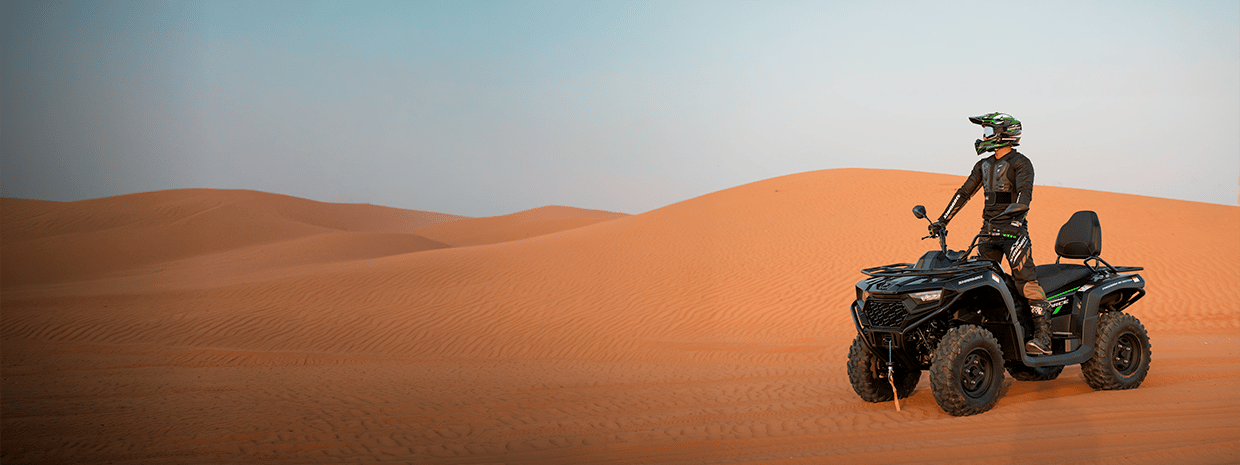
Is your new ATV standing idle while you build up the courage to ride it? Need a few tips of confidence on how to handle a quad safely? The main fear beginners have is a rollover. Although an atv is more stable than a motorcycle, there is still a risk of losing balance. In the atv safe riding guide below, we will break down the main atv safety techniques so that your vehicle brings you only joy and no fear.
A non-negotiable rule: never ride an ATV without gear
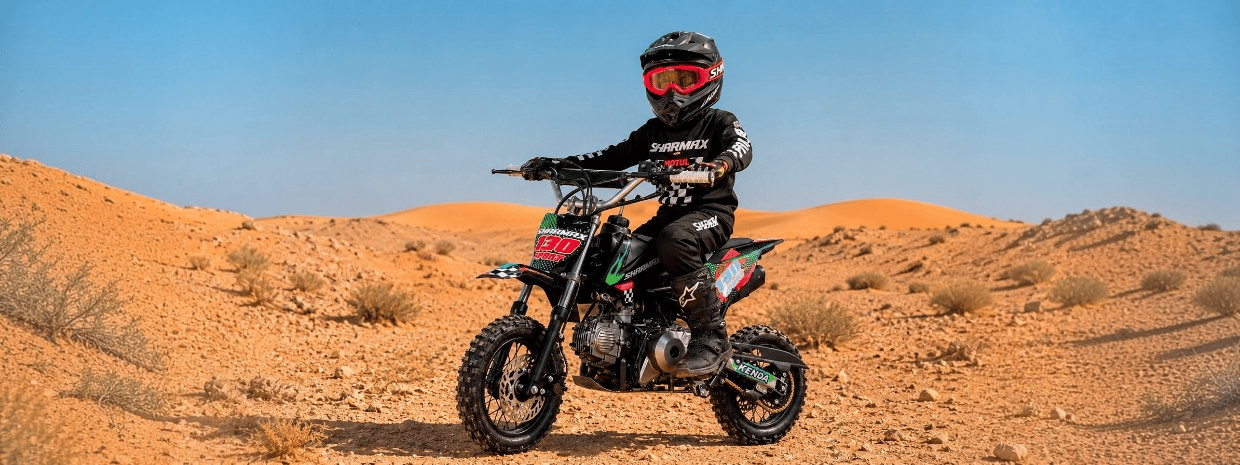
Ideally, when you look for an atv for sale, you should simultaneously look for an appropriate atv protective gear set. Unlike in a car with its closed cabin, when you are riding a quad bike, nothing protects you from outer impacts. Even a small tree branch can leave a deep cut if you hit it at 60 km/h. Basic safety gear and special rider's armour are meant to protect you from such injuries and more serious risks.
Any ATV safety checklist must include:
- protective helmet
- protective goggles or face mask
- gloves
- long-sleeve clothing or special riding gear with built-in protection
- motorcycle boots / riding boots
Look for protective gear in the off–road and enduro equipment section. Follow basic ATV helmet requirements: it should fit tightly, cover the full face, and be made of durable materials for off-roading. The best options are motocross/enduro helmets or so-called dual-sport models.
Why an ATV can roll over
Most ATV accidents happen because of wrong cornering techniques. When a quad bike turns, inertia pulls it to the outside of the corner. If the rider does not shift body weight correctly, the ATV can lift onto its side wheels and lose stability.
Key stability factors include:
- suspension stiffness
- correct weight distribution
- cornering technique
- riding speed
Soft suspension can increase the risk of rollover. If the shocks compress too much in a turn, the ATV may lean harder and feel less stable. That is why ATV riding safety also requires the right suspension setup.
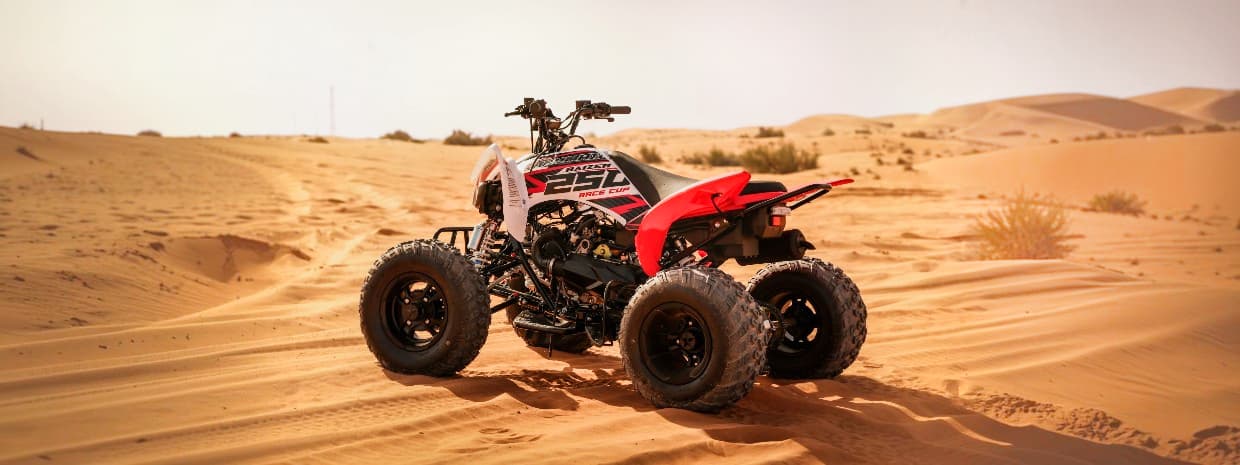
For example, models like the Sharmax Hummer 320 RX LTD are designed for controlled off-road riding, with a compact ATV format and enough ground clearance for uneven terrain.
But even with a well-built quad, the rider's technique still matters most.
Riding position and basic ATV safety tips
Be careful when turning
In contrast to their strong fun appeal, quad bikes are not meant for sharp cornering or aggressive turns at speed. The reason lies in their design: their center of gravity is higher than that of a passenger car, for example. Besides, their wheelbase is quite short and narrow compared to other vehicles.
If the rider enters a turn too sharply, the ATV can lift onto its side wheels and roll over, which may lead to serious injuries. So, you always need to be extra cautious when turning. The basic ATV riding rule is to slow down every time you change direction.
Shift your body in the right manner
In turns, always shift your body toward the inside of the turn. Turning right — lean right. Turning left — lean left. This is one of the main ways to avoid a rollover and an important part of ATV accident prevention. If you turn the handlebars one way but your body "flies" the other way, the ATV can easily lift onto its side wheels. That is exactly the moment when many rollovers happen. In practice, rolling over a modern ATV with good suspension is harder than it may seem. But it is better to stay safe than sorry and be aware of how your body shifts weight.
Keep your fingers on the brakes
One of the most important ATV safety tips is to always keep two fingers on the brakes. This helps you react quickly if something goes wrong. Why two fingers? With one finger, you may not press the brake hard enough. With three fingers, you may brake too sharply and lock the wheels, which only leads to sliding and losing control instead of safe braking.
The front brakes do most of the work, which is why many ATVs have stronger braking power at the front. If you open the throttle too sharply and the ATV starts pulling you back, your fingers on the brake can help you stop faster and regain control.
Use the right technique on climbs and descents
It is easy to get carried away with speed and lose your judgement. But even in that moment, remember one of the basic all terrain vehicle safety rules: an ATV is not made for extremely steep climbs. Therefore, avoid slopes steeper than 25 degrees.
When riding uphill, move your body weight forward and keep a steady speed. Do not make sharp throttle moves or sudden jerks. Leaning forward helps reduce the risk of the ATV tipping backward, which often happens when the rider leans back and the center of gravity shifts too far behind.
When riding downhill, stay straight and move your weight toward the rear of the ATV. Keep the speed low and use the brake gently. Do not rush the descent and do not turn sharply on the slope.
Adjust to different surfaces
ATV riding rules have their nuances when the surface changes under your wheels.
Sand and dirt
A 200cc ATV can handle sand and dirt quite well, although sand is not as easy on a quad bike as it is on an enduro motorcycle. The ATV has wider wheels and a larger contact patch, but it is also heavier and reacts differently to soft ground.
The main rule is to use your body weight correctly. Keep the throttle smooth, avoid sudden braking, and do not fight the handlebars too hard. If the front wheels start digging into sand, shift your weight slightly back and keep the ATV moving steadily.
Mud
Mud is tricky because traction changes every few meters. Avoid sudden throttle moves, because spinning wheels dig deeper instead of moving you forward.
For muddy sections, enter slowly, keep a steady line, and do not stop in the deepest part if you can avoid it. If the ATV starts slipping, reduce speed and let the tires find grip again. After riding through mud, check the brakes, radiator area, chain, and suspension parts, because wet dirt sticks everywhere.
Water
If you decide to cross water paths, first check the depth and the strength of the current. Do not enter water at speed, because a splash can reach places where water should not go.
Rear-wheel-drive ATVs should usually not go deeper than the footrests, sometimes slightly higher, depending on the model. The air intake is often located near the seat level, so deep water crossings are not recommended. For serious water obstacles, it is better to choose a 4WD model with a snorkel, such as the Sharmax Spyder 1100.
More ATV riding safety tips: use common sense
- Start with the simple routes that you already know. Do not rush to conquer steep slopes right off the bat. Build up your confidence gradually. Most trails for enduro bikes are also suitable for 200cc quads, so it makes sense to start there.
- Never get behind a quad when you are drunk. Even a bit of alcohol can cloud your judgment. This is not only about your personal safety but also about the safety of all the people around you: your fellow riders and passengers.
- Avoid riding alone. It's better to have a companion who can help you out if something goes wrong.
- When the route is unfamiliar, try to keep speed down and avoid sharp moves. Check the route before the ride, study the terrain, and choose slopes that match your skill level.
- Be careful on slippery roads, as you may lose control easily.
- If you feel that you are completely losing control and the ATV is already sliding away, do not try to "fight" an uncontrollable machine with your body. If there is no way to regain control, just dismount and jump off the ATV as safely as possible.
- This is exactly why proper gear matters. In full protective equipment, getting clear of the ATV can be safer than trying to hold onto a machine that is already going over.
Final take: safe riding can also be fun
Ideally, it would be great if you could take a few riding lessons with an instructor before riding on your own. Master the skill of shifting your body weight and refrain from speeding, at least while you are still new to the task.
We hope our ATV safety tips were useful and also inspiring enough for you to take the quad out of the garage and head for new adventures safely. Remember – controlled fun is still fun but with less risk and more good memories.