Cruiser motorcycle fuel consumption and range: a practical UAE guide
Learn how much fuel cruiser motorcycles use in the UAE, calculate riding range and monthly petrol costs, and compare Sharmax RR 250, RR 351, RR 661 Ultra, and RR 801 V Ultra models for everyday commuting and longer journeys.
10 Nov 2026
How much fuel does a cruiser motorcycle use, and how far can you ride before refueling? Smaller cruisers can consume around 3 liters per 100 km, while more powerful models may use 4–6 liters or more, depending on riding conditions. The real answer depends on engine design, tank capacity, speed, and how you ride. This guide explains how to estimate fuel expenses, calculate riding range, and choose from cruiser motorcycles for sale in the UAE without relying on misleading averages.
How much fuel does a cruiser motorcycle use?
Cruiser motorcycle fuel consumption is usually measured in liters per 100 kilometers (L/100 km). The lower the figure, the less fuel the motorcycle needs to cover the same distance.
For example, a motorcycle consuming 3 L/100 km uses 3 liters of petrol to travel 100 km. Another consuming 5 L/100 km needs 5 liters for the same journey.
That difference becomes more noticeable when you're commuting regularly or covering longer distances.
Typical fuel consumption by motorcycle size
The following ranges provide a general starting point for comparing road motorcycles, including cruiser-style models.
| Motorcycle category | Illustrative fuel consumption |
|---|---|
| Smaller cruisers, approximately 250–300cc | 2.5–4.0 L/100 km |
| Mid-sized cruisers, approximately 300–600cc | 3.5–5.5 L/100 km |
| Larger or higher-performance cruisers 600-1000cc | 5.0–8.0 L/100 km or more |
These are broad planning ranges, not measured values for individual models. Engine design, gearing, weight, and riding conditions can produce significant differences, even between motorcycles with similar displacement.
For instance, Sharmax has published an approximate consumption figure of 3.0 L/100 km for the RR 250 and a broader estimate of 4.0–5.0 L/100 km for the RR 661 Ultra.
Those figures are useful for initial budgeting, but you should still confirm the specific model's documented consumption and the conditions under which it was measured.
Why engine size doesn't tell the whole story
It's tempting to assume that a motorcycle with a larger engine always consumes more petrol.
In practice, engine size is only one factor.
A motorcycle's gearing, fuel-injection system, weight, and aerodynamic characteristics also affect efficiency. A larger engine operating smoothly at a steady speed may sometimes compare favorably with a smaller engine working harder under demanding conditions.
The more useful question is not simply How many cubic centimeters does it have? but How much fuel does it use on the routes I actually ride?
How far can a cruiser motorcycle travel on one tank?
A cruiser's riding range depends on two numbers: fuel-tank capacity and fuel consumption.
You can estimate the theoretical distance using a simple calculation:
Riding range (km) = Fuel-tank capacity (L) ÷ Fuel consumption (L/100 km) × 100
For example, imagine a motorcycle with a 15-liter fuel tank.
| Fuel consumption | Theoretical range with a 15 L tank |
|---|---|
| 3.0 L/100 km | 500 km |
| 4.0 L/100 km | 375 km |
| 5.0 L/100 km | 300 km |
| 6.0 L/100 km | 250 km |
These examples show why two cruisers with the same tank capacity can have noticeably different riding ranges.
However, the results assume that the entire 15 liters can be used. That's not how you should plan a real journey.
Why actual riding range is shorter
You should leave a fuel reserve rather than waiting until the tank is almost empty.
For example, if you plan to use only 12 liters from a 15-liter tank, leaving approximately 3 liters as a planning reserve, the calculation changes.
At 4 L/100 km:
12 ÷ 4 × 100 = 300 km
That's 75 km less than the theoretical full-tank range.
The 3-liter reserve here is an illustrative planning allowance, not a required reserve for every motorcycle.
Your actual stopping point should depend on the bike's fuel system, the owner's manual, available petrol stations, and your route.
For longer trips through less populated areas of the UAE, it's sensible to plan fuel stops in advance rather than relying entirely on the dashboard's range estimate.
What affects cruiser fuel consumption in the UAE?
Two riders using the same motorcycle can record different fuel-consumption figures. Here's why.
City traffic and frequent stops
Urban commuting often involves repeated acceleration, braking, and idling.
For example, a 15 km ride through busy streets with traffic lights may consume more fuel per kilometer than a 15 km ride at a steady speed on a clear road.
This is especially relevant during peak-hour commuting in Dubai, Abu Dhabi, and Sharjah.
Smooth acceleration, maintaining appropriate tire pressure, and avoiding unnecessary idling can help reduce fuel use.
Highway speed, wind, and passenger weight
Cruisers are frequently used for longer paved-road journeys, but riding speed has a direct effect on fuel consumption.
As speed increases, aerodynamic resistance rises. Maintaining a substantially higher speed can require considerably more engine power, even on a flat road.
A passenger or additional luggage also increases the load the motorcycle must carry, particularly during acceleration and uphill riding.
If you regularly travel between emirates, compare fuel consumption at realistic cruising speeds rather than relying only on a general economy figure.
Heat and motorcycle condition
UAE temperatures make regular maintenance particularly important, especially for motorcycles used daily.
Correct tire pressure helps reduce unnecessary rolling resistance. A dirty air filter, neglected drivetrain, or poorly maintained engine can also affect performance and fuel economy.
Check the tire pressure recommended for your specific motorcycle, preferably when the tires are cold.
Avoid assuming that unusually high fuel consumption is simply a result of hot weather. A sudden change may indicate a maintenance issue that deserves inspection.
How much does cruiser motorcycle fuel cost per month?
You don't need a complicated ownership calculator to estimate your monthly petrol expenses.
Start with three numbers:
- How many kilometers you ride each month.
- Your motorcycle's average consumption in L/100 km.
- The price per liter of the petrol grade recommended for your motorcycle.
The calculation is:
Monthly fuel cost = Monthly distance ÷ 100 × Fuel consumption × Petrol price
Suppose you ride 800 km in a month and use an illustrative petrol price of AED 3.00 per liter.
| Average consumption | Fuel used per month | Monthly cost |
|---|---|---|
| 3 L/100 km | 24 L | AED 72 |
| 4 L/100 km | 32 L | AED 96 |
| 5 L/100 km | 40 L | AED 120 |
| 6 L/100 km | 48 L | AED 144 |
The difference between 3 and 6 L/100 km is AED 72 per month, or AED 864 over 12 months, at this assumed mileage and petrol price.
These figures are budgeting examples, not current UAE pump prices or measured results for individual motorcycles. Actual fuel prices change, and your monthly mileage may vary.
You can adjust the calculation using your own driving distance and the current petrol price.
Is fuel the biggest ownership expense?
Not necessarily.
A cruiser also requires scheduled maintenance, engine oil, tires, brake components, insurance, and potentially registration or financing expenses.
For a smaller motorcycle used mainly for commuting, petrol may represent a manageable share of monthly running costs. Larger or frequently ridden models can have higher overall expenses, but fuel consumption is only one part of the calculation.
For a broader ownership-cost breakdown, see the guide to the cost of owning a 250cc motorcycle in the UAE.
How can you measure your motorcycle's real fuel consumption?
If you already own a cruiser, measuring its actual fuel use gives you a more useful answer than relying on a general estimate.
A simple fill-to-fill method
- Fill the tank consistently. Refuel using the same method and stop point each time.
- Reset your trip meter. Record the starting distance.
- Ride normally. Include the commuting or weekend conditions that represent your usual riding.
- Refuel again. Record the number of liters added and the distance traveled.
- Calculate consumption. Divide liters added by kilometers ridden and multiply by 100.
For example, if your motorcycle uses 9 liters over 225 km:
9 ÷ 225 × 100 = 4.0 L/100 km
Repeat the process over several refueling cycles. A single measurement can be affected by traffic, inaccurate refueling levels, or an unusually demanding journey.
Once you know your average consumption, combine it with your motorcycle's fuel-tank capacity to estimate when you should plan your next fuel stop.
Which Sharmax cruiser motorcycle should you consider?
Sharmax offers several cruiser-style motorcycles in the UAE, from approachable everyday models to more powerful options for experienced riders.
Sharmax RR 250
– for economical daily riding
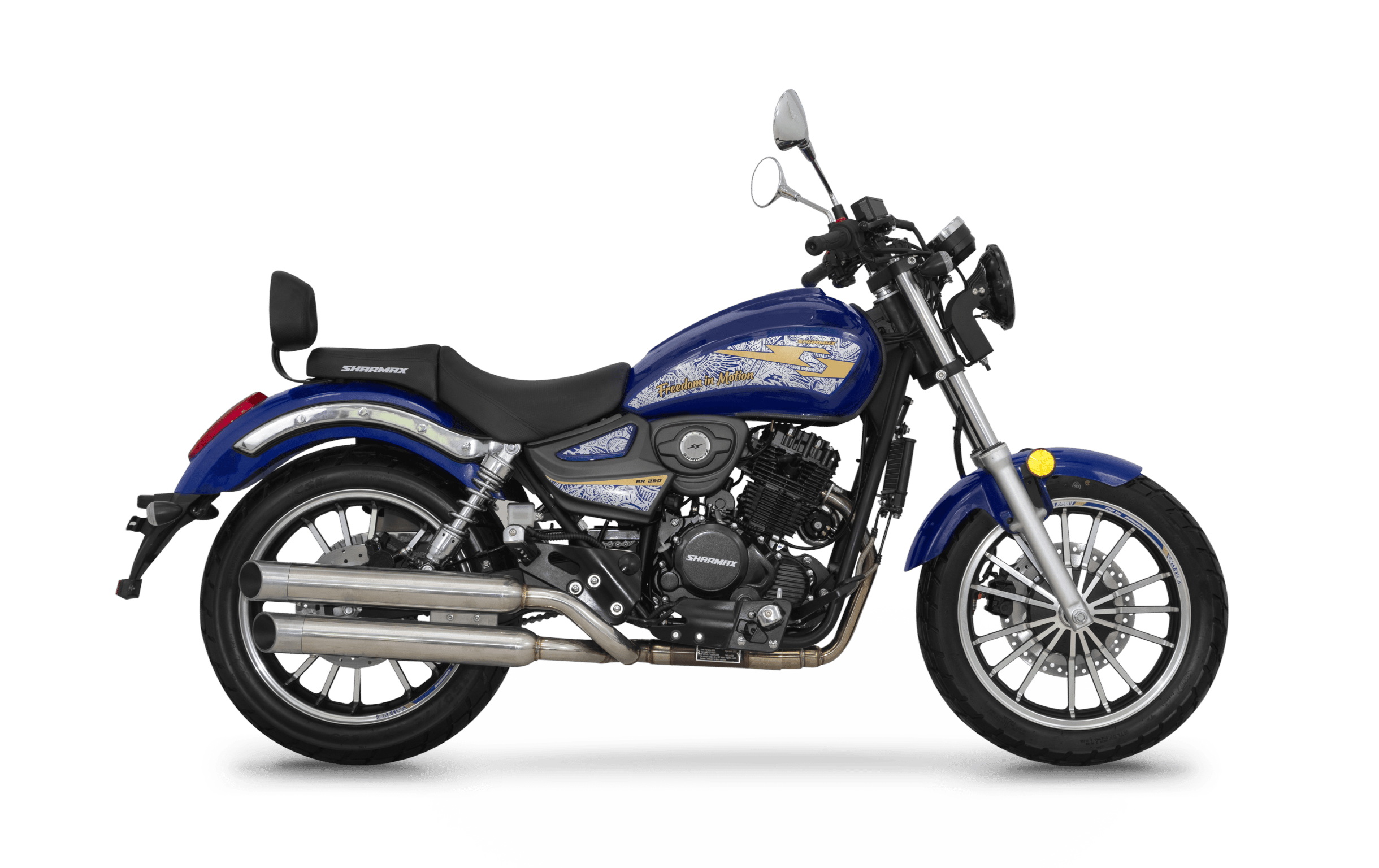
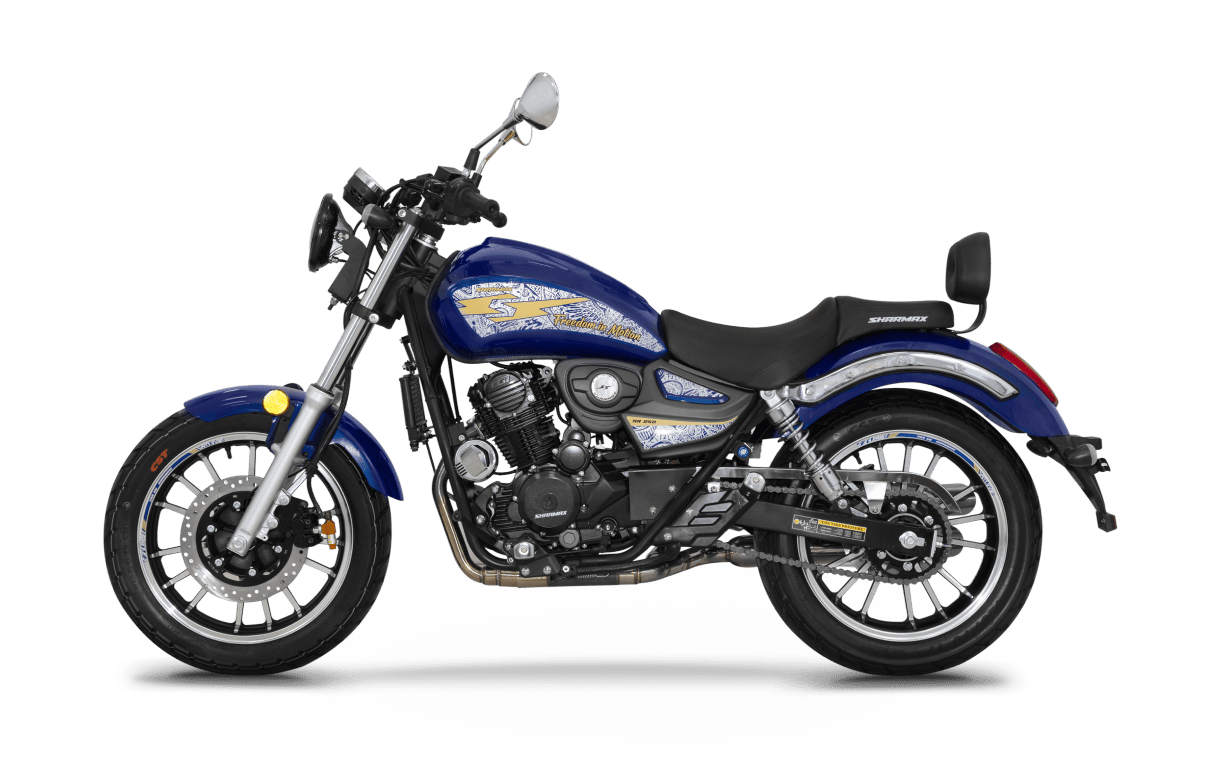
The Sharmax RR 250 is a practical starting point if you like cruiser styling but primarily need a motorcycle for commuting and shorter trips.
Its smaller engine and approachable character suit riders who value manageable running costs. Sharmax has published an approximate fuel-consumption figure of 3.0 L/100 km for this model, making it worth considering when fuel efficiency is a priority.
That doesn't mean every RR 250 will achieve the same figure. Traffic, speed, and maintenance can change the result.
Who is it for? Daily commuters, newer cruiser riders, and those looking for an economical entry into road motorcycles.
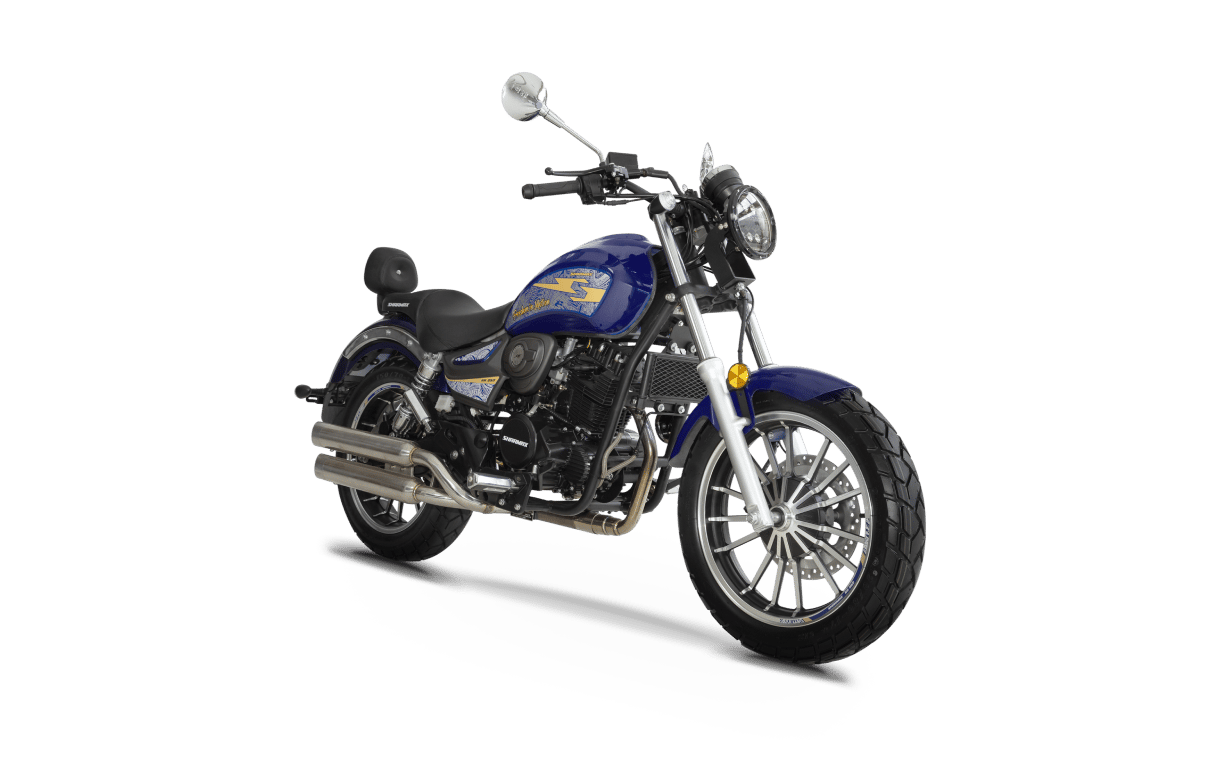
Curb weight (kg)
150
Displacement (cc)
249
Seat height (mm)
720
Power (hp)
21
Fuel tank capacity (L)
16
Gearbox
Manual, 6-speed
Sharmax RR 351
– for everyday comfort and weekend routes
The Sharmax RR 351 is suited to riders who want a relaxed cruiser experience without moving straight to a larger, more demanding motorcycle.
Its road-oriented design and low seating position make it appealing for regular journeys, while its engine offers a practical step up from smaller-displacement models.
For buyers concerned about fuel expenses, the important next step is to confirm this specific model's consumption figure and tank capacity rather than assuming it uses the same amount of petrol as the RR 250.
Who is it for? Riders who combine commuting with relaxed weekend journeys and want an approachable cruiser with additional performance.
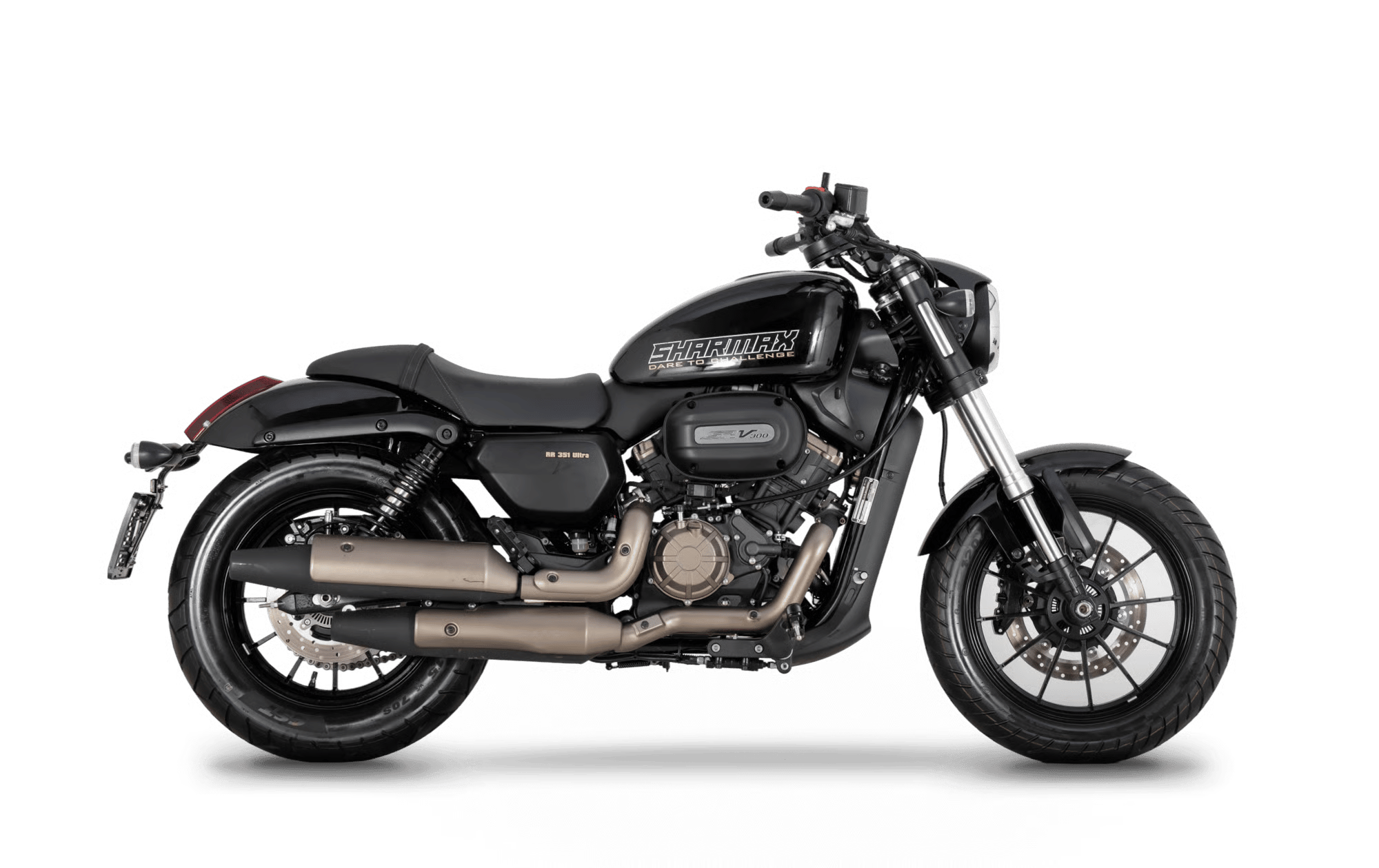
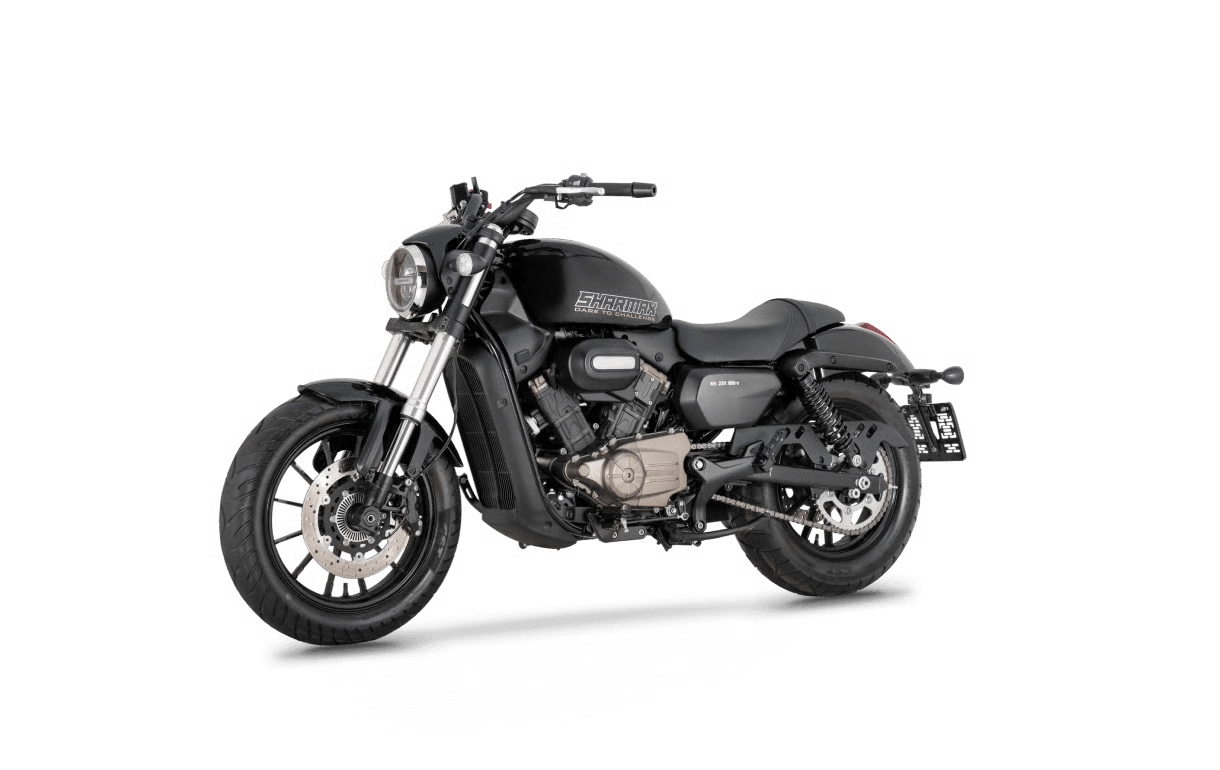
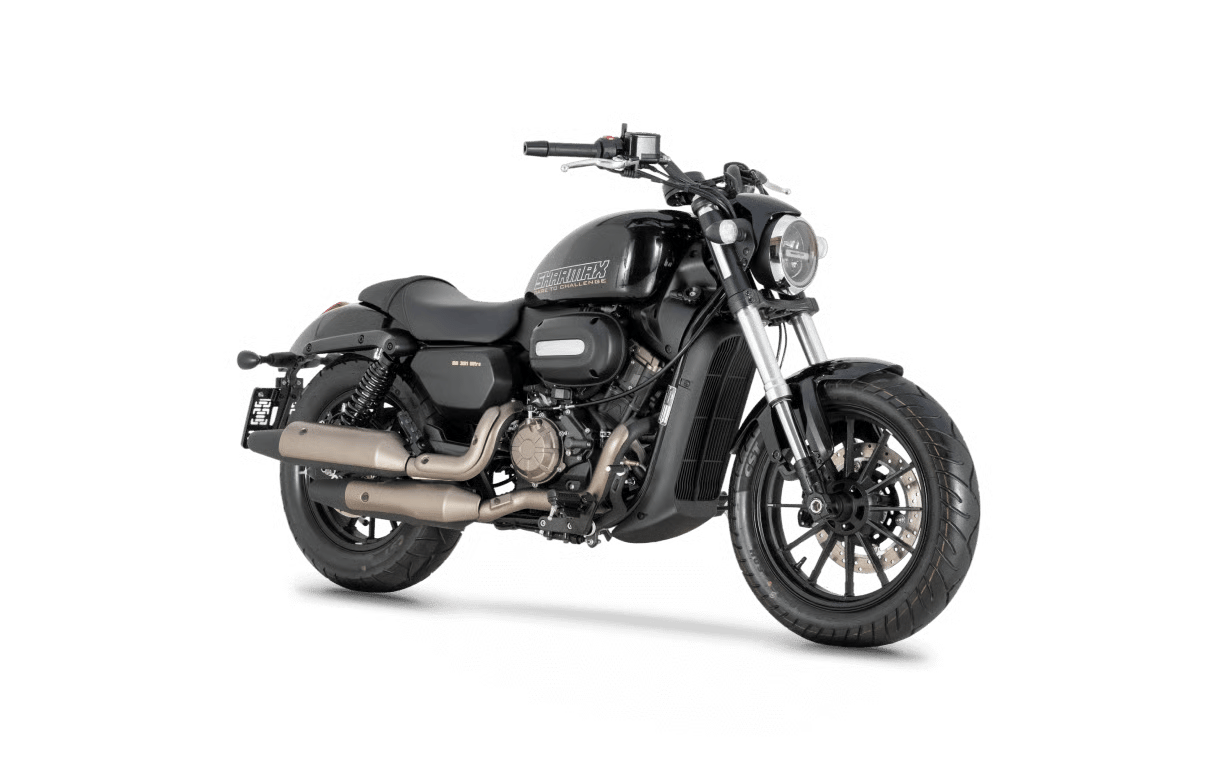
Displacement (cc)
296
Power (hp)
30
Gearbox
6-speed
Fuel consumption (L/100 km)
3.8
Fuel tank capacity (L)
13.5
Seat height (mm)
700
Curb weight (kg)
164
Sharmax RR 661 Ultra
– for balanced performance and fuel use
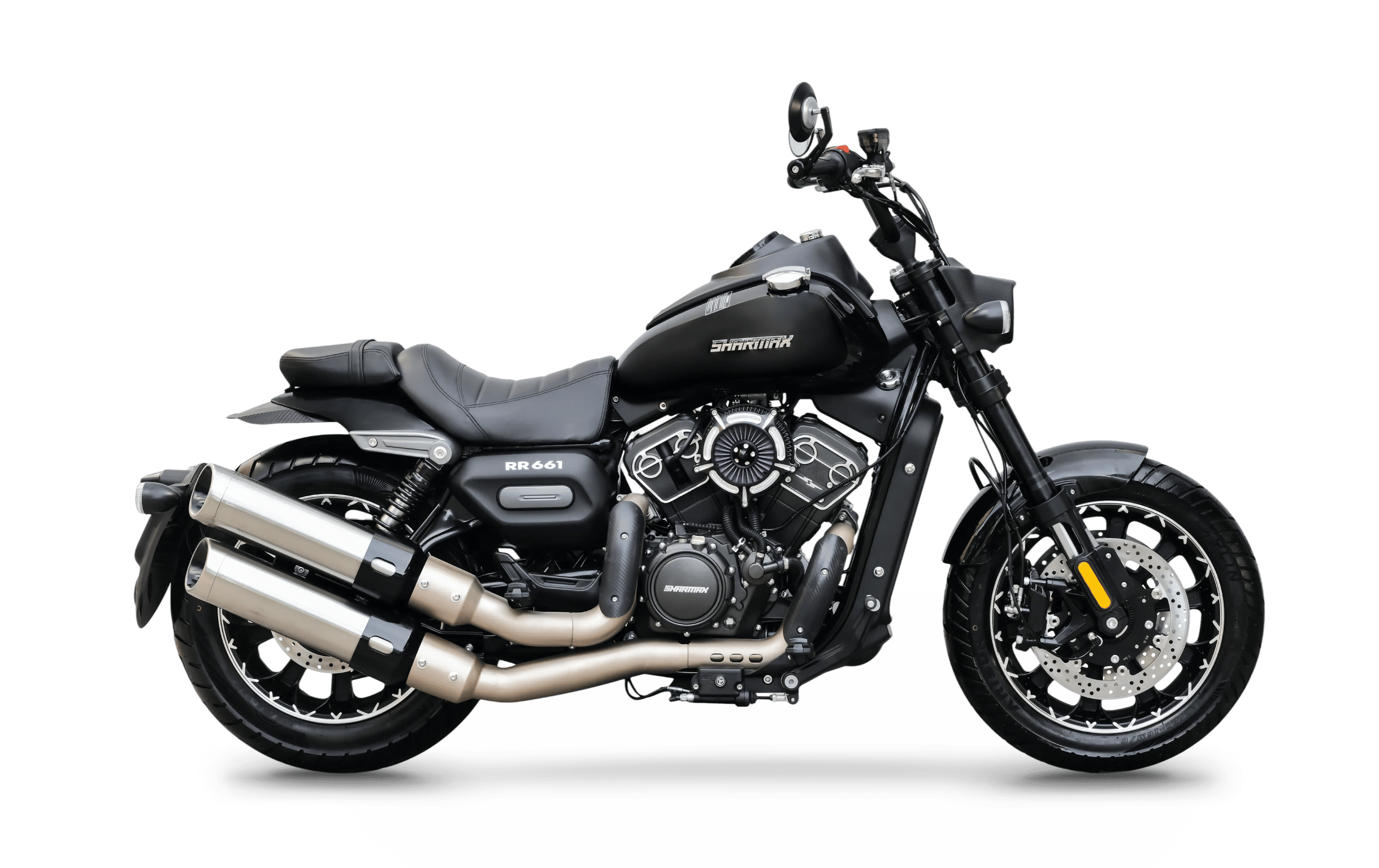
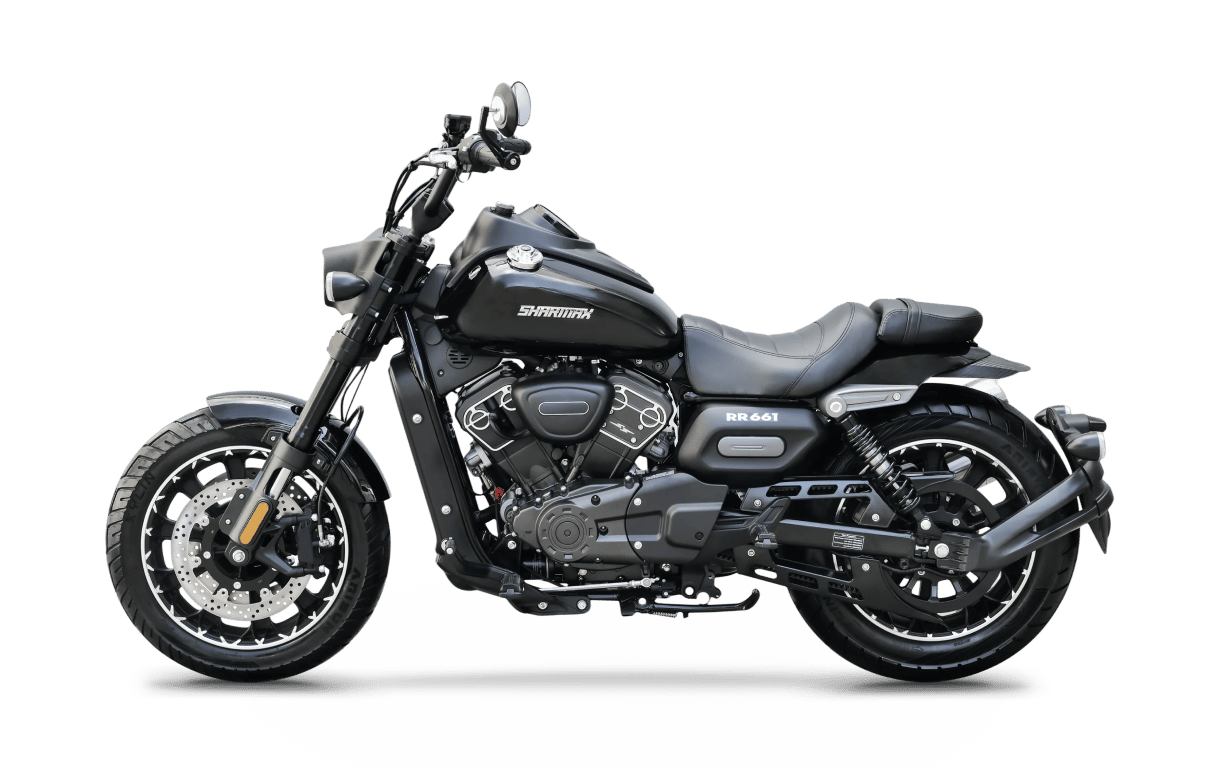
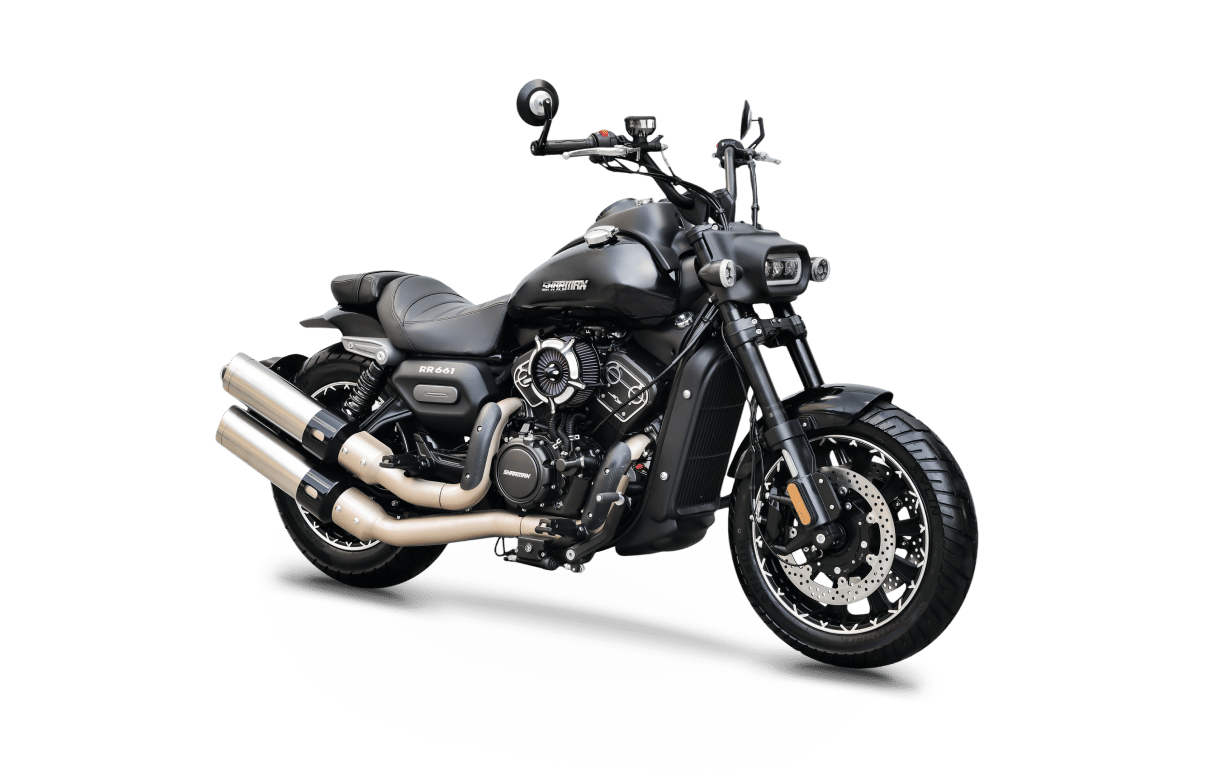
The Sharmax RR 661 Ultra is an interesting option for riders who want stronger cruiser performance without choosing a motorcycle solely for maximum engine size.
Its V-twin engine delivers a different riding character from a smaller commuter motorcycle, with useful torque for relaxed road travel and longer routes.
Sharmax has published an approximate consumption range of 4.0–5.0 L/100 km for this model. That provides a helpful budgeting reference, although actual consumption should be verified under your riding conditions.
Who is it for? Riders with some experience who want a balance of cruiser character, road performance, and manageable fuel expenses.
Power (hp)
36
Curb weight (kg)
180
Displacement (cc)
465
Seat height (mm)
720
Fuel tank capacity (L)
18
Gearbox
Automatic
Sharmax RR 801 V Ultra
– for more experienced cruiser riders
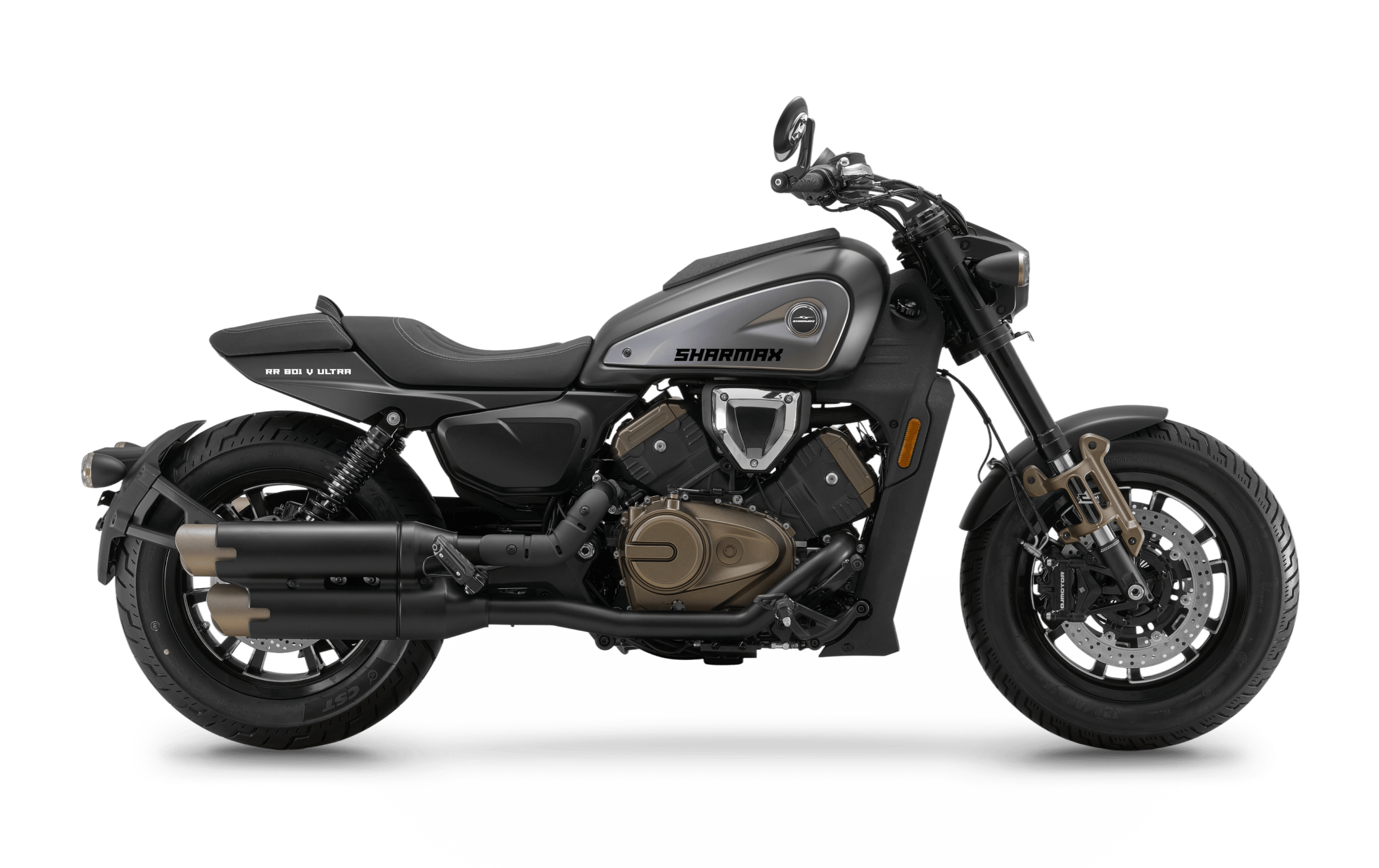
The Sharmax RR 801 V Ultra is aimed at riders who prefer a more substantial motorcycle for regular road use and weekend journeys.
Its larger engine and comfort-oriented character make it attractive for riders who value performance and a relaxed cruiser riding style.
However, buyers should not estimate fuel consumption from displacement alone. Confirm the exact tank capacity, model-specific consumption data, and expected running costs before making a comparison.
Who is it for? Experienced riders who prioritize a substantial cruiser experience and are comfortable balancing performance with ownership expenses.
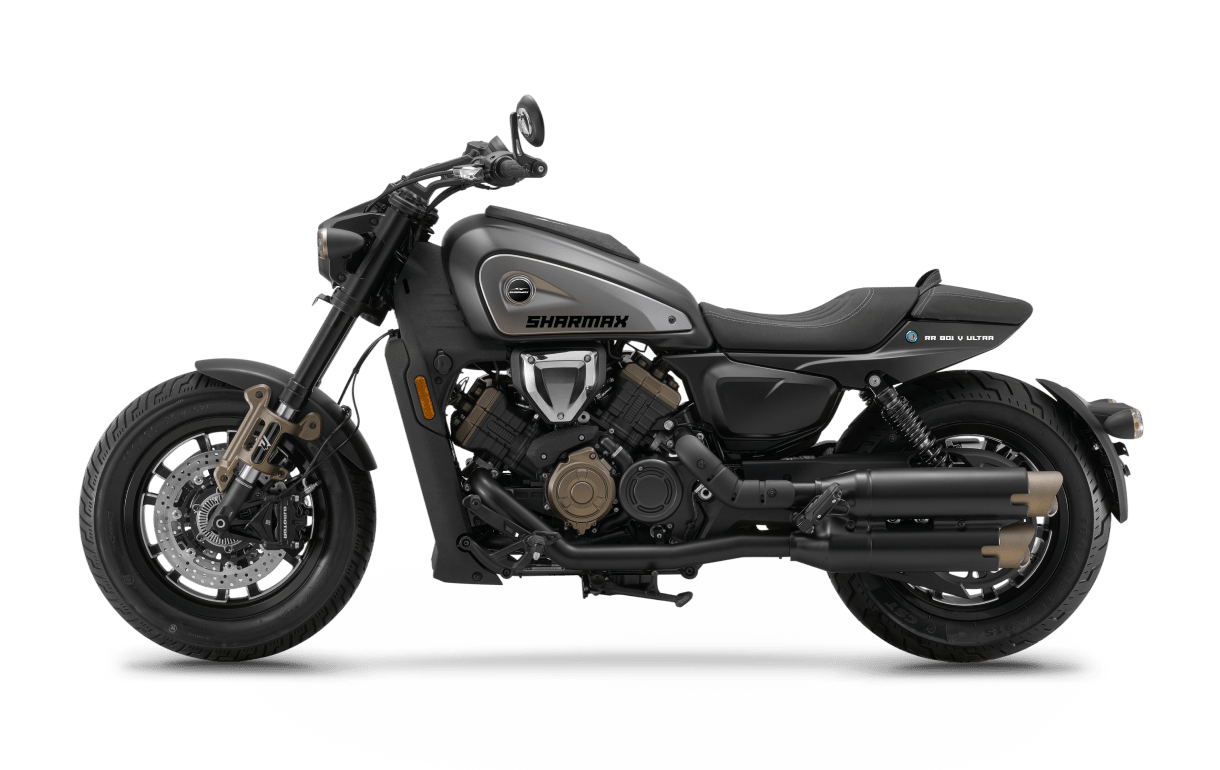
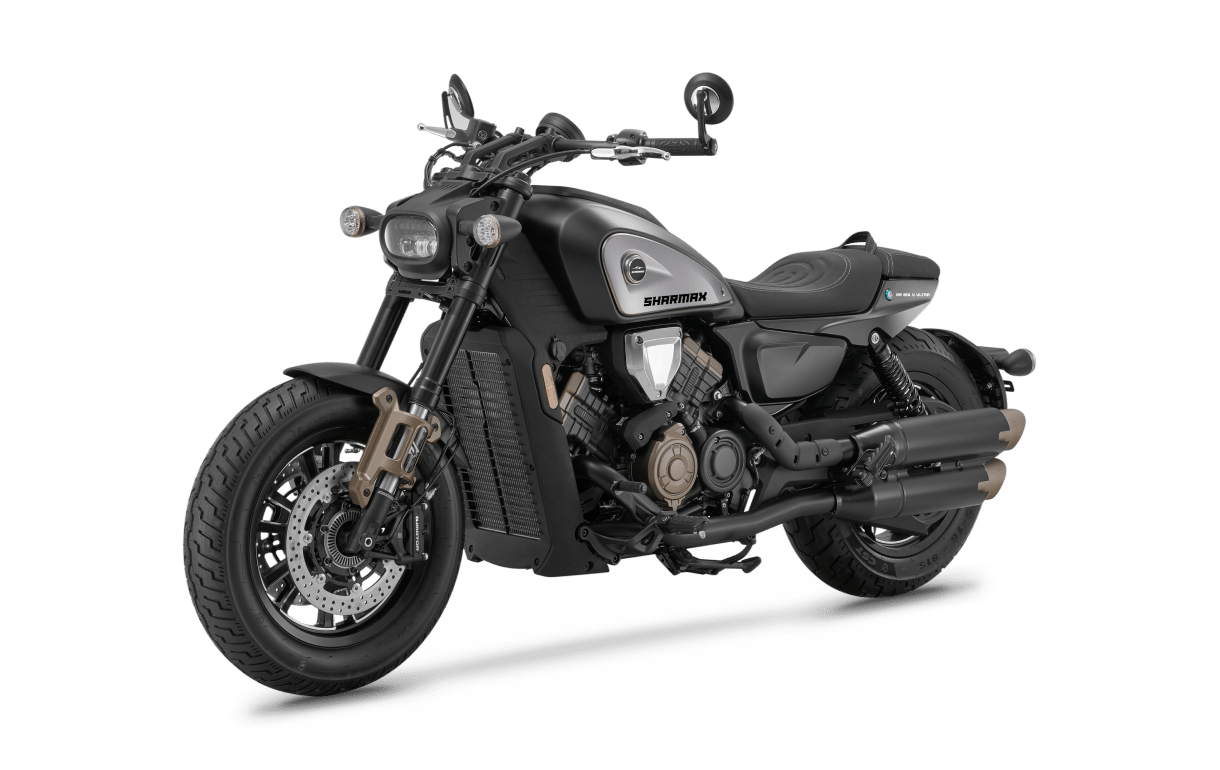
Power (hp)
68
Curb weight (kg)
228
Displacement (cc)
561
Seat height (mm)
720
Fuel tank capacity (L)
16
Gearbox
Manual, 6-speed
How to choose a cruiser based on your riding habits
The most economical motorcycle on paper isn't always the best motorcycle for your needs.
A useful way to decide is to consider where you spend most of your riding time.
For daily city commuting, look for manageable weight, a comfortable seating position, predictable throttle response, and low fuel consumption. A smaller cruiser such as the RR 250 may be a sensible starting point.
For commuting and regular weekend rides, comfort and additional performance may become more important. The RR 351 offers a different balance of everyday usability and road capability.
For longer highway journeys, compare cruising comfort, engine response, tank capacity, and passenger needs. The RR 661 Ultra and RR 801 V Ultra may appeal to riders seeking a more substantial road motorcycle.
Regardless of the model, ask for current specifications and consider arranging a test ride. A comfortable riding position and confident handling are just as important as the number of kilometers you can travel on a tank.
Final thoughts
Cruiser motorcycle fuel consumption varies with engine design, riding conditions, and maintenance. The most useful approach is to calculate your expected monthly fuel costs, measure actual consumption when possible, and plan refueling stops with a reasonable reserve. That gives you a clearer picture of ownership than a single economy figure.
If you're comparing motorcycles for commuting or weekend travel, explore the Sharmax cruiser motorcycle range in the UAE to find a model that matches your preferred riding style, comfort requirements, and budget.