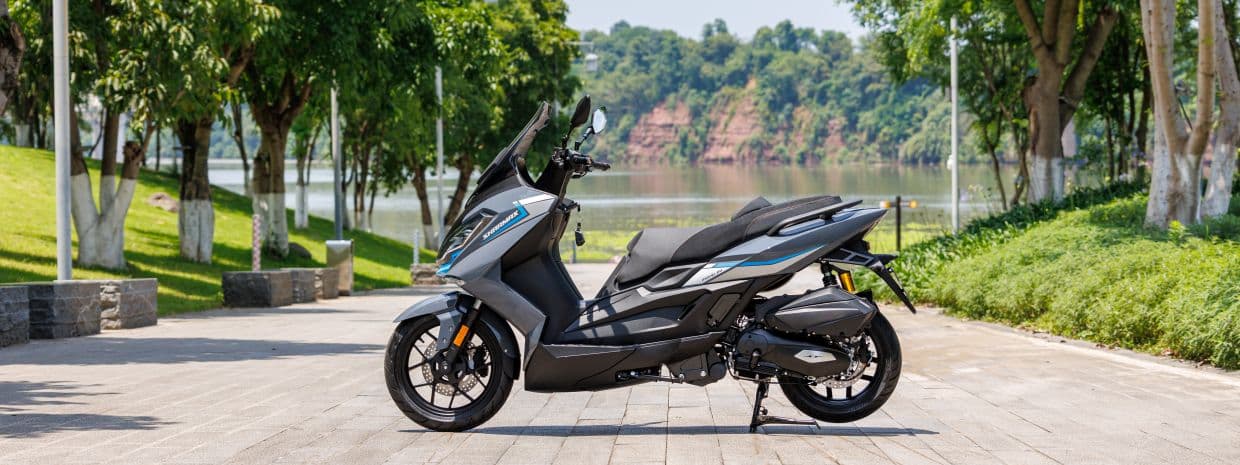
On vs off-road motorcycles: which is right for you in Qatar
Compare on-road and off-road motorcycles in Qatar. Learn the key differences in performance, comfort, handling, and features to choose the right bike.
02 Oct 2026
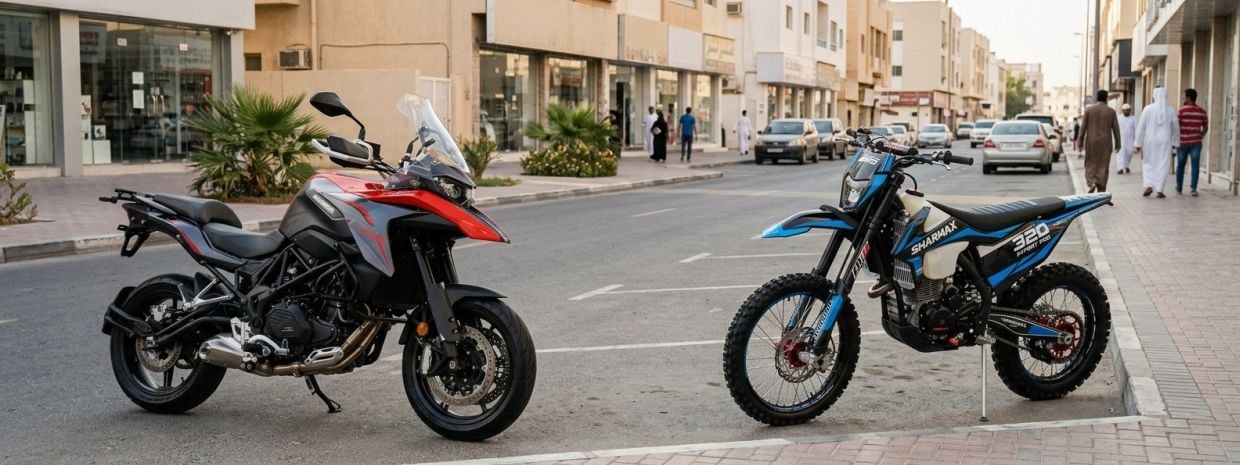
Both on-road and off-road motorcycles have their appeal and, as their names suggest, different purposes. As a city dweller, you might be familiar with the first group which is very versatile and practical in itself. Why consider an off-road bike at all? The answer is the landscape that Qatar offers. With its vast desert sands, it presents a ready playground for off-road lovers. So, what should you choose among all those motorcycles for sale? See the breakdown below to understand which option makes more sense for you in Qatar.
Difference between on-road and off-road motorcycles
The biggest difference between on-road vs off-road motorcycles is their construction and chassis setup. By merely looking at the two, you will instantly see a difference in their exterior.
Design and construction
On-road motorbikes are stable and comfortable, often heavy. Their off-road colleagues are slim and agile, mostly tall and far from being comfortable.
Body width: road motorcycles are generally wider because they may include a larger fuel tank, wider seat, fairings and passenger space. Off-road bikes use a narrower body so the rider can move more freely.
Ground clearance: road motorcycles often sit around 170–220 mm, while off-road bikes can reach roughly 300–360 mm.
Weight: road motorcycles are usually heavier because of larger engines, tanks and road equipment. Off-road motorcycles are kept lighter to make direction changes and recovery easier on sand or rough ground.
For example, the GL 570 Ultra touring bike has 190 mm of ground clearance and a curb weight of 235 kg. An off-road model such as the Expert Pro 450 enduro uses much higher clearance of 350 mm and a considerably lighter weight of just 125 kg.
Engine performance
The biggest difference is not simply how powerful the engine is, but how that power is delivered and used.
Engine size: Enduro bikes stay small on purpose. Entry-level models sit around 250–300cc, and even the more serious enduros rarely go past 350–500cc — anything bigger gets unwieldy the second you're standing on the pegs over rocks or sand. On-road bikes don't have that ceiling. A supersport like the GP 881 Ultra pushes close to 800cc, because it's built to hold speed on a highway, not pick a line through terrain.
Throttle response: On an enduro, you want the power right there at low RPM — snapping the throttle open on a sand dune or a steep climb needs to translate instantly, or you stall or spin the rear wheel. Road bikes spread that power delivery out more, so acceleration feels smoother rather than abrupt, which is what you actually want at 120 km/h on the highway.
Gearing: Enduros mostly run 5-speed boxes with short, low ratios — built for crawling up an incline or picking through rocks, not for outright speed. Road bikes typically go 6-speed, with ratios stretched across a much wider range. The RST 750 Ultra is a good example — 698cc, 73.4hp, 6-speed — it gets off the line hard and still has enough gearing left over to sit comfortably at highway speed without the engine screaming.
Suspension, wheels and tires
This is one of the clearest technical differences between an on-road motorcycle and off-road motorcycle.
Suspension: road bikes use shorter suspension travel because they ride on smoother surfaces and need more stable braking and cornering. Off-road motorcycles use much longer travel, often around 250–280 mm at both ends, so the wheels have more room to move over ruts, rocks, and jumps.
Wheels: road motorcycles often use smaller cast or alloy wheels. Sizes around 16–17 inches are common for stable handling on asphalt. Off-road bikes usually use larger spoked wheels, often 21 inches at the front and 18 inches at the rear. The larger front wheel rolls over holes and obstacles more easily, while spokes can handle repeated impacts better than many road-style cast wheels.
Tires: road tires have a smoother tread and a wider contact area for grip on asphalt. Off-road tires use deeper, more widely spaced tread blocks so they can bite into sand, dirt, and loose ground.
The difference is easy to see in the actual tire sizes. The RR 551 Ultra uses a 130/90-16 front tire and 150/80-16 rear tire. The 16-inch wheels are relatively compact, while the wider rear tire gives the bike a larger contact patch on the road and helps with stability under acceleration.
The Power Max 250 uses a 80/100-21 front tire and 110/90-18 rear tire. The 21-inch front wheel is much larger in diameter and helps the bike roll over rough ground more easily. The narrower tires also make the bike easier to place and control on loose terrain, while the 18-inch rear wheel gives enough sidewall and grip for off-road riding.
Speed and acceleration
This part of the on-road and off-road motorcycle comparison is straightforward: road bikes are built for higher speeds, while off-road bikes are built to accelerate and stay controllable on loose ground.
Top speed: regular street motorcycles commonly reach around 110–160 km/h, while supersport models can go much higher – up to 250 km/h. The GP 881 Ultra, for example, produces 95 hp and reaches about 240 km/h.
Off-road speed: enduro bikes usually work at lower speeds because outright top speed matters less on technical sections. Even a high-performance model such as the Sharmax Expert Pro 450 tops out at about 160 km/h, despite its 45 hp output.
Acceleration: road bikes keep building speed over a wider range. Off-road bikes use shorter gearing and lighter construction to respond quickly at lower speeds.
So road motorcycles have the clear advantage in maximum speed. Off-road bikes focus more on usable acceleration and control where the surface limits how fast you can actually ride.
Handling and control
The handling difference is not only in the motorcycle itself. Off-road riding also asks much more from the rider’s body.
Riding position: enduro bikes usually have a higher seat and a more upright handlebar position. Full-size enduro seats are often around 850–950 mm high, while many road motorcycles sit closer to 730–820 mm. The extra height gives the rider more room to stand on the footpegs and move forward or backward over rough terrain.
Body movement: on a road bike, the rider can stay seated for most normal riding. On an enduro bike, the rider often stands up, shifts weight forward on climbs, moves back on descents, and loads one footpeg or the other to help the bike turn or keep traction.
Low-speed control: off-road bikes are usually lighter and narrower, which makes these movements easier. Road bikes are more stable when ridden seated and at higher speeds, but they need less active body movement in normal use.
Thus, the RR 801 V Ultra cruiser has a seat height of 720 mm, which keeps the rider relatively low and makes stops easier. Enduro motorcycles usually have 850 mm or higher such as the Expert Pro 320 with its 960 mm seat height.
Fuel consumption and maintenance requirements
Fuel use and maintenance needs depend a lot on the riding style, which is understandably more aggressive on off-road bikes.
Fuel consumption: many Sharmax on-road motorcycles use around 3–5 L/100 km, while larger high-performance road models can move toward 6–8 L/100 km. For example, the RST 351 uses roughly 3.2–4.0 L/100 km, while the larger GP 881 Ultra can reach around 5.0–6.5 L/100 km.
Off-road use: smaller enduro engines can also be economical, but riding in sand or on steep terrain can raise consumption because the engine works harder at lower speeds. A Sport 250, for example, has been measured at around 4 L/100 km in mixed off-road use.
Maintenance: road motorcycles mainly follow mileage-based service schedules. Off-road bikes often use hour-based maintenance, because engine load matters more than distance. A short ride in deep sand can put more stress on the engine, air filter, chain, brakes, and suspension than a much longer road ride. For enduro use, basic checks are also recommended after every ride, especially in dusty conditions.
On-road motorcycles: pros and cons
Advantages
- Built for tarmac — better fuel economy, smoother highway manners, less vibration on long stretches.
- Versatility: On-road bikes work equally well for enjoyable city and highway rides, long-distance touring, and relaxed cruising between the cities.
- Wider tires and lower center of gravity mean more stable braking and cornering in city traffic
- Easier to find parts, servicing, and insurance for — dealerships stock road-focused models far more than off-road ones.
- Generally more comfortable for a daily commute: better seating position, windshields, sometimes even luggage options.
Possible drawbacks
- Struggle badly on gravel, sand, or poorly maintained roads — not ideal if your route includes unpaved stretches or construction detours.
- Low ground clearance means potholes and speed bumps hit harder than they should.
- Less forgiving if you drop it at low speed — road bikes are heavier and pricier to fix cosmetically.
Off-Road Motorcycles: Pros and Cons
Advantages
- Handle rough terrain, sand, and gravel with ease — useful if you're commuting through areas with unpaved roads or construction zones
- Higher ground clearance and long-travel suspension absorb potholes and speed bumps that would rattle a road bike
- Lighter overall weight makes them easier to maneuver at low speed and easier to pick up if dropped
- More forgiving for beginners in terms of low-speed control and drop tolerance
Possible drawbacks
- Most off-road models aren't road legal — no registration, no plates, which means you can't ride them in the city at all, let alone commute on one.
- You'll need a way to transport it to wherever you're actually riding — a truck, a trailer, or a roof rack, since you can't just ride it there yourself.
- Poor high-speed stability and wind protection — not built for sustained highway riding.
- Worse fuel economy and more frequent servicing under daily-commute mileage.
- Knobby tires wear fast on tarmac and reduce grip in hard braking on paved roads.
- Often less comfortable for longer rides — upright riding position, minimal seat padding, no wind protection.
On-road or off-road motorcycle: which one should you choose?
If you are deciding which is better: on-road or off-road motorcycle in Qatar, think about where you will ride most often and how much you want to spend not only on the bike, but also on maintenance.
When an on-road motorcycle is the better choice
- You need one bike for several jobs – commuting during the week, weekend rides, and longer road trips.
- Your commute is mostly highway or paved city roads or daily inner-city traffic.
- You want a bike that's registered, insured, and legal to ride straight out of the dealership.
- You want lower ownership effort – road bikes usually follow kilometre-based service intervals and need less frequent cleaning and inspection than enduro bikes.
- You do not ride off-road regularly – if sand or trails are only an occasional idea rather than your main use, there is little reason to accept the extra maintenance and narrower use of a dedicated off-road bike.
When an off-road motorcycle is the better choice
An off-road motorcycle makes sense in a much narrower set of situations — mainly when riding itself, not commuting, is the actual goal:
- You're buying it specifically for desert trails, dune riding, or motocross tracks, not for getting to work.
- You already own a car or an on-road motorcycle for daily transport, and this is a dedicated weekend/hobby vehicle.
- You have a way to transport it to riding spots — a truck, trailer, or roof rack — since most off-road models aren't road-legal and can't be ridden there directly.
- You're prioritizing light weight and low-speed control over comfort, range, or highway stability.
- You accept higher maintenance costs: serious 450cc enduro models need more frequent attention to oil, filters, chains, valves, and suspension.
- You are aiming to develop off-road riding skills.
- You want to explore rough, remote areas that a road bike can’t handle.
Bottom line: if you're shopping on-road and off-road motorcycles for sale in Qatar with commuting as the primary use case, the on-road option is almost always the practical answer — the off-road category is built for a completely different job.
Sharmax Motors: both worlds under one roof
If you want to compare both categories in one stop, Sharmax brings on and off-road motorcycles for sale in Qatar together in one range.
In the on-road segment, you’ll find urban naked bikes and roadsters for daily use, sport and sport-touring models for riders who want sharper performance, and adventure and dual-sport motorcycles that sit somewhere between city riding and light off-road use.
On the off-road side, the range includes dedicated enduro and motocross bikes, along with kids’ and pit bikes, plus ATVs and buggies for riders who want to go beyond two wheels. Entry-level Sharmax off-road motorcycles start at around QAR 5,000.
Sharmax models, both on and off-road motorcycles, are covered by a three-year warranty and supported through the brand’s service centres. Instalment plans are also available through finance partners. This can make the initial purchase easier to manage and gives owners one place to turn to for parts, servicing, and maintenance.