Motorcycle Fuel Consumption: How to Compare
Understand what affects motorcycle fuel consumption and how to measure your own. Compare riding conditions, engine use, weight and running costs.
29 Aug 2026
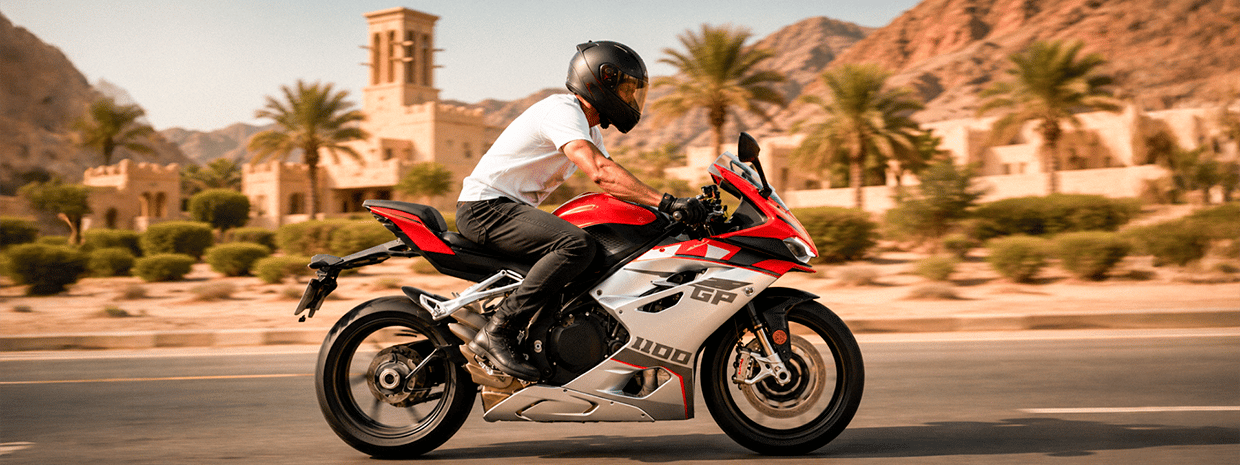
A motorcycle offers agility and road enjoyment, but it can also be a practical way to reduce transportation costs. Small or medium-sized motorcycles typically consume less fuel than a petrol car for similar use, though the exact figure varies depending on the model, road conditions, and riding style. So, what makes a motorcycle economical for everyday use? We'll explore the factors affecting fuel consumption and compare Sharmax models to help you choose the perfect motorcycle for your trips in Egypt.
What actually affects the fuel economy of motorcycles?
Whether you commute daily through Cairo's traffic or travel long distances between cities, there's one statistic worth keeping track of: fuel consumption in liters per 100 kilometers. This directly impacts your bike's running costs. Here are the factors that can increase or decrease this figure, and how to compare bikes based on your actual usage.
Engine capacity and power
Larger, more powerful engines tend to consume more fuel when their performance is fully utilized, but displacement alone doesn't determine fuel efficiency. A 300cc engine running continuously at high RPMs might consume more fuel than a larger engine riding more smoothly. Therefore, the smallest bike isn't necessarily the most fuel-efficient for every ride; the key is finding a balance between power and weight that suits your usage patterns.
Motorcycle weight
More mass requires more energy to accelerate when other conditions are comparable, but weight alone does not determine fuel consumption. Aerodynamics, gearing, engine efficiency and speed also matter. A light motorcycle cannot be declared highly economical without comparable route and load data.
Engine configuration
Single-cylinder engines are common in small, budget-friendly motorcycles, while twin- and quad-cylinder engines offer varying performance and smoothness options. The number of cylinders is only one factor; displacement, weight, gear ratios, and engine tuning also play a role. For example, the twin-cylinder V-engine in the RR 801 V Ultra provides adequate torque for a smooth ride, but this configuration alone isn't enough to judge its fuel consumption compared to another motorcycle.
Aerodynamics and riding position
Air resistance becomes increasingly important with speed. Frame design, riding position, and aerodynamic protection help reduce the effort required from the motor. Therefore, two motorcycles of similar power output may perform differently on the highway due to differences in design, speed, and load, not just engine power.
Riding style and conditions
Sharp acceleration and frequent braking increase fuel consumption, as does stopping and starting in traffic compared to steady driving in suitable conditions. Headwinds, inclines, and temperature also have an impact. The one factor you can control daily is your driving style: a smooth start, early road reading, and a safe, stable speed when conditions permit.
Fuel consumption depends on engine size and motorcycle class.
According to engine size
From 125 to 200 cubic centimeters
Actual consumption depends on the exact model, load, route and speed. Request documented model data and test conditions, then compare your measurements over similar journeys; an assumed model-specific consumption figure is not a test result.
From about 200 to 400 cm³
Actual consumption depends on the exact model, load, route and speed. Request documented model data and test conditions, then compare your measurements over similar journeys; an assumed model-specific consumption figure is not a test result.
From 400 to 600 cubic centimeters
Actual consumption depends on the exact model, load, route and speed. Request documented model data and test conditions, then compare your measurements over similar journeys; an assumed model-specific consumption figure is not a test result.
From 600 to 900 cubic centimeters
Actual consumption depends on the exact model, load, route and speed. Request documented model data and test conditions, then compare your measurements over similar journeys; an assumed model-specific consumption figure is not a test result.
More than 900 cubic centimeters
Actual consumption depends on the exact model, load, route and speed. Request documented model data and test conditions, then compare your measurements over similar journeys; an assumed model-specific consumption figure is not a test result.
Motorcycle category
Lightweight street bikes
Actual consumption depends on the exact model, load, route and speed. Request documented model data and test conditions, then compare your measurements over similar journeys; an assumed model-specific consumption figure is not a test result.
Naked bikes
Naked models differ in capacity, weight and equipment. Compare the offered versions of the RST 351, RST 511 EU and RST 750 Ultra, but do not rank their economy from the name or power alone. That ranking requires documented consumption data or measurements with comparable load, route and speed.
Sports bikes
Actual consumption depends on the exact model, load, route and speed. Request documented model data and test conditions, then compare your measurements over similar journeys; an assumed model-specific consumption figure is not a test result.
Touring and adventure motorcycles
Actual consumption depends on the exact model, load, route and speed. Request documented model data and test conditions, then compare your measurements over similar journeys; an assumed model-specific consumption figure is not a test result.
Cruiser bikes
When comparing the RR 351, RR 661 Ultra and Custom 1000 RST Roadster, treat comfort, torque, weight and running cost as separate criteria. Capacity or the cruiser label alone does not establish the fuel used on your journey. Obtain each version’s data and measurement conditions before ranking economy.
Comparing the fuel consumption efficiency of motorcycles
The table groups models for comparison without ranking them by assumed consumption. Request documented figures and test conditions for each model, then compare actual journeys with similar load and speed.
| motorcycle models | Engine and cylinders | Capacity | Consumption evidence | Notes |
|---|---|---|---|---|
| RST 150 Ultra | single cylinder | 150 cubic centimeters | Request documented model data and test conditions | Compare similar routes, load and speed; engine size alone does not rank fuel economy. |
| Street Bike 175 ME | single cylinder | 196 cubic centimeters | Request documented model data and test conditions | Compare similar routes, load and speed; engine size alone does not rank fuel economy. |
| Enduro 250 Travel | single cylinder | 232 cm³ | Request documented model data and test conditions | Compare similar routes, load and speed; engine size alone does not rank fuel economy. |
| GP 321 S | single cylinder | 240 cubic centimeters | Request documented model data and test conditions | Compare similar routes, load and speed; engine size alone does not rank fuel economy. |
| RR 351 | Two-cylinder engine with electronic fuel injection system | 296 cubic centimeters | Request documented model data and test conditions | Compare similar routes, load and speed; engine size alone does not rank fuel economy. |
| RST 351 | single cylinder | 300 cubic centimeters | Request documented model data and test conditions | Compare similar routes, load and speed; engine size alone does not rank fuel economy. |
| GL 570 Ultra | Two-cylinder engine with electronic fuel injection system | 554 cubic centimeters | Request documented model data and test conditions | Compare similar routes, load and speed; engine size alone does not rank fuel economy. |
| RR 661 Ultra | Two-cylinder engine with electronic fuel injection system | 465 cubic centimeters | Request documented model data and test conditions | Compare similar routes, load and speed; engine size alone does not rank fuel economy. |
| RST 750 Ultra | Two-cylinder engine with electronic fuel injection system | 698 cubic centimeters | Request documented model data and test conditions | Compare similar routes, load and speed; engine size alone does not rank fuel economy. |
| GP 881 Ultra | Four-cylinder engine with electronic fuel injection system | 778 cubic centimeters | Request documented model data and test conditions | Compare similar routes, load and speed; engine size alone does not rank fuel economy. |
| GL 991 Ultra | Two-cylinder engine with electronic fuel injection system | 904 cubic centimeters | Request documented model data and test conditions | Compare similar routes, load and speed; engine size alone does not rank fuel economy. |
| GP 1100 Ultra | Four-cylinder engine with electronic fuel injection system | 987 cubic centimeters | Request documented model data and test conditions | Compare similar routes, load and speed; engine size alone does not rank fuel economy. |
Why does the advertised fuel consumption differ from the actual figures?
Official figures are typically measured under specific test cycles and conditions, and may not reflect your daily commutes. Actual driving involves acceleration, braking, stopping in traffic, and changes in load. Therefore, don't be surprised if your consumption differs from the reference figure; the important thing is to compare it under similar conditions.
Different driving modes
The test cycle may include specific driving phases, but it doesn't represent every road or every instance of traffic. Long stops, inclines, and frequent acceleration all affect the result. Treat the official figure as a benchmark for comparison, not as a fixed prediction for every trip.
Fuel quality
Use gasoline with the specifications and octane rating that match your motorcycle's manual, and from a reputable station. Higher octane fuel does not automatically mean lower fuel consumption, while unsuitable or contaminated fuel can cause malfunctions. Adhering to the required specifications is the practical choice.
Cargo and luggage
A loaded motorcycle requires more effort to accelerate, and wide bags can also increase air resistance. The effect of an extra rider and luggage varies between models and roads; there is no fixed increase that works for every 10 kg. Respect the load limit and adjust tire pressure as recommended in the manual for the rider's weight.
Temperature and seasonal conditions
The engine may consume more fuel during warm-up, so frequent short trips will yield different results than a longer trip after it has reached operating temperature. In extreme heat, the cooling fans may work harder, and airflow may be reduced in traffic. Compare fuel consumption across several trips before concluding that there is a problem.
How to improve fuel efficiency in motorcycles
Improving fuel consumption in motorcycles doesn't require drastic modifications. In most cases, simple changes to maintenance and riding habits make a big difference.
Maintain tire pressure within the specified limits.
Lower tire pressure increases the contact patch and rolling resistance. Maintaining the pressure at the manufacturer's recommended level costs nothing and saves fuel on every trip.
Follow the maintenance schedule
A clogged air filter, worn spark plugs, or using unsuitable oil can increase fuel consumption. Adhering to regular maintenance and using the correct parts and oil specifications will maintain efficient operation and help you detect any abnormalities early.
Move the throttle smoothly
Aggressive acceleration from a standstill consumes more fuel than gradual acceleration. Smooth driving requires no modifications or extra cost: open the accelerator gradually and maintain a safe following distance to avoid sudden acceleration and braking.
Choose the appropriate spare parts
A gear that's too low keeps the engine revving high, while a gear that's too high can strain the engine when acceleration is needed. Choose a gear where the engine responds smoothly, and follow the recommendations in your motorcycle's manual; there's no single gear ratio that works for all engines. The goal is a smooth ride without unnecessarily high revs or overloading the engine at low RPMs.
Checklist: How to measure your actual fuel consumption
A useful motorcycle fuel efficiency guide should explain not only which bikes consume the least fuel, but also how to accurately measure the result.
Use the full tank method
The method for completely filling the tank is simple:
- Fill the tank to the same level and record the odometer reading.
- Ride the bike as usual for a sufficient distance to obtain a useful measurement, without getting too close to running out of fuel; several consecutive fill-ups can be collected.
- Refill the tank to the same level and note the number of liters added.
- Divide the number of liters used by the distance traveled, then multiply the result by 100.
Actual consumption depends on the exact model, load, route and speed. Request documented model data and test conditions, then compare your measurements over similar journeys; an assumed model-specific consumption figure is not a test result.
Measurement accuracy may be affected by traffic or irregularities in the filling process. Therefore, it is recommended to perform at least three complete tank filling cycles before drawing conclusions.
Keeping a record
A simple chart—date, odometer reading, amount of fuel added, calculated consumption—provides a clear picture after five to ten fill-ups. A sudden increase in consumption without any change in driving conditions is a reliable indicator to check the air filter, spark plugs, and tire pressure before assuming a more serious problem. Therefore, tracking consumption helps identify the most fuel-efficient motorcycles and can serve as an early warning sign for maintenance.
Frequently Asked Questions
Which motorcycle is the most fuel-efficient for city driving?
Lightweight motorcycles with small engines typically offer the lowest fuel consumption in intermittent traffic.
Which category of motorcycles has the best fuel economy?
Small city bikes and lightweight convertibles are often the most economical choices, but a precise comparison is made between specific models and in similar riding conditions.
What is the best fuel-efficient motorcycle for highway driving?
A mid-capacity touring bike often provides the best balance between economical riding and sufficient power for high speeds on highways.
What has the greatest impact on fuel efficiency in motorcycles?
Engine size, driving style, speed, traffic, maintenance, and additional weight all affect fuel consumption.
Are smaller engines always more economical?
Usually yes, but a small engine working hard at highway speed may consume more fuel than expected.
Can a sports bike be fuel-efficient?
Yes, small sport bikes can be economical when ridden smoothly and kept away from high revs.
How can I improve the fuel consumption of my motorcycle?
Maintain the correct tire pressure, service the bike regularly, accelerate smoothly, and avoid carrying unnecessary weights.
Does driving faster lead to increased fuel consumption?
Yes. High speeds create greater air resistance and make the engine work harder.