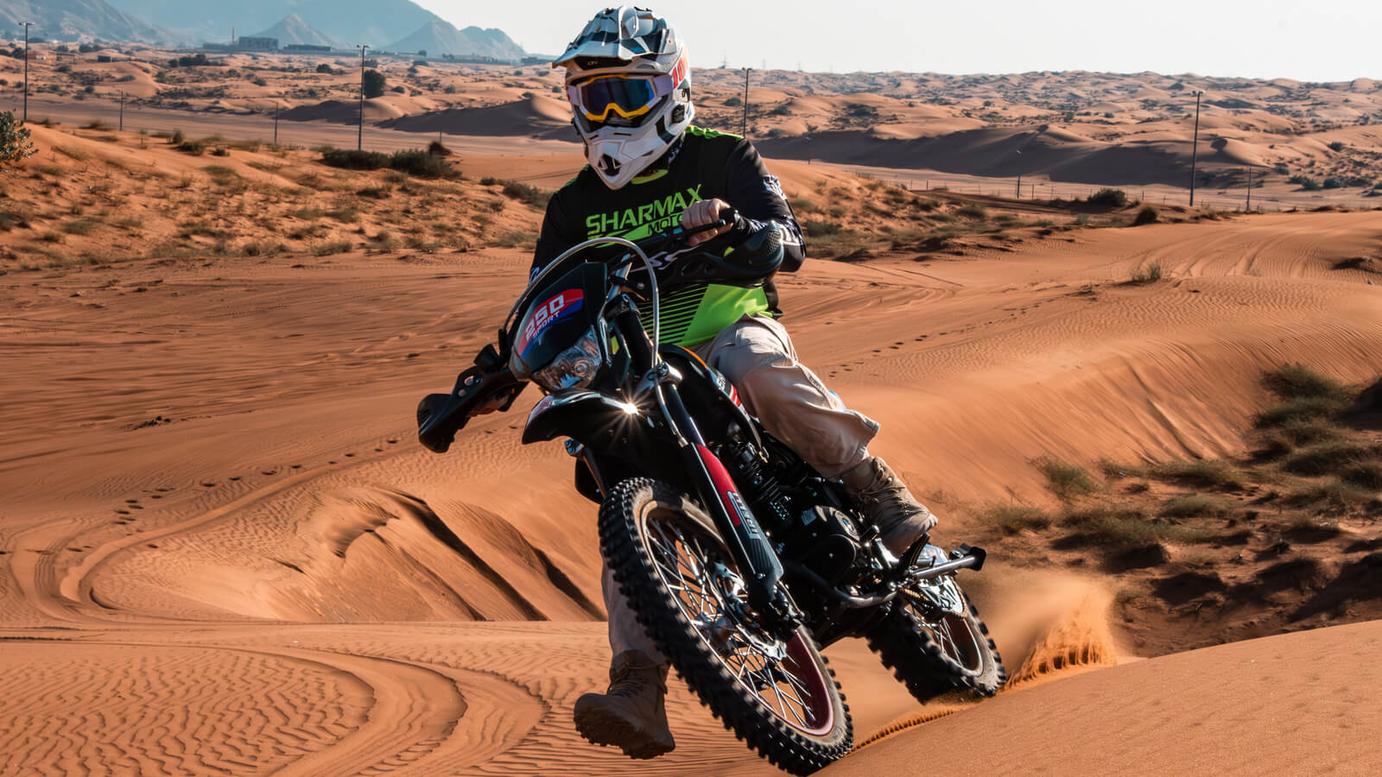
Kids' Dirt Bikes: Choosing a First Bike
Learn how to choose a child's first dirt bike by fit, age guidance and experience, with attention to training, protective equipment and supervision.
22 Aug 2026
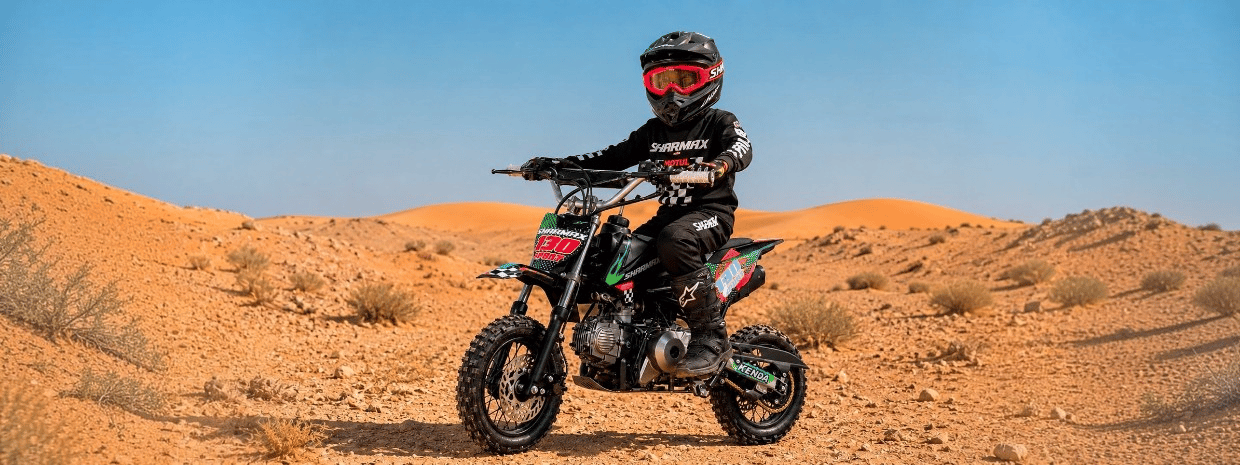
The day may come when your child stops merely glancing at bikes with interest and asks to try riding one themselves. It's natural to think about safety first. An off-road bike isn't a toy, but it can be the gateway to a fun hobby and a real learning experience when the right choice is combined with training and supervision. Not every model is suitable for every child or teenager; therefore, we'll explain the benefits of this hobby and what to compare before making a decision, from size to motor responsiveness and where to practice.
What can a child learn from riding a motorcycle?
Active time outside the home
A practical hobby gives a child a reason to get outside and be active instead of spending all their free time in front of a screen. Preparing for the trip, arriving at the training location, and learning a new skill makes for a different kind of day. You don't need to convince them that technology is the enemy; it's enough to offer them an activity that sparks their curiosity, provides enjoyment, and allows them to make tangible progress.
Balance and coordination between movement and vision
The rider learns how to balance, steer, slow down, and look ahead, as well as how to adjust their body position on uneven ground. With gradual practice on a suitable motorcycle, they begin to understand distance, speed, and body position. These skills don't come simply from buying a motorcycle; they require supervised practice in a suitable beginner's space.
Taking responsibility
Owning a motorcycle teaches the importance of taking care of real equipment. It requires cleaning, inspection, and proper storage, as well as fuel or charging depending on the type. An adult handles tasks requiring expertise, while a child can assist with simpler, age-appropriate tasks. Checking the protective gear, organizing the equipment, and following the rules are as much part of the hobby as riding itself.
Trust is built step by step
A child's success in a smooth stop or a simple turn gives them a sense of accomplishment. They become a participant, learning to make decisions, but within clear boundaries that don't imply independence from supervision. This can spark their interest in engines and mechanics. Most importantly, confidence should be linked to skill and respect for rules, not to speeding or trying to prove their bravery.
A hobby that brings the family together
A training visit can turn into a family outing everyone looks forward to: getting the helmet ready, checking the bike, and then watching the first successful ride. It's these little details that make memories. And if you're also riding, you can share the experience with your child, keeping the training at an age-appropriate level rather than demanding they keep up with adults.
Models for comparison: Gasoline or electric?
When looking for a children's off-road bike, you'll usually find two options: petrol and electric. Each has a different method of operation and maintenance, but ease of use alone isn't enough to judge a bike's suitability.
Gasoline models offer a familiar mechanical experience and allow you to learn the basics of engine maintenance. The transmission varies between automatic and manual depending on the model, and you need to follow the owner's manual regarding fuel, oil, and filter usage.
Electric models are quieter, and many don't require gear changes or clutch use. However, torque can build up quickly, so electricity isn't a guarantee of ease of control or safety. Proper power setting, a speed limiter (if available), and training are important factors.
The following examples will help you compare sizing and fitting. Check the age and load limits for your specific version with your trainer or dealer; this list is not an automatic recommendation to buy any model for a child simply because they have reached a certain age.
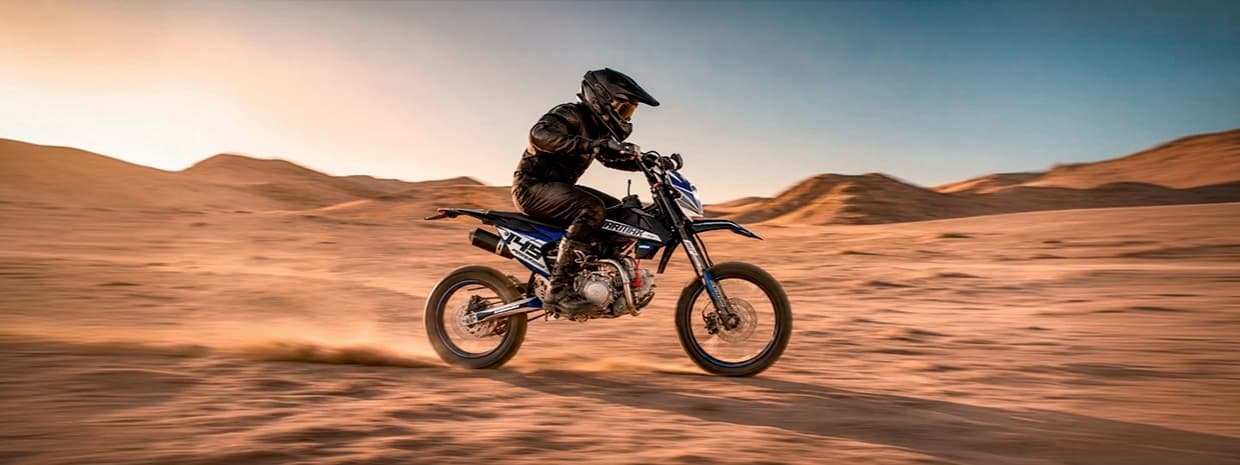
Sport 130 Mini: Small Pit Bike
The Sport 130 Mini shown here combines a 110cc air-cooled, 7hp engine with an automatic transmission, reducing the number of tasks a beginner has to handle. The seat is low and the bike weighs around 55kg, but this is still the weight of a real motorcycle; don't assume a child can pick it up on their own after a fall. Compare the ground clearance, handlebars, and brakes with the recommended age and load limits.
Key specifications:
- 110 cm³ air-cooled engine.
- The power of 7 horses.
- Automatic transmission in the version in question.
- Seat height 620 mm.
- 10/10 inch wheels.
- Ground clearance 300 mm depending on the version's configuration.
The model may be included in the initial training options if it meets the rider's requirements. However, jumps and technical maneuvers require specialized training and preparation, and are not the focus of the first rounds.
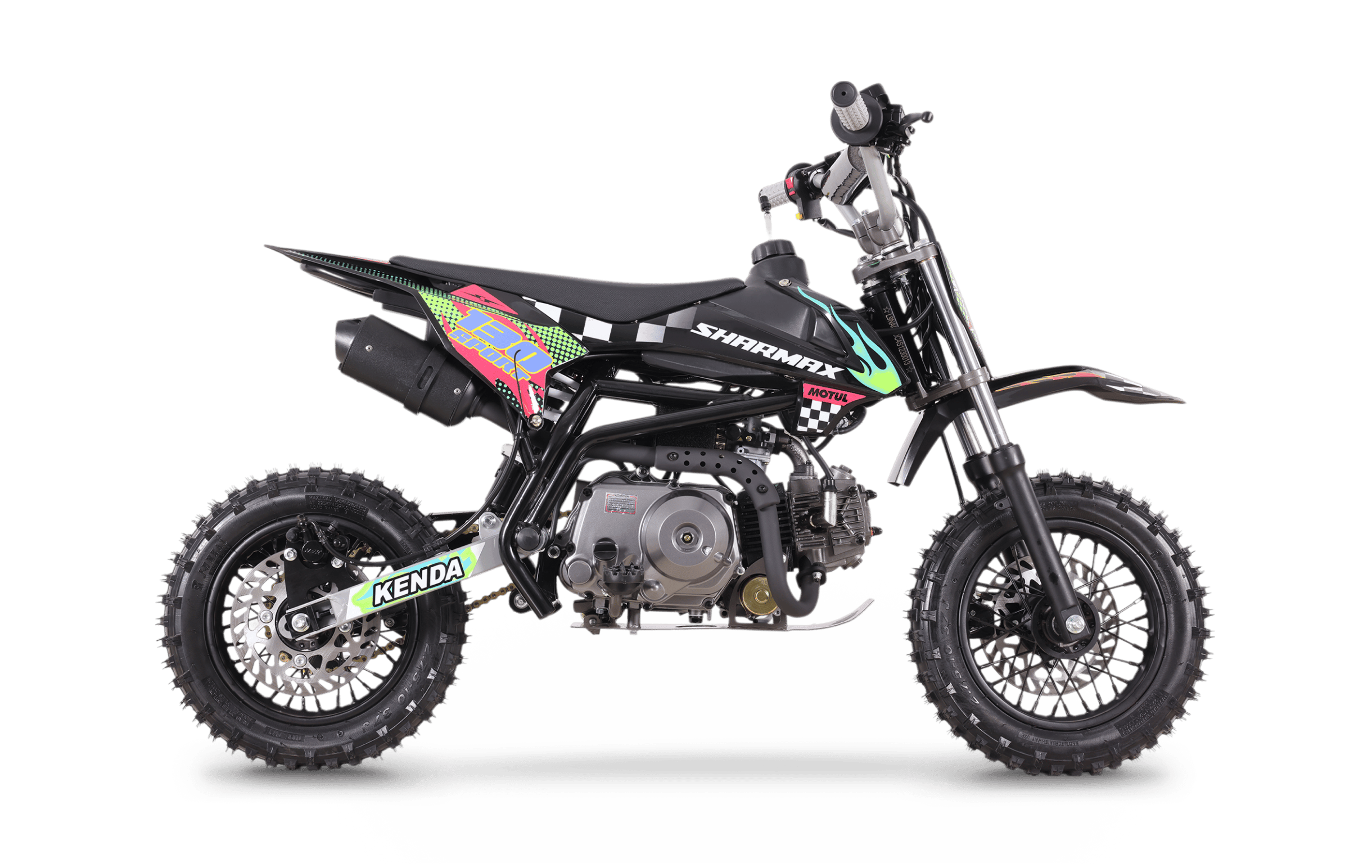
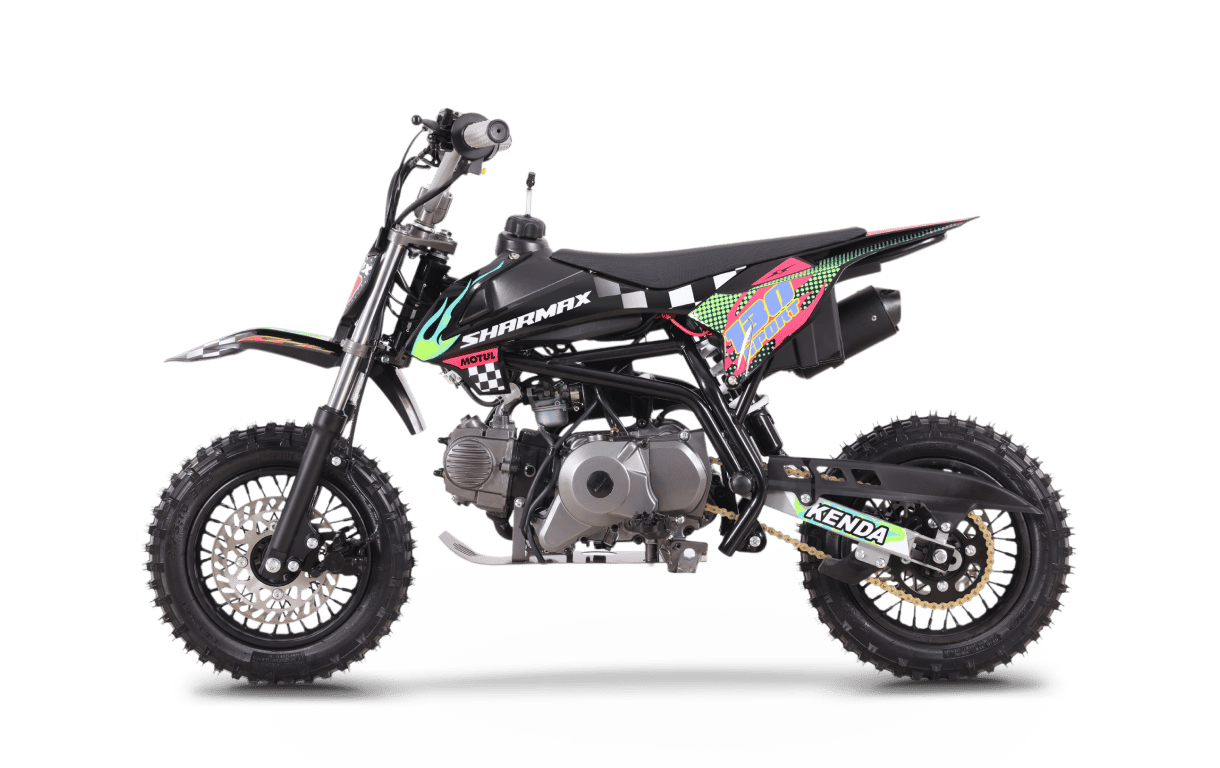
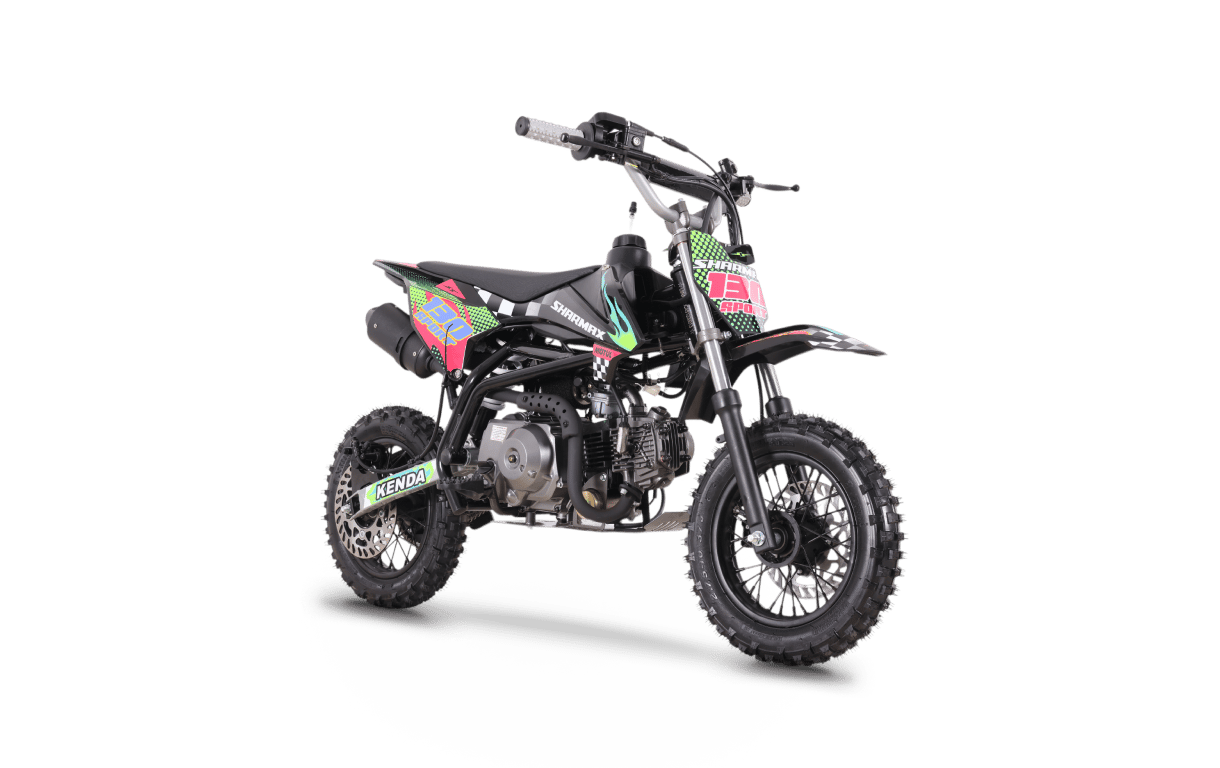
Sport 130 Mini · Photos: Sharmax.
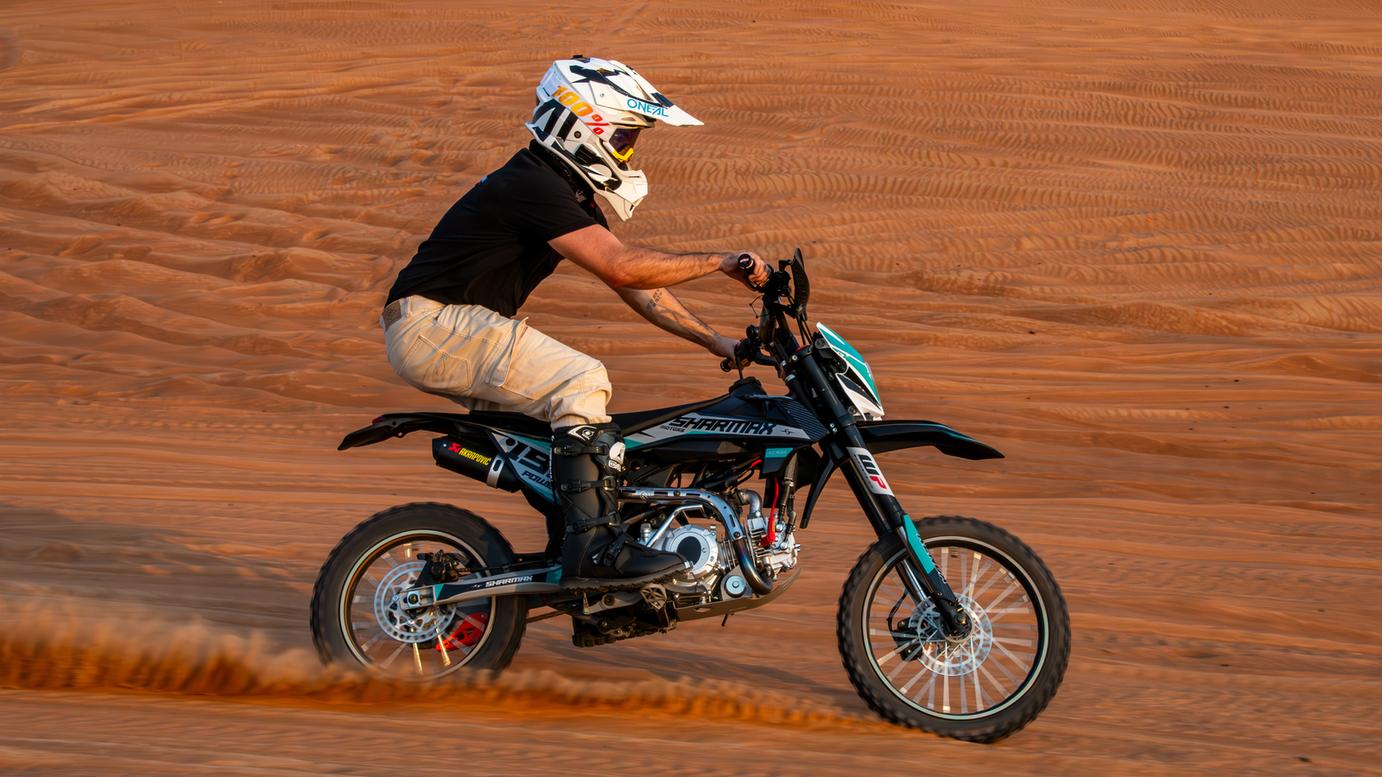
Power Max 145: A higher option for those who have mastered the basics of driving.
The Power Max 145 features a 125cc engine producing 10 horsepower and a manual transmission. It allows for learning clutch settings, speed, and gear ratios, but adds new tasks compared to the automatic transmission. The stated top speed for this version is 60 km/h; this is a performance figure, not a suitable training speed for a child.
Key specifications:
- 125 cm³ air-cooled engine.
- Power of 10 horses.
- Four-speed transmission.
- Maximum speed up to 60 km/h depending on the version.
- Ground clearance 340 mm.
- 17/14 inch wheels.
The 830mm seat height makes it larger than the smaller starter model. Compare leg length and weight distribution, and don't rely solely on the teenager's height for their age. Progression to this category comes after mastering the basic skills and receiving an assessment from the instructor.
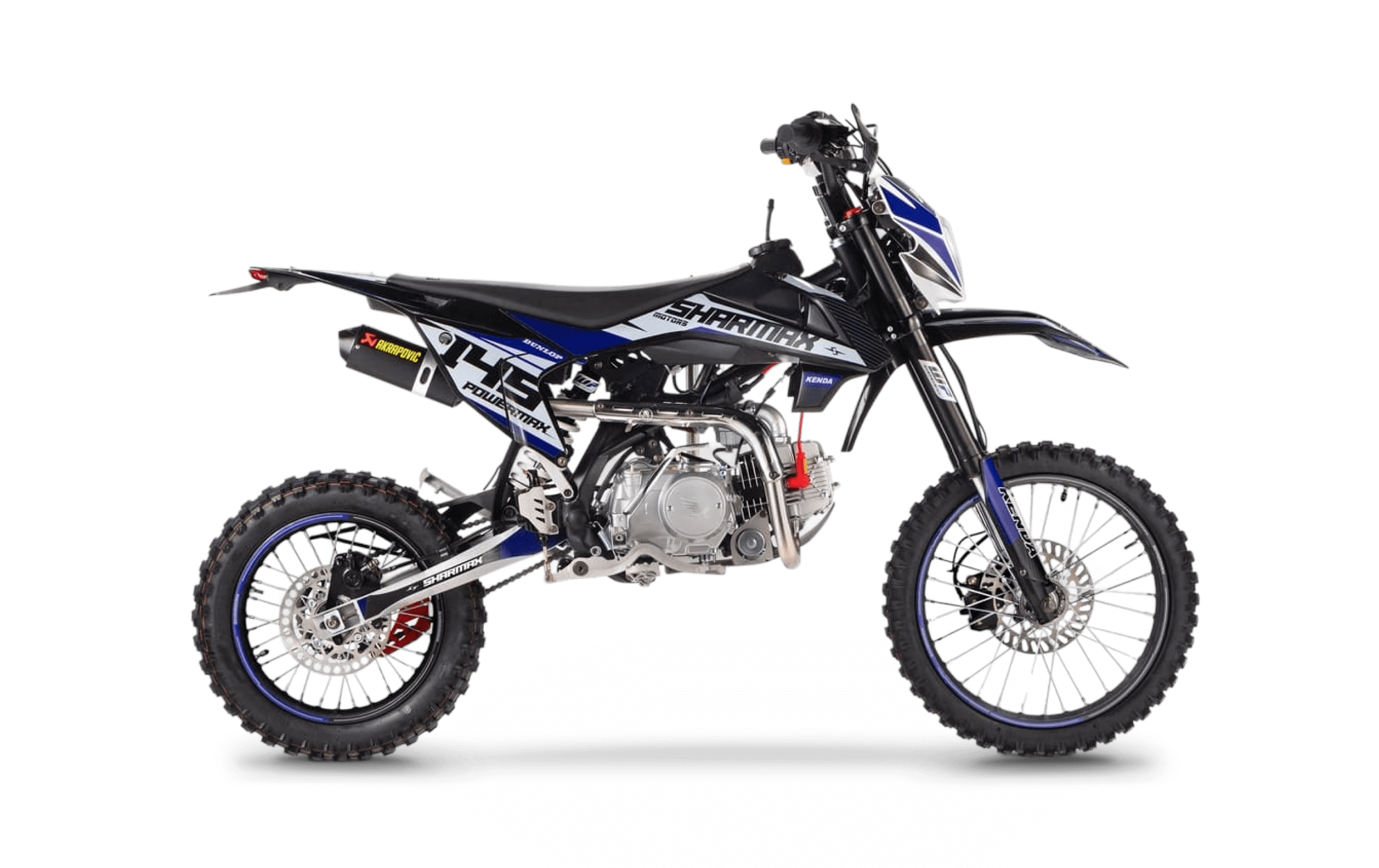
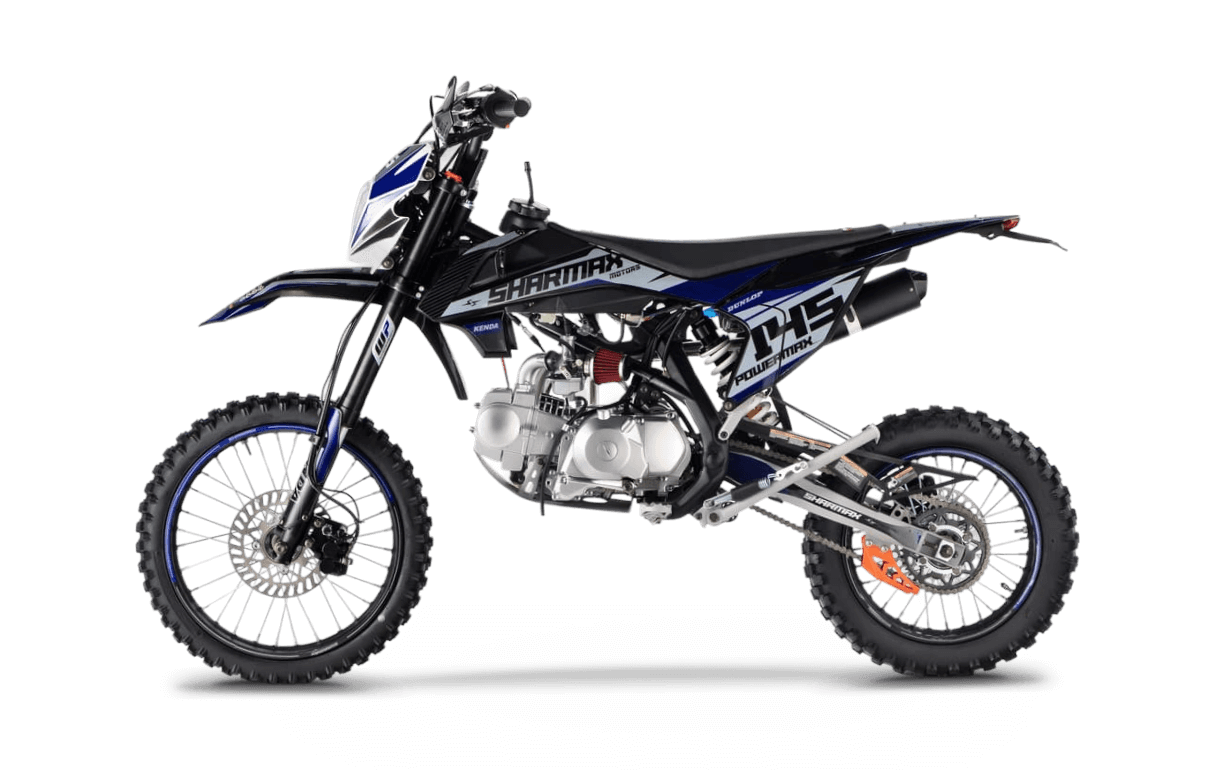
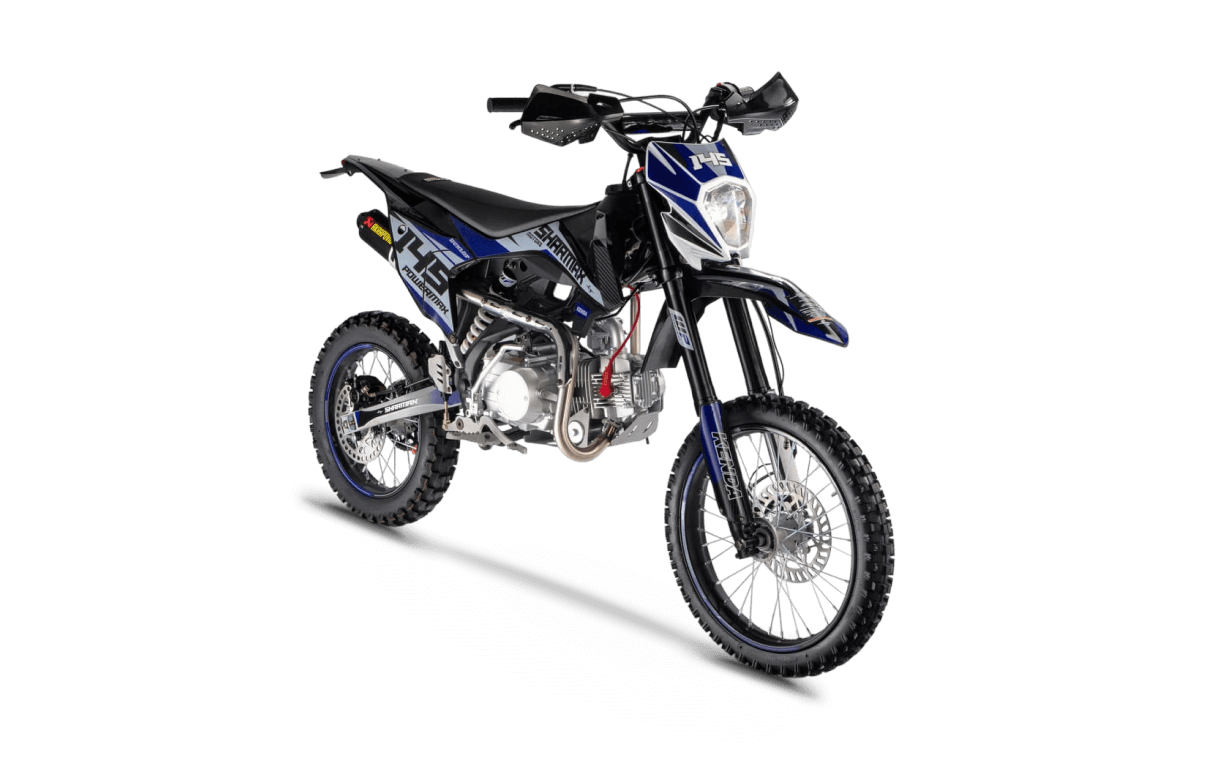
Power Max 145 · Photos: Sharmax.
Electric S1 190: Electric operation without speed change
The Electric S1 190 is an electric model to compare only after checking its manual and the version offered. Verify the controls, approved rider and load limits, and whether any power limiter or cut-off function is actually fitted. These functions are not substitutes for supervision, training and protection. Do not assign suitability from a general age band or an advertised top speed.
Key specifications:
- 48V, 20Ah lithium battery.
- A full charge takes approximately four hours, depending on the charger and conditions.
- Seat height 680 mm.
- Quieter operating sound than gasoline models.
- 14/12 inch wheels.
Check the ready-to-ride weight and how the rider manages the motorcycle while stationary and at low speed. Fewer manual controls do not remove the need for proper fit and a manageable response. Start in a supervised training area, not on the street or in an undesignated open space.
X5 Pro E: Power in a bigger size and higher performance
The X5 Pro E represents a more powerful and larger trend in this comparison. Its simple operation and quiet sound don't make it a suitable starting bike for every child. The version should be appropriate for the age and load limits, as well as the rider's experience, especially given the responsiveness of the electric motor.
Key specifications:
- 60V, 32Ah lithium-ion battery.
- Without a clutch or manual gear shifting.
- Charging takes approximately 1.5 hours when using a suitable fast charger; time may vary.
- The seat height is 815 mm in the version in question.
- It weighs approximately 63 kg.
Include it in the comparison when the rider is ready for a higher size and performance, not just because they want a faster model. A bike that suits them today will give them better progress than one that will take years to master.
Is buying an off-road bike for your child a good decision?
Three common questions parents ask are: What about injuries? Will the hobby be beneficial? And how much will it cost? All of these questions deserve clear answers. Start by assessing your child's readiness and adherence to rules, rather than trying to convince them or yourself at any cost. The MSF guide for parents provides a helpful framework for assessing this readiness.
- Driving involves risks. A proper helmet, goggles, gloves, shoes, and knee and body protectors help reduce some risks, but they don't prevent every injury. Adults should continue to wear and adjust their equipment, and begin training with an instructor in a designated area away from traffic and unsuitable obstacles.
- A motorcycle is not a toy, and when used correctly, it can be a tool for learning discipline, skills, and responsibility. Don't make achievement a race against others; a child's stopping, control, and adherence to instructions are more important than their speed.
- Budget for the bike, protection, training, transport, and maintenance. Some basic pit bike maintenance may be relatively straightforward, while the motor and electrical systems have less routine. However, tires, brakes, and moving parts still require attention in both cases.
If the interest is genuine and the child is ready, start with a small, well-thought-out step: first, practice, then a suitable bike, complete equipment, and clear rules. A successful first ride could become a cherished memory for the whole family. If they aren't ready yet, postponing is a responsible decision that leaves the door open for a better experience later.
Frequently Asked Questions
What is the ideal age to start riding an off-road motorcycle?
There is no single age that suits all children and all motorcycles. Adhere to the model's manufacturer's specifications and the training facility's requirements, then assess maturity, the ability to understand instructions, and physical control with an instructor. Height alone is not enough, and confidence cannot compensate for a lack of skill.
Are children's motorcycles safe?
These are vehicles that carry risks, not toys. Proper sizing, training, supervision, protection, and ability assessment where possible reduce the risks, but do not eliminate them. Do not allow a child to ride if they are unable to follow the rules and control the motorcycle.
What is the best off-road bike for a child?
The model that matches the age and load limits and allows access to the controls and bike support, with responsiveness appropriate for the user's experience. A capacity such as 50–125 cc alone is not enough to determine the choice.
Should I choose gasoline or electricity?
Gasoline engines offer more mechanical learning opportunities and may require gear changes and engine maintenance. Electric engines are quieter and simpler to operate in many versions, but their torque can be responsive. Ultimately, the comparison should be based on size, power, and tuning capabilities, not just fuel type.
Where can I find suitable Sharmax models for comparison in Egypt?
Contact the Sharmax showroom in New Cairo to compare sizes, features, age limits, and load capacities for each model, and discuss suitable driving experience options. Phone: +20 10 4040 4039. A practical comparison with an instructor helps you choose a starting model that suits your child, without purchasing one with more capacity than they need.