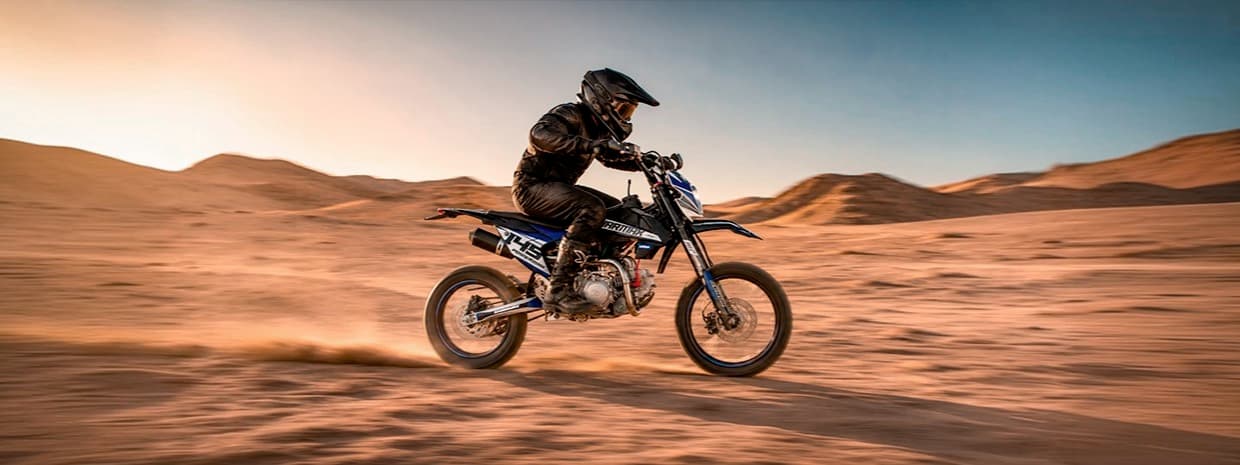
Cruiser vs Sportbike vs Dirt Bike
Understand the differences between cruisers, sportbikes and dirt bikes. Compare riding positions, intended terrain and practical ownership trade-offs.
17 Aug 2026
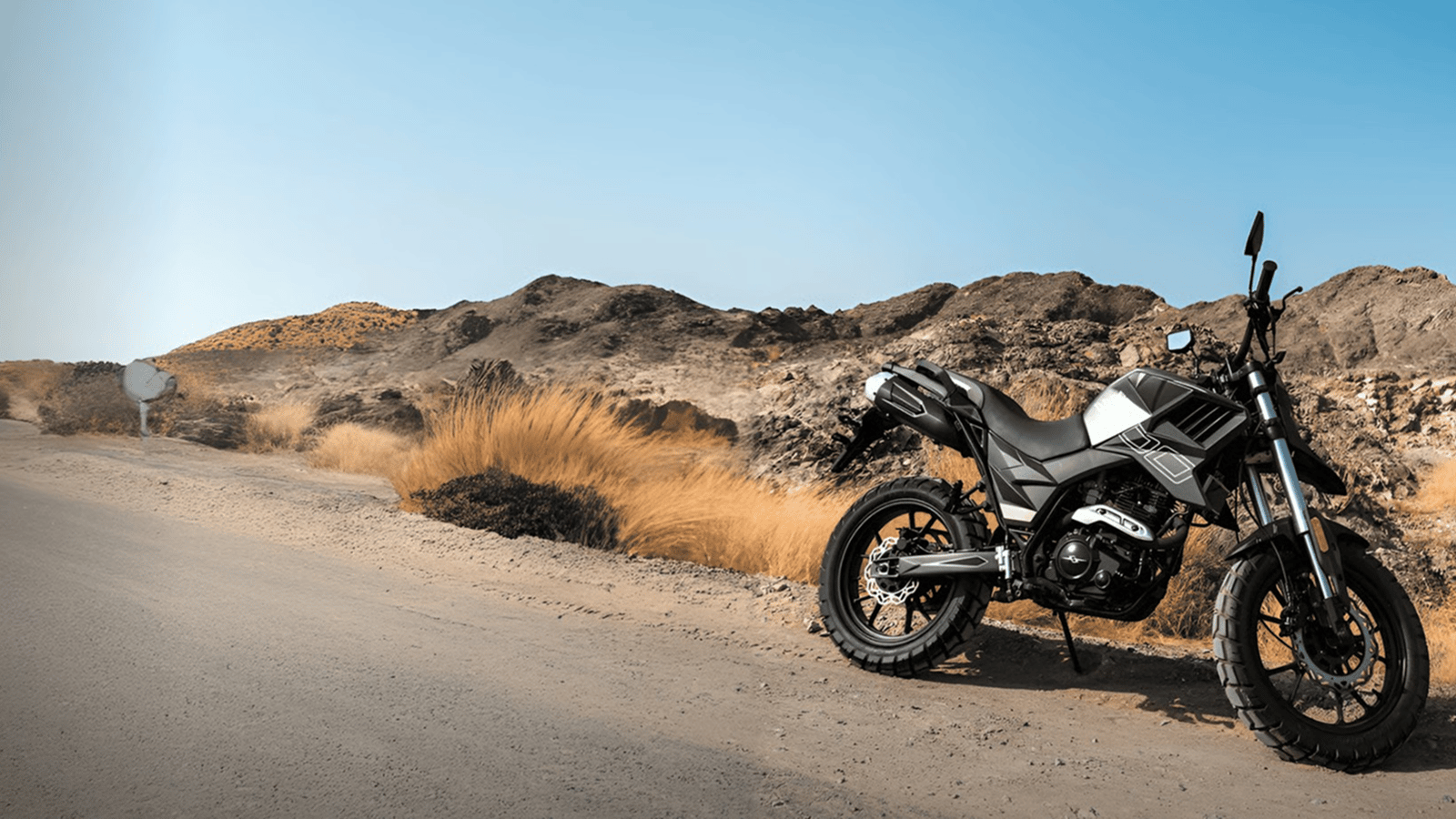
Ask five riders in Cairo about the best motorcycle, and you might get ten different answers. The type of ride you enjoy will determine the choice: a leisurely stroll, an open road, or a sandy track? Cruisers, sport bikes, and off-road bikes each have their preferred environments. Those who want to experiment with different styles may discover that one bike doesn't perform all tasks equally well.
In this guide we compare the cruiser, sport bike and enduro, and explain the differences that will help you decide which type deserves first place in your garage now.
A look at the types of motorcycles
The Cruiser: Comfort and Classic Style
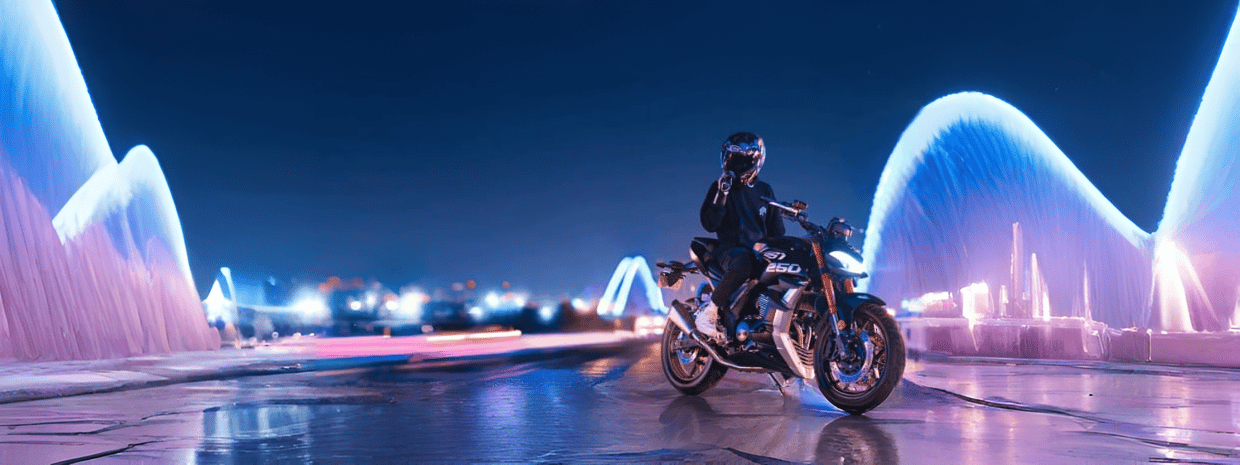
The cruiser represents the relaxed side of motorcycle riding: a low seat, comfortable riding position, and a distinct personality. Compared to a sport bike, you're comparing comfort and classic style with a sharper response and greater focus on performance. A Sharmax model that comes close to the roadster style is the Custom 1000 RST, which combines a distinctive look with practicality for city streets and touring.
Advantages
Many Cruiser models excel in low seating, comfort, and stability on straight roads. Easier ground clearance when stopped is a plus for some riders, while rear-seat versions offer a comfortable two-person experience. It's a style that suits an evening stroll along the waterfront as well as a leisurely trip out of town.
What needs to be balanced
The opposite is true in terms of weight, ground clearance, and directional change speed. In tight turns, a cruiser might require more effort and reach the mile mark before a sport bike. Also, the large engine heat might be more bothersome in summer traffic compared to a lighter, smaller model.
The sports motorcycle: performance takes priority
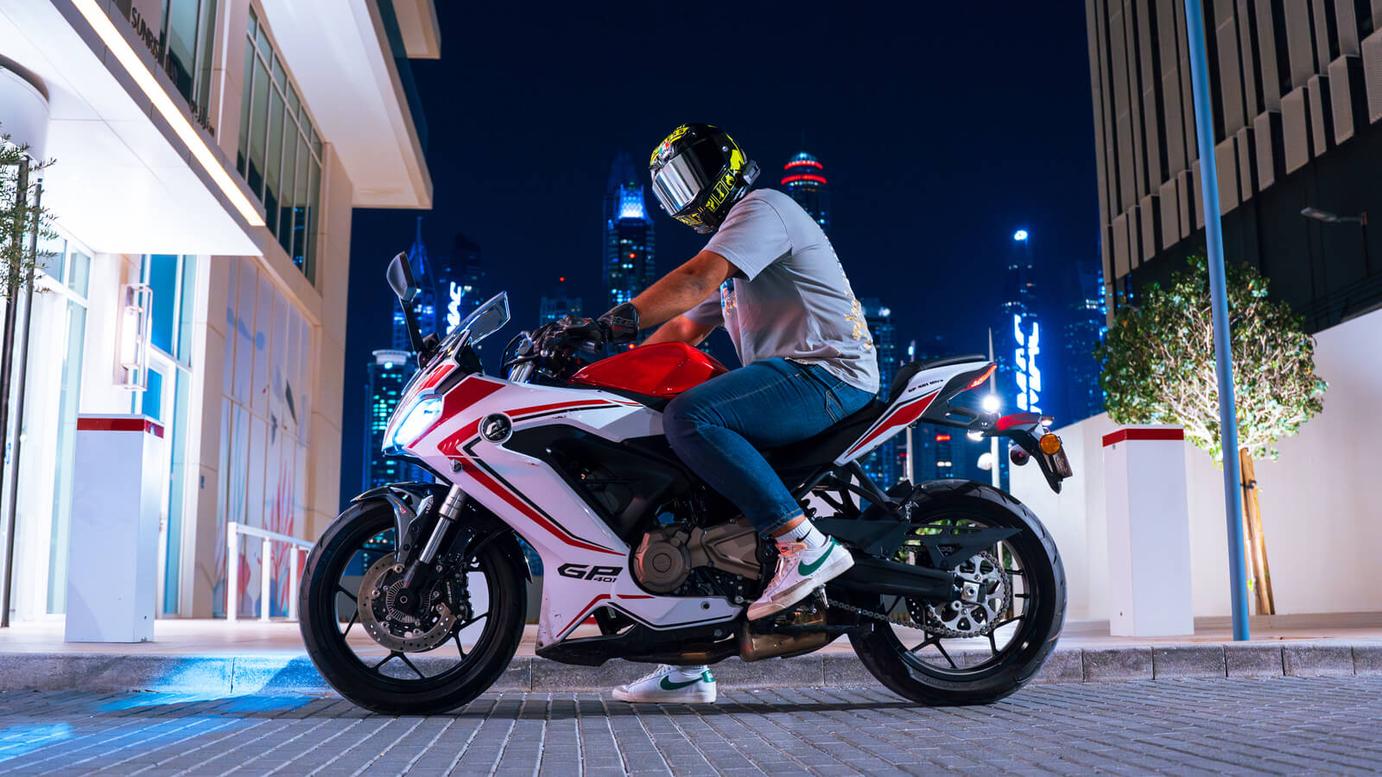
The sports bike is designed for quick response, powerful braking, and precise directional changes. It requires greater skill but rewards the experienced rider with dynamic performance. Sharmax's GP 1100 Ultra is an example, aimed at those who appreciate a sporty feel and want to experience the track in a dedicated and safe environment.
Advantages
Powerful acceleration, effective braking, and precise cornering control: these are the main reasons for choosing a sport bike. On good asphalt, the difference between it and a cruiser becomes apparent in its responsiveness and ability to change direction. To fully utilize these capabilities, however, requires training and respect for road and speed limits.
What needs to be balanced
Comfort and cost are on the other side of the comparison. A reclined riding position can strain the wrists and back at slow speeds, and the cost of tires, brakes, and insurance can vary depending on the model and intended use. Furthermore, a sport bike designed for asphalt is not a versatile option suitable for both city and sand.
Off-road bike: For sandy and rocky trails
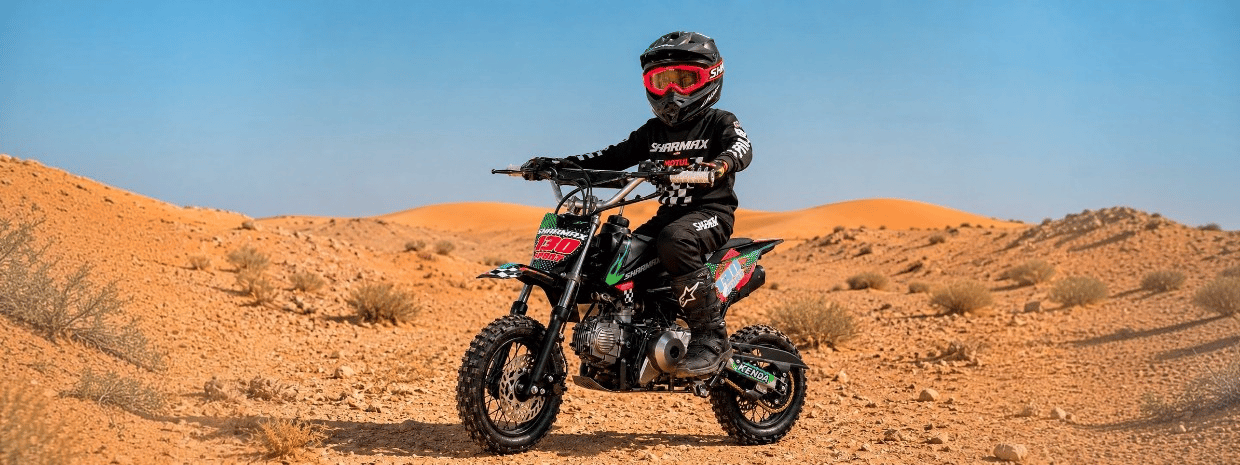
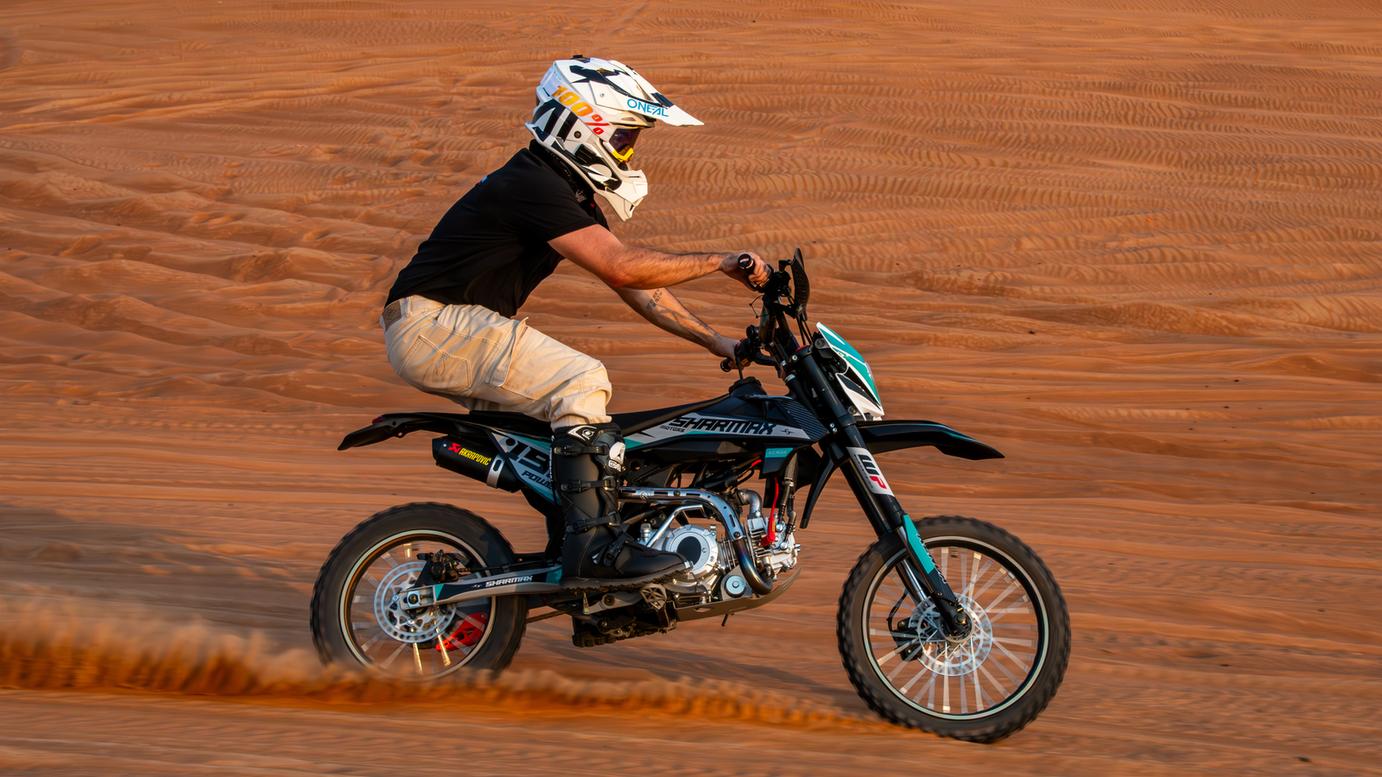
Off-road bikes are typically lighter, have a higher seat, longer travel suspension, and components designed to handle the demands of trails. They're the logical choice for those heading to sand or rocky trails. Sharmax Off Road and Enduro models deliver on this trend with their well-designed tires, suspension, and practical construction.
Advantages
The biggest advantage is its ability to handle terrain unsuited to road bikes. The weight, geometry, and suspension help you maintain control over varying surfaces, and the simpler trim reduces the cost of repairing scratches and falls compared to full sport trim. For the experienced enduro rider, the Sharmax Expert Pro 450 stands out as a model worth considering.
What needs to be balanced
The limitations become apparent on long asphalt journeys: less wind protection, a higher seat, and increased noise and vibration, depending on the model. Also, the tanks of some smaller models are not suitable for long, unplanned trips. And bikes designed for track or off-road use are not automatically road-legal; this depends on the specific model, registration, and licensing.
Specifications That Affect the Ride
Riding Position and Control
The cruiser: a low, relaxed riding position.
The athlete: Leaning forward and a posture that needs to be gotten used to.
Enduro: An elevated and active position in which you move with the bike.
The first difference between a cruiser and a sport motorcycle is felt in your body. In a cruiser, you sit low with a handlebar that allows for a smooth, gradual movement. This position helps you enjoy comfortable journeys, provided the seat and footrest are appropriate for your height.
On an sport motorcycle, the body leans forward, and a greater portion of the load may shift to the wrists. The handlebar angle and geometry are different, resulting in a quicker response. Therefore, the riding position deserves a real try; visual appeal alone doesn't tell you how your back will feel after an hour.
The off-road bike changes the picture once again: a high seat, wide handlebars, and room to move and stand over bumps and sand. You don't just sit on it; you use your body to help with balance and control, skills you learn gradually.
Engine performance and speed
Cruiser: Torque available at low RPMs in many models.
The sportier version: Higher power with increased engine speeds according to its design.
Enduro: A suitable response for overcoming terrain and climbing.
The comparison isn't just about horsepower, but also how it's delivered to the wheel. Many cruiser engines tend to offer comfortable torque at low RPMs, reducing the need for constant gear changes during leisurely driving. However, this characteristic varies from engine to engine.
Sport engines, on the other hand, build up more power at higher RPMs. Some models start off relatively calmly and then accelerate aggressively, requiring discipline and experience. The advertised top speed for some examples, such as the Sharmax GP 881 Ultra, is around 240 km/h; this is a performance specification, not a speed for street use.
An off-road bike focuses on efficient response on climbs and loose surfaces rather than chasing top speeds. On asphalt, it's not about outperforming a supersport, but on sand, tires, ground clearance, and suspension become more important than the engine power of a heavy road bike. The right speed there is determined by skill, terrain, and visibility.
Control and ease of maneuvering
Cruiser: Stability on a straight line with greater effort in corners.
The athlete: quick response and precise guidance.
Enduro: Advantages on loose ground with compromises on asphalt.
The geometry of the motorcycle explains much of the difference in riding feel. The long, low cruiser gives a sense of stability on a straight road, but may require more effort to change direction, and the footrests and clearance limit the available angle of lean.
In contrast, many sport bikes use a sharper geometry and firmer suspension, allowing them to change direction quickly. This is an advantage for experienced riders, but it can be tricky for beginners, especially with high power or sudden handlebar movements.
The long suspension and trail tires on an enduro bike might offer a different feel on smooth asphalt, but they stand out over sand and rocks. There, you need to constantly adjust your trajectory and weight distribution, and the wide handlebars and bike geometry help with that.
City comfort and long journeys
Cruiser: Suitable for quiet driving and straight distances depending on the equipment.
The athlete: It's a vital experience, but the position might tire you out over time.
Enduro: Fun on the track, but usually less comfortable over long stretches of asphalt.
From a comfort perspective, many cruiser models combine a low seat, a stable riding position, and an engine that doesn't require constantly high RPMs. Touring equipment, when available, adds significant value for long journeys.
The Super Sport, however, can be tiring with its constant stopping and starting, even if it's enjoyable in its proper environment. The wrists, neck, and lower back remind you that the design prioritizes performance, not prolonged sitting in traffic.
A road bike offers a great experience for short trips on trails, but it can be tiring for long daily commutes or long journeys between cities. That's why some enthusiasts prefer to combine a road bike with a trail bike rather than forcing one model on you for all uses.
Compare purchase costs
Cruiser: Prices are higher in the larger, well-equipped tourist categories.
The sport motorcycle: choices ranging from small categories to high-performance models.
Enduro: There is a big difference between an amateur bike and a competition model.
In Egypt, compare recent offers in Egyptian pounds for available models, not prices from other markets. A mid-range sport bike might be similar in price to a mid-range cruiser, while larger touring models and those with extra features will cost significantly more. The choice between new and used bikes also completely changes the comparison.
The same applies to off-roading: a basic trail bike isn't in the price range of a fully equipped enduro competition. Add to that the budget the necessary protective gear, rider equipment, and a means of transport if the bike isn't road-legal.
Therefore, the rule "enduro is cheaper, cruiser is more expensive, and sport motorcycles are in between" is not sufficient. Compare models that are similar in terms of features, condition, and specifications, then calculate what you need to use them the way you want.
Fuel consumption and operating costs
Cruiser: Consumption is affected by engine capacity, speed, and load.
The athlete: High performance and aggressive driving increase fuel consumption.
Enduro: Working in the sand may be more tiring than a leisurely walk.
Riding style can affect fuel consumption as much as the type of motorcycle. For rough comparison, examples within the following ranges are provided, but these are not fixed figures for each model:
- Average sports bike: approximately 4.8–5.0 liters per 100 km in mixed use for some models.
- Cruiser in the 400–600 cm³ category: approximately 4.6–4.8 liters per 100 km in moderate driving for some models.
To calculate the cost in Egypt, multiply the model's fuel consumption per 100 km by the price per liter of the required gasoline type. This way, you get an up-to-date comparison instead of relying on an outdated fuel price or a price from another country.
On off-road motorcycles, fuel consumption for models that typically consume around 5–6 liters per 100 km can rise to 6–7 liters or more with sand and frequent acceleration. Tires, chain, and brake pads also factor into the cost; sport riding and off-road riding consume different parts, and it's impossible to rank all categories on a fixed scale from cheapest to most expensive.
Maintenance needs
Cruiser: Periodic maintenance according to distance and time.
The athlete: a model-specific chart, with a clear effect of the intensity of use.
Enduro sports: Frequent maintenance, and intervals may be calculated in operating hours.
Maintenance is one of the most obvious differences between a road bike for everyday use and a competitive off-road bike. It's part of the purchase decision, not a detail that comes later.
Many road bikes rely on distance and time to determine maintenance intervals. You might find charts suggesting intervals of 6,000–10,000 km for oil and filter changes, but don't apply this range to your specific model without consulting its manual; intervals may be shorter. Heat, dust, traffic, and warranty terms also affect the maintenance plan.
Competition models, however, may have operating hours and require more intensive monitoring. Examples of tasks that fall under these schedules include:
- Change the oil and filter, clean the air filter, or replace it according to operating hours and dust conditions.
- Lubricate the suspension connections and check the valves and fasteners according to the schedule specified for the model.
- Inspect the internal parts of the engine and replace what is needed according to service hours and condition, not relying on a single period such as 80-100 hours for all bikes.
This commitment is suitable for those who want serious off-road performance, but it requires time, budget, and proper technical support. Even road bikes with longer service intervals need tire, brake, fluid, and chain checks between maintenance appointments.
Which type is suitable for your use in Egypt?
Daily commuting and traffic
A compact cruiser or a moderately sized sport bike can serve for daily commuting, but the comparison here begins with comfort and handling. Pay attention to engine temperature at low speeds, handlebar rotation range, clutch responsiveness, and ease of maneuvering and parking. These details are more important for trips around Cairo than the top speed.
Highways and intercity travel
On long journeys, you'll feel the difference in your body more than what's shown in the specifications. A cruiser with a travel-ready seat and wind protection might offer greater comfort, but you won't get the full benefit of a supersport's capabilities on a straight road. However, a convertible cruiser isn't automatically wind-protected; the actual equipment is what matters.
Sand and off-road tracks
Once you enter soft sand or permitted rocky trails, the comparison between a road bike and an enduro bike becomes entirely different. Ground clearance, tires, suspension, and weight are essential elements that engine power alone cannot compensate for. This is why some enthusiasts combine a Sharmax road model with an off-road version, training, planning, and sticking to designated areas instead of treating the entire desert as an open track.
Frequently Asked Questions
Can the Cruiser travel on desert roads?
If the intended route is an asphalt road through the desert, a cruiser equipped for off-road travel might be suitable. Soft sand and rough terrain are not its environment. If you want to combine paved roads with dirt tracks, compare suitable dual-purpose models instead of choosing a traditional cruiser for the purpose.
Is a sports motorcycle practical within the city?
It can be practical, especially in models with a less aggressive stance, but it has its drawbacks. The congestion and slow movement can strain the wrists and back, and the heat from the engine and upholstery increases the feeling of heat in the summer.
Can an off-road motorcycle be used on a public road?
This depends on the version being approved, registered, and licensed, not just the category name. There are dual-use models designed for the road, while many motocross bikes are specifically for tracks and circuits. Adding lights or mirrors does not automatically make a bike licensed.
Summary: Which motorcycle would you choose?
There is no single winner for everyone; there is a bike that suits the place and style in which you actually ride.
- If most of your travel is on asphalt and quiet tours, start with the comfortable Cruiser or Roadster, and compare the seat, features, and weight.
- If you want athletic performance and are thinking about the tracks and developing your skills, then a sport bike is worth comparing to what suits your experience, not the maximum power you can buy.
- If your ideal holiday means a sandy or rocky trail that's allowed, then a proper enduro or dual-use bike will open up an experience that a road bike simply can't provide.
Some riders eventually end up owning two bikes instead of one: one for the road and one for trails. Start with the type that covers 70–80% of your riding, then let experience guide your next step. To compare Sharmax models and arrange a viewing and test drive when available, contact the New Cairo showroom on Ain Sokhna Road: +20 10 4040 4039.