Summer Motorcycle Maintenance in Egypt
Review the key motorcycle checks for hot weather in Egypt, including cooling, tyres, chain care and fluids, using your model's service requirements.
27 Aug 2026
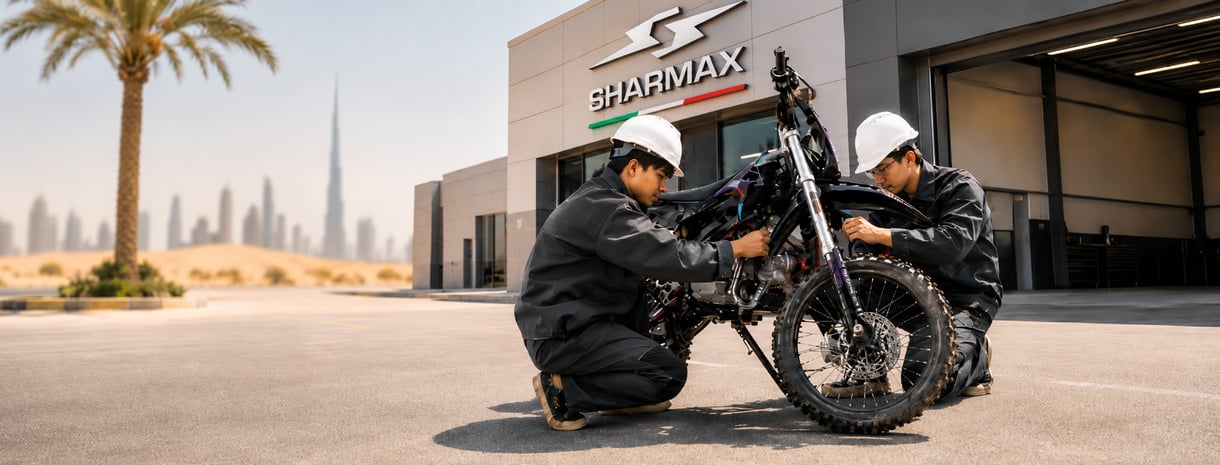
In the summer heat, everything is put to the test. Motorcycles, despite being made of steel and rubber, can be affected by sunlight and dust. In fact, during the peak of summer, your bike may need more care than ever. Below, we've compiled ten tips for summer motorcycle maintenance that will help protect your bike from the heat and prevent breakdowns.
1. Check tire pressure and condition
Tire pressure readings increase with heat and driving. Therefore, check them when they are cold and set them to the model's recommended pressure for the load, not the maximum pressure printed on the tire sidewall. Make checking tire pressure part of your trip preparation, and don't deflate a hot tire just because its reading is higher than the cold one.
Next, look at the tire itself. Hot asphalt damages rubber, so check it for cracks, flat spots, and uneven wear. Inspect the sidewalls and tread after long trips, and replace the tire if the tread is nearing the wear indicators. Don't ignore small scratches if you drive fast on highways.
Do: Check the cold pressure, tread condition and sides, and repeat the check before long trips.
Do not: Do not relieve pressure randomly "to feel comfortable" on the street, and do not ignore small cuts or cracks.
2. Change the oil on schedule
Oil deteriorates more quickly in heat and with intensive use. If you're stuck in intermittent traffic, the engine will overheat the oil. Follow the owner's manual, but be even more vigilant in the summer. These are the basics of motorcycle maintenance in the summer heat.
Check the oil level using the method specified for your model, and maintain it between the two marks without overfilling. The color alone does not determine the oil's condition; metallic deposits, a milky appearance, or frequent low levels warrant further investigation.
How often should the oil be changed?
- Motocross and competitive enduro: Service may be determined by operating hours rather than kilometers. Follow the model schedule and race or dust conditions, and do not use a single number for all off-road bikes.
- Road and sports bikes: Adhere to the distance or time, whichever comes first, in the user manual. Traffic congestion and heavy use may necessitate an intensive service schedule.
- Touring and custom motorcycles: Do not delay the change because the engine seems quiet; check the oil and filter interval of the engine itself.
Use the viscosity grade and specifications recommended in the model's manual, including oil compatibility with the wet clutch. Heat alone is not a reason to arbitrarily choose a thicker oil.
Do this: Book a service appointment and have the level and leak checked correctly.
Do not do the following: Extend oil change intervals during peak heat, especially after driving on dusty or rough roads.
3. Wash your motorcycle
In many areas, sand and dust are an integral part of daily life during the summer. Dirt clogs cooling fins, accelerates chain wear, and damages moving parts. Therefore, washing your motorcycle is an essential part of its maintenance in hot weather.
Useful cleaning tips:
- Allow the motor to cool down before washing it. Hot metal and cold water are a harmful combination.
- Start with the dirtiest parts first (the wheels), so you don't spread the dirt upwards.
- Avoid using high-pressure washing. This can damage radiators, coolers, chains, and bearings.
- Dry the bike thoroughly. Wipe it from top to bottom (tank, plastic parts, seat) with a clean microfiber cloth.
- Carefully dry the corners with a suitable cloth or low-pressure air, keeping away from bearings, seals, and connections. Clean the chain with the engine off; do not use the engine's rotation to move the chain during cleaning.
- After washing, test the brakes first at a very low speed in a safe area; they may be less effective when wet. Do not start a normal drive until normal feel and performance are restored.
This is a simple motorcycle maintenance checklist, a common practice in hot weather that pays off quickly.
Tip: Wash the bike frequently after trips where the roads are dusty, and dry it thoroughly.
Do not: spray high pressure on radiators, bearings, chain or electrical connectors, and do not wash the bike while it is still hot.
4. Check the cooling system
An overheated engine is the quickest way to ruin your ride. Whether your motorcycle is water-cooled or air-cooled, it needs special care during the summer. This is a crucial part of preparing your motorcycle for summer.
For liquid-cooled motorcycles:
- Check the coolant level in the reservoir when the bike is cold.
- Check for leaks around hoses and clamps.
- Make sure the fan is actually working when the bike temperature rises.
- Keep the radiator fins clean (dust impedes airflow).
For air-cooled motorcycles:
- Keep the cooling fins clean (dust acts as a cover).
- Avoid prolonged stops in traffic jams - air cooling requires airflow.
- Pay attention to "signs of overheating": irregular engine rotation, reduced power, strong smell of heat.
Do the following: Gently clean the radiator/fins (soft brush, low-pressure water), and make sure the fan is working.
Do not: Never open the radiator cap while it's hot. And never use pressure washers directly on the radiator fins.
5. Keep the radiator and oil cooler clean.
Even if your coolant is good, clogged radiator fins mean poor cooling. Dust can turn the radiator into a kind of lid. This is especially problematic in summer traffic and on sandy roads, as the fan has to work harder and heat builds up more quickly. Also, check your motorcycle's oil cooler (if it has one). It's just as prone to clogging. A quick check after a dusty ride could save you from an engine overheating later.
Do: Perform a quick visual inspection after dusty trips and clean gently using low-pressure water or a soft brush.
Do not: bend the fins with excessive pressure or scratch them with hard objects.
6. Clean and oil the chain frequently during the summer.
Heating causes the lubricant to dry out, and dust turns it into an abrasive paste. Therefore, chain maintenance becomes a weekly task for many motorcyclists. This is one of the most important motorcycle maintenance tasks for long summer rides.
Use a cleaner and lubricant compatible with the chain type and its seals. A 300–500 km interval is a common example for some uses, but follow the schedule for your model and inspect more often after dust, rain or washing. Clean and dry the chain before lubricating it, and keep lubricant off the tyres and brakes.
Check the chain's slack in the position and manner specified in the manual, and at its tightest point of rotation. Some models use a range of 2–4 cm, but this isn't suitable for every bike, especially enduro bikes. Over-tightening or over-slackening can damage the drivetrain; adjust it to your model's specifications.
Rust, excessive wear, stiff links or hooked sprocket teeth can indicate that replacement is needed. Have the chain and sprockets assessed together and replace them as specified by the manufacturer.
Do: Regularly check for looseness, wear, and lubrication, and follow the model number and measurement method in its manual.
Do not: Do not use random oils as a "chain lubricant," and do not ride with a chain that is too tight or noticeably sagging.
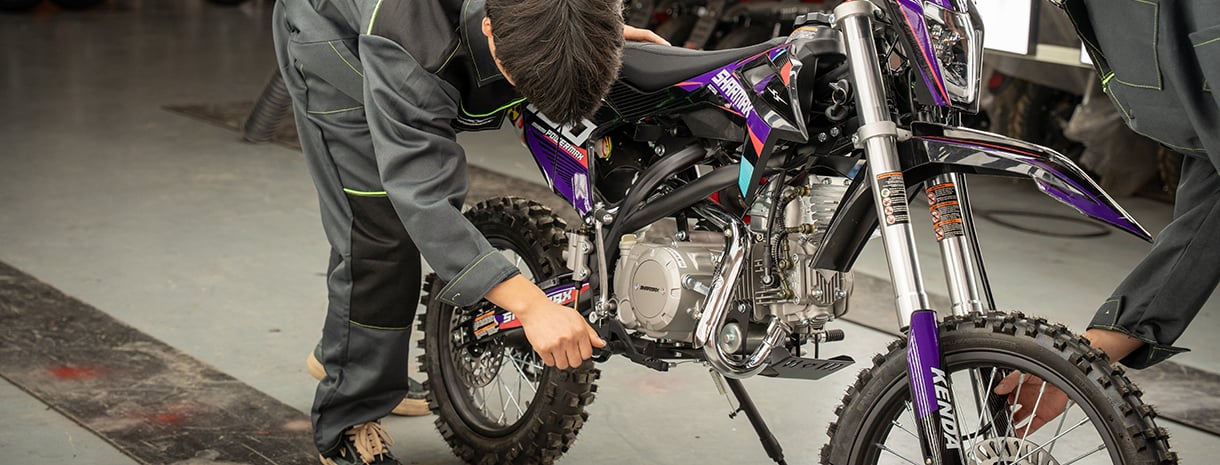
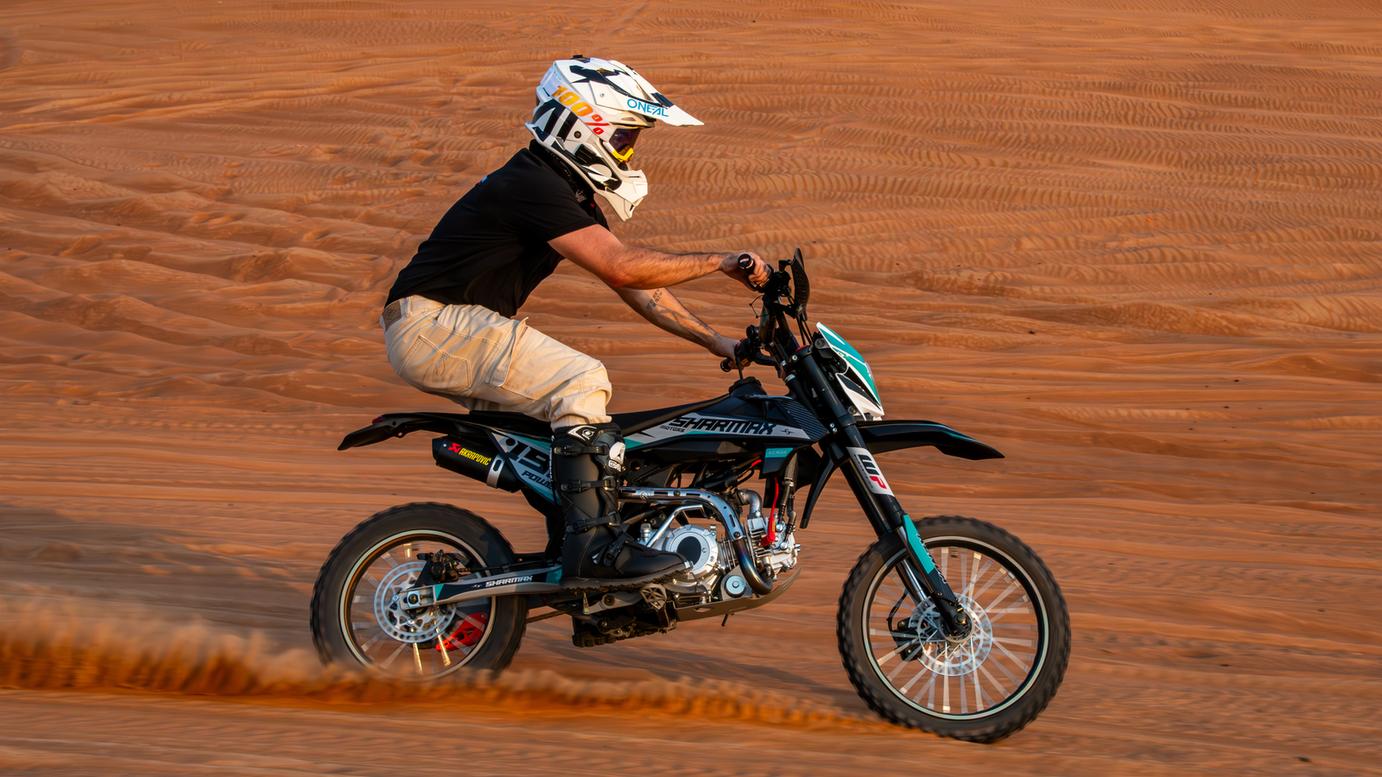
Motorcycle maintenance. Photo: Sharmax.
7. Check the brake pads and brake fluid.
Traffic congestion and heat increase the load on the brakes. Check the thickness of the brake pads, the condition of the discs, and the fluid level. Deterioration of the brake fluid and its absorption of moisture in suitable types can lead to a lower boiling point and reduced braking performance under load.
Replace brake pads at their wear limit or the model's recommended wear threshold; figures like 1.5–2 mm are not universal. The brake fluid interval and type are also specified in the manual; a one- or two-year interval is common on some models and is not a substitute for the instructions. Do not mix different fluids simply because their names are similar, and leave hydraulic system servicing to a qualified technician if you are not trained.
Inspect the brake discs for deep grooves or cracks. Also check the disc thickness: if it is equal to or less than the minimum thickness printed on it, it's time to replace it.
Do: Check the pads, discs and any signs of leakage. Use the brake fluid type and replacement interval specified for your model.
Do not ignore: squeaking, vibration, or a spongy feeling in the brake lever - especially in hot weather.
8. Check the battery and charging.
Extreme heat severely strains batteries. If you feel the engine starting weakly, don't wait until it comes to a complete stop in a parking lot. This is a simple part of summer motorcycle maintenance, but it will save you a lot of trouble.
Inspect the terminals, connections, and for corrosion. When storing, use a maintenance charger compatible with the battery's chemistry, voltage, and manufacturer's instructions; a lead-acid battery charger is not automatically suitable for lithium batteries. If swelling or leakage occurs, discontinue use and consult a technician.
Do: Check the connection points for corrosion and make sure the connections are tight.
Do not: Ignore slow startup or leave a weak battery "until it runs out".
9. Prepare well for long journeys
Before embarking on long summer trips, perform a quick check. This will prevent unexpected problems while you're away from home. It's the simplest way to maintain your motorcycle during extended summer journeys.
Quick checklist before riding:
- Tires: Pressure + visible damage
- Chain: Check slack and lubrication
- Fluids: Oil level, coolant level (if available)
- Brakes: lever feel, pad thickness, and no leakage
- Lights: Headlight/Brake light (Night journeys may occur)
This is also the most practical solution for how to prepare a motorcycle for the summer without turning maintenance into a full-time job.
10. Park smart: Shade and cover in the summer
Direct sunlight heats the seat, plastics, tires, and even the fuel in the tank. Therefore, shade makes a bigger difference than most motorcyclists realize. This is a simple step in protecting your motorcycle from the heat.
Key points:
- Park the motorcycle in the shade whenever possible, on stable ground and in a permitted place.
- If shade is not available, use a cover that allows air to pass through (so as not to trap heat and humidity).
- Avoid parking the bike next to hot walls or metal surfaces that radiate heat onto the bike.
- If the bike remains parked all day, the reflective cover helps to reduce heat absorption.
Do this: Park in the shade and use a suitable cover that allows ventilation after the engine and exhaust have cooled down.
Do not: Leave it in direct sunlight for hours or use a tightly sealed cover.
What should you do when the engine overheats?
The above-mentioned hot weather motorcycle service checklist is a really good basis to follow and stay on track in the summer.
However, if the bike starts to overheat while riding despite all precautions, do the following:
1. Stop in a safe place
If the overheating warning light, steam, or a noticeable loss of power appears, reduce your speed and move to a safe location away from traffic. Do not attempt to cool the engine by increasing speed on the road.
2. Turn off the engine and let it cool down.
Follow the stop procedure specified in your model's manual, and turn off the engine when the overheating warning appears. Do not intentionally leave it running longer to dissipate heat; this may worsen the problem.
3. Do not restart before assessing the cause.
Allow the motorcycle to cool down without pouring cold water on the engine. Avoid hot parts and steam, and do not restart if there is a leak or a continuous warning light.
4. Never open the radiator cap while it is hot.
Wait until it cools down. Hot coolant may splash and cause burns.
5. Check the obvious things
Check for coolant leaks, a wet hose area, or a non-working fan. If you see coolant on the ground, stop driving.
6. Add more only when it has cooled down (and only when needed).
After the system has cooled completely, check the coolant level as specified in the manual. Use only the correct coolant as instructed; topping up does not repair a leak. If the system is empty or the coolant level drops again, seek assistance instead of continuing to drive.
7. If its temperature rises again, stop using it.
Repeated overheating can damage the engine. If the warning light returns or a leak is detected, stop and have the motorcycle towed to a service center instead of risking another trip.
Regular maintenance makes summer rides more comfortable and reduces surprises. Start with simple checks, note down what needs servicing, and leave repairs to a qualified technician. This way, you'll enjoy your ride while giving your bike the care it needs.