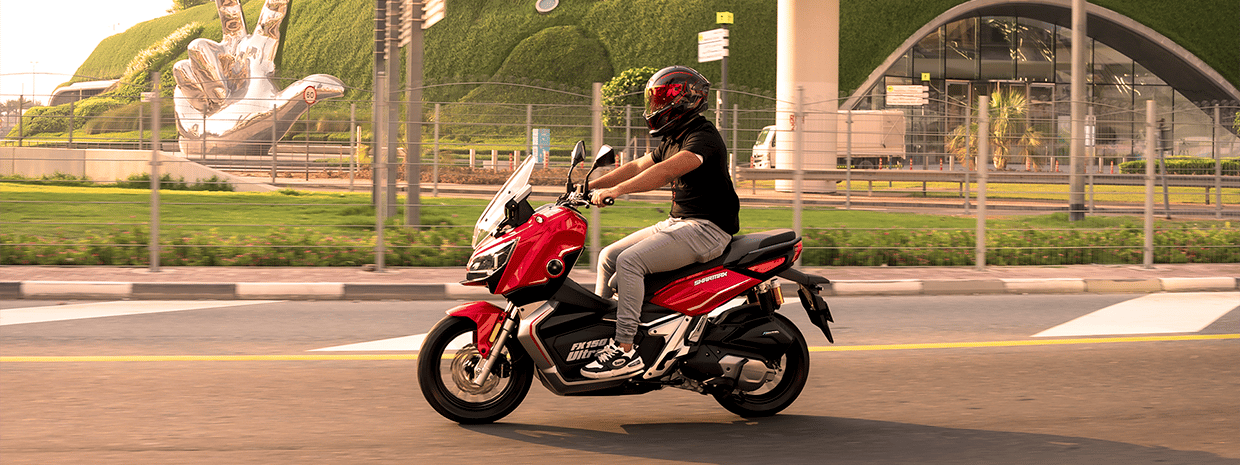
What is a buggy and how to drive one in Saudi Arabia
Learn what a buggy is and how to drive one in Saudi Arabia. Explore safety basics, driving techniques, and off-road handling tips.
14 Aug 2026

Unlike motorcycles or quad bikes, buggies may seem more familiar to riders who know how to drive a car. Actually, a buggy, also known as a UTV, looks like a simplified version of a car – it has a steering wheel, rider's and passenger's seats with safety belts, and an automatic transmission. And that's where similarity ends. Buggies are meant for off-roading, and they are far more agile and light, which means your basic riding skills behind a car's wheel may not be enough. You need to understand the transmission modes, know how to accelerate and brake correctly, choose the right trajectory on turns, and know how to handle different surfaces.
In this complete buggy driving guide, we'll go through the main techniques, from braking and turning to tackling steep slopes and muddy sections, so that you feel confident on your next buggy ride in Saudi Arabia.
What is a buggy and how does it work?
If you are still confusing a buggy with an ATV and keep asking yourself, "what is a UTV?", here is a quick breakdown.
The main features that allow you to recognize buggies on the spot and distinguish them from a quad bike are:
- a steering wheel;
- at least two seats side-by-side;
- pedal controls;
- safety belts;
- a car-like frame, often without full doors or a windshield.
For the purposes of this buggy driving guide, we will use buggy and UTV as interchangeable terms. Among many buggies for sale, you will mostly see sport-oriented versions rather than heavy-duty utility machines.
In its basic setup, a buggy borrows much of its logic from a car. The driver sits in a car-like position, with the passenger beside them. That seating arrangement explains the other common name for this vehicle type: side-by-side.
This difference in layout also changes how to drive a UTV. Instead of handlebars and hand controls, like on a quad bike, the driver works with a steering wheel and pedals, which makes the experience feel more familiar to anyone used to driving a car.
UTV driving tips for beginners
Understanding buggy controls
One of the first things to learn when figuring out how to drive a buggy is the control layout. A buggy uses a regular steering wheel, which is one less thing to think about if you're coming from a car.
The gearbox is automatic, running on a CVT-style transmission. The shifter usually sits centrally between the seats, or occasionally off to the side near the driver. The gear markings are close to what you'd find in a car:
- P (Park): locks the transmission for standing still
- R (Reverse): backs the vehicle up
- N (Neutral): engine running, no gear engaged
- H (High): the standard driving range for normal conditions
- L (Low): a lower gear ratio for climbs, towing, or rougher off-road sections
Pedals work the same way as a car too — throttle on the right, brake on the left, no clutch to worry about. Throttle response is straightforward: the harder you press, the faster it goes.
If the model has four-wheel drive and a locking differential, those switches typically sit on the center console:
- 2WD: rear-wheel drive
- 4WD: full four-wheel drive
- 4WD Lock: four-wheel drive with the differential locked
Rear-wheel drive is usually enough on flat, dry roads. Four-wheel drive earns its keep in mud, snow, ruts, climbs and rocky sections — this is one of the more practical UTV driving tips worth remembering before you head off-road.
This is also where UTV driving for beginners requires a little restraint. A locked differential can make the buggy harder to turn on high-grip surfaces and place additional load on the drivetrain, so it should not stay engaged when it is no longer needed. Only engage the differential lock where the wheels genuinely need the extra grip, since running it on hard, dry surfaces makes the buggy turn worse and puts unnecessary strain on the transmission.
Note: Switch drive modes, gears and locks only after coming to a complete stop with the brake held down. It's easier on the drivetrain, and it lets the system engage cleanly instead of clunking into place.
Sitting properly before you start
Good buggy safety starts before the vehicle moves. Many modern side-by-sides use bucket-style seats with multi-point harnesses that help keep the driver and passenger securely positioned when the trail gets rough. Sport models often place the seats lower in the chassis, which helps keep the vehicle's centre of gravity down.
Before setting off:
- fasten the seat belt or harness securely;
- adjust the seat so you can press both pedals comfortably without stretching;
- position yourself close enough to the steering wheel to keep your arms slightly bent;
- keep your back against the seat and both feet firmly supported.
One of the simplest UTV safety tips is to avoid sitting too far from the controls. On rough terrain, a relaxed but stable position helps absorb bumps while keeping your steering and pedal inputs precise. Avoid bracing yourself with a completely straight arm or leg, as this makes it harder to react smoothly when the buggy moves beneath you.
Starting off and choosing the right gear
The startup sequence is straightforward:
- Make sure the selector is in P (Park) or N (Neutral).
- Press and hold the brake pedal.
- Switch on the ignition with the key or control switch.
- Start the engine according to the owner's manual.
- Let the engine settle briefly before selecting a drive range.
- Keep the brake pressed while shifting into H or L, then release it gradually and apply the throttle smoothly.
Ease onto the throttle and the buggy pulls away smoothly. Avoid stabbing the pedal, particularly on loose or slippery surfaces, since a hard input there is the fastest way to lose the back end. This is basic, but it's one of the buggy driving tips that separates a clean first outing from a nervous one.
High range (H) suits flat routes and light dirt tracks just fine. Low range (L) is the better call for mud, climbs, rocky ground, forest ruts, towing a trailer, or running with a full load — it delivers more pull at low speed and keeps the CVT from overheating under strain.
Braking
Most modern buggies run hydraulic disc brakes across all four wheels, which bite hard and immediately. The catch is that hard braking in mud or sand can send the back end sliding sideways without much warning. So:
- On dry ground, brake evenly and firmly, without jabbing at the pedal
- On slippery surfaces, use short, broken pulses instead of one continuous press
- On descents, drop into low range (L) so the transmission does most of the speed control, with the brake pedal only for fine adjustment
- After crossing water, tap the brakes a few times to dry out the pads
Solid buggy safety starts with braking habits like these — knowing when to modulate rather than stomp is what keeps the buggy pointed where you actually want it to go.
Taking and exiting corners smoothly
Cornering is one of the areas where buggy driving tips matter most. Generally, a UTV is wider and heavier than an ATV, so sudden steering can upset the chassis quickly, especially on loose ground.
A few habits make turns much more controlled:
- Slow down before the corner and begin steering early rather than turning the wheel sharply at the last moment.
- Keep the throttle steady. On sand, gravel or mud, too much acceleration can break traction and push the buggy into a slide.
- Look through the turn rather than directly over the front bumper. This makes it easier to judge the line and steer more smoothly.
- Keep your hands relaxed on rough ground. A death grip on the wheel can make every bump feel worse and may lead to unnecessary steering corrections.
For UTV driving for beginners, the simplest rule is to separate the main actions: brake first, turn second, then accelerate once the buggy is stable again.
Knowing how to enter a corner is only half of how to drive a UTV properly. The exit matters just as much.
As the front wheels begin to straighten:
- Gradually return the steering wheel towards the centre rather than snapping it back.
- Add throttle only once the buggy has settled, especially on loose or wet ground.
- On rocks and bumps, avoid sudden acceleration that could make the tyres lose grip.
- Keep looking ahead. If the corner leads directly into a descent, rut or rough section, finish the turn at a controlled speed before accelerating again.
One of the most useful UTV driving tips here is simple: do not rush the exit. Smooth steering and progressive throttle usually give you more control than trying to accelerate hard before the buggy is pointing straight again.
Buggy riding tips on different terrain
Mud, ruts and water crossings
Switch to 4WD before you hit a muddy section, and add the differential lock and low range if the ground looks bad enough to need them. Don't just drive in blind — check where the ruts run deepest, where there's a firmer edge to aim for, and where you'd actually be able to hook a winch line if the buggy gets stuck.
In mud, steady traction matters more than top speed. Keep your line smooth, avoid stopping mid-section, and don't yank the wheel around. If the buggy starts spinning its wheels, don't just bury the throttle — try adjusting the angle slightly, backing out along your own tracks, or using the winch instead of forcing it.
Before any water crossing, check the depth and what's underneath. If the model doesn't have proper air intake protection for deep water, don't push past a safe level. Keep moving steadily through the water rather than stopping halfway, and once you're out, test the brakes and make sure the engine's running clean before continuing.
Sand and dune riding
Dunes ask for a different mindset than mud or rock. Speed becomes your friction here — momentum is what keeps you on top of the sand instead of digging into it, which is the opposite instinct from most other terrain on this list. A few things worth knowing before you head into dune country:
- Lower your tire pressure before hitting sand — a wider contact patch floats the buggy instead of letting it sink
- Approach dune crests straight on, never at an angle, since a sideways approach on a slope this loose is one of the fastest ways to roll
- Keep momentum steady on the way up rather than gunning it right at the top, where a sudden power spike can send the front end airborne on the other side
- Never assume what's on the other side of a blind crest — ease over slowly enough to react to whatever's there
- If you bog down, don't fight it with full throttle — back off, reverse along your own tracks, and try a slightly different angle
Learning how to drive a buggy on dunes is largely about reading the surface. Deep churned-up sand may require more momentum, while firmer sections give the tyres much more grip.
Climbs and descents
On an uphill section, choose your line before you start. Where the vehicle and terrain require it, engage Low range, 4WD and the appropriate differential setting in advance. Keep the throttle confident but smooth.
If it becomes clear that the buggy will not make the climb, do not keep forcing it until the wheels lose all traction. Stop safely and plan the next move according to the procedure recommended for your vehicle.
Uphill:
- select the appropriate low range and 4WD before the climb;
- build enough momentum before the slope and keep the throttle steady;
- avoid sudden acceleration that can make the tyres spin;
- if the climb cannot be completed, stop safely and follow the vehicle's recommended recovery procedure.
Downhill:
- select the appropriate low range before descending;
- keep the wheels as straight as the terrain allows;
- brake progressively rather than hitting the pedal sharply;
- use engine braking together with controlled brake input.
For UTV driving for beginners, steep side slopes are best avoided until basic control becomes instinctive. On this terrain, power matters far less than keeping the buggy balanced and predictable.
Buggy safety tips
A few basic rules make a big difference to buggy safety, especially when passengers are involved or the surface becomes unpredictable.
Buckle up before moving
The driver and every passenger should be properly strapped in before the buggy starts. Seat belts or harnesses should stay fastened throughout the entire ride.
Wear proper riding gear
Essential UTV safety tips include wearing a helmet, goggles, gloves and closed footwear, particularly on rocky, muddy or technical routes.
Keep arms and legs inside the cabin
Hands, elbows and feet should never extend beyond the frame. If the buggy tilts, hits a rock or drops into a rut, exposed limbs can be injured very quickly.
Avoid sudden movements
Passengers should not unfasten their harness, lean outside the cabin or reach for a phone while the buggy is moving. Sudden movements can also distract the driver at exactly the wrong moment.
Do not panic if the buggy starts to slide
If the rear or side begins to drift, avoid instinctively flooring the accelerator or making a sharp steering correction. Keep your inputs controlled and respond to the direction of the slide rather than fighting it with sudden movements.
Follow the instructed line through water and difficult terrain
On a guided ride, take puddles, water crossings and technical sections along the line shown by the instructor. A route that looks shorter or easier from the driver's seat may hide deeper water, soft ground or rocks.
Increase the distance when conditions worsen
Leave more space between buggies when the ground becomes slippery or dust, rain or darkness reduces visibility. Extra distance gives you more time to react if the vehicle ahead slows suddenly or gets stuck.
Do not deliberately provoke a slide
intentional drifting should be left for a controlled exercise and only attempted when an instructor specifically allows it. For UTV driving for beginners, learning how to preserve traction is far more useful than learning how to lose it.
Carry recovery and emergency equipment
For longer or more demanding trips, take a first-aid kit and basic recovery gear. A tow strap, winch and radio communication become especially useful when the route takes you farther from immediate assistance.
Keep a safe speed for the terrain
Adjust your speed before the surface changes rather than reacting once the buggy is already unsettled. Slow down for blind crests, tight turns, rocky sections and areas with limited visibility. One of the most practical buggy driving tips is to leave yourself enough time to react instead of relying on last-second braking.
Which buggy to choose for different riding needs
Junior 250
— for younger and first-time drivers. The Junior 250 is the entry point in this group. It’s a compact off-road buggy for younger riders or beginners who need stable handling and a more confidence-building introduction to off-road driving. It makes the most sense for supervised practice, easier tracks and learning the basics of steering, braking and throttle control before moving on to larger machines. For UTV driving for beginners, this is the least intimidating option on the list.
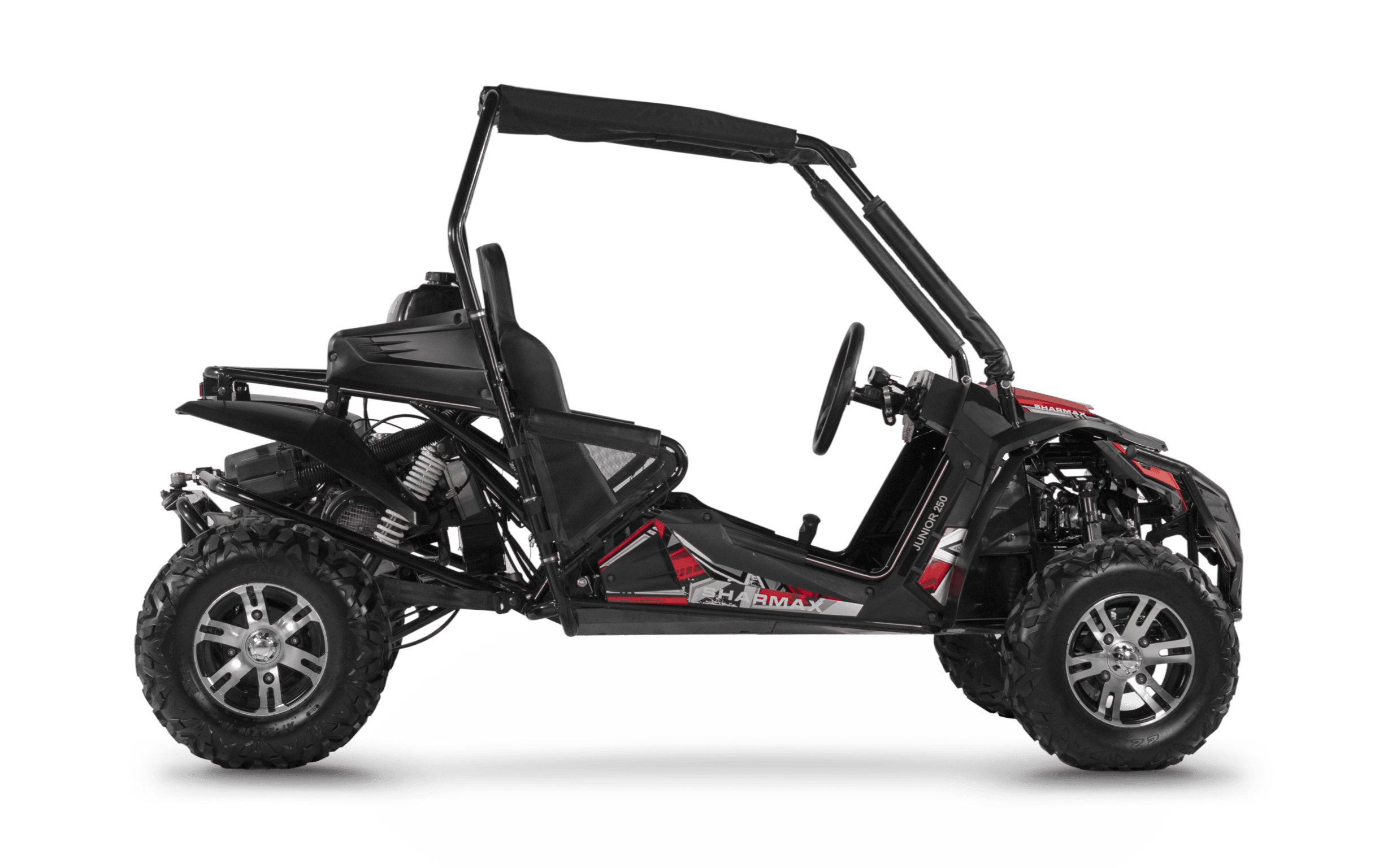
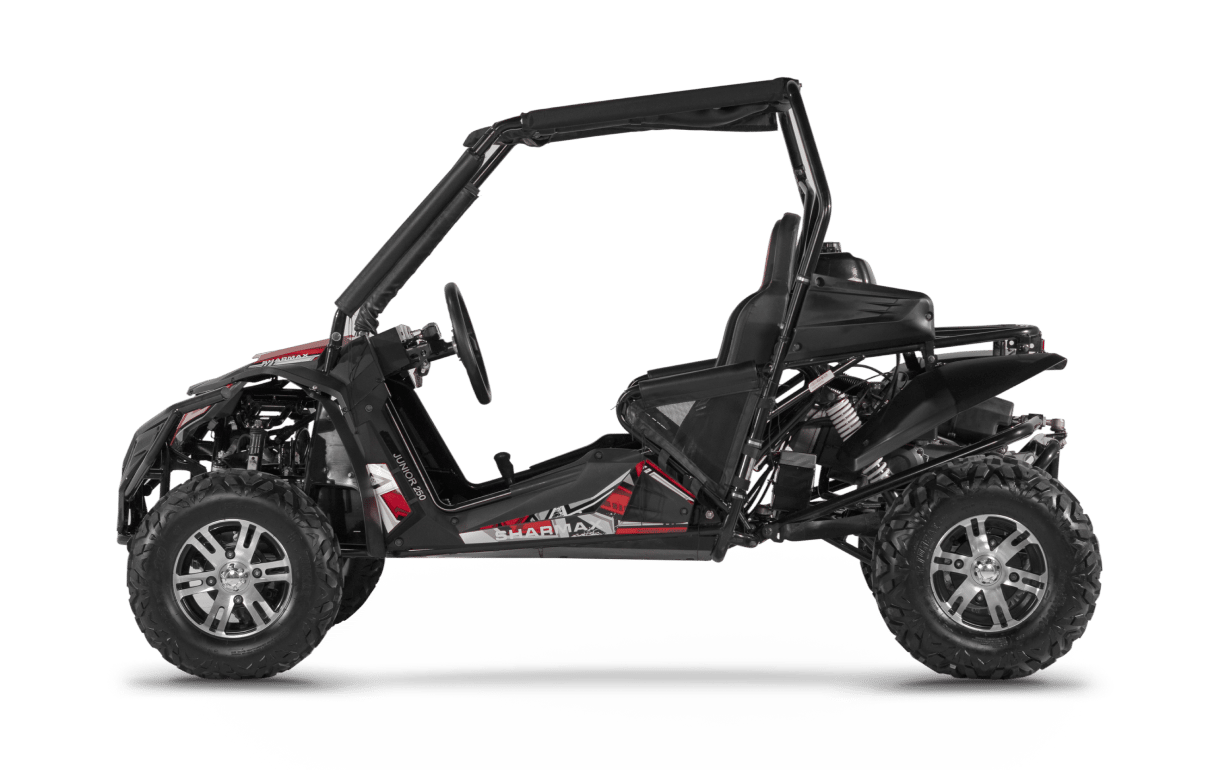
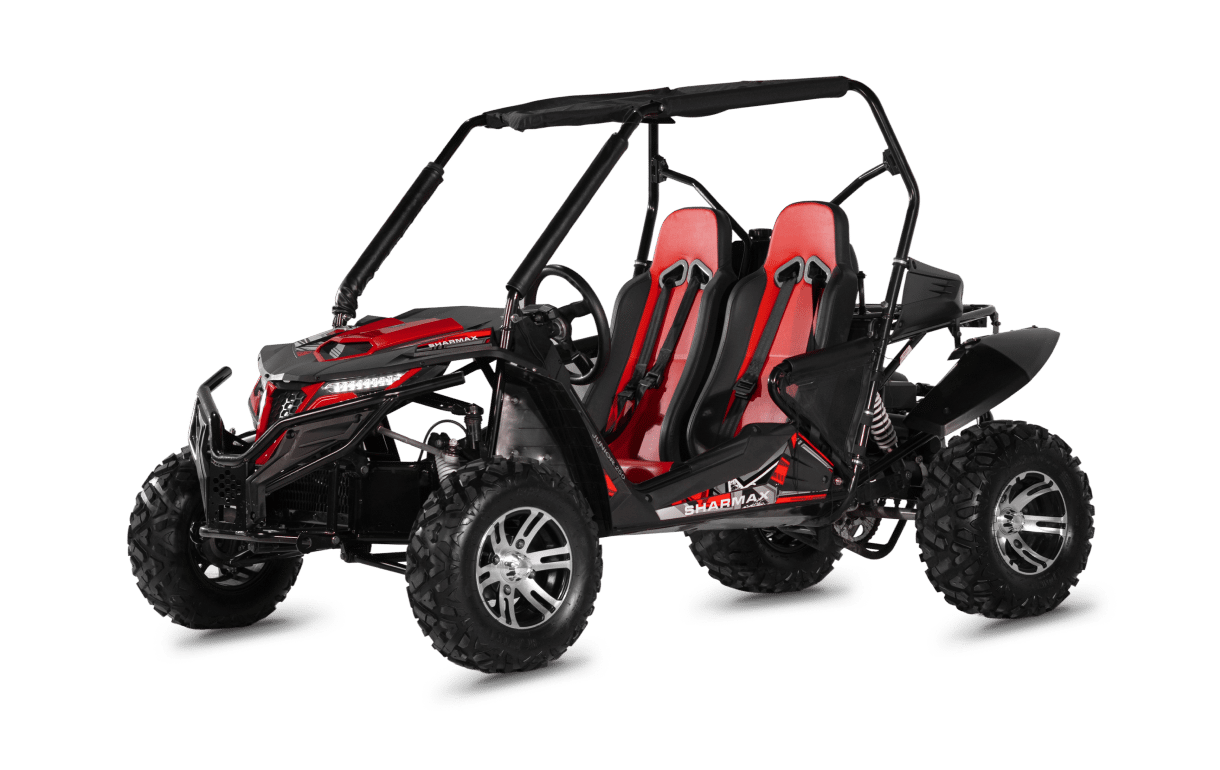
Max speed (km/h)
60
Displacement (cc)
169
Fuel tank capacity (L)
10
Power (hp)
17
Seating capacity
2
Predator 420 2-Seater
— for beginners moving beyond basic track. The Predator 420 2-Seater is a step up for riders who want more capability without immediately jumping into the high-performance class. A two-seater buggy made for sand tracks, with high clearance and wide tyres. That makes it a good recreational all-rounder for beginners with some experience and intermediate drivers. It is particularly suitable for desert outings.
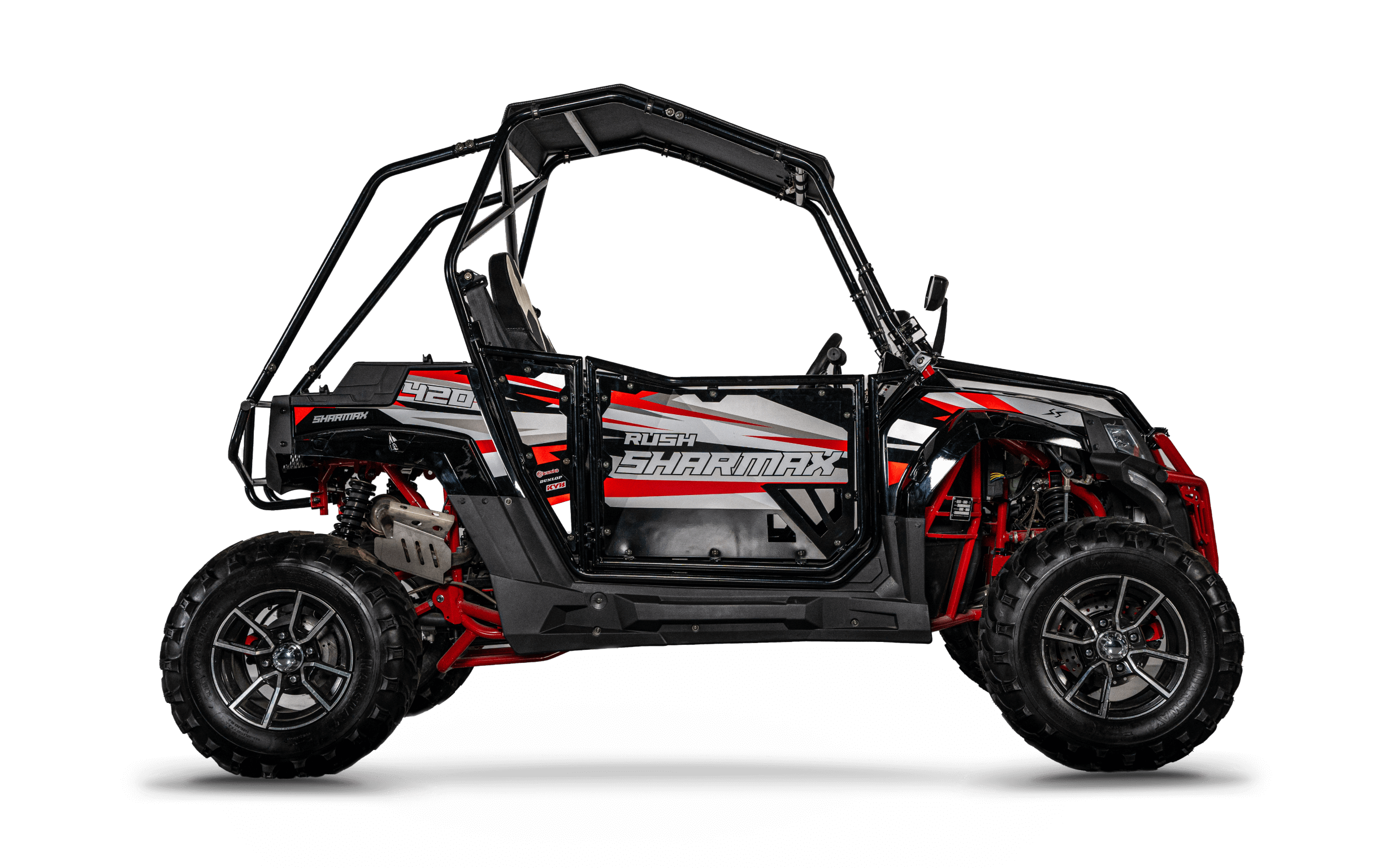
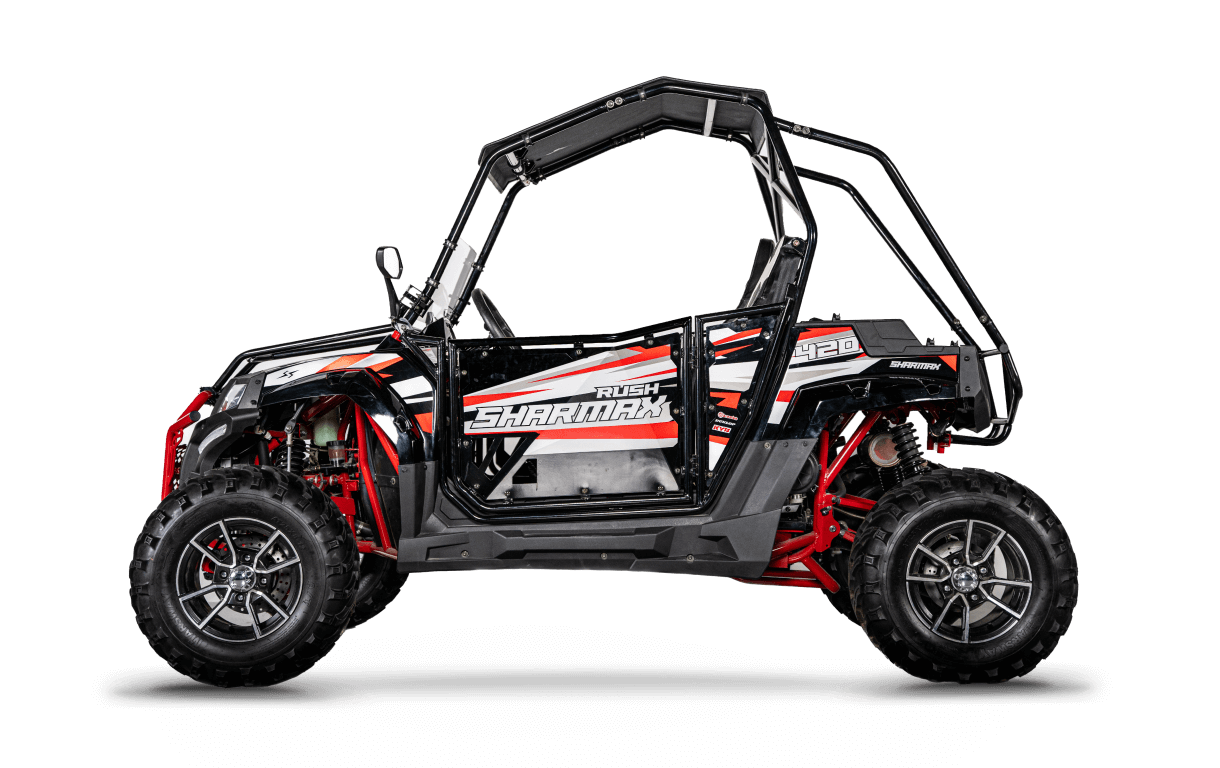
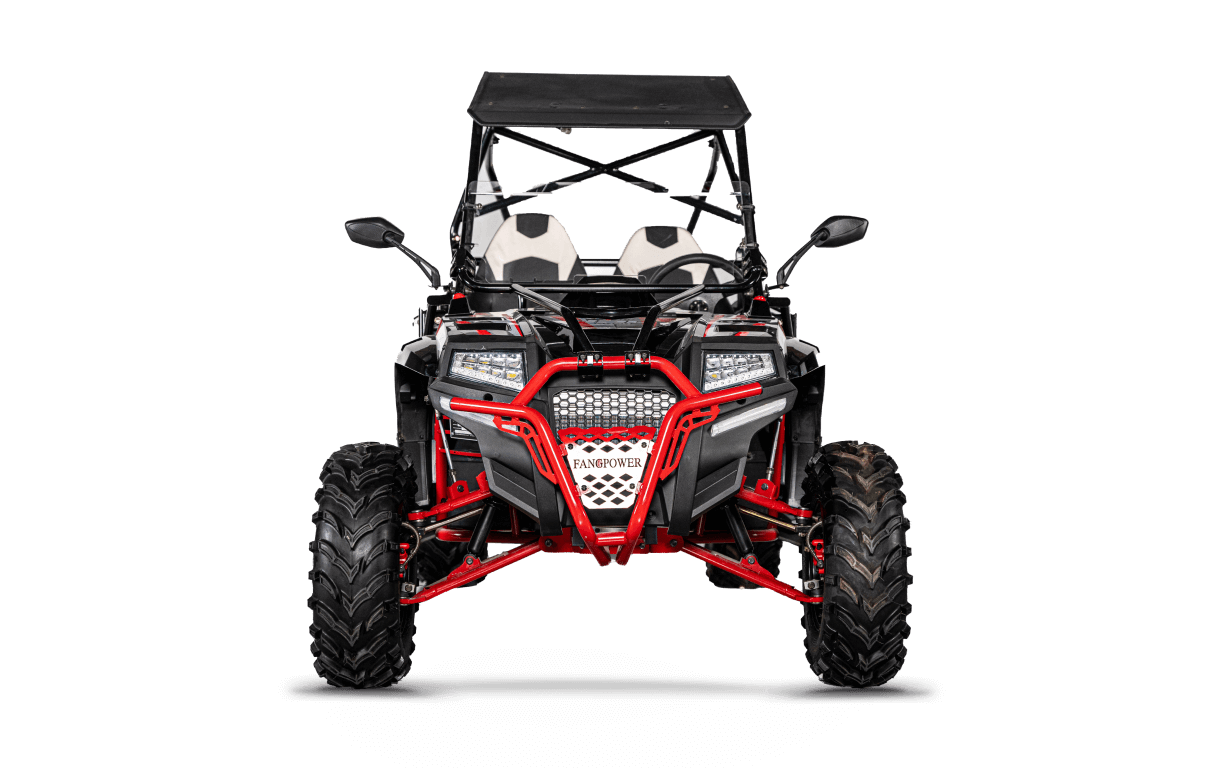
Max speed (km/h)
75
Displacement (cc)
400
Fuel supply system
EFI
Ground clearance (mm)
300
Power (hp)
25
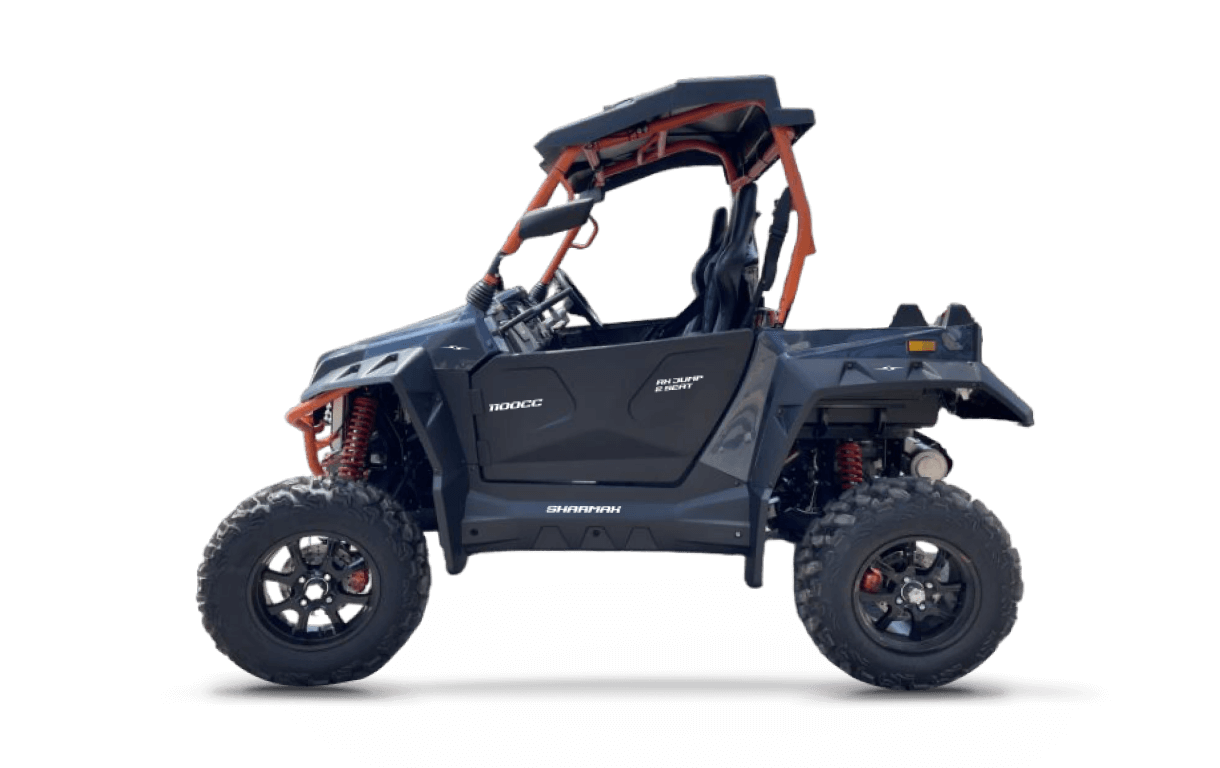
Jump 1100 2-Seater
— for experienced off-road drivers. The Jump 1100 2-Seater moves into the professional side of the range. Sharmax positions it as a high-performance side-by-side for demanding off-road use, and the model appears in the brand’s professional buggy category. This is a better match for experienced drivers taking on steeper dunes, rougher trails and longer off-road sessions. Its two-seat layout also suits riders who want a more focused driving experience without carrying a larger group.
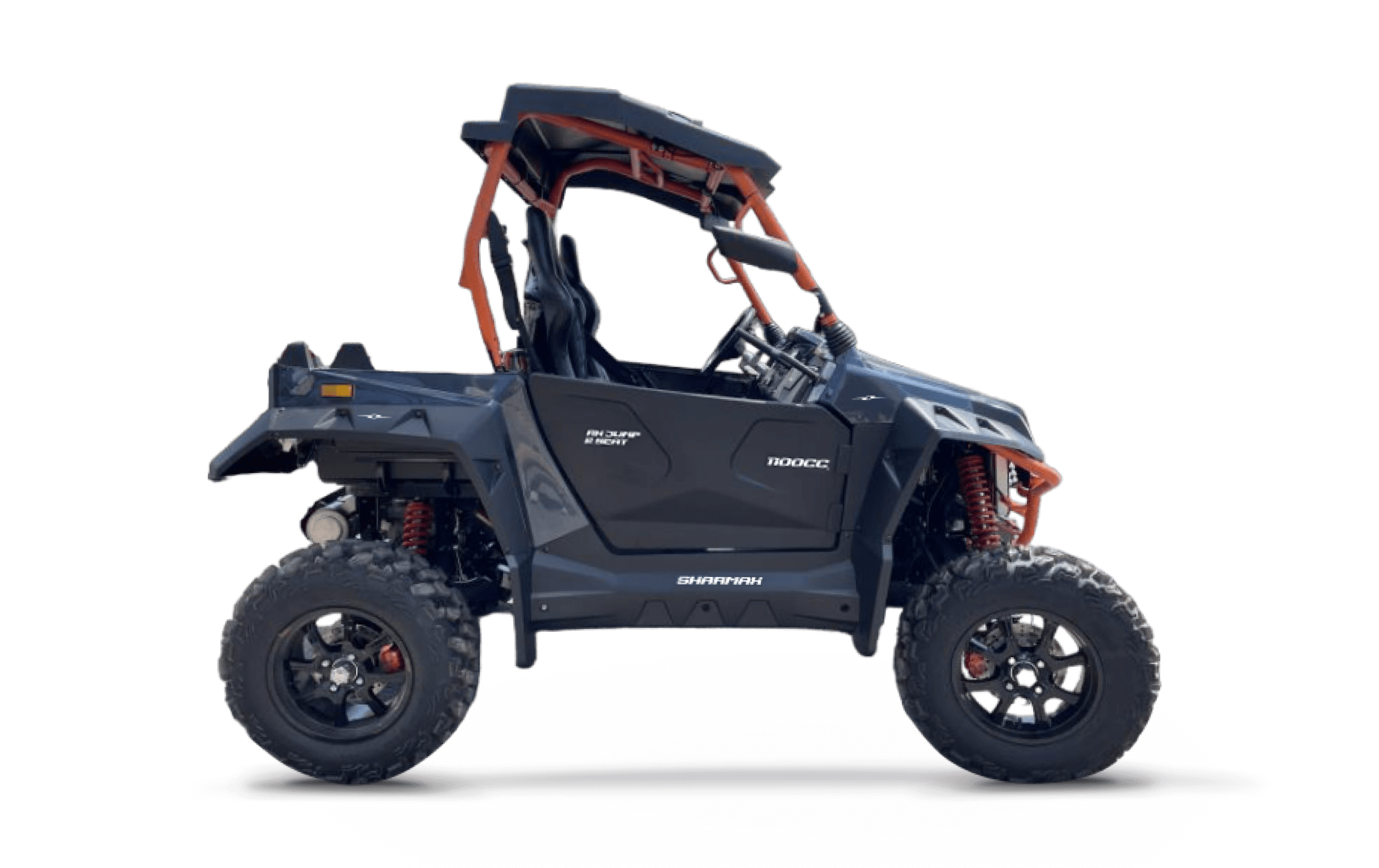
Power (hp)
25
Max speed (km/h)
100
Ground clearance (mm)
100
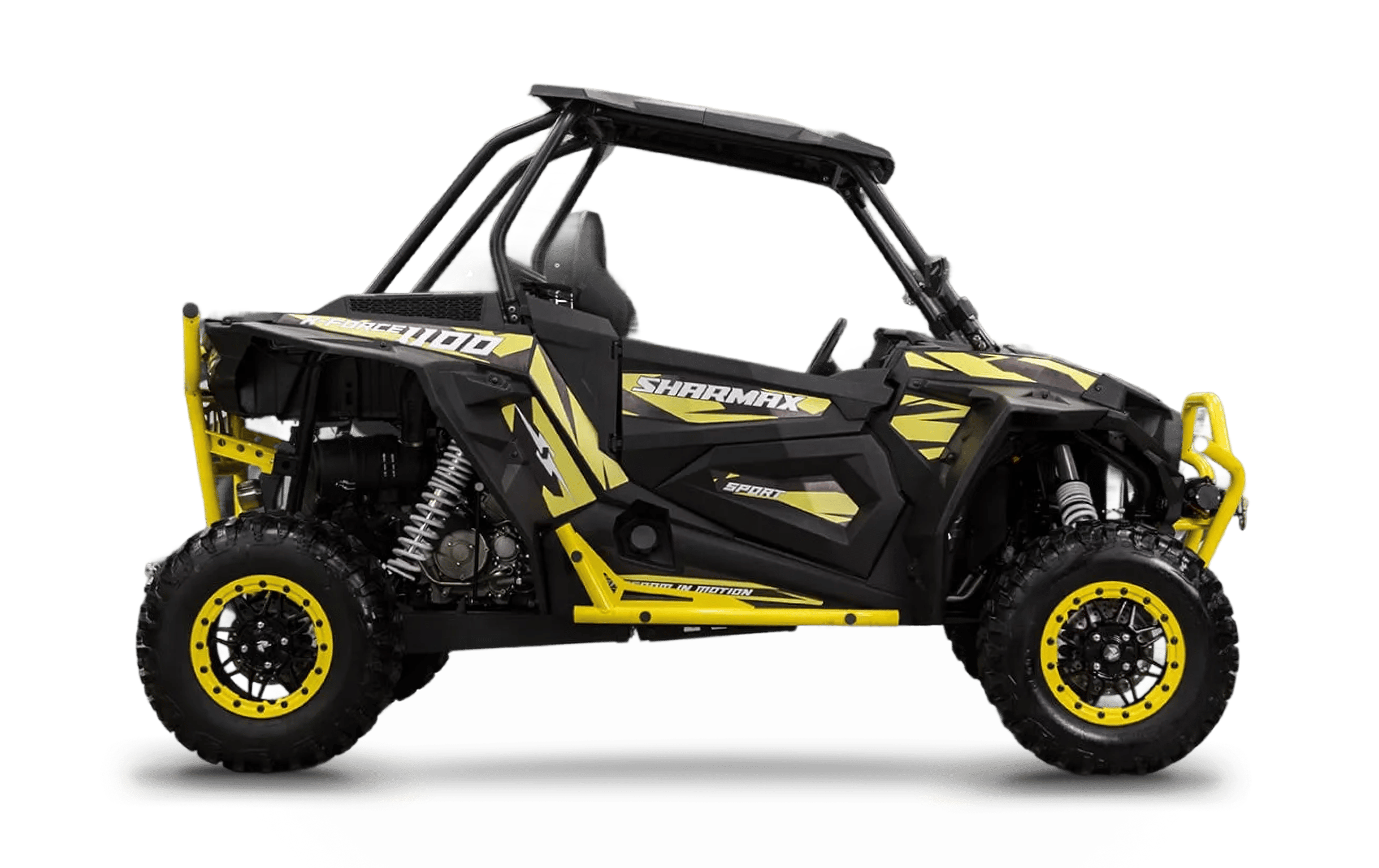
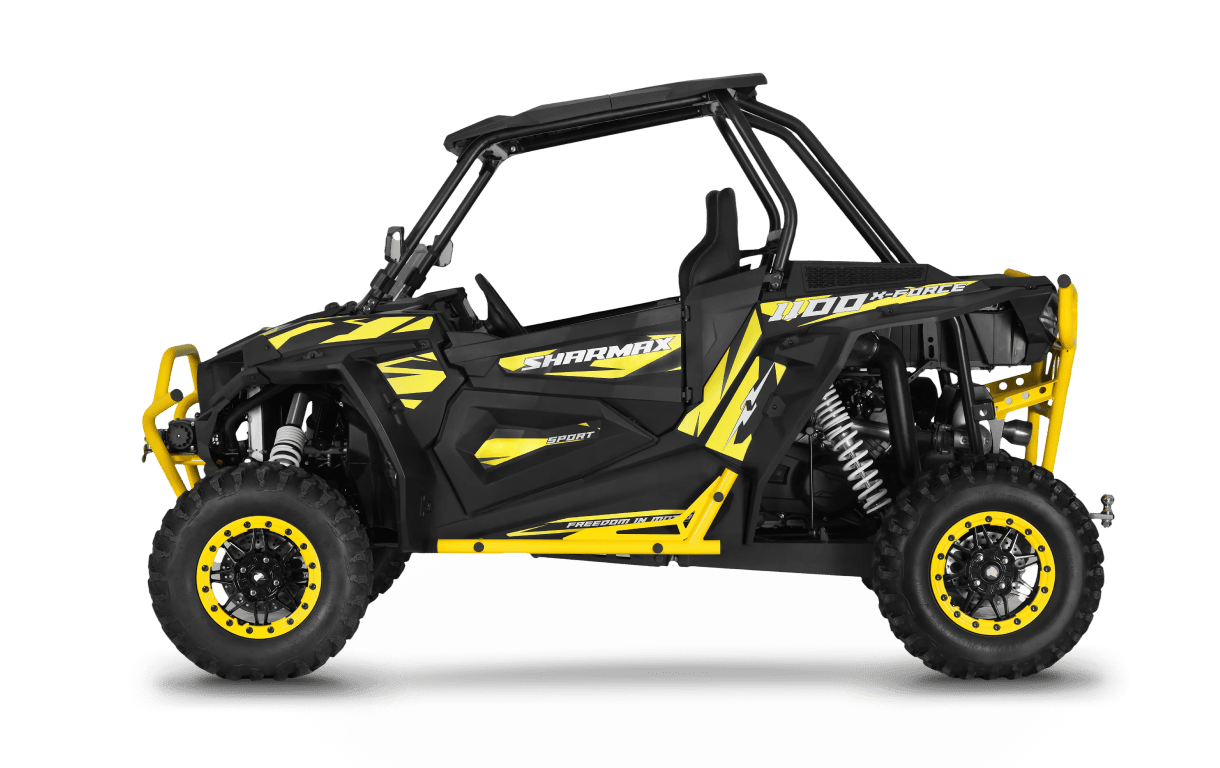
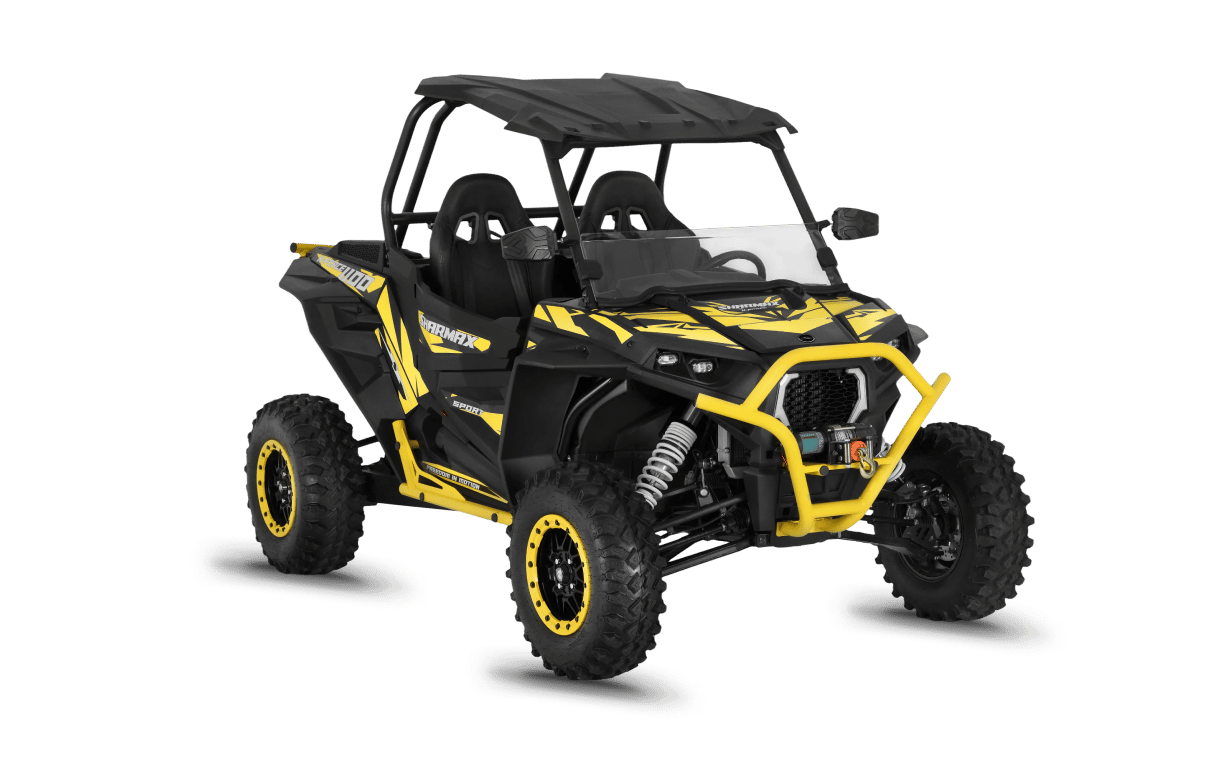
XForce 1100 Sport
— for experienced and performance-focused drivers. This model is for riders who already know how to drive a UTV and want considerably more performance. A high-performance side-by-side built for extreme terrain and precise control, and the model is part of the professional buggy range. It is best suited to open desert, demanding trails and experienced drivers who can make proper use of its power. This is not where we would send someone for their first buggy lesson.
Power (hp)
93
Max speed (km/h)
130
Displacement (cc)
976
Ground clearance (mm)
360
Buggy models
Professional
XForce 1100 Sport X4
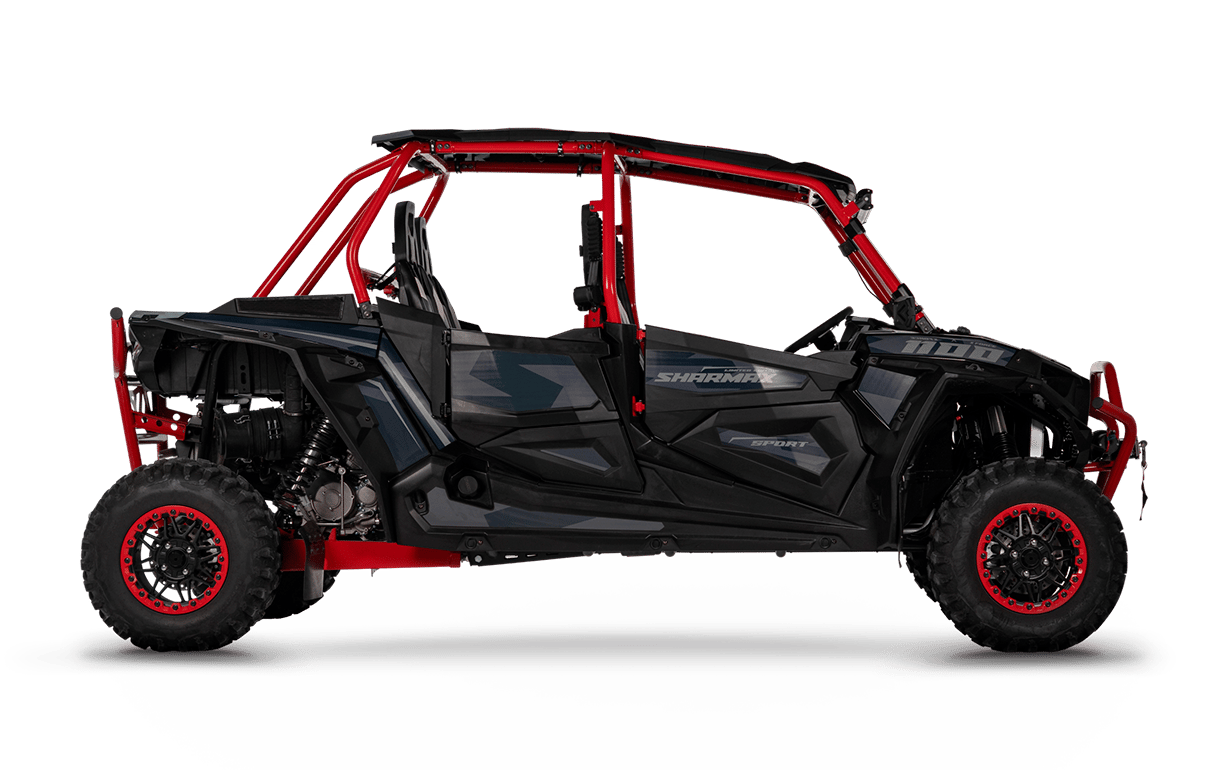
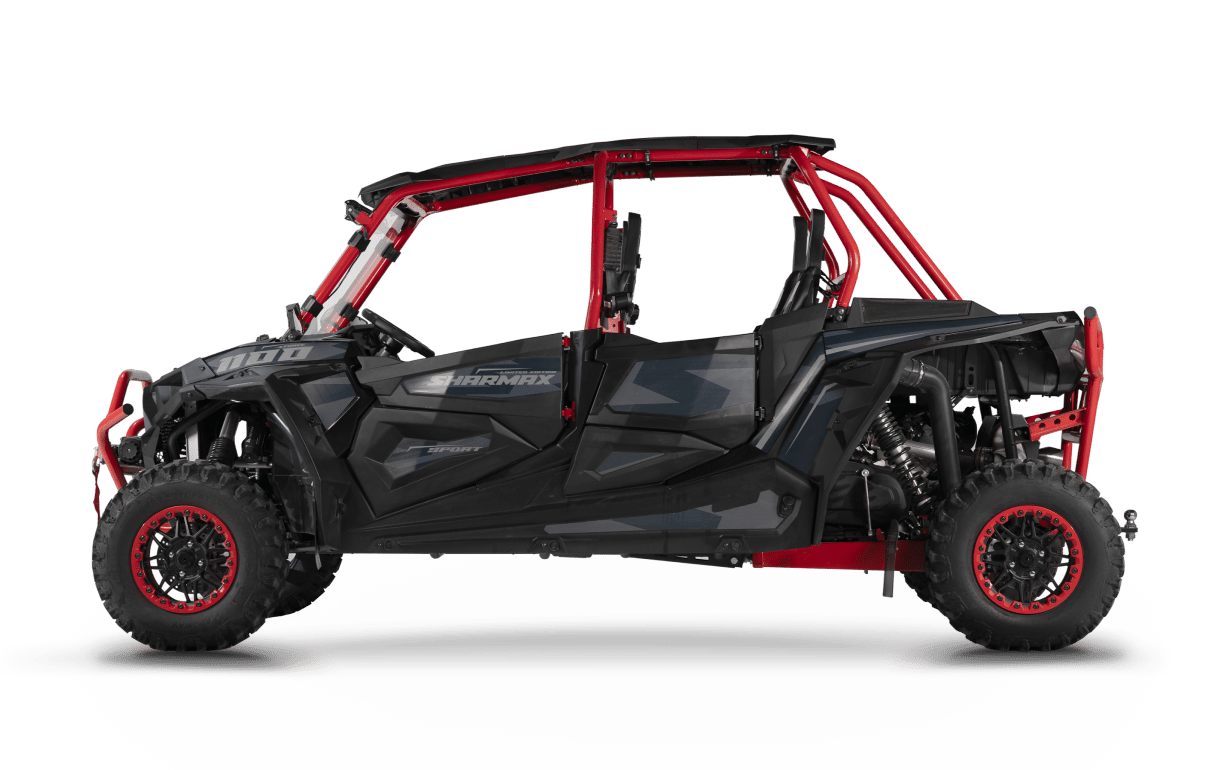
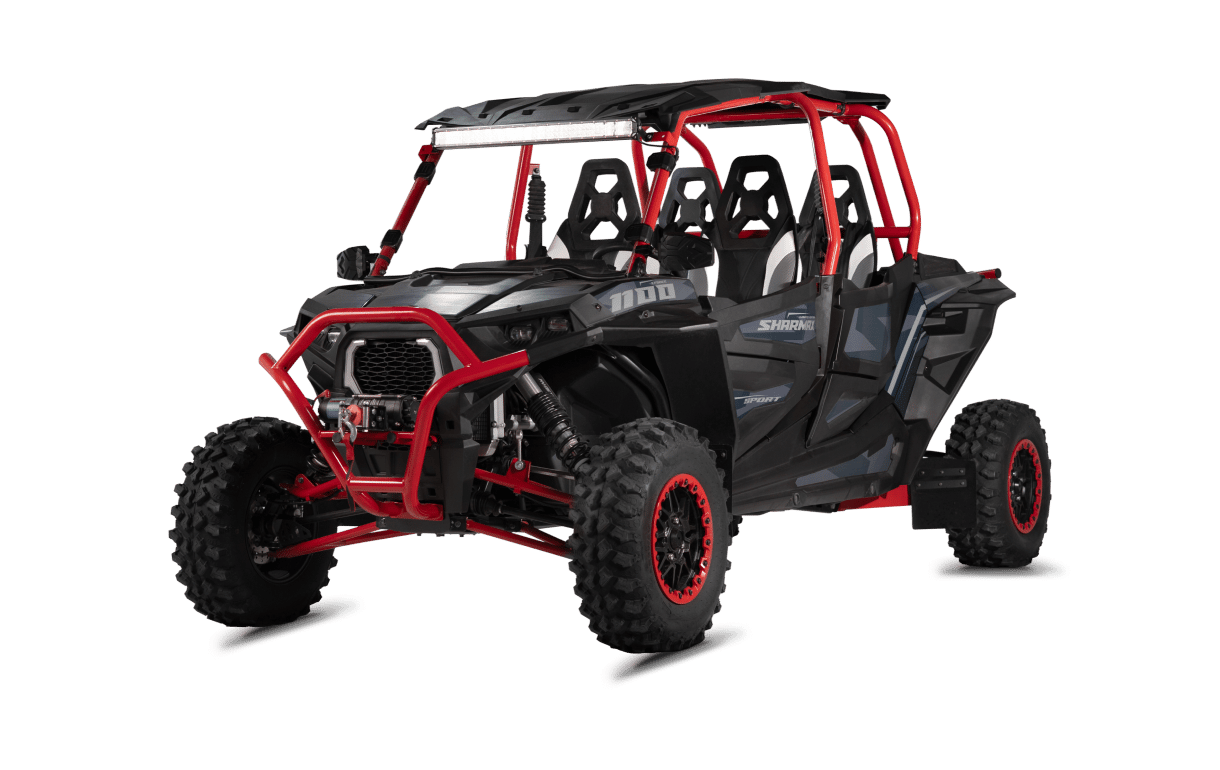
— for experienced group of riders. The XForce 1100 Sport X4 keeps the performance-oriented character of the XForce family but adds seating for four. Sharmax positions it for fast off-road routes while combining strong traction with four-seat practicality. It suits experienced drivers who want to take several passengers on desert trips without moving into a purely utility-focused vehicle. The four-seat layout also makes it the most practical option here for group adventures, although the extra size means the driver should already be comfortable handling a larger UTV.
Displacement (cc)
989
Power (hp)
98
Max speed (km/h)
130
Ground clearance (mm)
360
Seating capacity
4