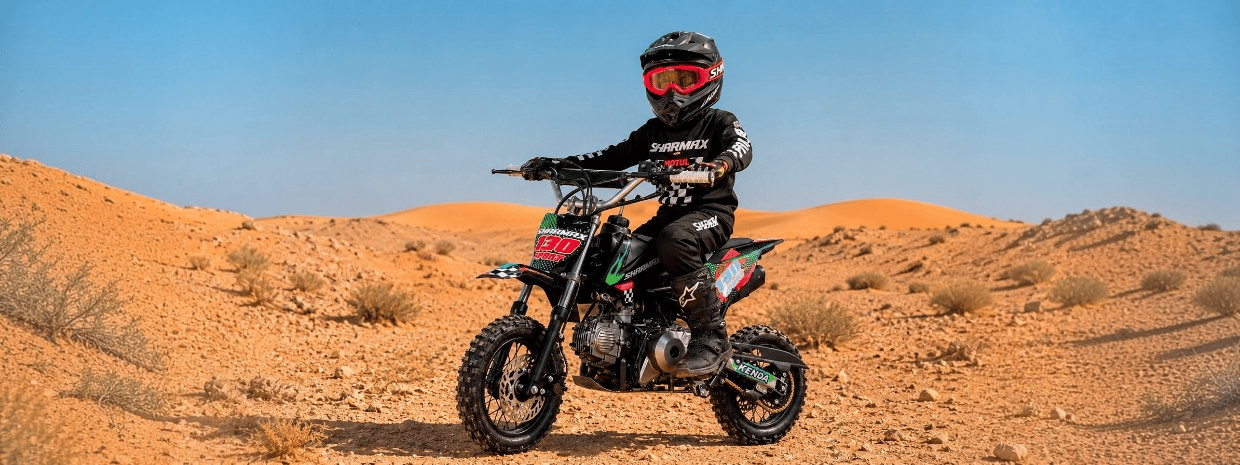
For 130–150 cm
Seat height from 620 mm – The smallest riders need a bike that allows at least toe contact with the ground. The Sport 130 Mini fits this range comfortably.
Learn how to choose an enduro bike by height and weight in the UAE. Find the right size for comfort, control, and confident riding.
23 Jul 2026
What else should you consider besides enduro power and size? A new rider can be overwhelmed when going through a myriad of off-road bikes for sale, as there are so many things to keep in mind at once. We know how to narrow down the choice to just several most suitable models. The simplest way is to focus on two main parameters: your height and weight, as these are the most important factors to base your decision on. In this quick guide, we will provide clear instructions on how to choose the enduro bike size that is right for your physique.
Among all the numbers on a spec sheet — power output, weight, suspension travel — seat height is the one a new rider should look at first. Everything else can be adjusted or learned around. Seat height determines whether you can control the bike easily, especially at a standstill.
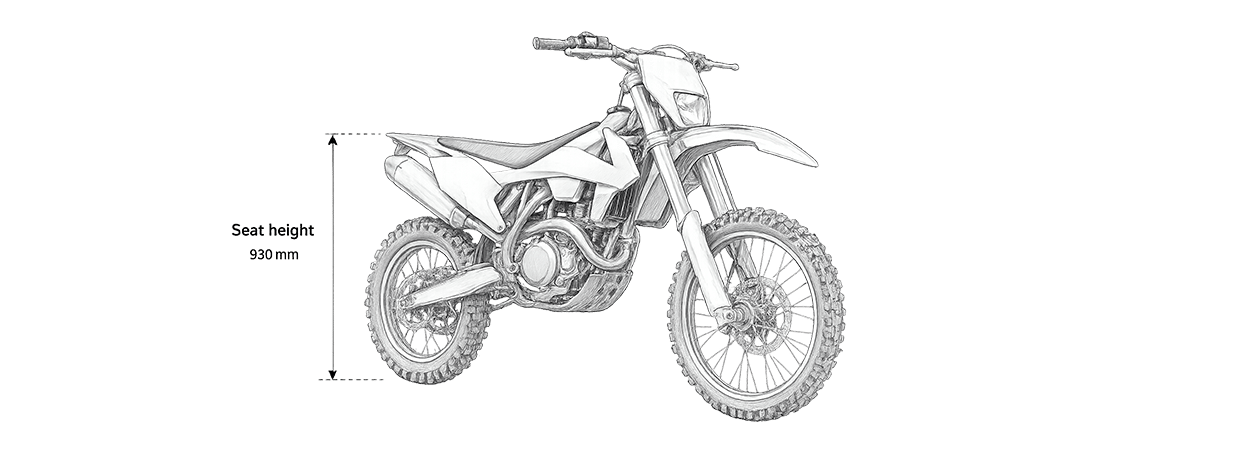
Seat height is the distance from the lowest point of the seat to the ground when the bike is standing upright with no load. That measurement determines how easily you can reach the ground with your feet. In enduro riding specifically — where low-speed manoeuvring, technical sections, and sudden stops are part of every ride — being able to confidently put a foot down is a control requirement rather than a matter of comfort. A bike that is too tall for the rider creates constant anxiety at low speed and a genuinely elevated risk of dropping the bike on terrain that should be straightforward.
There is a simple check that tells you more about enduro bike sizing than any chart. Sit on the bike. Can you place the balls of both feet on the ground at the same time, comfortably, without the bike pulling to either side? If yes, the enduro bike size is a reasonable match. A full flat foot on each side is ideal but not always necessary — most enduro riders, even experienced ones, ride bikes where full foot contact is not possible.
What is not acceptable for a new rider: stretching to reach the ground with the tip of one foot on a good day. That is not a sizing edge case. That is the wrong bike.
That confident contact gives a huge psychological advantage. It removes the fear of stopping and helps you feel in control, instead of sitting helplessly on a "horse" that is clearly one size too big.
Now let's move to the most practical tool in this guide. This simple enduro motorcycle size chart helps you narrow the search and understand which bikes deserve your attention first. Use it as a starting point when choosing the right enduro bike size: find your height range and then check which seat height usually fits it best.
At the same time, treat these numbers as a guideline, not as an absolute rule. Two riders of the same height may have very different leg length and proportions. That is why the final decision should always be made after sitting on the bike yourself and checking how natural the fit feels.
| Rider height | Recommended seat height | Typical bike category | General fit |
|---|---|---|---|
| Around 140–150 cm | Starting at 620 mm | Kids pit bike | A low and manageable starting point for younger riders learning basic balance and throttle control |
| 150–160 cm | 780–840 mm | Larger pit bike / low enduro | A practical option for shorter teens or adults who need easier foot contact |
| 160–170 cm | 840–890 mm | Low to mid-size enduro | A good range for an enduro bike for short riders who want more control at stops |
| 170–180 cm | 890–930 mm | Mid-size enduro | Often the safest middle ground when looking for the best enduro bike size |
| 180–190 cm | 930–960 mm | Full-size enduro | A common fit for adult riders with enough leg length and confidence |
| 190 cm and above | 960 mm and above | Tall full-size enduro | Usually the better direction for an enduro bike for tall riders who need more room to move |
There are two practical ways to choose an enduro bike by height: a rough calculation and a real test sit. The first one helps you narrow the search. The second one tells you whether the bike actually works for your body.
The simplest calculation looks like this:
For example, if your height is 186 cm, the calculation will be:
186 ÷ 2 = 93 cm
93 cm + 2–4 cm = 95–97 cm
Recommended seat height: 950–970 mm
The extra two to four centimeters are added because the suspension compresses under the rider's weight. This is why the number in the spec sheet and the way the bike feels under you are not always the same thing.
The most reliable way is to visit a specialized showroom and sit on several models.
Try the bike in full riding gear, especially with motocross or enduro boots. They can add a little height and change how confidently your feet touch the ground. Once seated, check whether you can support the bike without tension. Then gently rock it from side to side and feel how the weight moves.
After that, stand up on the footpegs. Your enduro riding position should feel natural. The handlebar should not pull you too far forward, and your knees should hold the bike comfortably without forcing your body into an awkward angle.
Want to check the fit in person? Visit a Sharmax showroom in Dubai, and test sit different enduro models. Our expert team will help you choose the bike that feels right.
If the bike you want sits slightly above your comfortable reach, there are several proven ways to close that gap without switching to a smaller machine.
None of these solutions are unusual. Most enduro riders below 170cm are running at least one of them.
For tall riders, the problem goes the other way. A standard-geometry enduro bike on a tall rider looks uncomfortable before it even moves, and usually feels that way too. Knees too high, back rounded, arms bent at awkward angles — the enduro riding position suffers and so does control.
The good news is that tall riders have just as many adjustment options as shorter ones:
For tall riders, choosing the right enduro bike size also means looking at full-size machines with seat heights from 930mm upward from the start rather than trying to stretch a mid-size bike beyond its geometry.
Rider weight matters as much as height, because the suspension has to work under your actual load. From the factory, most enduro bikes are set up for an "average" rider of around 75–80 kg. If your weight is far below or above that range, the standard suspension settings may not behave properly.
A lighter rider may not compress the suspension enough. The bike can feel harsh, nervous, and too eager to bounce off bumps instead of tracking the ground. A heavier rider faces the opposite problem: the suspension can sit too deep in its travel and bottom out on bumps, landings, or sharp hits. That is not just uncomfortable. It can reduce grip and make the bike harder to control.
Weight ranges and what they mean for suspension:
That is why choosing an enduro bike by weight should always include suspension setup. For a deeper setup process, read our full guide on how to adjust enduro suspension before your first serious off-road ride.
Engine displacement determines power output, and power output needs to match the rider.
The principle is simple: heavier riders need more torque to climb steep sections confidently and maintain momentum on difficult terrain.
For light riders and complete beginners, 125cc to 250cc is the right starting point. These machines forgive mistakes and let the rider focus on technique rather than managing a motor that wants to get away from them.
Riders at 90kg and above will find the smaller displacement range starts to feel inadequate on steeper climbs and technical sections. The 250cc to 450cc range provides enough torque to carry heavier riders through demanding terrain without the engine struggling, while remaining controllable enough that the power works for the rider rather than against them.
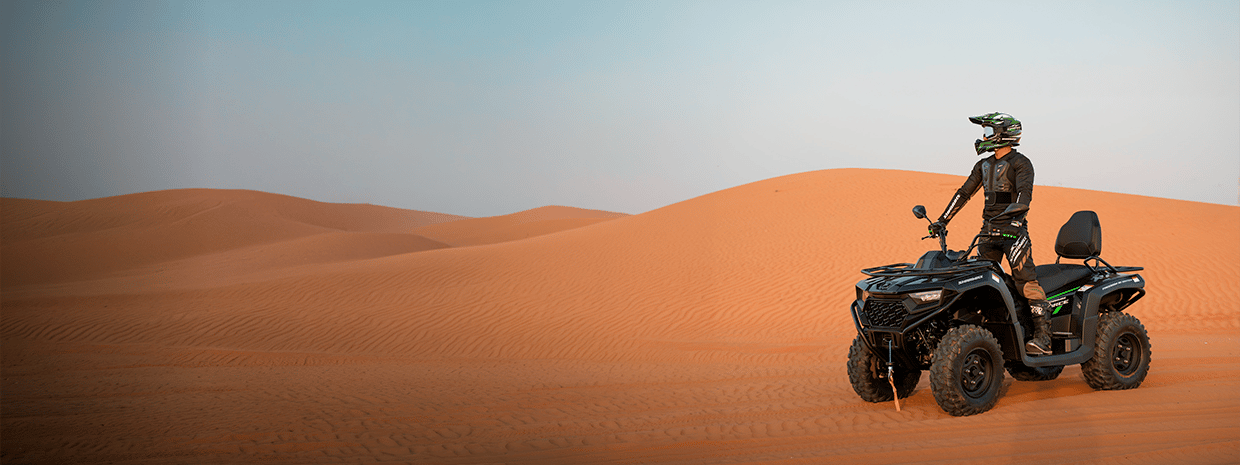
We have selected several common Sharmax pit bike and enduro models for riders of different heights.
Seat height from 620 mm – The smallest riders need a bike that allows at least toe contact with the ground. The Sport 130 Mini fits this range comfortably.
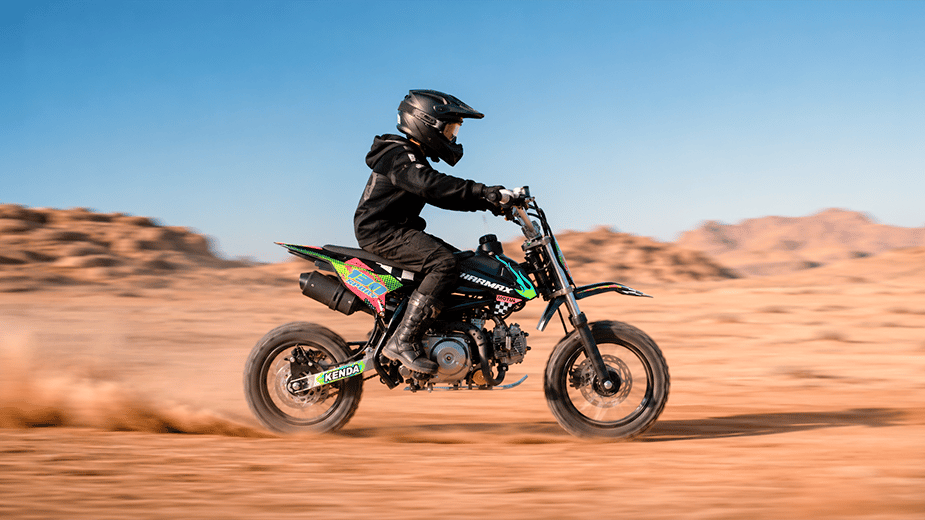
Seat height from 800–815 mm – Stepping up from pit bike territory into proper junior enduro sizing. The X5 Pro E electric bike is a natural fit here for riders building confidence and technique.
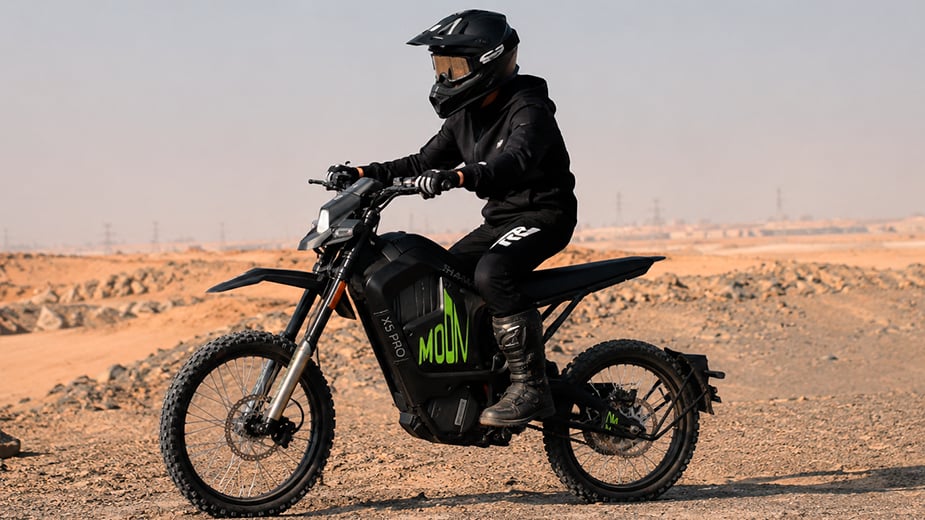
Seat height 830–890 mm – Two directions depending on what the rider needs. Larger pit bikes with 17/14 wheels and 125–140cc engines — Power Max 145 and Power Max 190 — suit this range well. Riders ready for a mid-size machine can move to the Power Max 320 with its 890mm seat height.
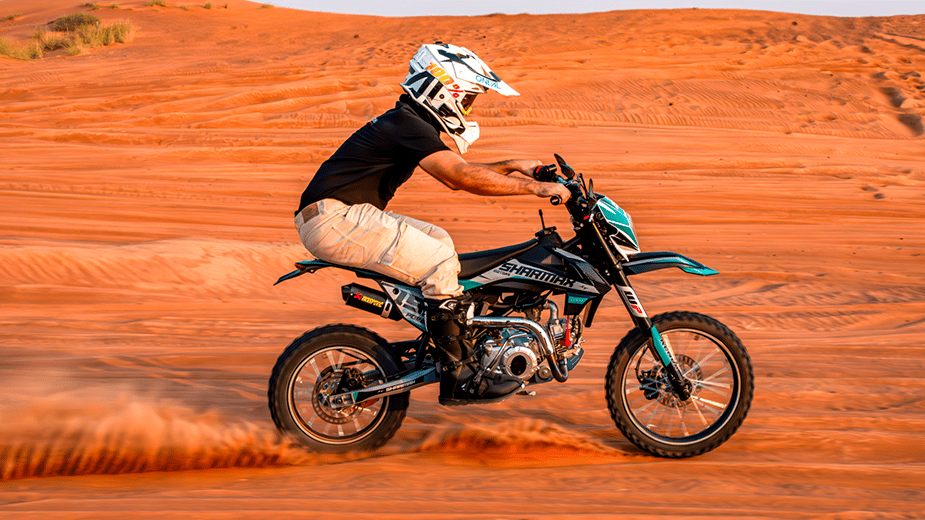
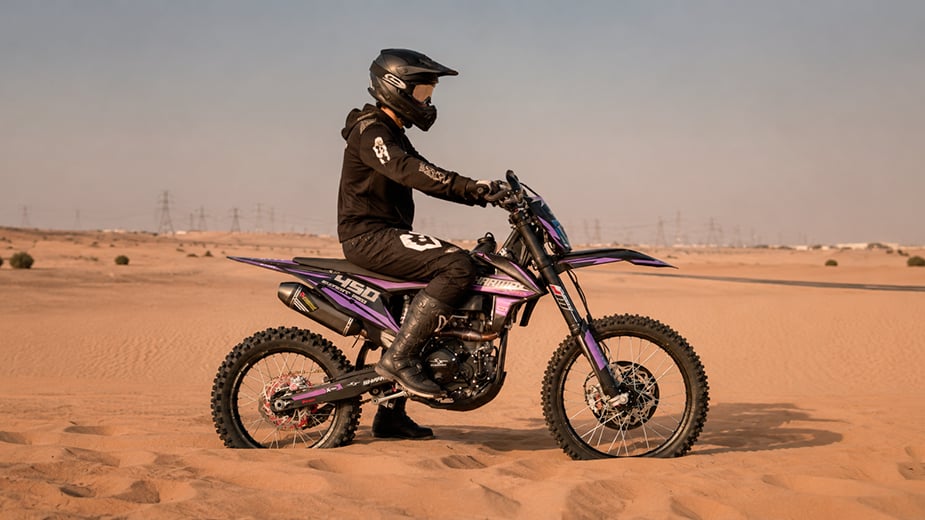
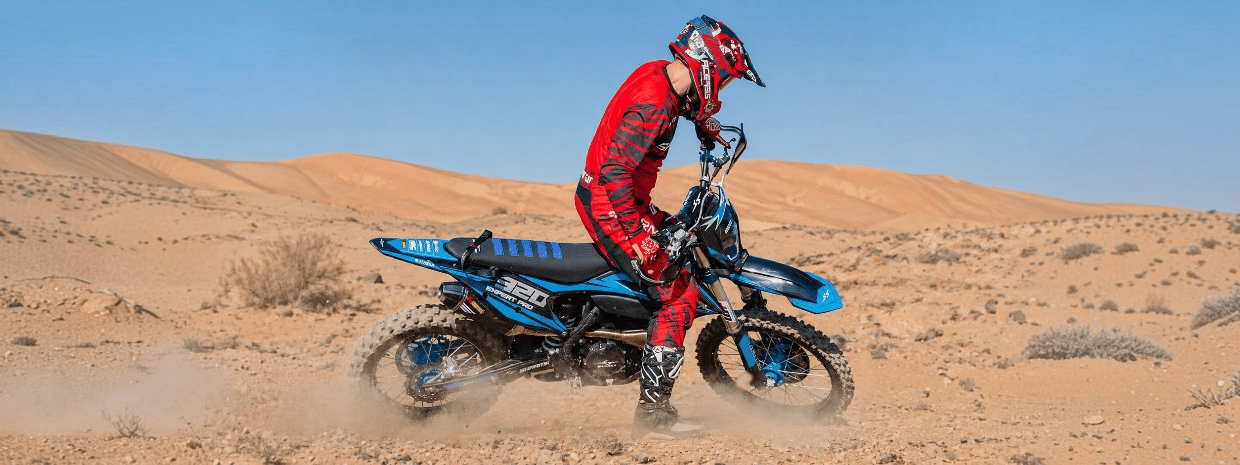
Seat height from 910 mm – Full-size enduro bikes for tall riders start here. The Sport 280 sits at 910mm and suits the lower end of this range. The Expert Pro 450 at 960mm is the top of the lineup — built for experienced riders with the height and inseam to use it properly.