Sharmax partners with Brembo for advanced motorcycle braking
Sharmax brings Brembo braking technology to its motorcycles, delivering confident control, precise response, and performance you can rely on in every ride.
21 Sep 2026
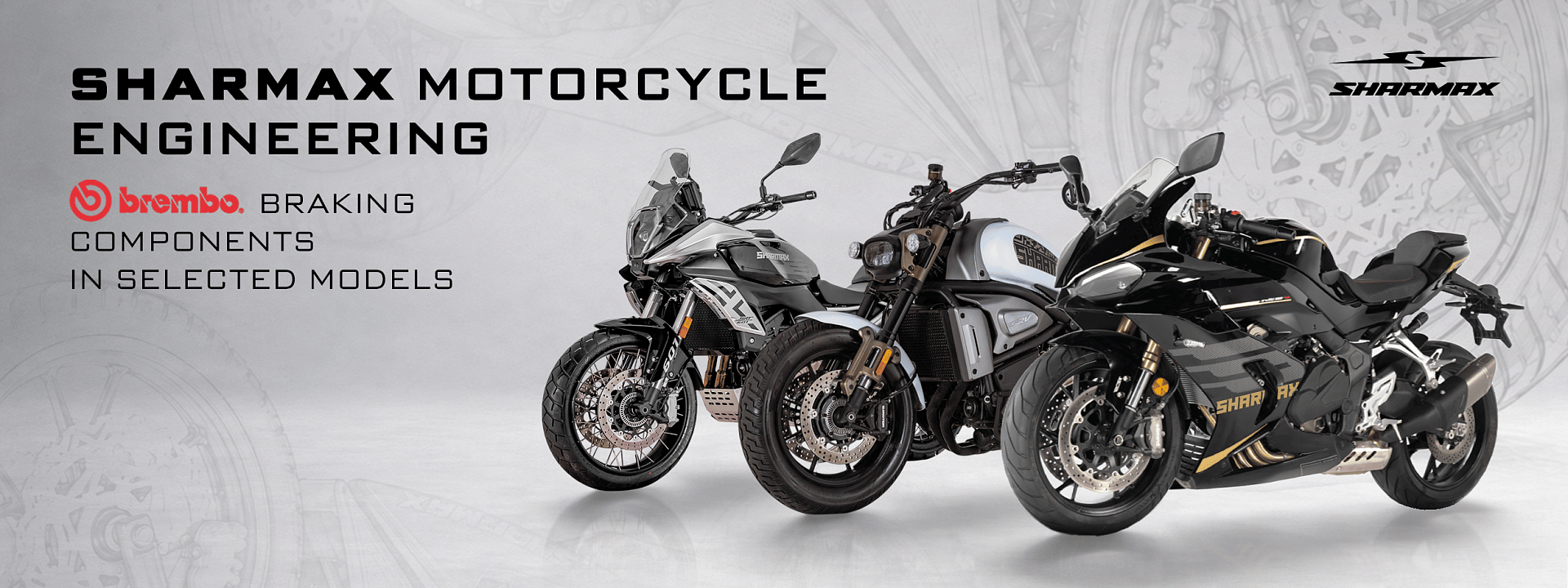
Sharmax develops its motorcycles in-house, but for certain components, it turns to established suppliers who already have deep expertise in that specific area.
One example: the brand's cooperation with Brembo, one of the world's best-known braking-system manufacturers, now used on selected Sharmax models in the high-performance segment.
Brembo — a global supplier of advanced braking systems
Brembo has been developing braking technology for decades and has become one of the industry's best-known specialist manufacturers. The brand supplies original-equipment solutions across multiple motorcycle categories and works with major manufacturers worldwide. Its portfolio covers calipers, discs, master cylinders and other braking components for road and performance motorcycles.
Its systems are used across motorcycles, passenger cars, performance vehicles, and motorsport. That range gives it real depth in exactly the areas that matter most for braking: precision, heat management, and consistent performance under pressure.
How Sharmax applies Brembo technology
Brembo braking components are used across Sharmax’s entire on-road motorcycle range as well as all of its enduro models for off-road riding. Thus, the partnership is not limited to individual flagship models, but forms part of a broader engineering standard across key motorcycle categories.
Sharmax incorporates Brembo braking systems into its motorcycles right at the production stage. This OEM (Original Equipment Manufacturer) approach allows Sharmax to combine its own motorcycle platform development with Brembo’s expertise.
The technical benefits for Sharmax vehicles include:
- stable braking performance under repeated load;
- precise brake modulation;
- effective heat management;
braking components suited to higher-performance motorcycle applications.
These factors become increasingly important on higher-capacity models where the braking system must be treated as part of the overall performance package, alongside the engine, suspension and chassis.
Sharmax motorcycles with Brembo braking components
The cooperation can already be seen across several high-performance motorcycles in the Sharmax lineup.
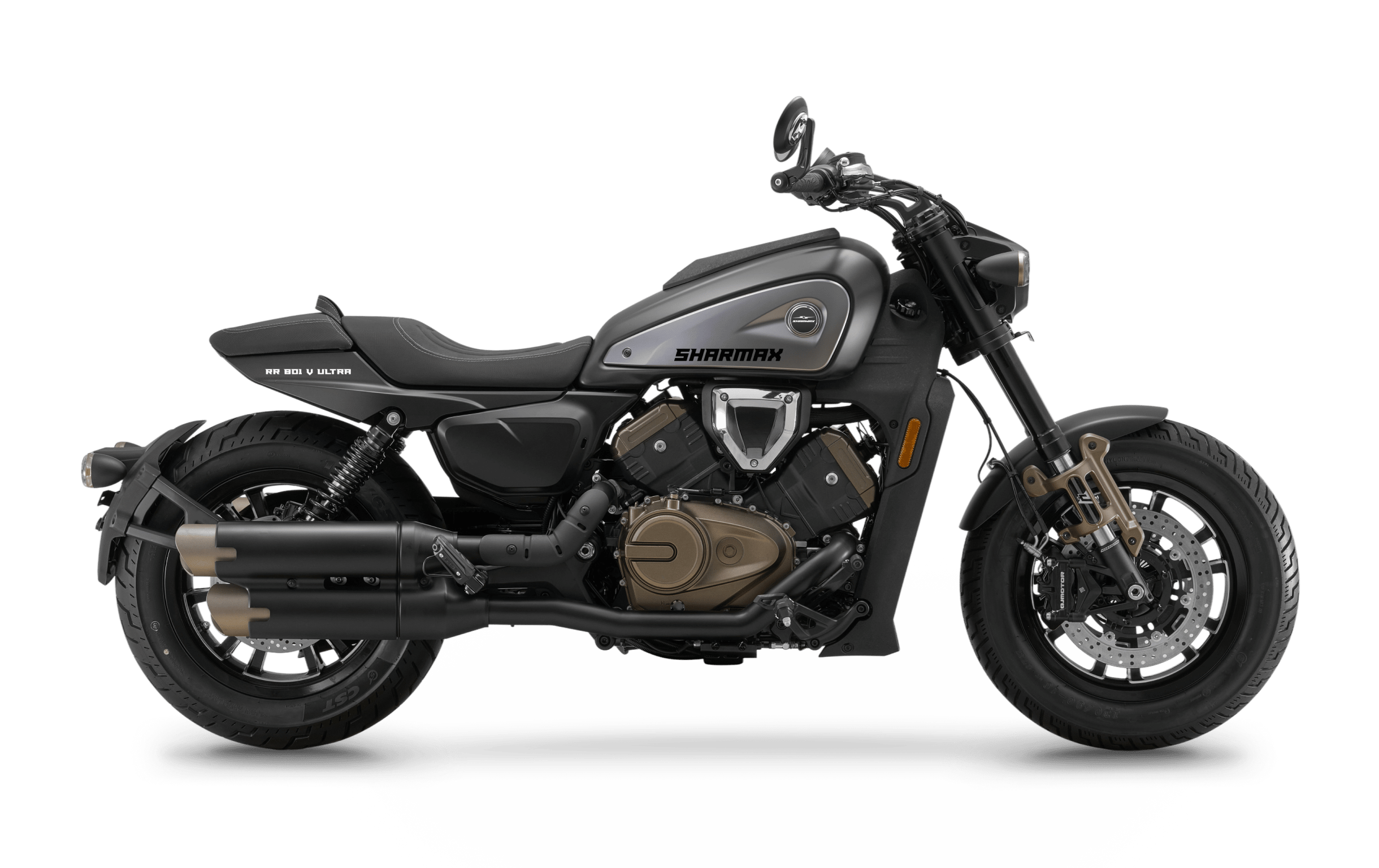
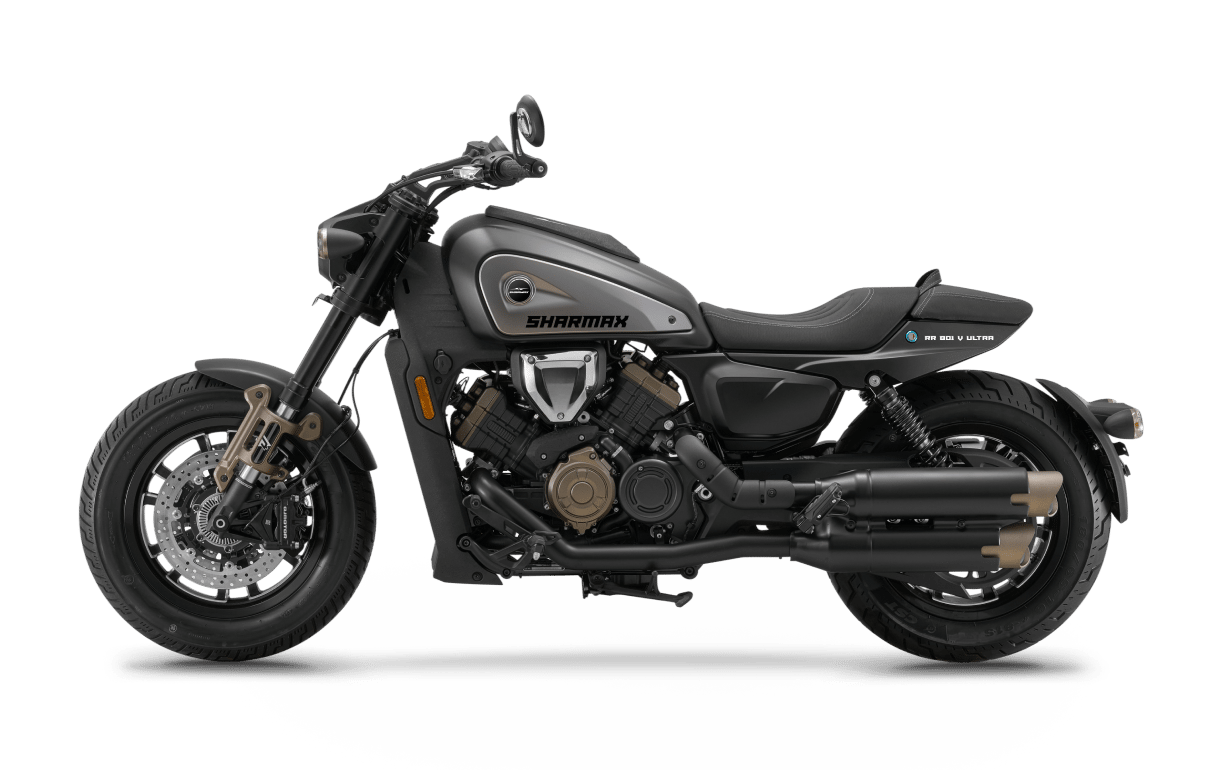
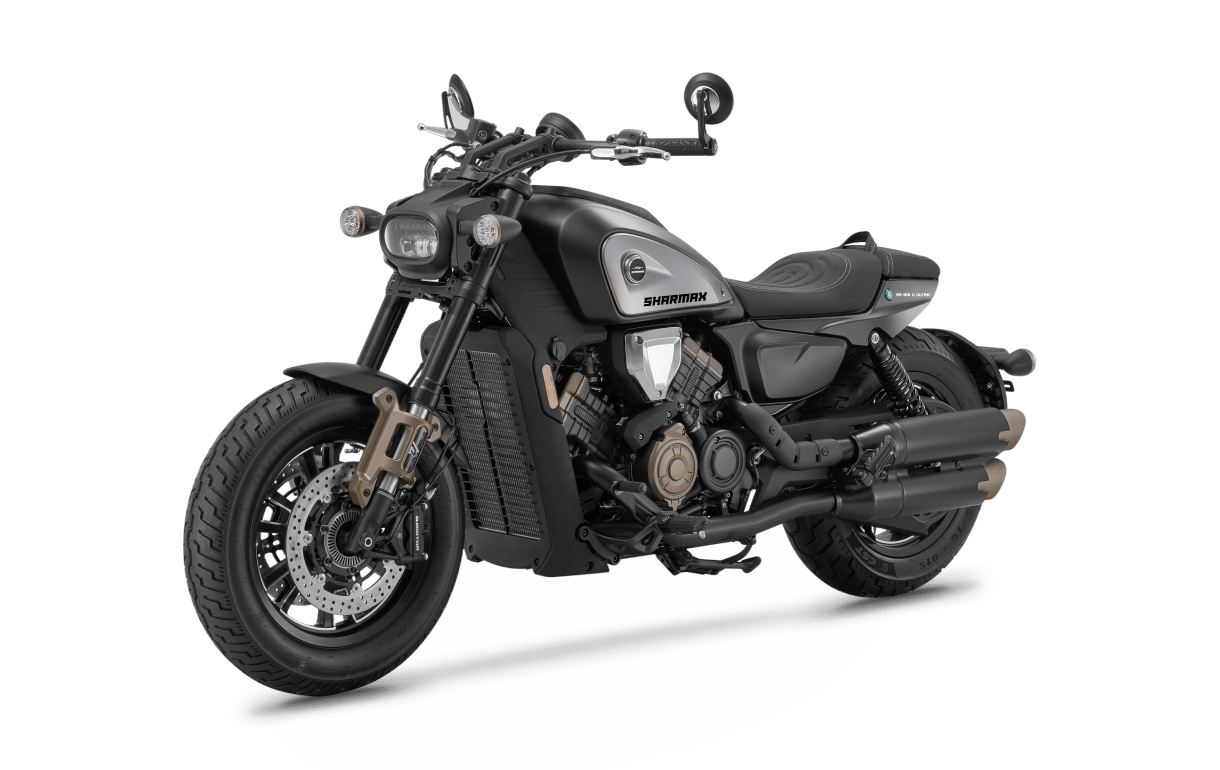
RR 801 V Ultra - aggressive power, sharpened by precise Brembo braking control
The RR 801 V Ultra pairs its bold cruiser character with Brembo braking components designed for confident, responsive deceleration. The setup complements the bike’s performance-focused nature while giving the rider consistent braking feel in everyday and dynamic riding.
Power (hp)
68
Displacement (cc)
561
Max torque (N·m)
54
Power (kW)
51
Engine configuration
V4, 16-valve, DOHC
Engine speed at max power (rpm)
10500
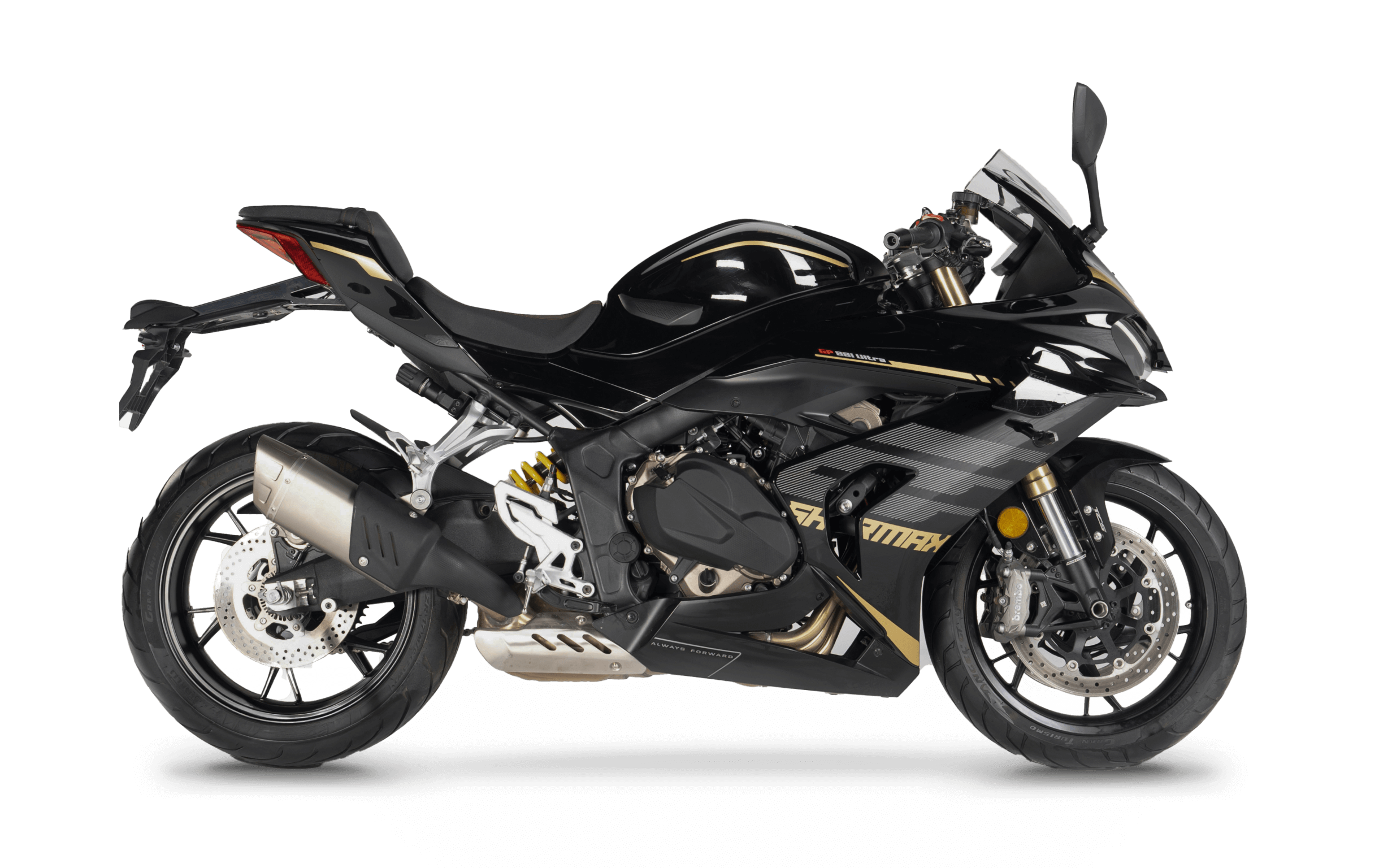
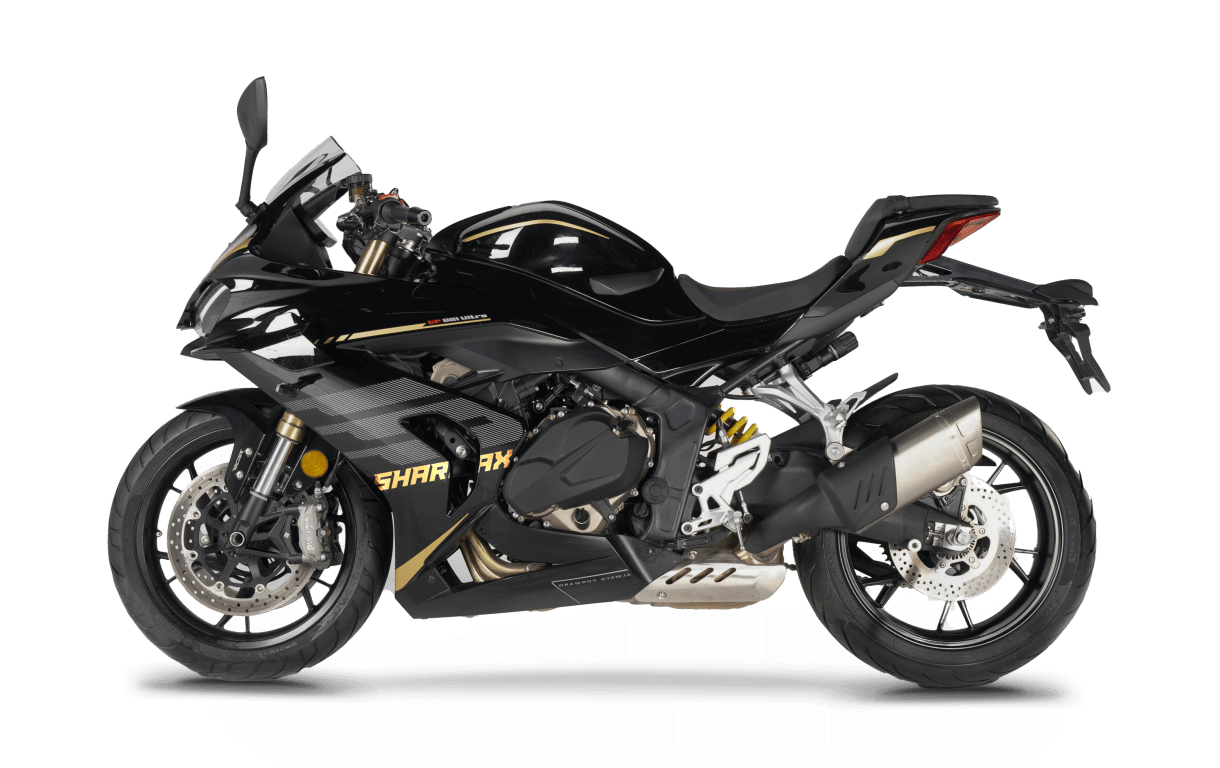
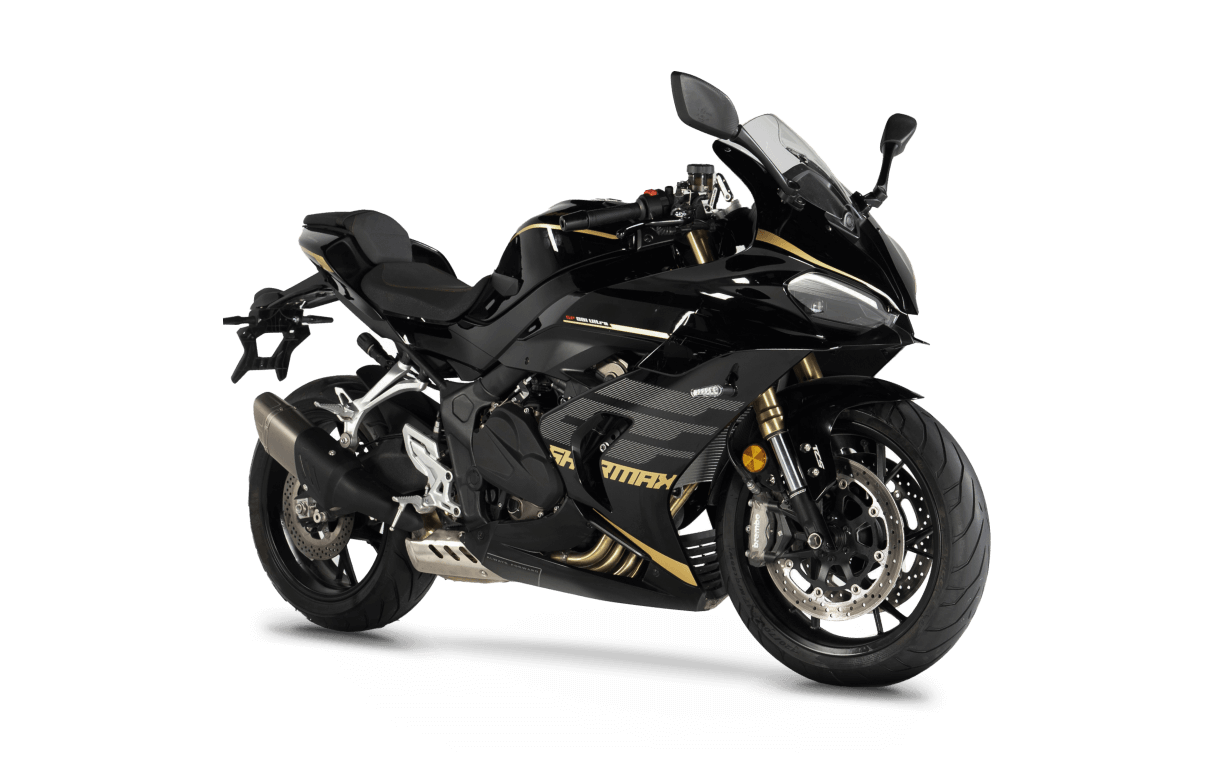
GP 881 Ultra supersport - сonfident stopping performance built for a supersport pace
The GP 881 Ultra combines supersport performance with Brembo braking components tuned for strong, consistent response. The system supports confident braking under dynamic riding while matching the bike’s sharp, performance-oriented character..
Displacement (cc)
778
Max speed (km/h)
240
Power (hp)
95
Engine configuration
4 cylinders, 16 valves, DOHC
Engine speed at max torque (rpm)
8000
Engine speed at max power (rpm)
10500
Power (kW)
70
Part of a broader Sharmax approach
The use of Brembo components reflects a wider Sharmax production philosophy: keeping vehicles accessible without reducing quality in the systems that matter most.
Rather than positioning premium components as something reserved only for the highest-priced models, Sharmax combines competitive pricing with selected technologies from established specialist manufacturers. Braking is one example, but the same approach is increasingly being applied across other vehicle systems.
As the product range develops, Sharmax is also expanding cooperation with external suppliers whose expertise can strengthen specific areas of performance, durability and control. The goal is to build vehicles around the right balance of cost and component quality, rather than treating affordability and advanced engineering as opposites.