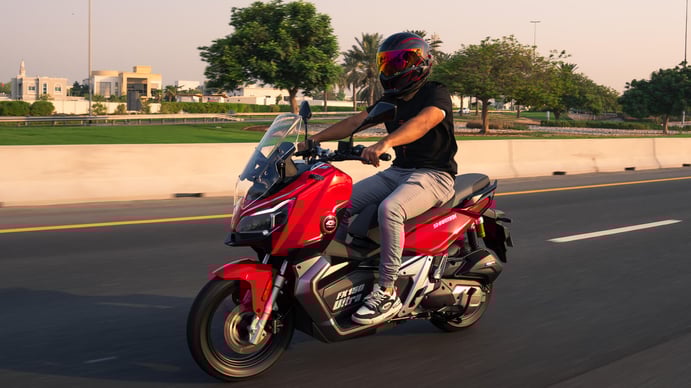
Motorcycle design trends in the UAE: what makes a motorbike visually appealing
In the UAE, a motorcycle is never just a way to move from A to B. It’s a rolling business card parked next to supercars. That’s why motorcycle design trends UAE riders follow are so visible: one glance in Dubai Marina or on Jebel Jais tells you which shapes, colours and details are “in” right now. The latest trends in motorcycle design in the UAE blend global ideas with local lifestyle, climate and social-media obsession.
27 Feb 2026
Below is how design is changing, what riders are customising, and where things are heading next.
How motorcycle design is evolving
Influence of technology and rider preferences
Electronics have quietly reshaped motorcycle design trends. Once ABS, riding modes, TFT screens and LED lighting became standard, designers suddenly had more freedom. Compact LED units allowed slimmer, angrier “faces”. Small colour displays replaced bulky clocks, so cockpits could look cleaner. Integrated sensors and wiring made it easier to hide cables and keep lines tidy.
On top of that, riders in the Emirates demand bikes that look as advanced as they feel. If a bike has traction control and smartphone connectivity but looks like it escaped from 2005, most people will scroll past it. Everyday ergonomics, phone mounts, USB ports and luggage points are now part of motorcycle design innovation, not afterthoughts.
Global trends shaping modern motorbikes
When people talk about motorcycle design trends, they’re often talking about something that started with a handful of leading brands. Big manufacturers and racing programmes experiment first; everyone else follows once riders fall in love with the look.
A good example is how MotoGP and WorldSBK machines influenced streetbikes. Once factory race bikes adopted razor-sharp fairings, winglet-style edges and ultra-compact tails, the same themes quickly appeared on everyday models from Japan, Europe and China. Today, you see the same ideas on everything from litre-class flagships to entry-level 300 cc machines.
Other big influences are:
- aggressive, compact front ends inspired by MotoGP and WorldSBK;
- shorter tails and tucked-in exhausts;
- visible frames and engines that show off engineering instead of hiding it;
- ultra-modern “high tech” designs, especially on electric models with sculpted battery covers and futuristic LED lighting.
Electric bikes are a clear case of this trickle-down effect. Once a few premium manufacturers launched bold, sci-fi-looking e-models, smaller brands started adopting similar sharp lines and backlit logos to signal “future tech” even on more affordable machines. That simple design language – compact nose, tidy tail, exposed structure and tech-focused surfaces – now drives many of the most recognizable trends in motorcycle aesthetics worldwide.
Local context: design for the Gulf environment
The UAE adds its own filter on global styling. Hot sun and sand mean that plastics fade faster, so high-quality paint and UV-resistant finishes matter. Also, windscreens and fairings must work both on highways and in dusty crosswinds.
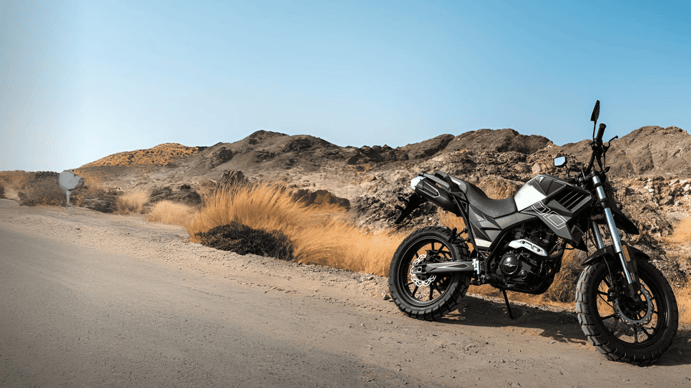
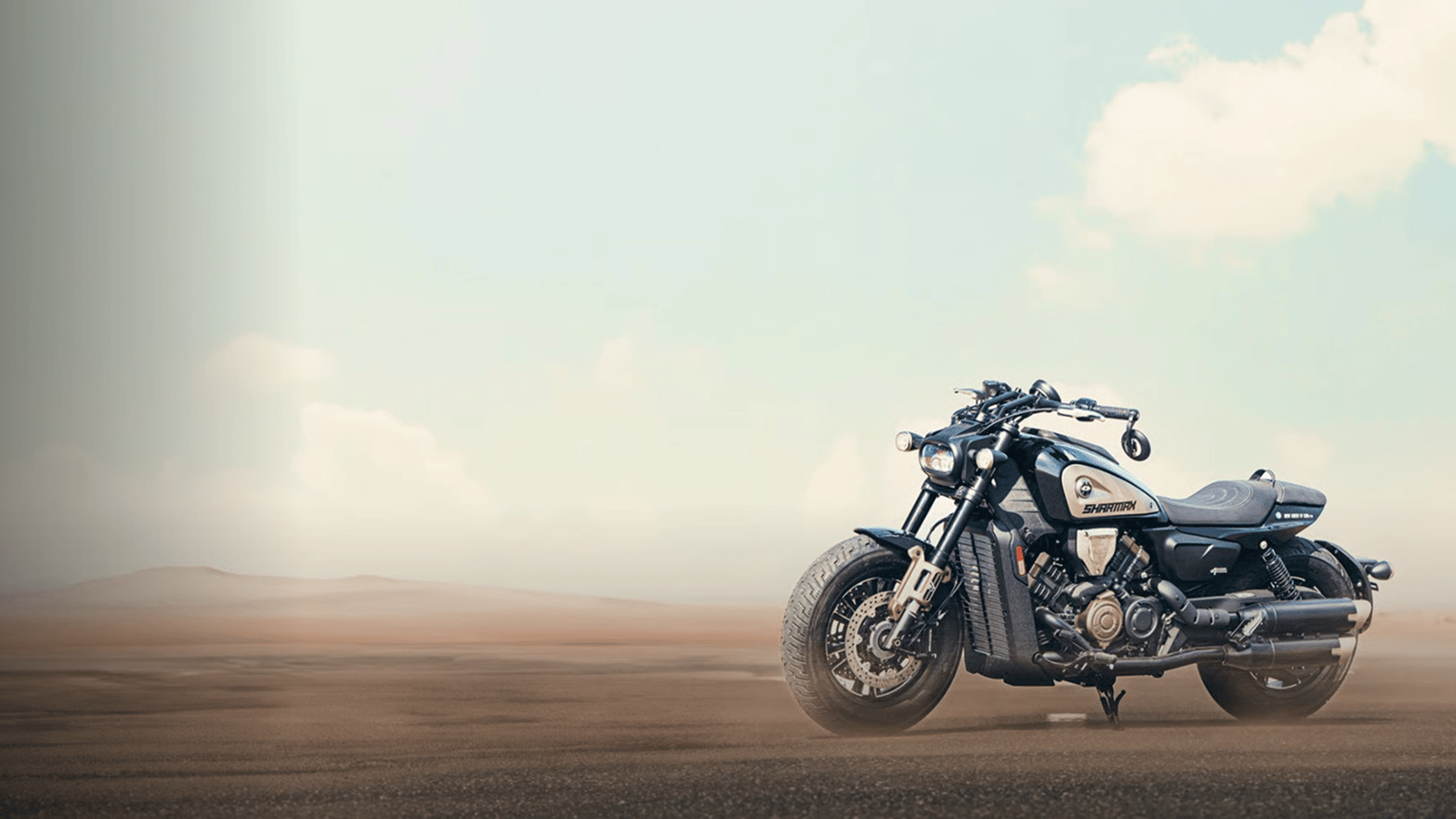
Design teams are quietly adapting paint, materials and finishes for Gulf use. For example, the Sharmax RR 551 Ultra blends perfectly into the desert landscape with its golden-finish body parts and timeless roadster design. Bikes aimed at this region tend to have sturdier brackets, better sealed switches and colour schemes that still look sharp after a few years of sun.
The rise of customization
Personal expression through design
Riders increasingly treat bikes as personal projects. Motorcycle aesthetics are a way to signal tribe: ADV gear for tourers, stealth black for “daily hustlers,” bright race replicas for track fans. In the UAE, where parking lots are showrooms, even small changes – mirrors, levers, indicators – help a bike stand out.
This is where custom motorcycle design trends kick in. People don’t always go full custom build, but they pick a look and lean into it: desert-ready ADV, minimalist café style, stunt-inspired naked, or sleek urban sport machine.
Custom paintwork and accessories
Paint and graphics are the most visible layer. Popular custom touches include:
- partial wraps and accent stripes that match helmets or cars,
- smoked screens and blacked-out exhausts,
- colour-matched crash bars, calipers or wheel stripes.
These relatively small changes sit on top of factory motorcycle color trends, letting riders keep a modern base design but add their own signature.
Structural and material modifications
Deeper custom work swaps parts rather than colours: lighter wheels, different subframes, tail-tidy kits, aluminium or carbon-fibre panels. In the UAE, riders often mix practicality with looks – for example, stronger radiator guards or skid plates that also sharpen the silhouette.
This kind of modification respects the original frame and geometry but pushes motorcycle design trends a little further in a personal direction.
Key elements of visual appeal
Aerodynamic shapes and sharp lines
Supersports and fast roadsters owe a lot of their appeal to sleek, aerodynamic bodies. Sharply cut fairings, winglet-style details and tucked-in screens instantly signal speed.
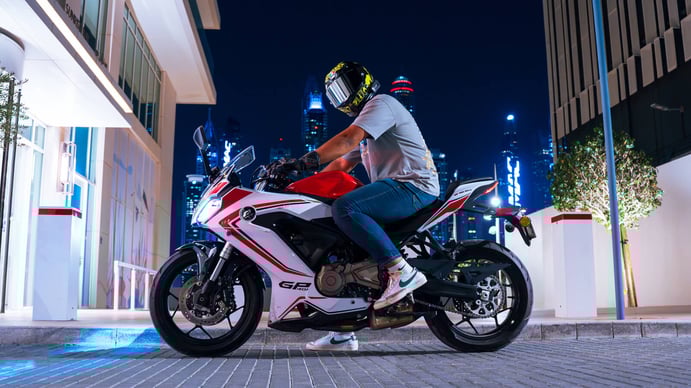
Sharmax sport models – like a GP-series supersport – follow this logic: low, pointed nose; tight side fairings with sculpted vents; and a tail that looks like it’s slicing the air. In a region obsessed with speed and tech, that’s exactly the kind of motorcycle design trends UAE riders gravitate toward.
Minimalism and clean design language
At the same time, clutter is out. Many riders prefer minimal, calm lines for everyday road bikes and roadsters. Sharmax road models and RR-series roadsters and cruiser, for example, use:
- simple, strong tank shapes,
- tidy tail sections without huge overhangs,
- fairings that flow rather than fight each other.
This “less but better” approach to motorcycle aesthetics makes the bike look contemporary and keeps it stylish for longer than a wild, over-complicated design.
Naked bikes and exposed construction
Naked bikes sit in the middle: no big fairings, but not stripped to the bone either. Sharmax naked machines such as the RST 250 Competitions emphasise visible frames and engines, compact LED headlights, short, muscular tails.
Seeing the mechanical parts is part of the appeal; it makes the bike feel more honest and sporty, and it taps directly into current motorcycle design trends for urban riders.
Cross-industry design influences
Automotive and motorsport inspiration
Supercar styling has always influenced bikes, but in the UAE it’s especially obvious. Aerodynamic creases, splitters, diffusers and winglet-inspired shapes migrate from cars and MotoGP to production motorcycles. Brake disc patterns, wheel designs and even switchgear often echo performance cars parked in the same garage.
Architecture and modern materials
Look around Dubai or Abu Dhabi: glass, steel, sharp angles everywhere. Designers borrow that language: layered surfaces, “floating” panels, clean structural lines. Use of brushed aluminium, forged components and carbon fibre mirrors the towers and bridges riders see every day.
Fashion trends in motorcycle styling
Streetwear and luxury fashion also leak into bike design. Matte finishes, muted desert tones, rose-gold accents, and stealth black schemes all mirror sneaker and watch trends. Seats with contrast stitching or Alcantara textures feel as much “fashion” as “engineering,” feeding into broader trends in motorcycle aesthetics.
Color trends and graphic design
Bold colours and dynamic graphics
On the loud side of motorcycle color trends, you see: bright oranges, lime greens, yellows and reds, racing stripes, number-board motifs and angular decals. These work brilliantly on sportbikes and dirt machines that need to pop in desert photos or at night under city lights. Thus, the famous Sharmax GP 1100 Ultra sports bike boasts a striking color combination of red and white and is sure to attract attention in Dubai streets.
Stealth, retro and premium palettes
Not everyone wants neon. Other popular designs include:
- stealth schemes: matte black, charcoal, dark navy with tiny metallic flake;
- retro combos: cream with maroon, deep blue with gold striping;
- premium vibes: satin grey with copper or bronze accents, often seen on higher-end tourers and roadsters.
A good example of this premium side of current motorcycle color trends is the Sharmax RR 801 V Ultra. Its contrasting yet muted bodywork, clean graphics and carefully picked accent tones make the bike look more like a modern sports GT than a loud race replica – refined rather than shouty. These calmer directions give bikes a more timeless look and suit riders who want their machine to blend with luxury cars rather than scream over them.
Integrated graphics and branding
Another current thread in motorcycle design innovation is integration: logos and stripes are worked into the body lines instead of slapped on top. Tank shapes, side panels and even wheel designs are planned so that graphics flow across the bike. It makes the whole package feel more intentional and upscale.
Future motorcycle design trends in the UAE
Looking ahead, several forces will shape the next wave of motorcycle design trends in the region:
- Electrification and new packaging – batteries and motors allow different frame layouts, storage spaces and lighting concepts. Expect cleaner bodies, hidden “fuel caps” and bolder LED signatures.
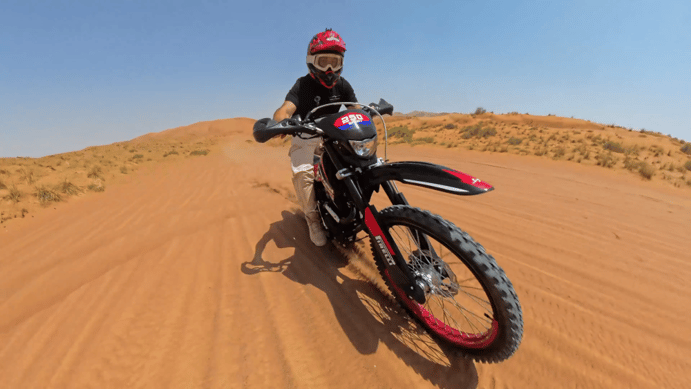
- More desert-aware design – built-in space for crash bars, reinforced mounts for luggage, and colours that hide dust better are likely to grow as more people explore off-road.
- Smarter, connected cockpits – larger, app-driven displays will become central design elements, not just add-ons, changing how bars, clamps and fairings are shaped.
- Sustainable materials and finishes – recycled plastics, eco-treated leathers and long-life coatings will quietly become part of premium design language.
In short, the region will keep mixing global ideas with local reality. Bikes will have to look good on Sheikh Zayed Road, survive sand and heat, and still photograph beautifully at sunset. If designers manage that balance, the UAE will remain one of the most visually exciting places in the world to watch motorcycle design evolve.