Common mistakes to avoid when buying a new buggy in the UAE
Avoid common mistakes when buying a new buggy in the UAE. Learn what to check before choosing an off-road vehicle.
23 Aug 2026
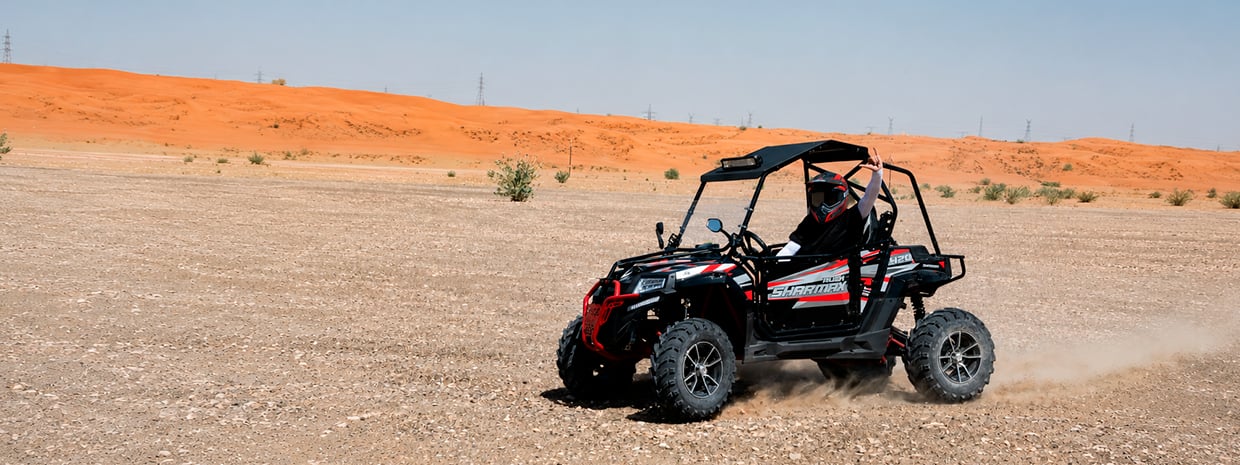
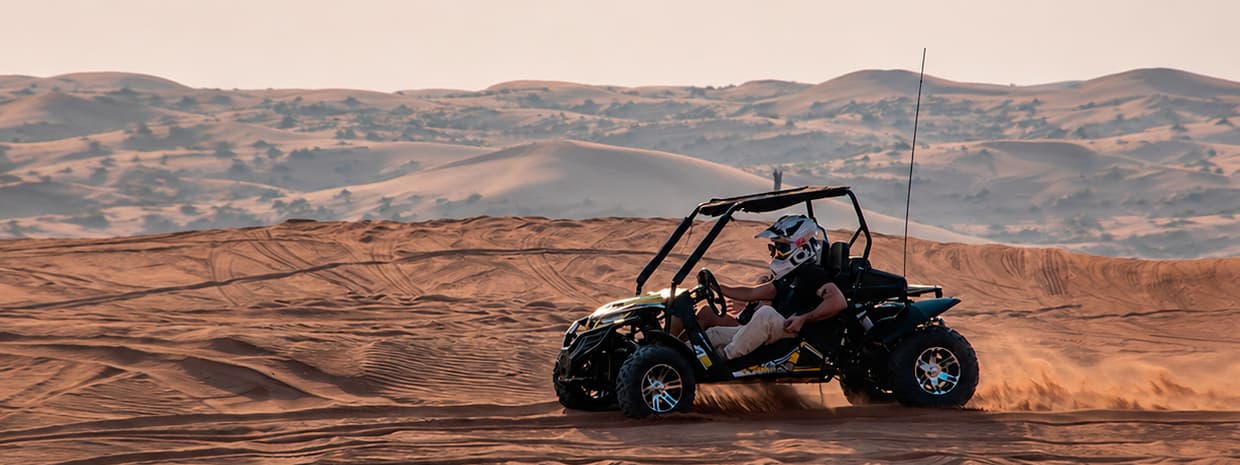
You will most likely find numerous tips and recommendations on how to choose a car or a motorcycle. But with buggies, everything is different. First-time buyers may have never met a buggy in real life before, as they are not as common as, let’s say, quad bikes. We’d like to help our readers avoid some common mistakes when buying a new UTV in the UAE. Most buggy buying mistakes come down to the same handful of oversights repeated across brands and budgets.
1. Choosing a buggy that does not match your needs
This is the single most common of all UTV buying mistakes, and it usually happens because buyers fall in love with a spec sheet instead of thinking about their actual riding. A sport UTV built for high-speed dune runs is a poor fit for slow technical rock trails, and a heavy utility buggy loaded with towing capacity will feel sluggish and overbuilt for weekend recreational riding.
Before you look at a single listing, be honest about three things:
Primary terrain — soft sand, rocky trails, mixed use, or mostly flat open desert
Passenger count — two-seat sport models vs. four-seat family/crew configurations
Frequency of use — a few times a year vs. every weekend changes what's worth paying for
Rider experience — if you are a beginner, it might not be worth it to buy a massive utility buggy with 1000 cc.
Skipping this step is one of the mistakes when buying a new UTV that's hardest to undo, since trading in a mismatched machine a year later almost always costs more than getting the sizing right the first time. Getting this one decision right before any UTV buying paperwork begins saves the most money in the long run.
2. Focusing only on engine size – common buggy buying mistake
More power does not automatically mean a better buggy. Engine size should match the terrain, load, and type of riding.
200–400 cc: light recreational use and easier trails
500–800 cc: a versatile middle ground for regular off-road riding
900–1,000+ cc: high-performance machines for dunes, steep climbs, and demanding terrain
3. UTV purchase mistakes: skipping the test ride
Buyers who skip this step are making one of the most easily avoidable UTV purchase mistakes simply because almost every decent buggy dealer today allows to have at least a short drive in the parking lot.
If a dealer won't let you test ride before buying, treat that as a warning sign rather than a formality to work around. A short 10–15 minute loop over varied terrain — a bit of acceleration, some tight turns, one or two bumps — is usually enough to reveal whether the suspension and ergonomics genuinely suit you.
4. UTV Shopping Mistakes: ignoring engine cooling and heat tolerance
This is high on the list of things to avoid when buying a UTV buggy in a hot climate like the one we have in the UAE and it's often overlooked because it doesn't show up as a problem until months after purchase. Engines that run fine in moderate weather can struggle once ambient temperatures climb, especially during sustained low-speed riding through soft sand where airflow to the radiator drops.
| Feature | Why It Matters |
|---|---|
| Radiator size relative to engine displacement | Larger radiators cope better with sustained heat load |
| Liquid-cooled engine | Maintains more consistent engine temperatures under sustained load and high ambient heat |
| Dual cooling fans | Reduce overheating risk during slow, technical riding |
| Belt/CVT cooling design | Poorly cooled belts wear out fast in high heat |
| Oil cooler (separate from radiator) | Extends engine life under repeated heat cycling |
Ask specifically about these details rather than assuming a bigger engine automatically means better heat handling — displacement and cooling capacity are two different specs. Overlooking this distinction is one of the quieter buggy buying mistakes, since heat-related wear rarely shows up until well after the return window has closed.
5. Overlooking suspension travel and ground clearance
Suspension is one of the specs buyers most often gloss over, yet it's directly responsible for how a UTV actually feels on rough terrain. Front and rear suspension travel — typically ranging from around 12 inches on entry-level models to 20+ inches on high-performance sport UTVs — determines how well the machine absorbs bumps at speed. Ground clearance, usually somewhere between 10 and 15 inches depending on class, determines what obstacles you can clear without bottoming out.
Choosing based on horsepower alone while ignoring these numbers is one of the more technical UTV purchase errors to avoid, because a powerful engine paired with short-travel suspension will feel harsh and unstable the moment the terrain gets uneven. Suspension specs deserve the same attention during UTV buying research as the engine does.
6. Focusing only on the sticker price
The purchase price is just the entry point. Top mistakes when buying a buggy consistently include underestimating the real cost of ownership, which adds up fast once you factor in the full picture:
Transport — a trailer or roof rack system if you're not riding directly from home
Registration and insurance — costs vary by engine size and usage classification
Tires — sand-specific paddle tires or all-terrain sets wear differently and aren't cheap to replace
Routine servicing — oil, filters, belts, and brake pads on a schedule tighter than most road vehicles
Recovery gear — tow straps, traction boards, and a winch aren't optional extras in soft sand
A machine that's AED 10,000 cheaper up front can easily cost more over two years once these are factored in — one of the costliest buggy mistakes a budget-focused buyer can make.
7. Most common mistake when buying a buggy – buying from an unreliable second-hand dealer
A used buggy can be a good way to save money, but only if you know what you are buying. One of the more expensive UTV shopping mistakes is choosing a second-hand vehicle from a dealer that cannot provide a clear service history or proper documentation.
Before paying, check:
Signs of hard use — inspect the frame, suspension, CVT and underbody
Parts and repairs — ask whether major components have been replaced or modified
Documents — the chassis number should match the paperwork
Service history — regular maintenance should be documented
Engine hours and mileage — unusually low figures should match the actual condition
A low price can quickly stop looking attractive if the buggy needs major repairs soon after purchase. Buying from an established seller and arranging an independent inspection can help avoid one of the costliest UTV purchase mistakes.
8. Underestimating safety equipment
Skimping on safety gear is one of the mistakes to avoid when choosing a UTV, and it's an easy one to make when a base model looks like a bargain next to a better-equipped one. At minimum, confirm the machine has:
A certified roll cage rated for the vehicle's weight class
Four- or five-point harnesses, not just lap belts
Functional doors or nets to keep limbs inside the cabin
A working horn, lights, and mirrors if you'll ever ride near other traffic
None of this is optional equipment to add "eventually" — it's the difference between walking away from a rollover and a serious injury. Safety specs belong on every UTV buying checklist, right alongside engine and suspension details.
9. What not to do when buying a UTV – rush with decision
What not to do when buying a UTV is treat the first appealing listing as the final answer. Comparable models from different manufacturers often differ meaningfully in suspension quality, engine reliability, and parts availability, even when the horsepower figures look similar on paper.
Give yourself time to:
Check parts and service availability locally before committing to a less common brand
Compare at least two or three models in the same class side by side
Read owner feedback specific to long-term reliability, not just first impressions
A rushed purchase is rarely a good one, even when the deal seems time-sensitive — impatience is behind more buggy mistakes than any single technical spec.
10. Mistakes when buying a new UTV – overlooking warranty terms
A strong warranty on paper can still leave a buyer stuck if the fine print excludes exactly the parts that fail most — belts, CVT components, and electronics are common exclusions worth checking before signing. Glossing over this section of the contract is one of the more expensive UTV shopping mistakes, since it only becomes obvious the first time a claim gets denied.
Before committing, ask:
Coverage length and mileage/hour limits — some warranties cap out far sooner than the sales pitch implies
What voids the warranty — off-road use restrictions or non-dealer servicing can quietly cancel coverage
Service turnaround time — a nearby dealer with a two-week parts wait isn't much better than no warranty at all
Whether the warranty transfers — this matters directly for resale value later on
Buyers who skip this step are repeating one of the same buggy buying mistakes covered earlier: judging a purchase by the upfront numbers instead of what happens after the sale.