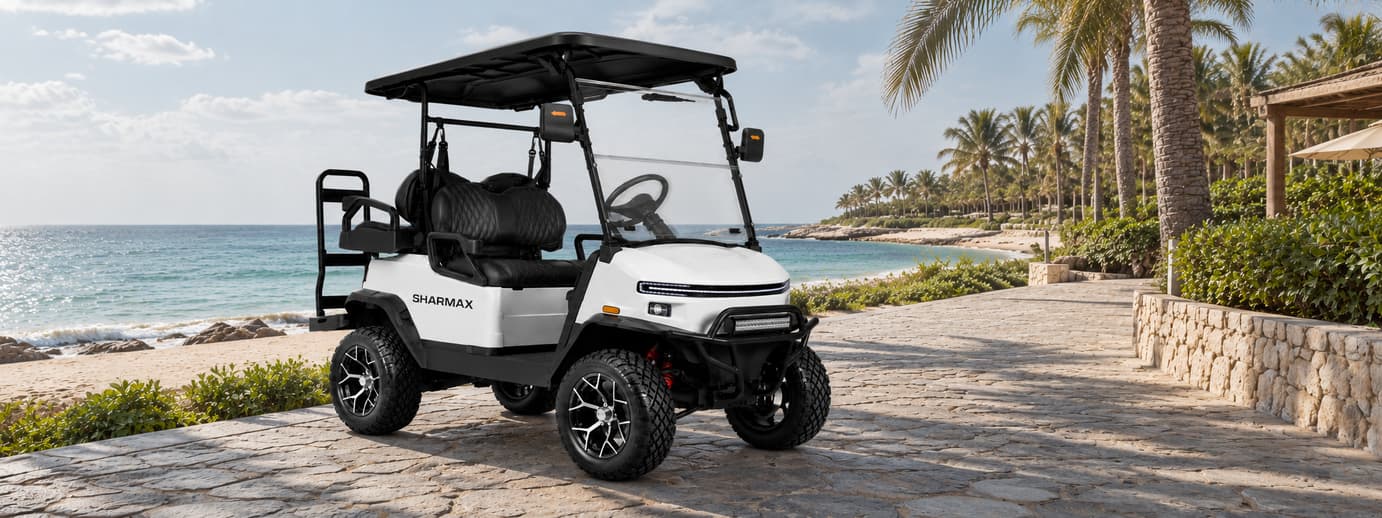
How to choose an ATV for sand and desert riding in Qatar
Learn how to choose an ATV for sand and desert riding in Qatar. Compare 2WD vs 4WD, tires, , cooling, and suitable Sharmax models.
06 Nov 2026
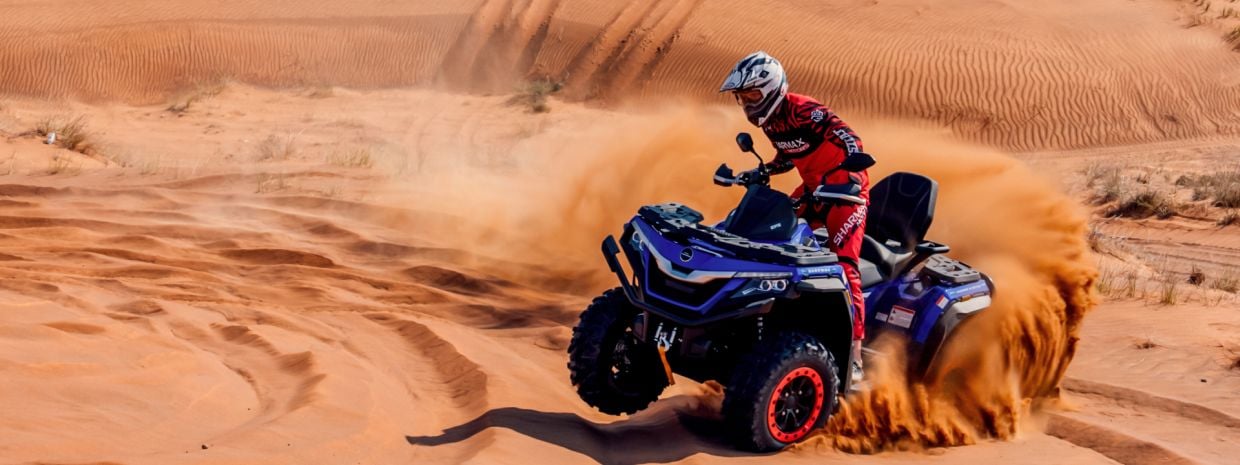
Choosing the right desert ATV in Qatar depends on more than engine power. Soft dunes, compact sand, and rocky tracks all require different levels of traction and control. Browse ATVs for sale in Qatar to compare drivetrain, tires, and cooling options before choosing a model.
What makes an ATV suitable for desert riding?
An ATV designed for general off-road use is not necessarily the best choice for deep sand. Loose surfaces increase rolling resistance, making the engine work harder while reducing tire grip.
When comparing models, pay attention to:
- Drivetrain: 4WD provides additional traction options on loose sand, while 2WD is often suitable for firmer tracks.
- Engine performance: Enough power helps maintain movement through sand, but vehicle weight and gearing matter too.
- Ground clearance: More clearance can reduce contact between the underbody and uneven terrain.
- Suspension: Adequate travel and suitable shock settings help absorb ruts and maintain control on uneven sand.
- Tires: Width, tread pattern, and correct pressure affect traction and flotation.
- Cooling: The engine must be properly maintained to handle sustained loads in high temperatures.
For frequent dune riding, a 4WD utility ATV is generally a better starting point than a rear-drive recreational model.
2WD vs 4WD: which drivetrain works better on sand?
The drivetrain affects how an ATV moves when traction becomes limited.
| Feature | 2WD ATVs | 4WD ATVs |
|---|---|---|
| Driven wheels | Rear wheels | Front and rear wheels |
| Best suited to | Firm sand and prepared trails | Loose sand and uneven terrain |
| Traction in deep sand | More limited | Additional traction available |
| Typical design | Sport and recreational models | Utility and all-purpose models |
| Main consideration | Requires careful throttle control | Usually larger and heavier |
If you plan to ride mainly on compact desert tracks, a 2WD quad bike may be sufficient. For deeper dunes, consider a model with selectable 4WD.
However, four-wheel drive does not guarantee successful dune climbs. Tire setup, vehicle weight, and rider technique remain important.
What else makes an ATV good for desert riding
Engine performance and gearing
Riding through soft sand requires steady power because the wheels face greater resistance. For example, ATVs with 450–700 cc engines are found among recreational and utility models, but engine size alone does not determine sand performance.
Low-speed torque, suitable gearing, and vehicle weight also matter. A low gear or low-range transmission can help maintain controlled movement in demanding conditions without constantly forcing the engine to work harder.
Ground clearance
Ground clearance helps an ATV pass over ruts, dune edges, and uneven tracks without scraping its underside. Around 230–300 mm is a useful comparison range for recreational and utility ATVs, while some models offer more than 300 mm.
Higher clearance is useful on rough desert routes, but it does not prevent an ATV from sinking into soft sand. Tire choice and weight remain important.
Suspension travel and control
Good suspension absorbs bumps, helps the wheels follow uneven terrain, and improves rider comfort. Many off-road ATVs offer approximately 200–250 mm of suspension travel, although designs vary.
For mixed desert riding, look for suitable shock absorbers and adjustable preload. Suspension that is too stiff can reduce comfort and traction over small bumps, while overly soft settings may allow the ATV to bottom out on larger ones.
How to choose tires for sand riding
The right tires help an ATV move across sand without excessive wheelspin. Tire width, tread pattern, and pressure all influence traction.
Tire width: compare the markings
Sand tires are often 10–12 inches wide; 26×12-12 means a 26-inch diameter, 12-inch width, and 12-inch rim. An all-terrain example, 25×8-12, is narrower. Check the approved sizes for your ATV.
Tread pattern: sand or mixed terrain?
Rear paddle tires help propel an ATV through dunes, while ribbed front tires aid steering. For mixed sand, gravel, and firm tracks, all-terrain tread is more practical; tread depth can be around 1.25–2 cm. Avoid paddle tires on hard surfaces.
Tire pressure: follow your ATV's limits
As a general reference, sand-tire setups can use around 0.2–0.4 bar, while all-terrain examples may use around 0.4–0.8 bar. These are not universal settings. Always follow the approved cold pressure for your tires, ATV, and load; pressure that is too low can unseat a tire.
Tire condition: what to inspect
Check all four tires for cuts, cracks, worn tread, bulges, and damaged valves. If the tire has a four-digit DOT date code, 2524 means week 25 of 2024. Also check the load rating and storage condition.
For frequent dunes, consider compatible sand tires. For mixed desert routes, approved all-terrain tires may be the more flexible option.
Why engine cooling matters in Qatar
Riding through soft sand puts extra load on an ATV engine. When combined with Qatar's high temperatures, this makes cooling an important consideration.
Two common cooling systems are:
- Air cooling: Uses airflow to remove engine heat. Some systems also have an oil radiator.
- Liquid cooling: Circulates coolant through the engine and radiator to manage operating temperature.
For example, the Sharmax Force 1100 uses liquid cooling, while the Hummer 320 RX LTD has forced-air cooling with an additional oil radiator.
Neither system eliminates the risk of overheating. Regular maintenance is essential, particularly when riding slowly through deep sand.
Check the air filter, coolant level where applicable, and radiator condition before longer trips. Dust buildup and blocked airflow can interfere with cooling performance.
Five Sharmax ATVs to consider for desert riding in Qatar
The Sharmax Qatar ATV catalog includes both 2WD and 4WD models. Here are five options worth comparing, depending on the terrain and your riding experience.
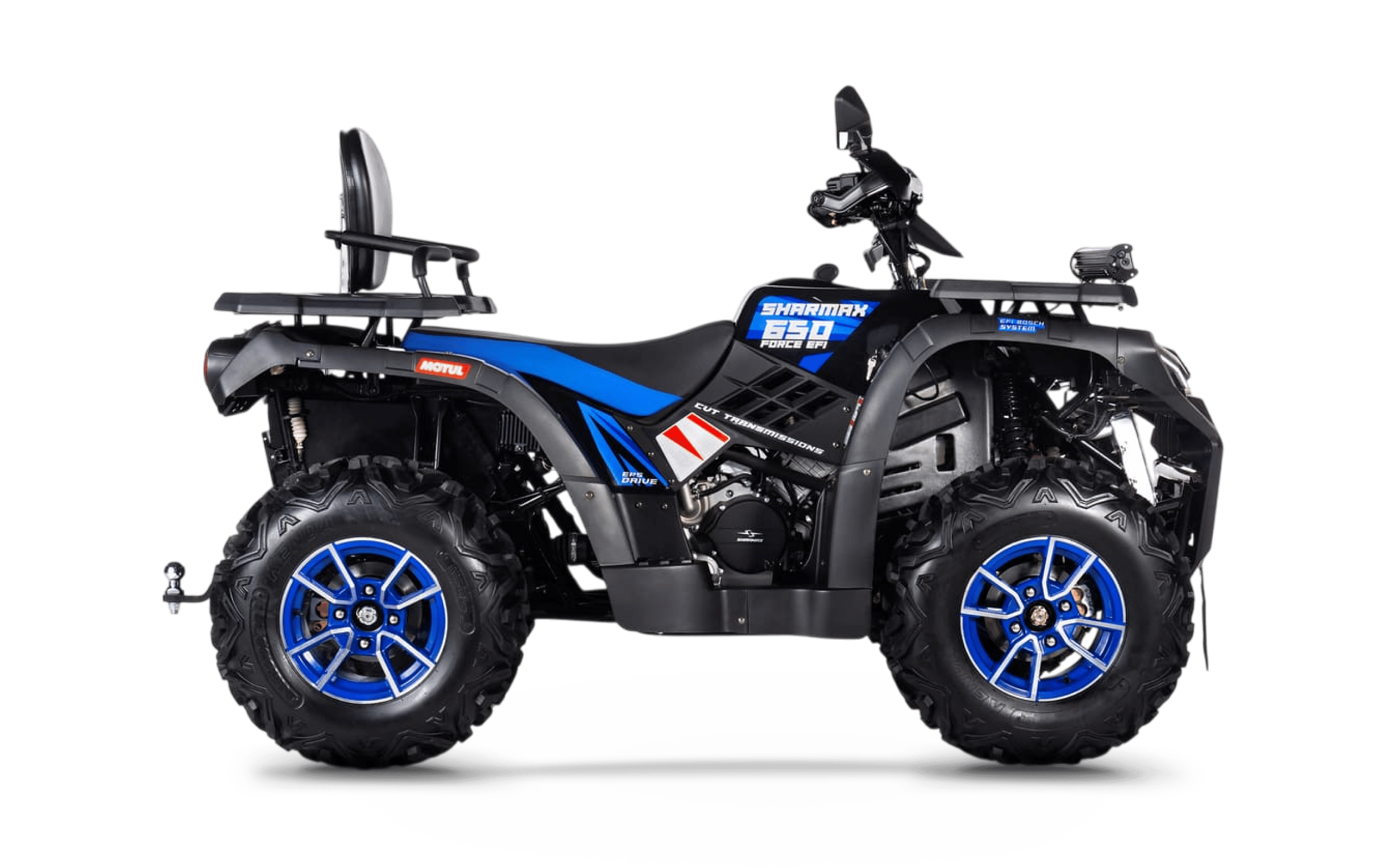
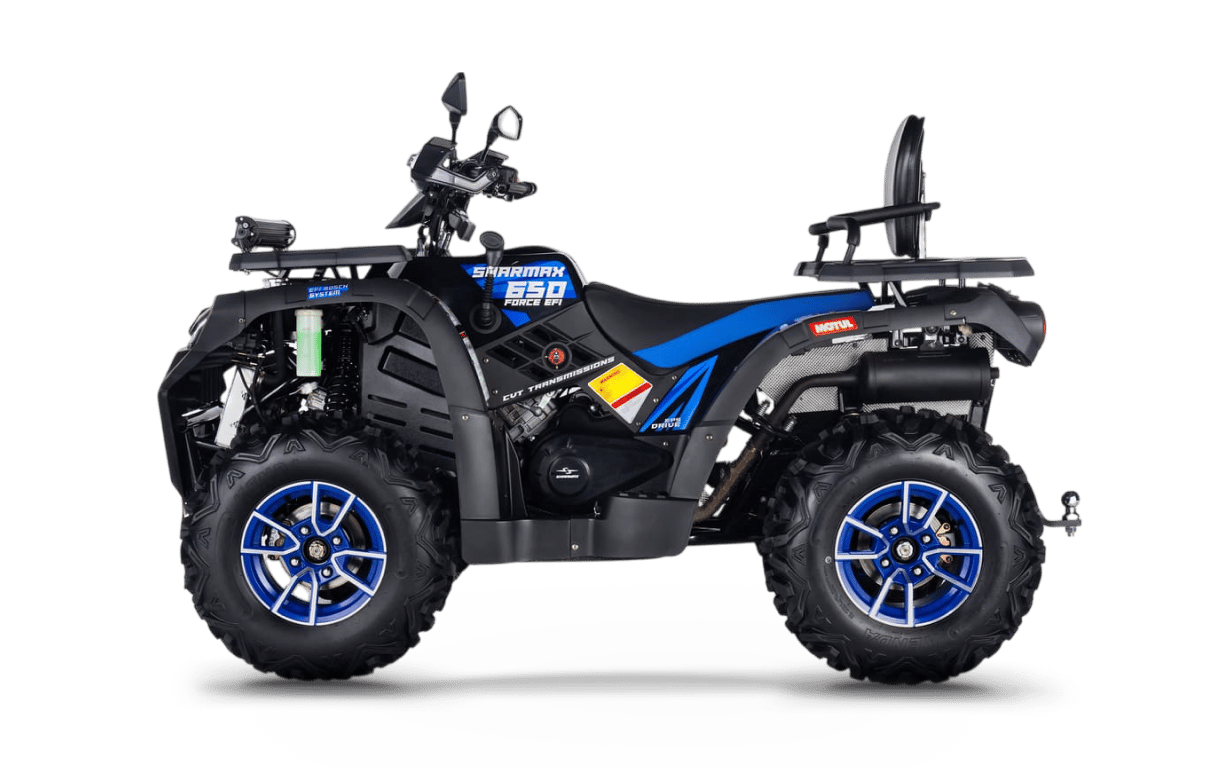
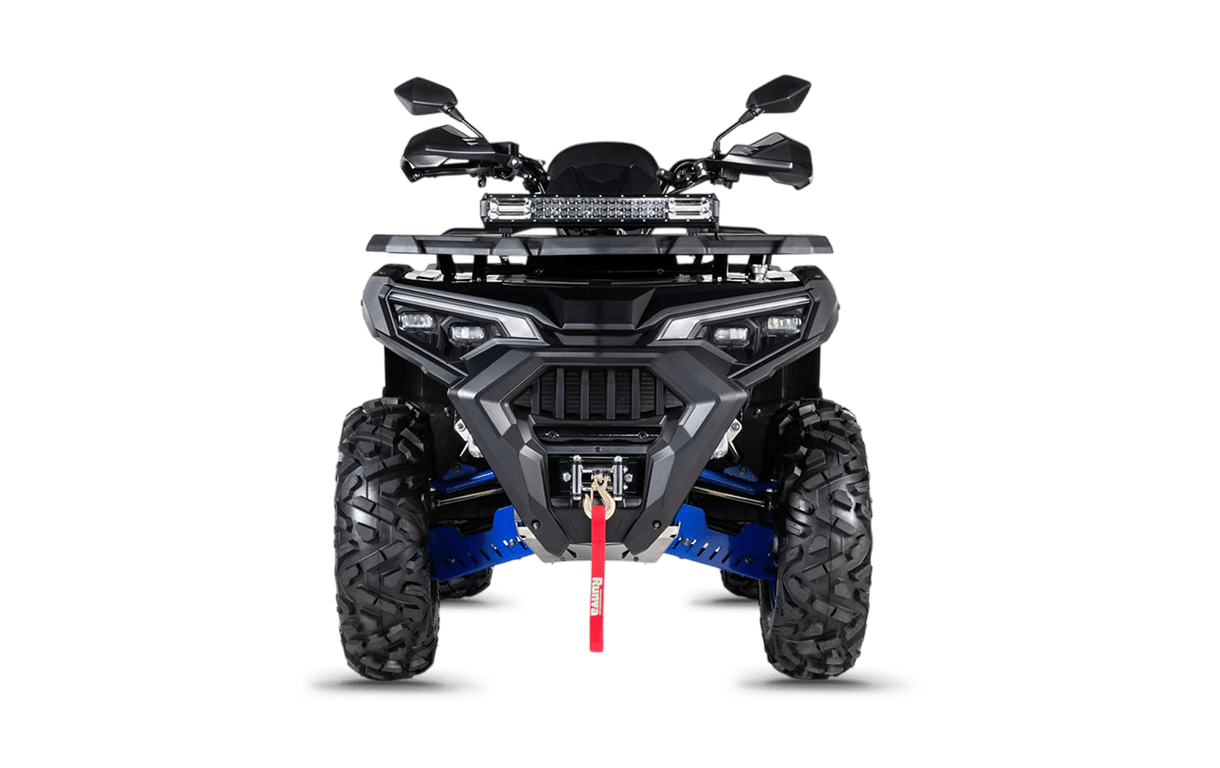
1. Sharmax Force 650 EFI EPS
The Force 650 EFI EPS is a utility ATV suitable for buyers comparing options for loose sand and mixed off-road terrain.
Its 570 cc engine produces 44 hp, while 310 mm of ground clearance helps it handle uneven tracks. The 4WD system offers additional traction when the rear wheels struggle on softer ground.
Best for: Regular desert trips, loose sand, and mixed off-road routes.
Displacement (cc)
570
Ground clearance (mm)
310
Power (hp)
44
Drive modes
2WD / 4WD / 4WD Lock
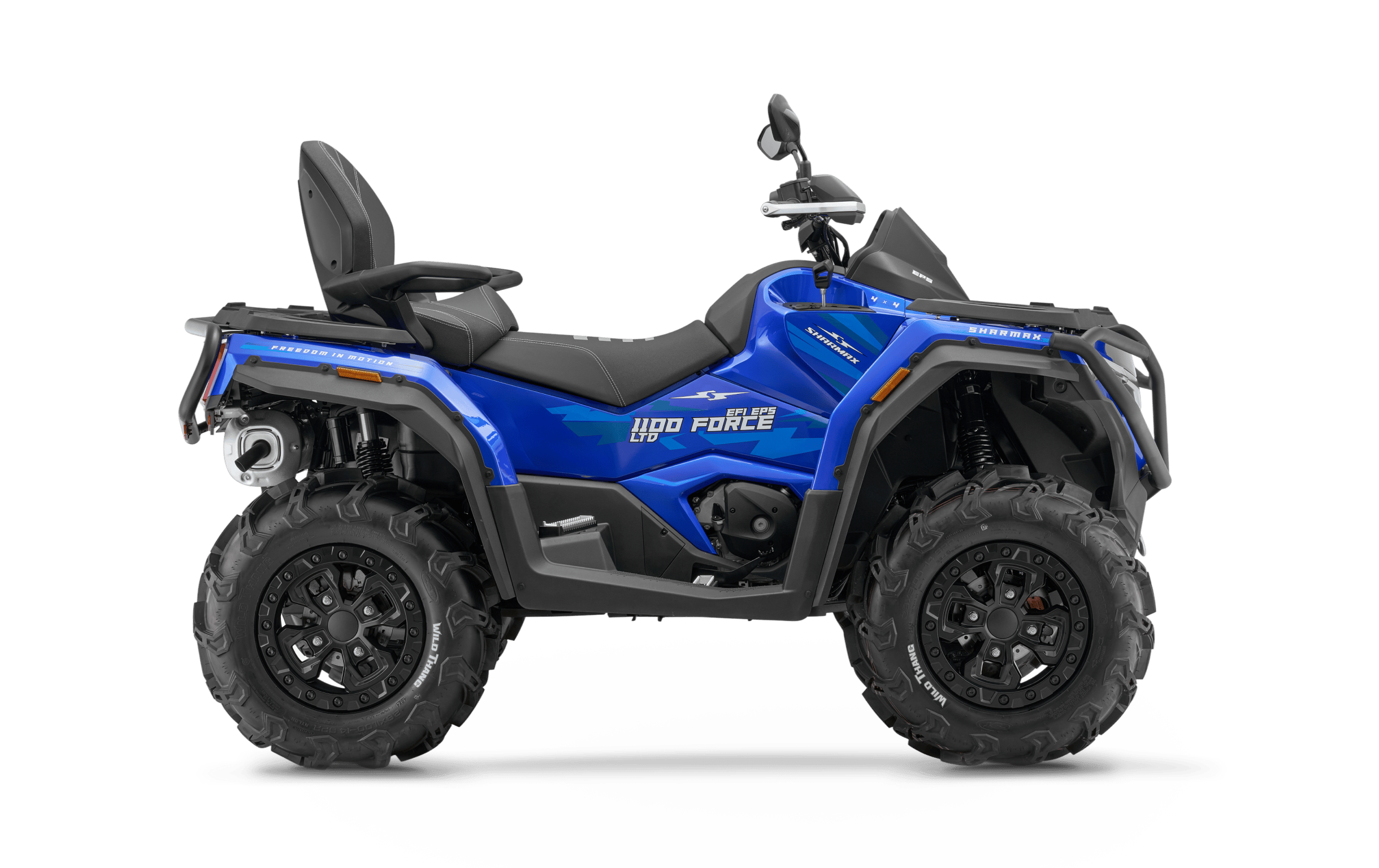
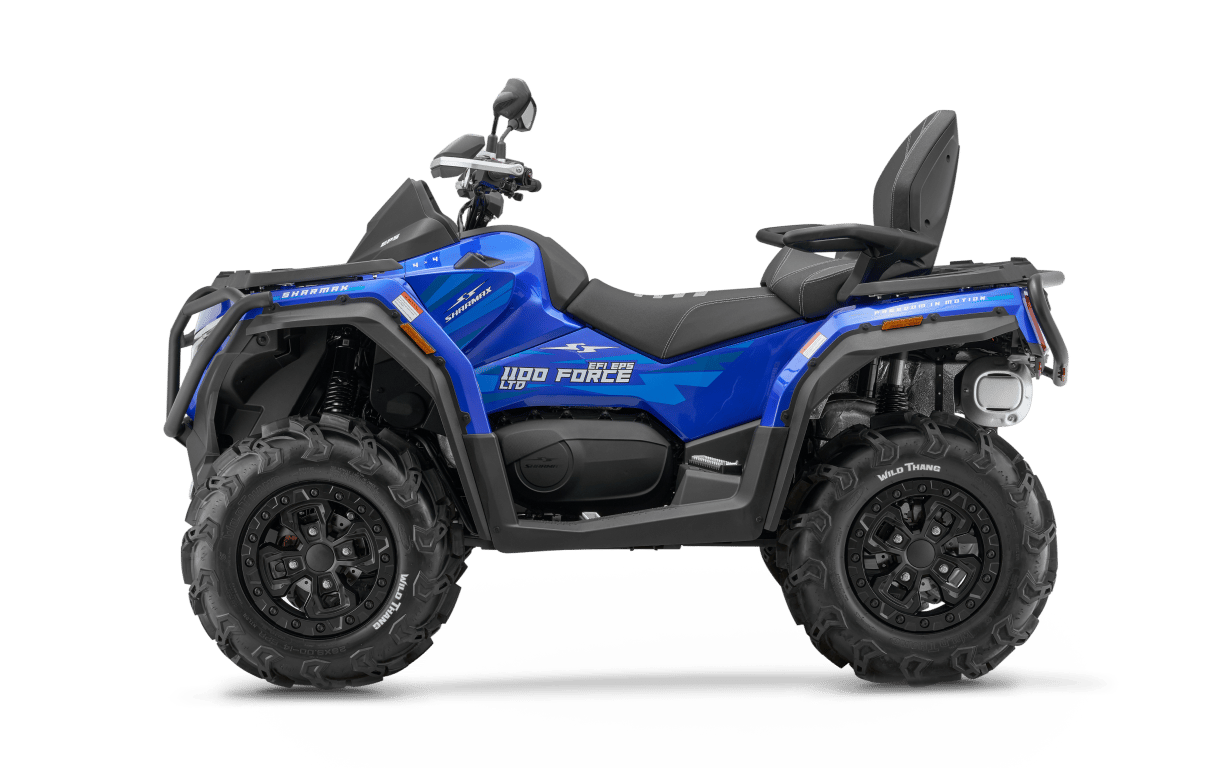
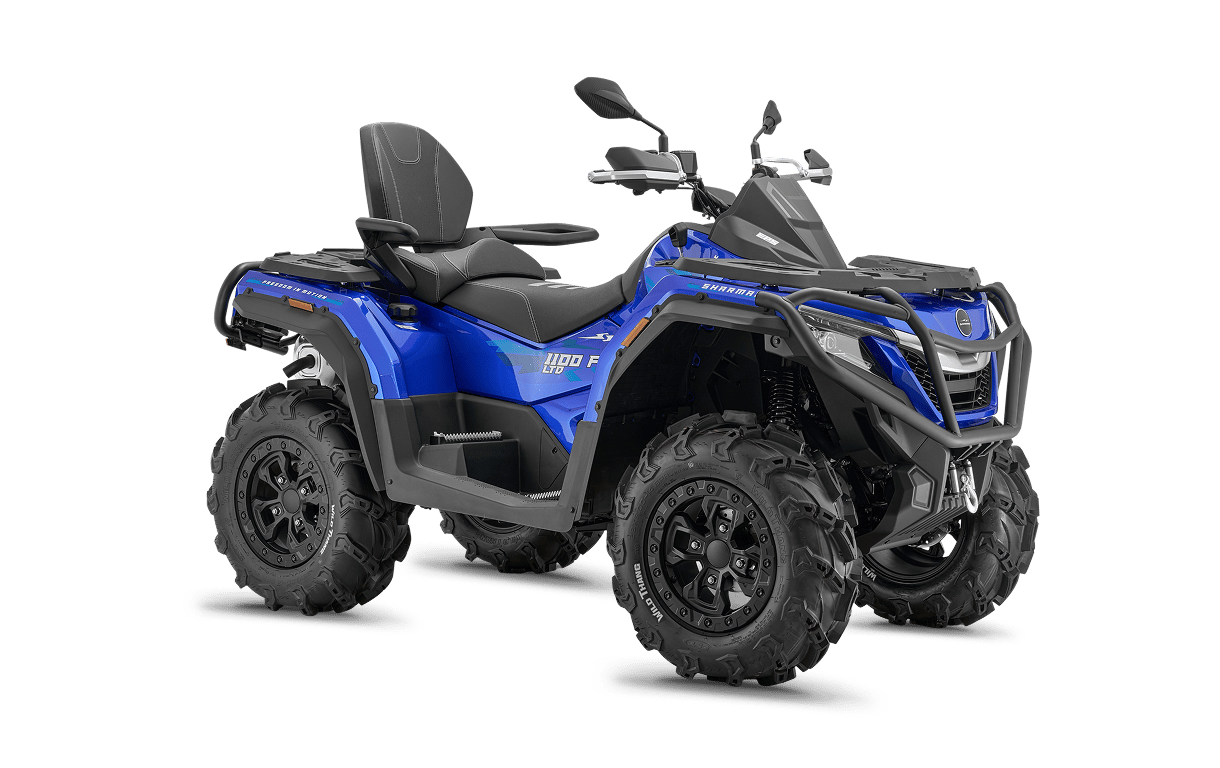
2. Sharmax Force 1100
The Force 1100 is a more powerful utility ATV with a 976 cc engine producing 92.5 hp.
Its 340 mm ground clearance and 4WD configuration make it worth considering for demanding desert routes. Electronic power steering can also reduce steering effort during longer rides.
Best for: Experienced riders who need a powerful ATV for challenging terrain.
Displacement (cc)
976
Ground clearance (mm)
340
Power (hp)
92.5
Drive modes
2WD / 4WD / 4WD Lock
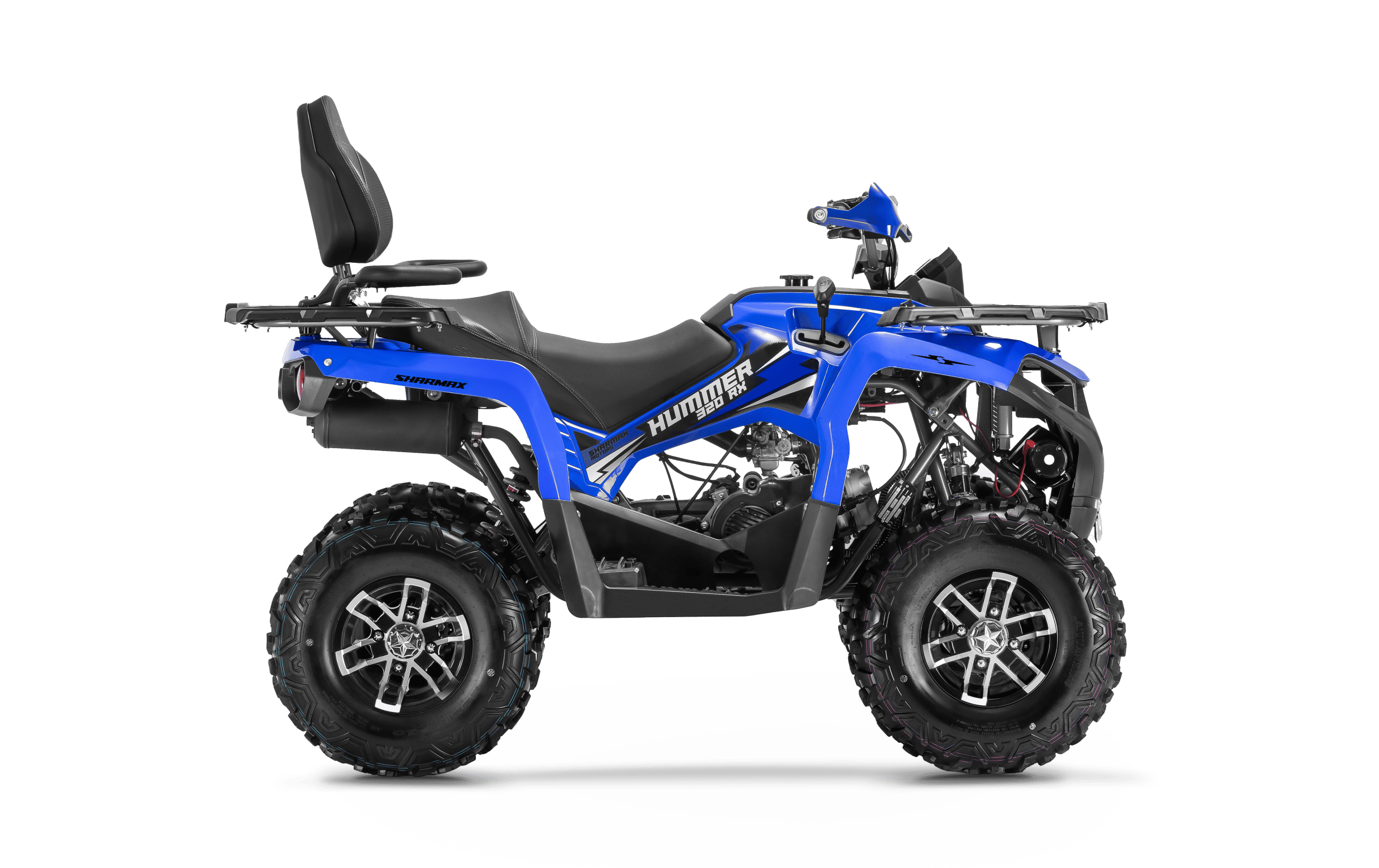
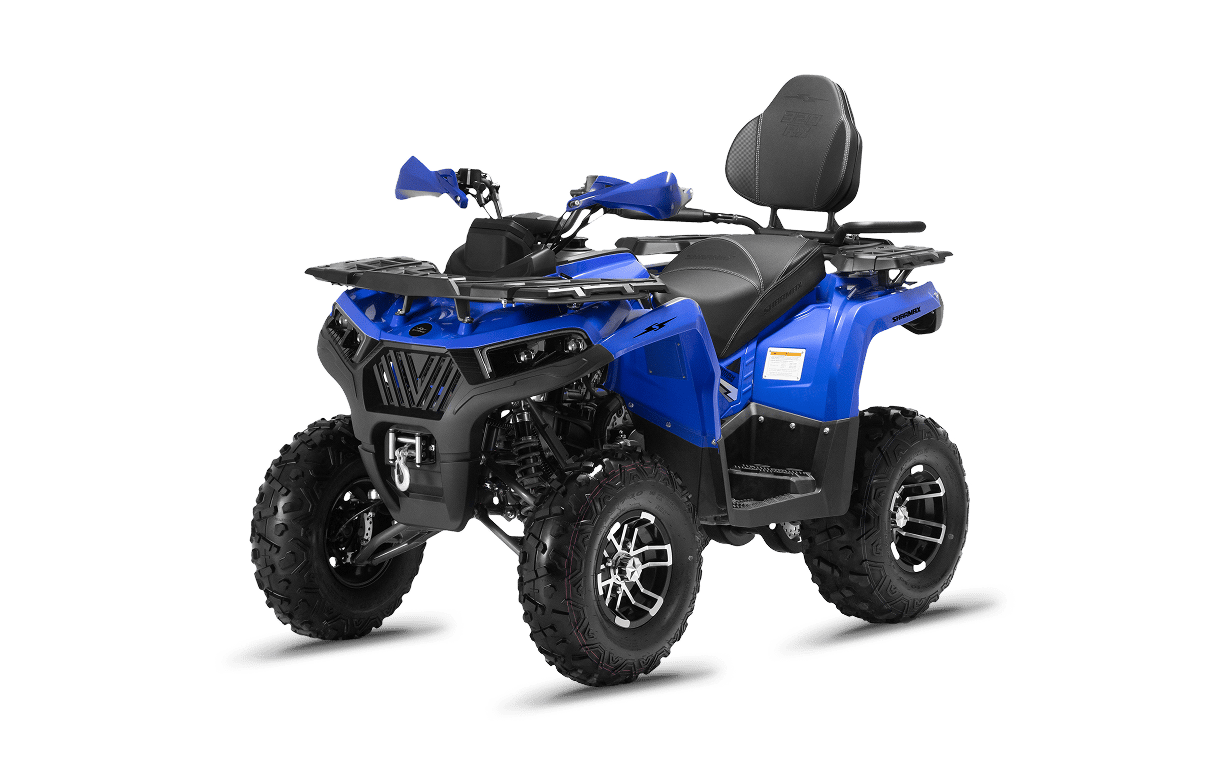
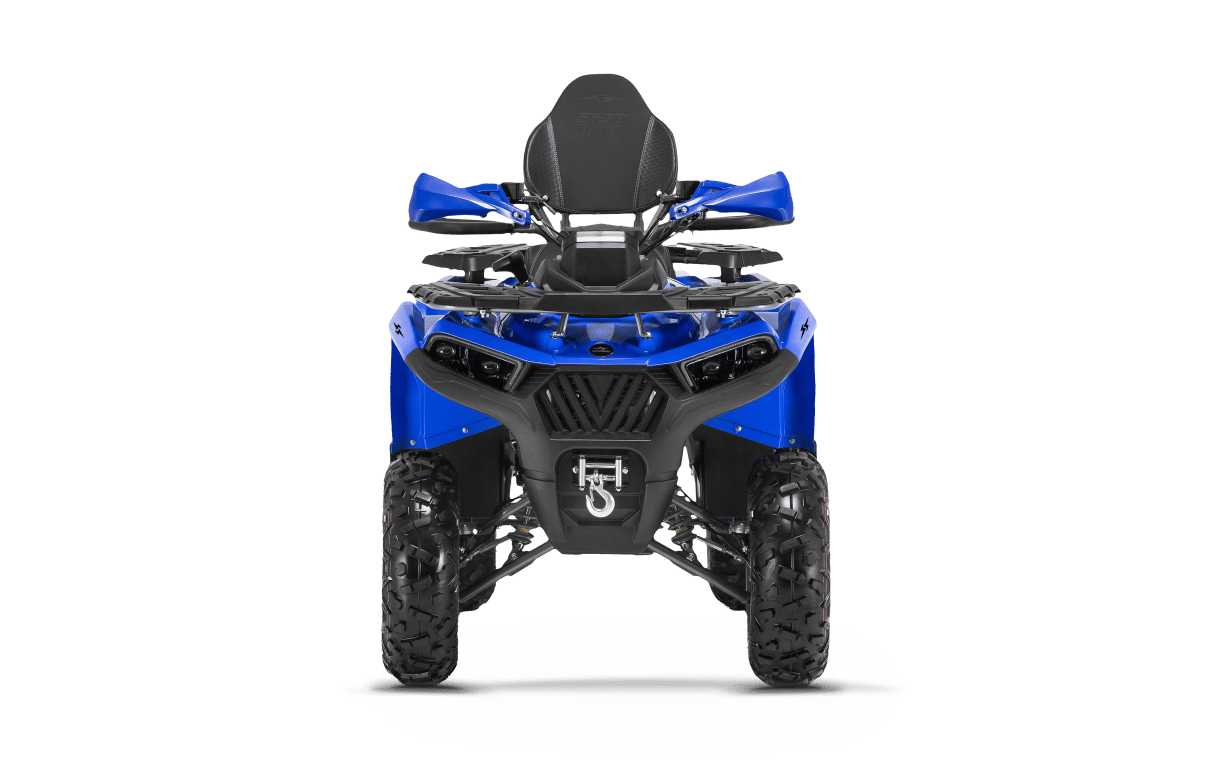
3. Sharmax Hummer 320 RX LTD
The Hummer 320 RX LTD combines a 286 cc engine producing 25 hp with 300 mm of ground clearance.
Its 2WD layout makes it more suitable for recreational trips on firmer desert tracks than frequent riding through deep dunes. The air-and-oil cooling arrangement is another feature to consider when comparing maintenance requirements.
Best for: Recreational riding, compact sand, and mixed off-road tracks.
Displacement (cc)
286
Ground clearance (mm)
300
Power (hp)
25
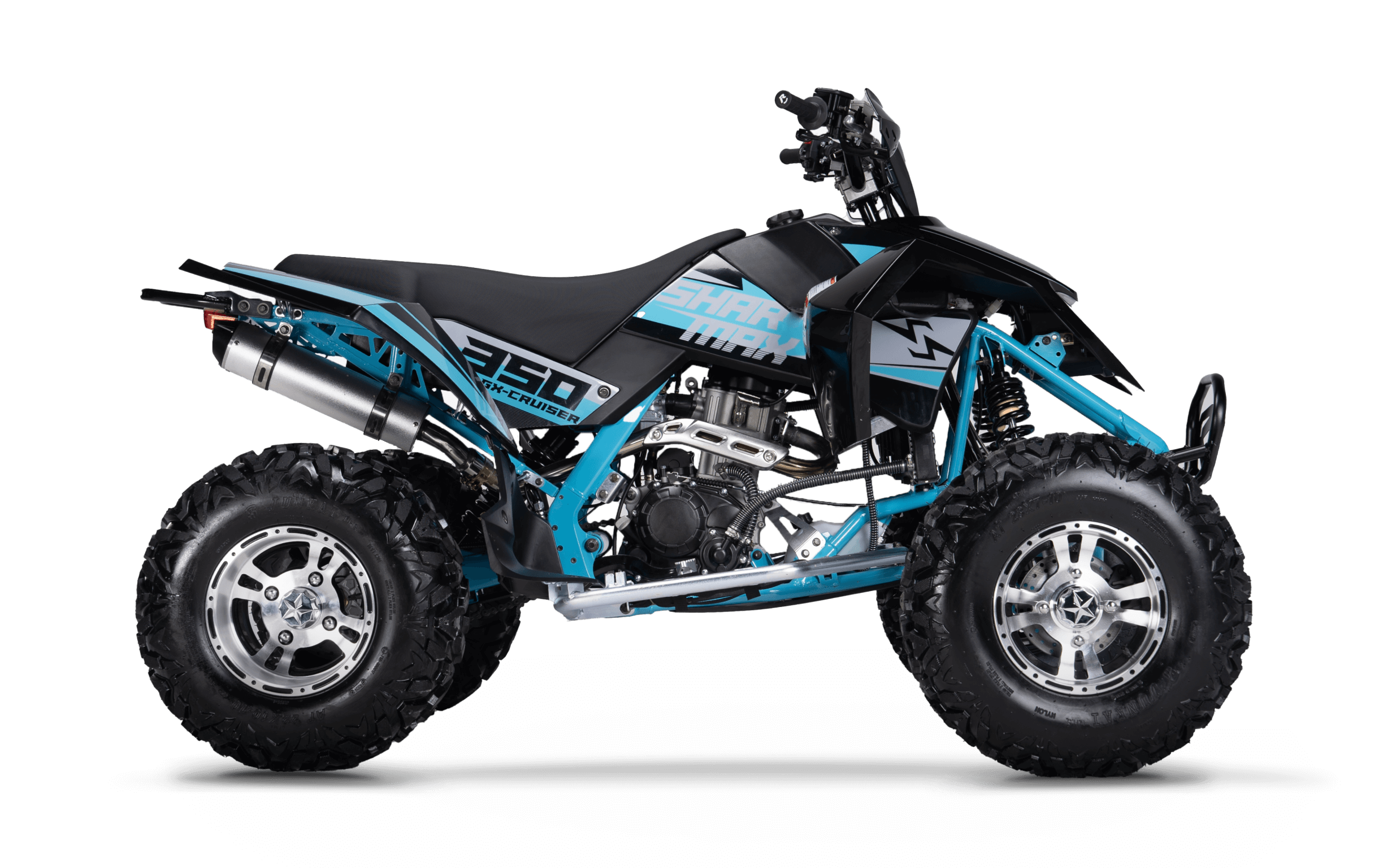
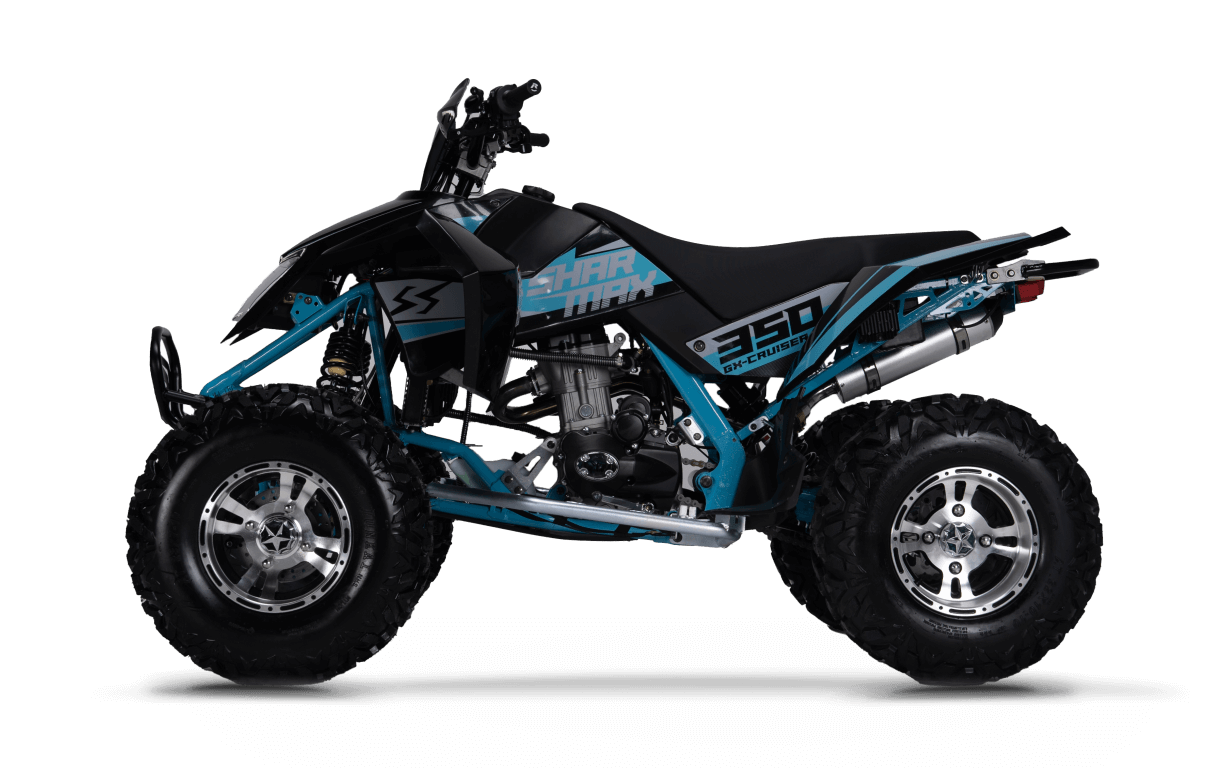
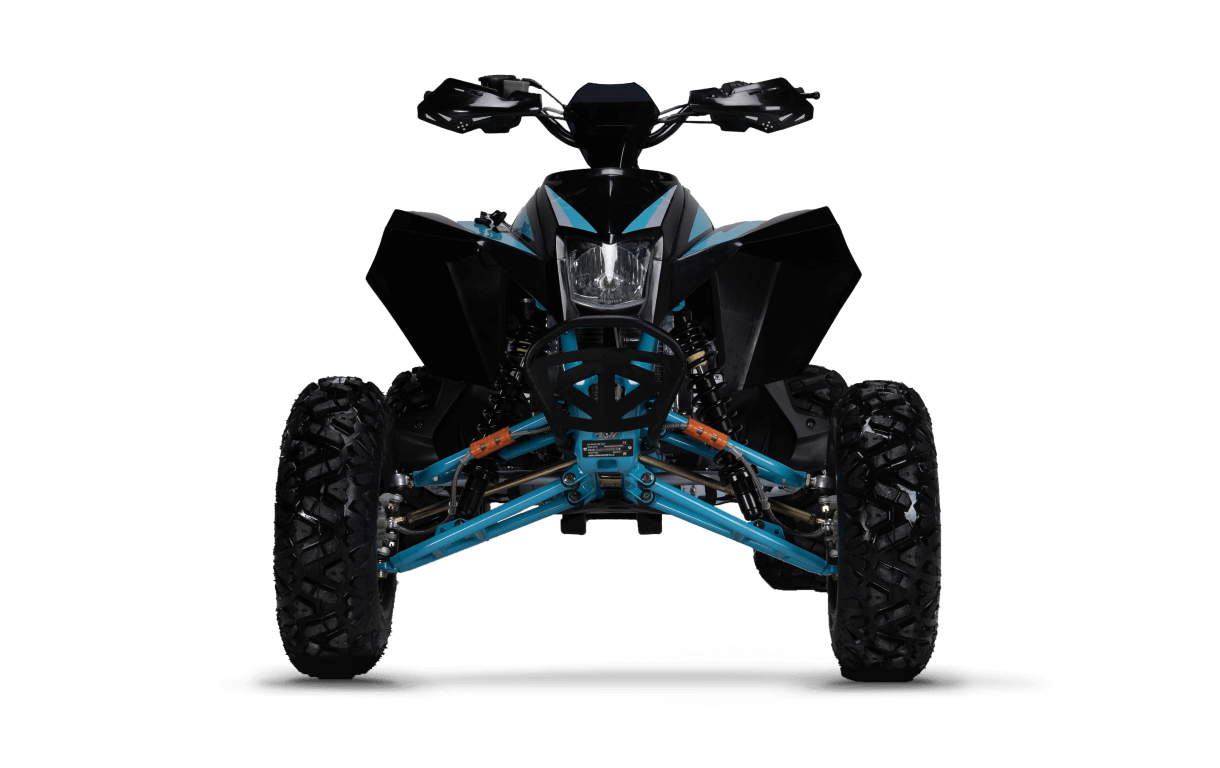
4. Sharmax Cruiser Race 350 GX
The Cruiser Race 350 GX is a sport-oriented ATV with a 297 cc engine producing 25 hp and 260 mm of ground clearance.
Its rear-drive design focuses on responsive handling rather than maximum traction in soft sand.
Best for: Active recreational riding on suitable firm sand and off-road trails.
Displacement (cc)
297
Ground clearance (mm)
260
Power (hp)
25
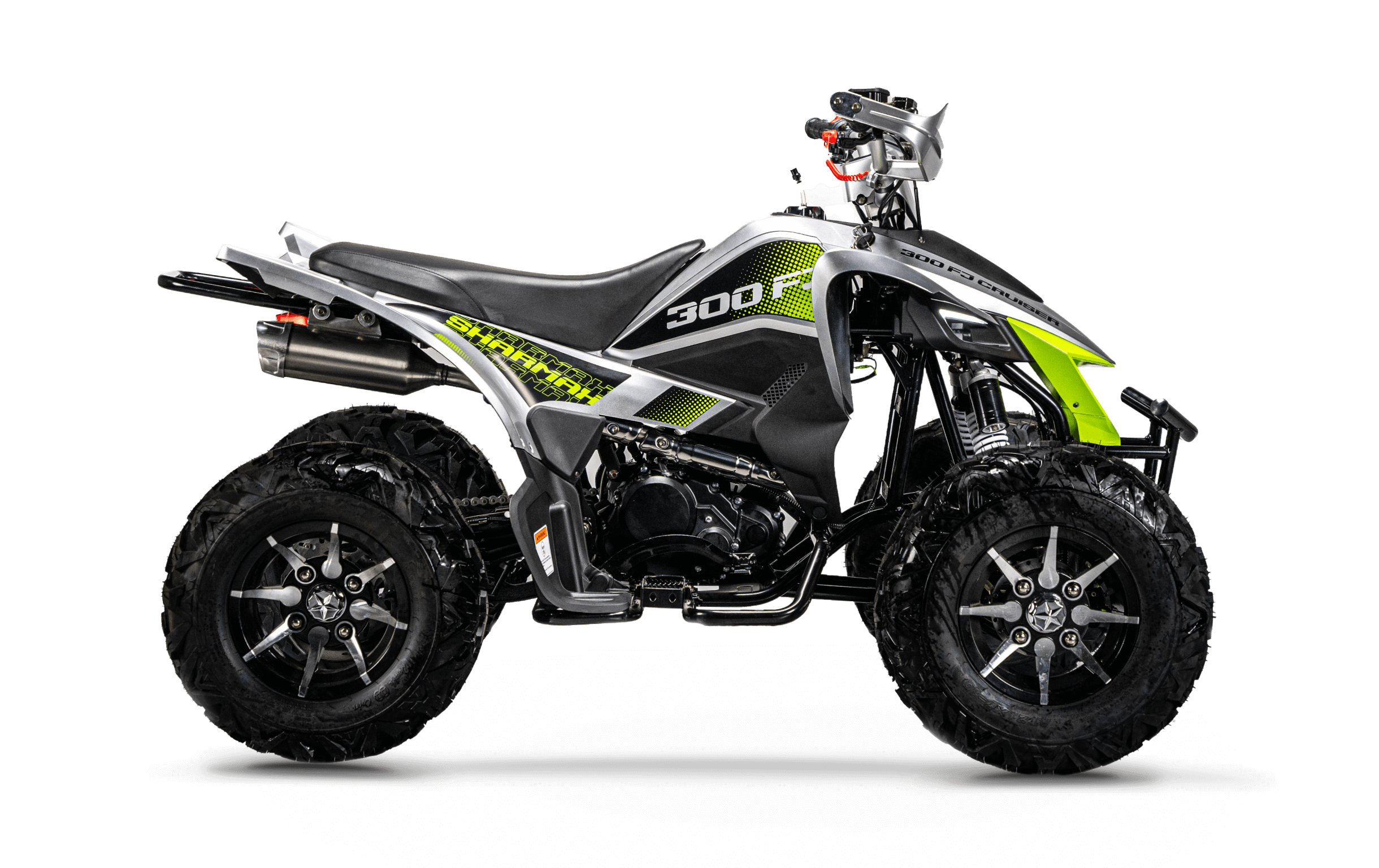
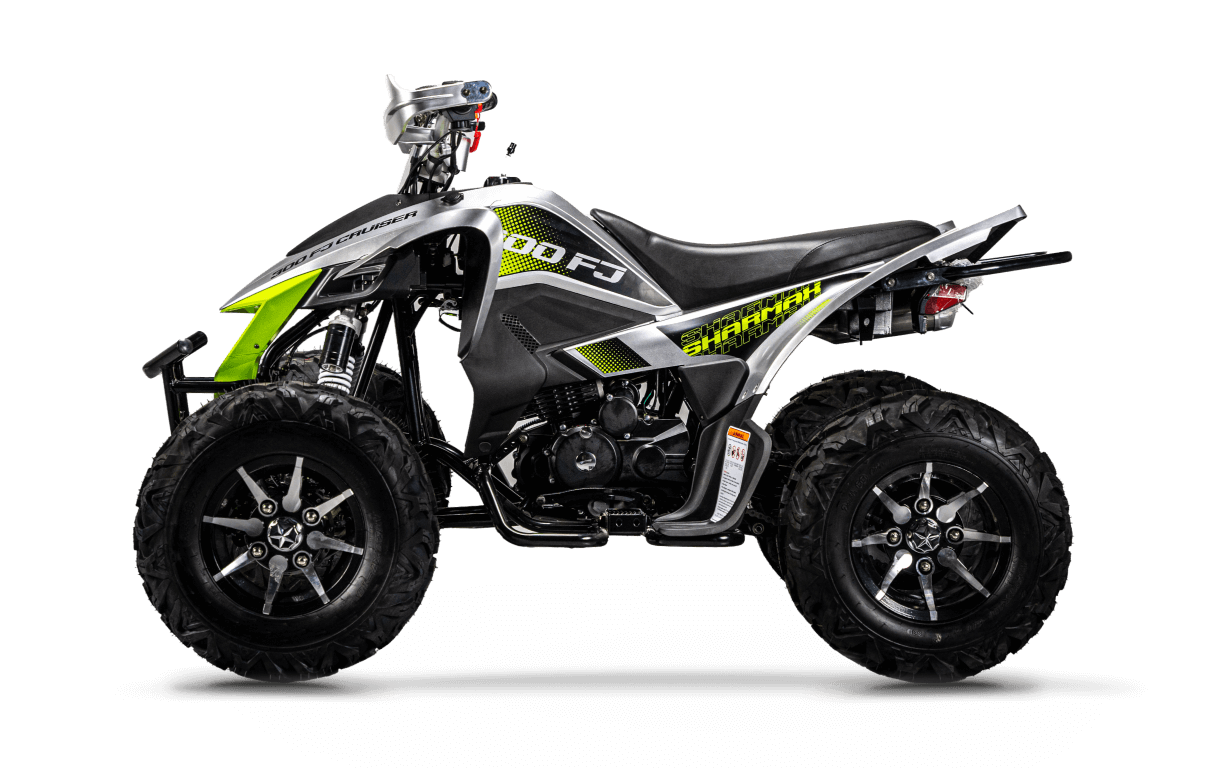
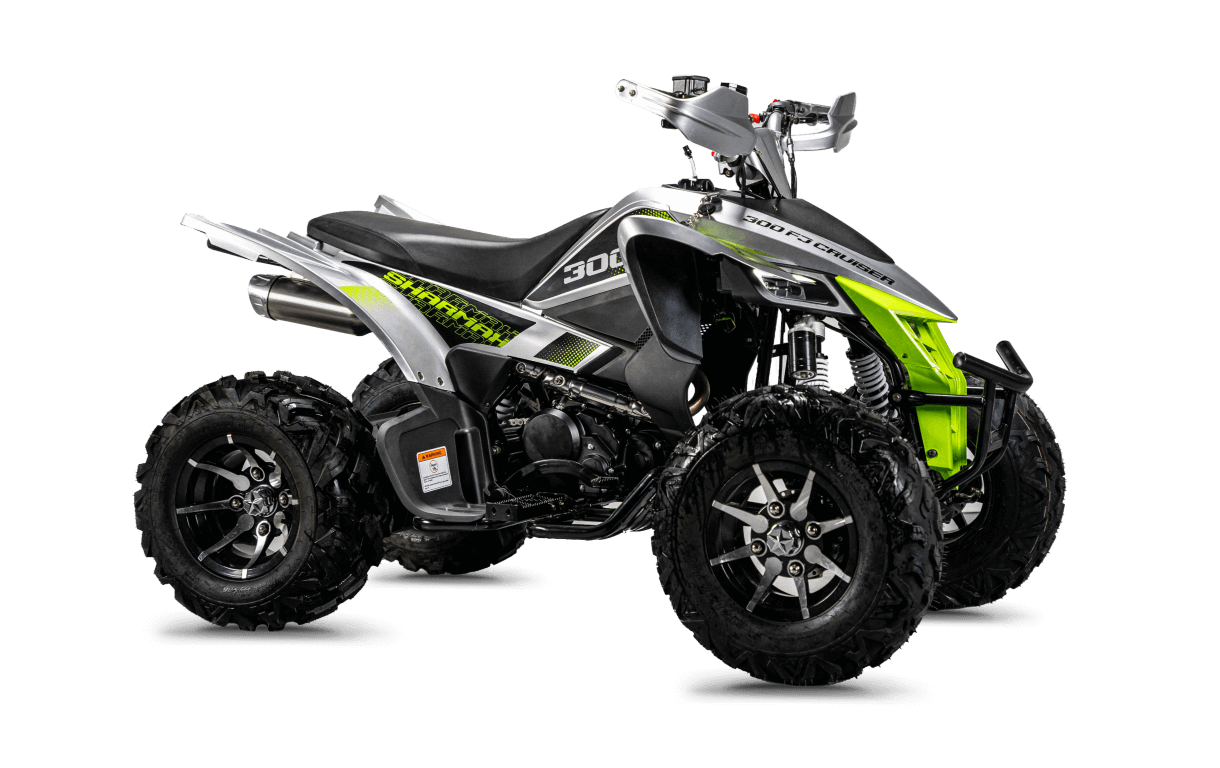
5. Sharmax Cruiser 300 FJ
The Cruiser 300 FJ is a compact recreational ATV. The current Qatar model is listed with a 250 cc engine producing 15 hp and 150 mm of ground clearance.
Its 2WD configuration and lower ground clearance make it more appropriate to investigate for less demanding tracks than deep, uneven dunes.
Best for: Recreational off-road riding on relatively firm, predictable surfaces.
Displacement (cc)
250
Ground clearance (mm)
150
Power (hp)
15
What to check before riding an ATV in the desert
Even a capable quad bike needs preparation before a desert trip.
- Inspect tire pressure, tread condition, and wheel fasteners.
- Check the engine oil and coolant where applicable.
- Inspect the air filter for dust buildup.
- Test the brakes, steering, throttle, and engine stop switch.
- Carry drinking water, communication equipment, and appropriate recovery gear.
- Wear a suitable helmet, goggles, gloves, boots, and protective clothing.
- Check local riding restrictions and travel with experienced riders when visiting remote areas.
Avoid riding during extreme heat where possible, and stop if the ATV shows signs of overheating. Follow the manufacturer's instructions before restarting.
Final thoughts
The right desert ATV depends on where you plan to ride.
For regular trips across loose dunes, compare 4WD models such as the Sharmax Force 650 EFI EPS and Force 1100. For recreational riding on firmer tracks, the Hummer and Cruiser models offer different 2WD options.
Choose suitable tires, check cooling and maintenance requirements, and make sure the ATV matches your experience.
Explore the Sharmax ATV catalog in Qatar to compare the available models and specifications.