This is where sustained heat, fine sand, and dust do the most damage over time. A solid ATV maintenance guide for the Middle East pays extra attention here, because the conditions accelerate wear on every component in this section faster than the manufacturer's baseline ratings assume.
Carburetor cleaning
For carbureted ATVs, the carburetor needs regular cleaning with a dedicated carburetor cleaner spray. Left unattended, fuel residue and fine dust particles build up in the jets and passages, causing rough idling, poor throttle response, and difficult cold starting.
To clean it properly: remove the carburetor, disassemble the float bowl, and spray cleaner through every jet and passage. Use a soft brush for stubborn deposits — never wire or abrasive tools that can damage the soft metal. Check that the float needle and seat are clean and seating properly, as a worn needle causes fuel overflow and rich running. Reassemble, adjust the idle screw if needed, and reinstall. If the ATV runs on EFI rather than a carburetor, this step is replaced by periodic fuel injector inspection — less frequent but equally important.
Air filter
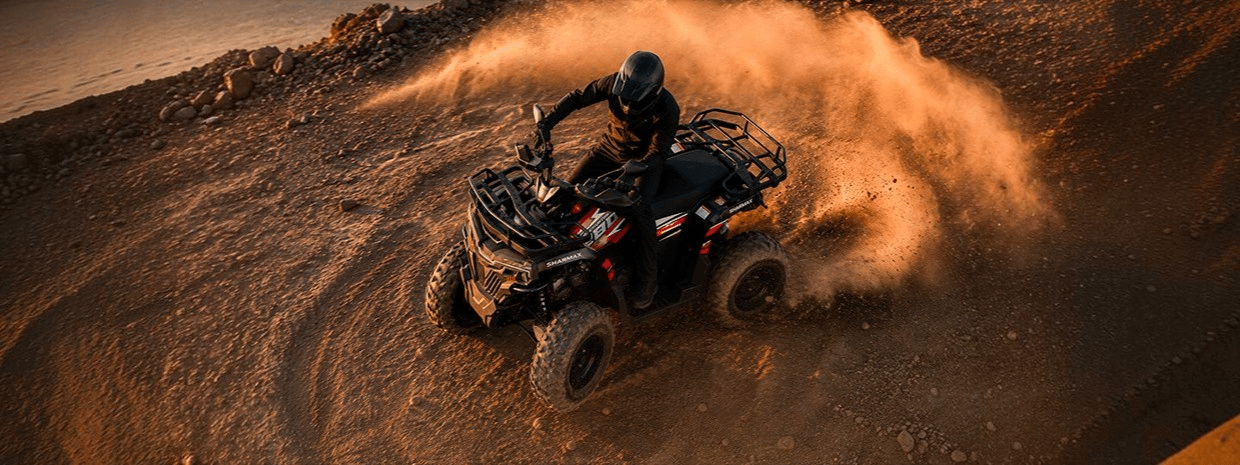
Air-filter care is one of the most important parts of ATV maintenance for beginners, and especially in the Middle East, where it becomes a once-a-month job. Fine desert sand and dust are significantly more abrasive than the mud and leaf debris the filter schedule was designed around. A clogged air filter makes the engine run louder and weaker, and in serious cases, allows particles through that damage the piston and cylinder walls in ways that are expensive to fix.
Check the air filter every 500 km as a baseline. If you are riding in sandy or dusty conditions regularly, check it every few rides. The good news is that replacement is rarely necessary — wash the filter in warm soapy water, rinse it thoroughly, let it dry completely before reinstalling, and it is ready to go again. Never reinstall a damp filter.
While the filter is out, check the condition of the intake hoses, seals, and connections for cracks or loose fittings. Any gap in the intake path bypasses the filter entirely.
Cooling system
Cooling-system checks belong on every ATV maintenance checklist in hot climates. Check the coolant level regularly and inspect the radiator after sandy or muddy rides. Sand, dry grass, and mud can block the fins and reduce airflow through the radiator.
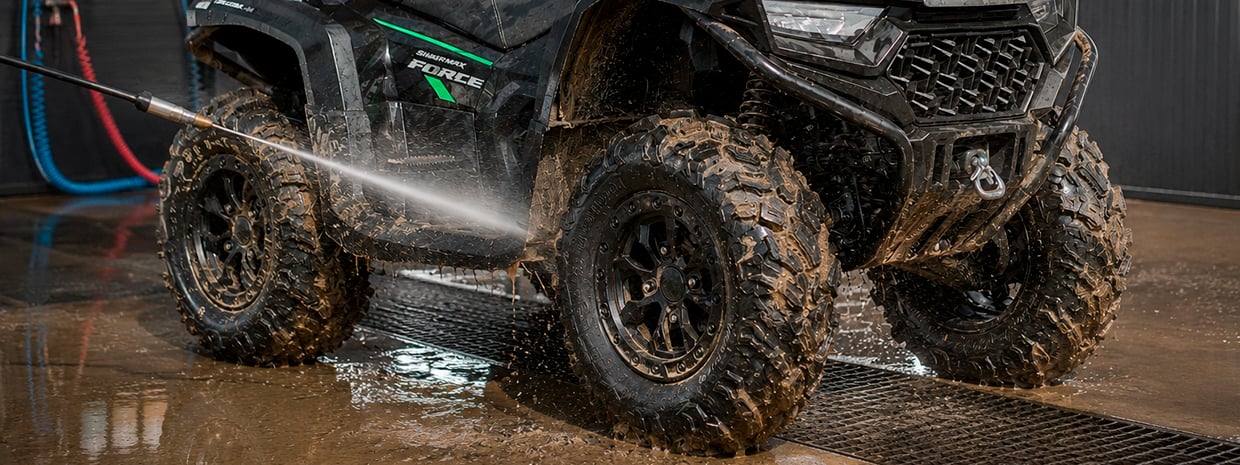
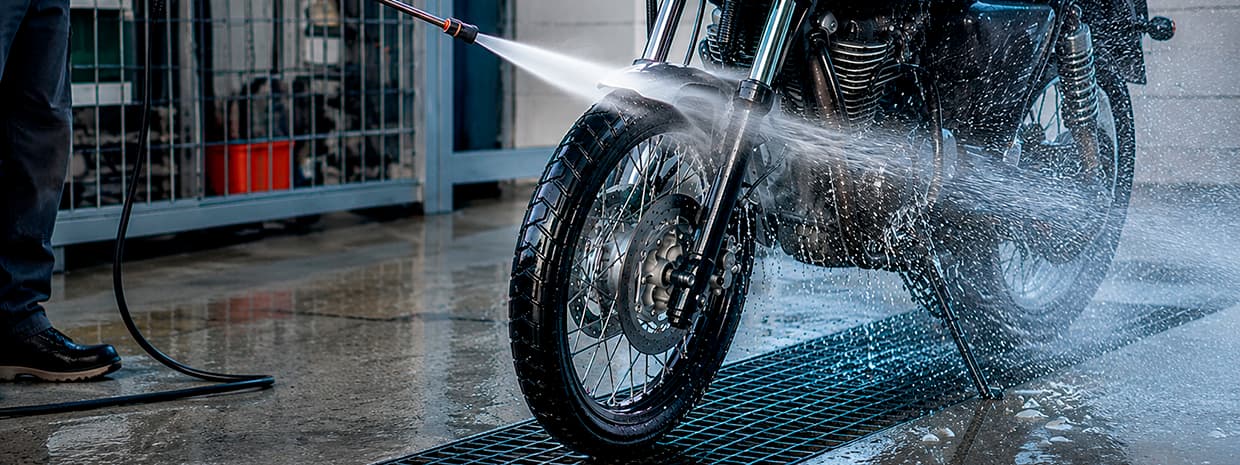
Use low-pressure water or compressed air from the back of the radiator to push debris outward. Avoid placing a pressure-washer nozzle close to the fins, as they bend easily.
In extreme heat, slow riding can be harder on the cooling system than fast riding because less air passes through the radiator. If the temperature warning appears, stop and let the engine cool rather than trying to "ride through it."
Spark plugs
The spark plug ignites the fuel-air mixture in the combustion chamber. By the manufacturer's schedule, plugs typically need replacing every 6000 km. Replace them earlier if you notice:
- The engine takes multiple attempts to start
- Throttle response feels hesitant or uneven
- The ATV has lost noticeable acceleration
- Fuel consumption has increased on familiar routes
The number of plugs matches the number of cylinders. When replacing, gap each new plug to the specification in the owner's manual before installing — the gap affects ignition timing and combustion efficiency. Use the correct heat range for your model and conditions. In sustained high-temperature riding, a plug that runs slightly cooler than stock can reduce the risk of pre-ignition. Always torque plugs to spec — overtightening damages the thread in the cylinder head.