How to choose a lightweight sport bike in Egypt: weight, load capacity and handling
How to choose a lightweight sport bike in Egypt: weight, load capacity and handling
Learn how to choose a lightweight sport bike in Egypt by understanding motorcycle weight, load capacity, handling and ergonomics.
20 Nov 2026
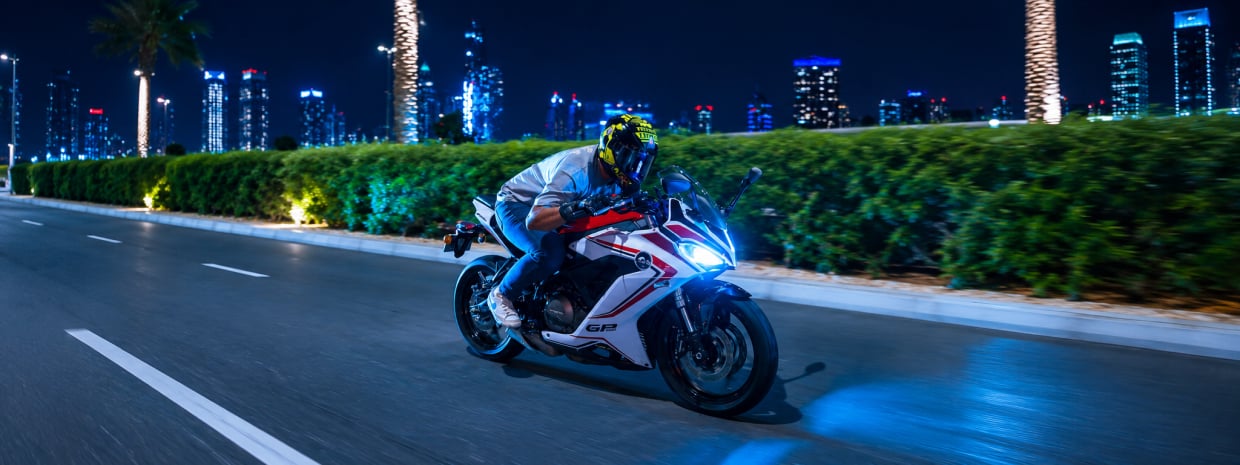
Looking for a sporty motorcycle that's easy to control without sacrificing performance? Weight is one of the first specifications worth checking, especially if you're a new rider or regularly navigate busy streets in Egypt. But choosing between lightweight sport bikes involves more than finding the smallest number on a spec sheet. You also need to consider how much weight the motorcycle can safely carry, including your riding gear, luggage and occasional passengers.
If you're exploring on-road bikes for sale, this guide will help you understand motorcycle weight, calculate your riding load and choose a sport bike that suits your needs.
What counts as a lightweight sport bike?
A lightweight sport bike is generally a motorcycle designed to combine sporty handling with a relatively low overall weight. Smaller-displacement sport bikes often weigh around 130–170 kg, although there's no universal weight limit defining this category.
That makes them appealing to riders who want the look and riding feel of a sport motorcycle without the bulk of a larger machine. However, before comparing models, it's important to understand what manufacturers mean by weight.
Dry weight, curb weight and maximum permissible weight
These terms describe different measurements, and confusing them can lead to the wrong buying decision.
| Term | What it means | Why it matters |
|---|---|---|
| Dry weight | Motorcycle weight without some operating fluids, depending on the manufacturer's definition | Can make a motorcycle appear lighter on paper |
| Curb weight | Motorcycle weight with required operating fluids and typically a full fuel tank, but without the rider | More useful for comparing ready-to-ride motorcycles |
| Maximum permissible weight (GVWR) | Maximum total permitted weight of the motorcycle, riders, luggage and equipment | Determines how much total load the motorcycle may safely support |
| Payload capacity | Weight available for riders, gear and luggage | Helps you determine whether the motorcycle suits your everyday use |
When comparing two bikes, check that both manufacturers use the same weight definition.
For example, a motorcycle listed at 145 kg dry weight isn't necessarily lighter than one listed at 155 kg curb weight. The first figure may exclude fuel and other fluids.
How does motorcycle weight affect handling?
A lighter motorcycle can feel easier to manage, particularly at low speeds. But weight alone doesn't determine how well a motorcycle handles. Seat height, weight distribution, suspension, tire choice and rider position also play important roles.
Easier maneuvering in traffic and parking areas
Imagine pushing a 140 kg sport bike out of a parking space compared with a 210 kg motorcycle. That's a 70 kg difference you'll likely notice when moving the bike manually or correcting its balance at very low speeds.
This is especially relevant in Cairo, where riders regularly deal with parking areas, busy intersections and frequent stops.
A manageable lightweight sport bike can make these everyday situations less tiring. Still, a heavier motorcycle with a low center of gravity may feel easier to balance than a lighter but taller bike.
Cornering, braking and stability
Lower weight can help a motorcycle respond more readily to steering inputs and direction changes. It also means there's less mass to accelerate or slow down, assuming other factors are similar.
However, lighter doesn't automatically mean safer or better at cornering. Tire grip, braking equipment, suspension setup and rider technique make a significant difference.
For everyday riding in Egypt, look for a motorcycle that feels predictable rather than one that's simply the lightest available.
Seat height and riding position
A sport bike might look compact but still feel uncomfortable if its seat is too high or its handlebars place too much weight on your wrists.
Before buying, check whether you can:
- Reach the ground securely when stopping.
- Turn the handlebars comfortably at low speed.
- Reach the controls without stretching.
- Support the motorcycle while moving it backward.
- Maintain a comfortable riding position for your usual journey.
A short test ride can tell you more about confidence and comfort than a weight figure alone.
How much weight can a lightweight sport bike carry?
One important distinction often gets overlooked: the motorcycle's own weight and its carrying capacity are not the same thing.
A 140 kg sport bike doesn't necessarily have a higher or lower payload capacity than a 180 kg motorcycle. The maximum permitted load depends on the frame, suspension, tires and manufacturer's specifications.
How to calculate your motorcycle's payload
If the manufacturer provides both curb weight and gross vehicle weight rating (GVWR), you can calculate the remaining load allowance: Maximum payload = GVWR − curb weight.
For example, suppose a motorcycle has:
- Curb weight: 160 kg
- Maximum permissible total weight: 330 kg
That leaves a theoretical payload of 170 kg. These numbers are illustrative. Always follow the manufacturer's actual payload, axle-load and tire-load limits.
Remember to include your riding gear and luggage
Your total riding load can be higher than you think.
Here's an example for someone commuting on a lightweight sport motorcycle:
| Item | Example weight |
|---|---|
| Rider | 80 kg |
| Helmet, jacket, boots and protective gear | 8 kg |
| Backpack and personal belongings | 7 kg |
| Total riding load | 95 kg |
If the motorcycle's approved payload is 170 kg, this example leaves 75 kg of unused capacity.
But that doesn't automatically mean you should add a passenger weighing 75 kg. You must also check whether the motorcycle is approved for passenger use, its seating arrangements and the relevant axle and tire limits.
What happens if you overload a sport bike?
Exceeding the manufacturer's weight limit can affect several parts of the motorcycle:
- Braking: Additional mass can increase stopping distances.
- Suspension: Excessive load can reduce available suspension travel and ground clearance.
- Handling: Steering and cornering response may become less predictable.
- Tires: Loads beyond their ratings can increase the risk of damage or failure.
The safest approach is simple: calculate your usual riding load before choosing a model, and never exceed its specified limits.
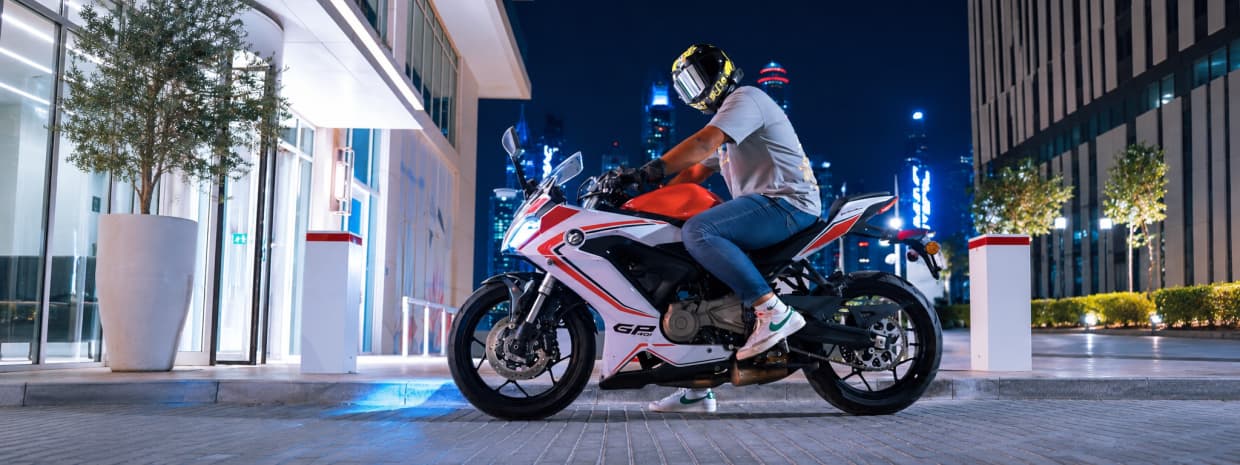
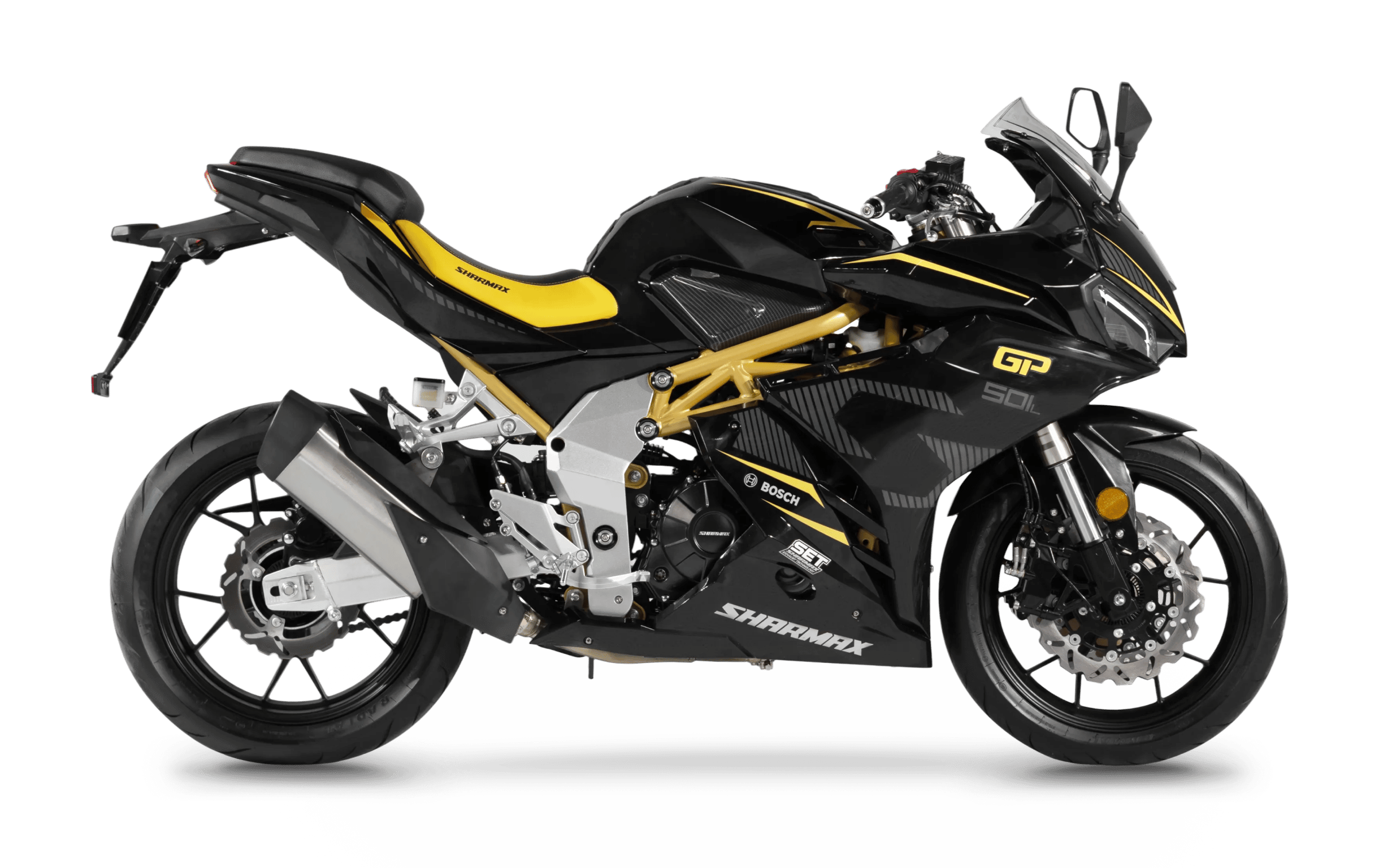
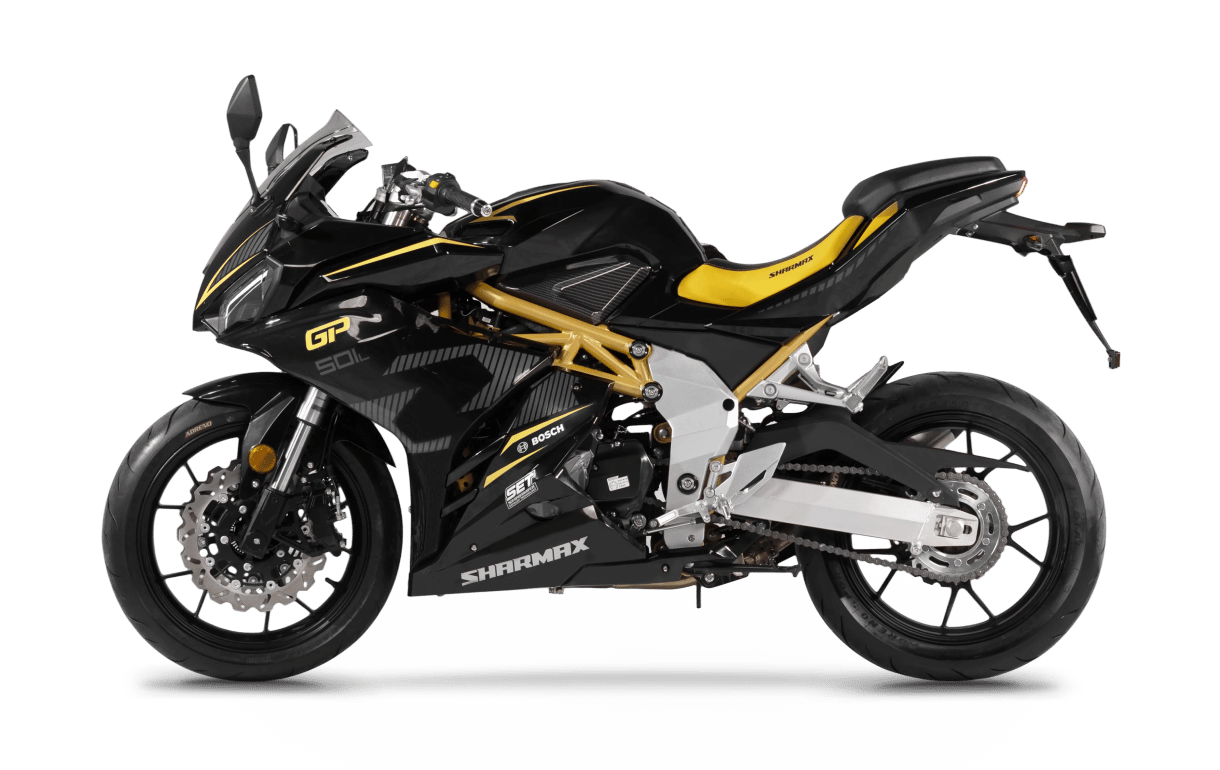
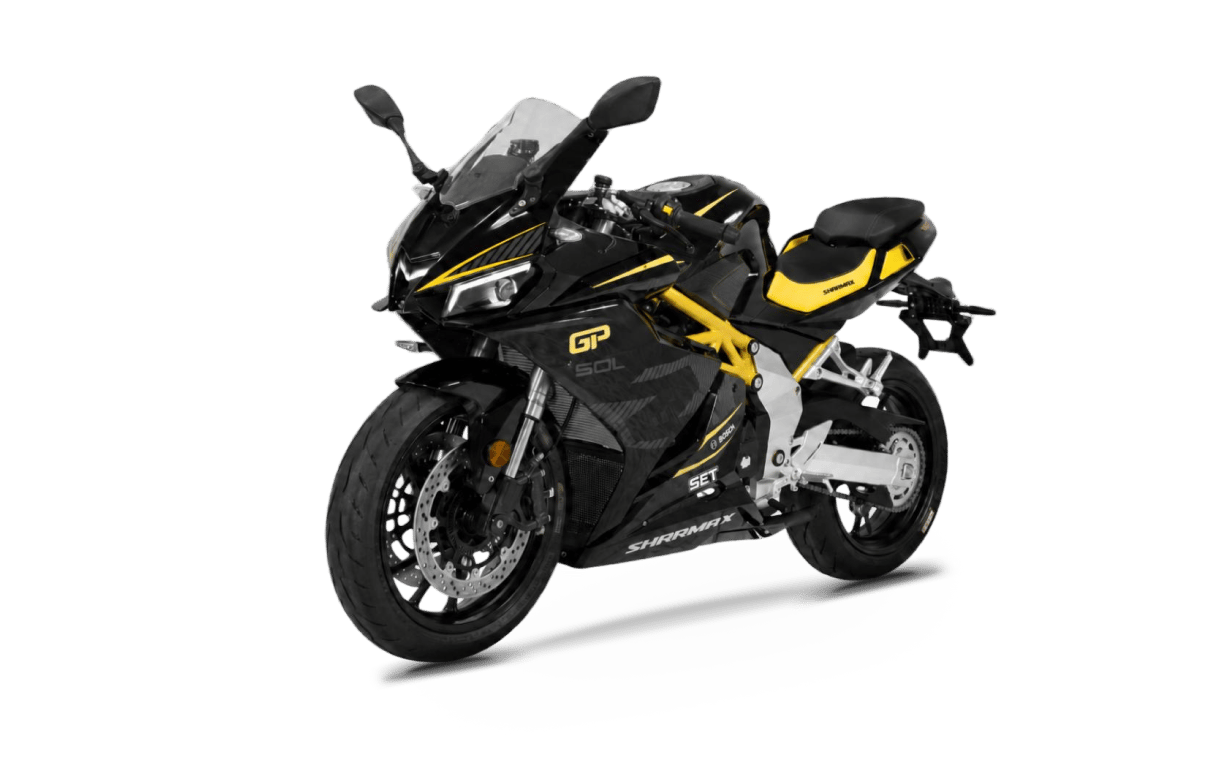
Sharmax GP 501 L
– a lighter sport bike for everyday riding
The Sharmax GP 501 L is worth considering for riders interested in sport styling and dynamic road riding.
Its twin-cylinder engine and sharp fairing design give it a distinctive sport-bike character. When choosing the GP 501 L, consider how comfortable its weight, seat height and riding position feel during everyday use.
Before carrying a passenger or additional luggage, check the manufacturer's approved payload and passenger requirements.
Engine configuration
2 cylinders, 4-stroke
Power (hp)
45.00
Curb weight (kg)
192
Displacement (cc)
400
Fuel tank capacity (L)
13
How to choose the right lightweight sport bike for your needs
The best motorcycle isn't necessarily the lightest one. It's the one that suits your experience, physical comfort and typical riding conditions. Before making a decision, work through these questions.
Are you mainly riding in the city?
If most of your journeys involve traffic, frequent stops and parking in tight spaces, a lighter bike can be more convenient.
For riders who commute daily, manageable weight and comfortable ergonomics may matter more than maximum engine power.
Will you regularly ride on highways?
Think about engine performance, wind protection, riding posture and how comfortable the motorcycle feels at steady speeds.
A compact sport bike can be perfectly suitable for many paved-road journeys, but a relaxed riding position becomes increasingly important on longer trips.
Will you carry luggage or a passenger?
Calculate your regular riding load before purchasing.
A rider weighing 85 kg, wearing 10 kg of protective equipment and carrying a 5 kg backpack already adds 100 kg to the motorcycle.
If you occasionally travel with a passenger, you'll need enough approved load capacity for both people and their gear. Check the passenger seat, footrests and manufacturer's limits as well.
Does the motorcycle actually feel comfortable?
Don't choose a motorcycle solely because its weight sounds manageable. Sit on it, check your reach to the controls and arrange a test ride where available. Pay attention to how easily you can stop, turn and maneuver at low speeds. That experience often makes the final decision much easier.
Final thoughts
Choosing between lightweight sport bikes involves more than comparing kilograms on a specification sheet. A motorcycle's weight affects maneuverability, but its carrying capacity, ergonomics and intended use matter just as much.
The Sharmax GP 501 L is one option to consider if you're looking for a sport-style motorcycle in Egypt. Before making a decision, check its specifications, riding position and suitability for your everyday needs.
Ready to find your match? Explore the Sharmax Egypt sport motorcycle range and speak with the Sharmax team about the specifications that matter most to you.