Dirt bike tires: How to choose the right type and pressure for your ride in the UAE
Dirt bike tires: How to choose the right type and pressure for your ride in the UAE
Learn how to choose dirt bike tires in the UAE, compare tread types and sizes, check tire pressure, and spot signs of wear before your next ride.
12 Nov 2026
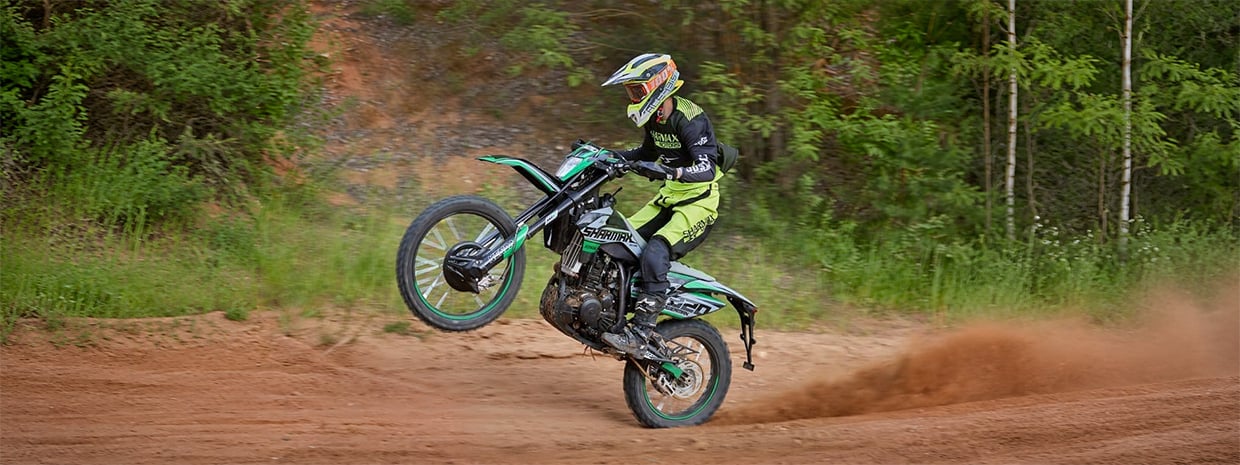
Dirt bike tires affect how your motorcycle grips, steers and responds to the ground beneath it. A tire that feels predictable on a firm track may behave differently when you reach loose sand or a rocky trail.
If you’re exploring off-road motorcycles for sale in the UAE, understanding tire types, sizes and pressure will help you choose a setup that suits both your bike and the places you ride.
What makes dirt bike tires different?
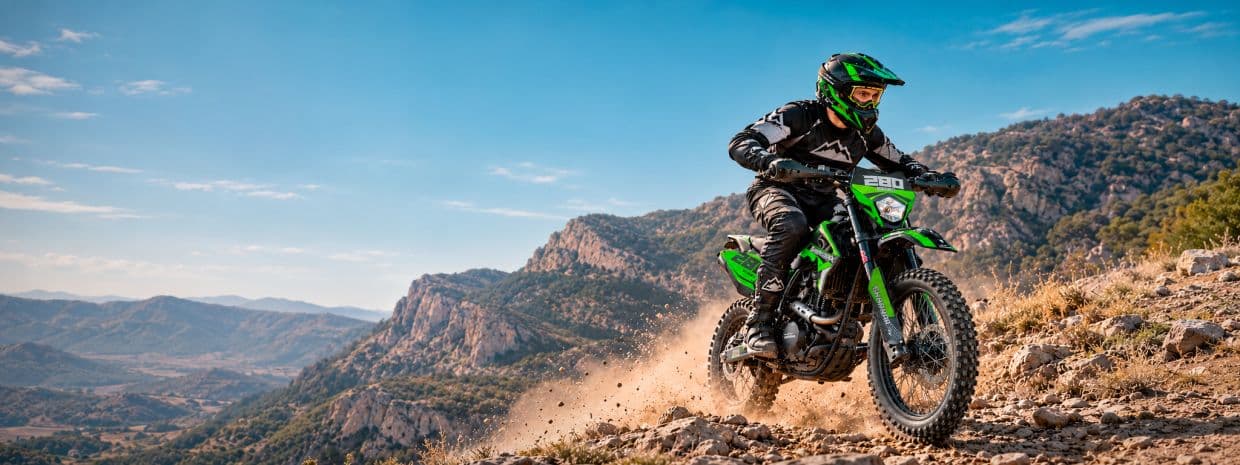
Dirt bike tires usually have raised tread blocks, often called knobs, with space between them. These blocks help the tire find grip on surfaces such as dirt, sand and loose gravel.
The front and rear tires do different jobs. The front helps the motorcycle steer and stay on its intended line, while the rear transfers engine power to the ground. That is why they often have different tread patterns and sizes.
For example, the Power Max 250 uses an 80/100-21 front tire and a 110/90-18 rear tire. The numbers tell you about each tire’s width, sidewall and rim size—we’ll break them down below.
Which dirt bike tires suit your terrain?
Before choosing a tire, think about where you spend most of your riding time. In the UAE, one trip might include compact dirt, loose sand and rocky sections, so the most specialized tire is not always the most practical choice.
Tires for sand and soft ground
Soft-ground tires are designed to find traction when the surface moves beneath the wheels. Their tread pattern needs to work in loose material rather than simply rest on top of it.
If you mainly ride on sand, compare tires designed for soft terrain. If your route also includes firm tracks or rocky sections, consider how a specialized sand tire will perform on those surfaces before choosing it.
Tire pressure matters too, but it should suit the particular tire and motorcycle. Lowering pressure without checking the approved range can create other problems, including tire or rim damage.
Tires for mixed terrain
Mixed-terrain tires are worth considering if you regularly move between different surfaces. They aim to provide a useful balance when a route includes sections of dirt, sand and firmer ground.
A full-size enduro such as the Power Max 320 can be used as a starting point for this discussion: before choosing a replacement, think about whether your usual rides are mostly loose sand or a mixture of surfaces. The right tread depends on the route, not just the motorcycle’s name.
Tires for hard or rocky ground
Firm dirt, gravel and rocks place different demands on a tire from soft sand. The tire needs to maintain contact with harder surfaces while dealing with sharp edges and repeated impacts.
Check the tread and sidewalls after rocky rides. Look for cuts, damaged knobs and anything caught in the tire. Pressure also matters: an underinflated tire can leave the rim more exposed to impacts.
How to read dirt bike tire sizes
The numbers on a tire’s sidewall tell you whether it fits your wheel. Take 80/100-21 as an example:
| Marking | What it means |
|---|---|
| 80 | Nominal tire width: 80 mm |
| 100 | Sidewall height is approximately 100% of the tire’s width |
| 21 | The tire fits a 21-inch rim |
The last number is the rim diameter, not the outside diameter of the complete tire.
On the Power Max 250, the 80/100-21 tire goes at the front and the 110/90-18 goes at the rear. The rear tire is nominally wider and fits an 18-inch rim. You cannot exchange their positions simply because both are off-road tires.
Smaller wheels for pit bikes
Pit bikes often use smaller wheels than full-size enduro motorcycles.
For example, the compact Sport 130 Mini has a 10/10-inch wheel arrangement: a 10-inch rim at both the front and rear. The larger Power Max 145 uses a 17/14-inch arrangement.
Smaller wheels help make a bike more compact, while larger wheels can make it easier to roll over uneven ground. Wheel size is only one part of fit, though: seat height, controls and the rider’s experience matter too.
Full-size enduro wheels
Full-size enduro motorcycles commonly use a larger front wheel and a smaller rear wheel. The Power Max 250 and Power Max 320 both use a 21/18-inch arrangement.
If you are replacing a tire, check the complete size on the sidewall and in the motorcycle’s documentation. Two tires may fit the same rim diameter but have different widths, profiles or intended uses.
What tire pressure should a dirt bike use?
The right dirt bike tire pressure depends on the motorcycle, tire, tube or other setup, rider load and conditions. Start with the guidance for your exact equipment and check the pressure before riding.
Why tire pressure matters
Tire pressure changes how the tire supports the bike and makes contact with the ground.
- Too little pressure can make the tire feel unstable and increase the chance of rim or tire damage on hard impacts.
- Too much pressure can make the ride feel harsher and reduce how well the tire conforms to uneven ground.
- The right pressure helps the tire work as intended for the bike, tire construction and riding conditions.
You cannot reliably judge pressure just by looking at the tire. Use a gauge that reads accurately at the low pressures used by your particular off-road setup.
Tire pressure examples
The right pressure depends on your bike, the tires fitted and the way you ride. Check the recommended cold pressures for the front and rear before setting off.
The ranges below are general off-road examples. Check the approved cold pressure for your bike and tires before riding.
| Riding conditions | Front | Rear |
|---|---|---|
| Hard motocross track | 10–12 psi (0.7–0.8 bar) | 10–12 psi (0.7–0.8 bar) |
| Intermediate motocross track | 12–14 psi (0.8–1.0 bar) | 12–14 psi (0.8–1.0 bar) |
| Soft motocross track | 10–11 psi (0.7–0.8 bar) | 10–11 psi (0.7–0.8 bar) |
| Desert / enduro | 14–18 psi (1.0–1.2 bar) | 14–18 psi (1.0–1.2 bar) |
Check your bike’s manual or ask our service team for the correct figures. Take both readings when the tires are cold, then adjust them to suit the approved settings for your ride.
What about UAE heat?
Check pressure when the tires are cold, before the ride. Riding warms the tires and raises their pressure, so a reading taken after a session may be different from the one you set beforehand.
In hot weather, try to check the bike before it has been ridden and before the tires have been heated by direct sun. Don’t release air from a hot tire simply to bring its reading back to the cold setting: it may end up underinflated once it cools.
If your route includes road riding, check that the tires are approved for that use and follow the applicable road-pressure guidance. An off-road setting should not automatically be carried over to pavement.
How to check dirt bike tire pressure
You don’t need a complicated routine. A few minutes before a ride can help you catch a problem early.
Find the correct guidance. Check the motorcycle manual and the tire manufacturer’s instructions for your setup.
Start with cold tires. Check before riding, with the tires and wheels at ambient temperature.
Use a suitable gauge. Remove the valve cap and press the gauge onto the valve.
Adjust and recheck. Add or release air as needed, then take another reading.
Replace the valve cap. Check the valve area for damage or air loss.
For a bike such as the Power Max 145, check the front and rear separately. They are different tire sizes and may have different requirements depending on the tires fitted.
If pressure drops repeatedly, don’t keep adding air and ignore it. Have the tire, tube where fitted, valve and rim inspected.
When should you replace dirt bike tires?
Worn or damaged tread
Look at the shape and condition of the knobs. Rounded, torn or missing blocks can change how the tire grips and responds, especially when braking or accelerating on loose ground.
Also check for cracks, deep cuts or damage between the knobs. If you are unsure whether the tire is safe to use, have it inspected before the next ride.
Repeated pressure loss or visible damage
A tire that repeatedly loses pressure needs attention. The cause could involve the tire, tube, valve or rim, depending on the setup.
Check the wheel after a hard impact as well. Visible sidewall damage, a bent rim or a damaged valve is a reason to stop and arrange an inspection rather than continue riding.
The tire no longer suits your riding
A tire can still have tread and yet be a poor match for your usual route. If you used to ride mainly on a firm practice track but now spend more time on loose sand, reassess the tread pattern and ask which options fit your bike.
How to choose replacement tires for your bike
Before ordering a new dirt bike tire, check the following:
- Front or rear fitment: Choose a tire intended for the correct wheel position.
- Complete size: Check width, aspect ratio and rim diameter—not just the final number.
- Terrain: Match the tread and construction to the surfaces you ride most often.
- Tube or tubeless setup: Use a tire and installation method compatible with your wheel.
- Load and speed ratings: Make sure they meet the motorcycle’s requirements.
- Installation: Use a qualified technician if you are not equipped or experienced to fit the tire correctly.
For example, if you own a Power Max 320, start by checking its 80/100-21 front and 110/90-18 rear fitment against the tires currently on your bike. Then choose a compatible tread for the conditions you actually ride in.
For a smaller bike such as the Power Max 145, don’t assume the same tires will fit: its 17/14-inch wheels use a different rim-size arrangement.
Final thoughts
The best dirt bike tires are the ones that fit your motorcycle, suit your terrain and run at the right pressure for your setup. Start with the correct size, choose a tread for your usual routes and check both tires before heading out.
Whether you ride a compact Power Max 145 or a full-size Power Max 250, the same habit helps: inspect the tires regularly and address damage or pressure loss early.
Explore the Sharmax off-road motorcycle range or contact a Sharmax service center for help checking your bike and its tire requirements.