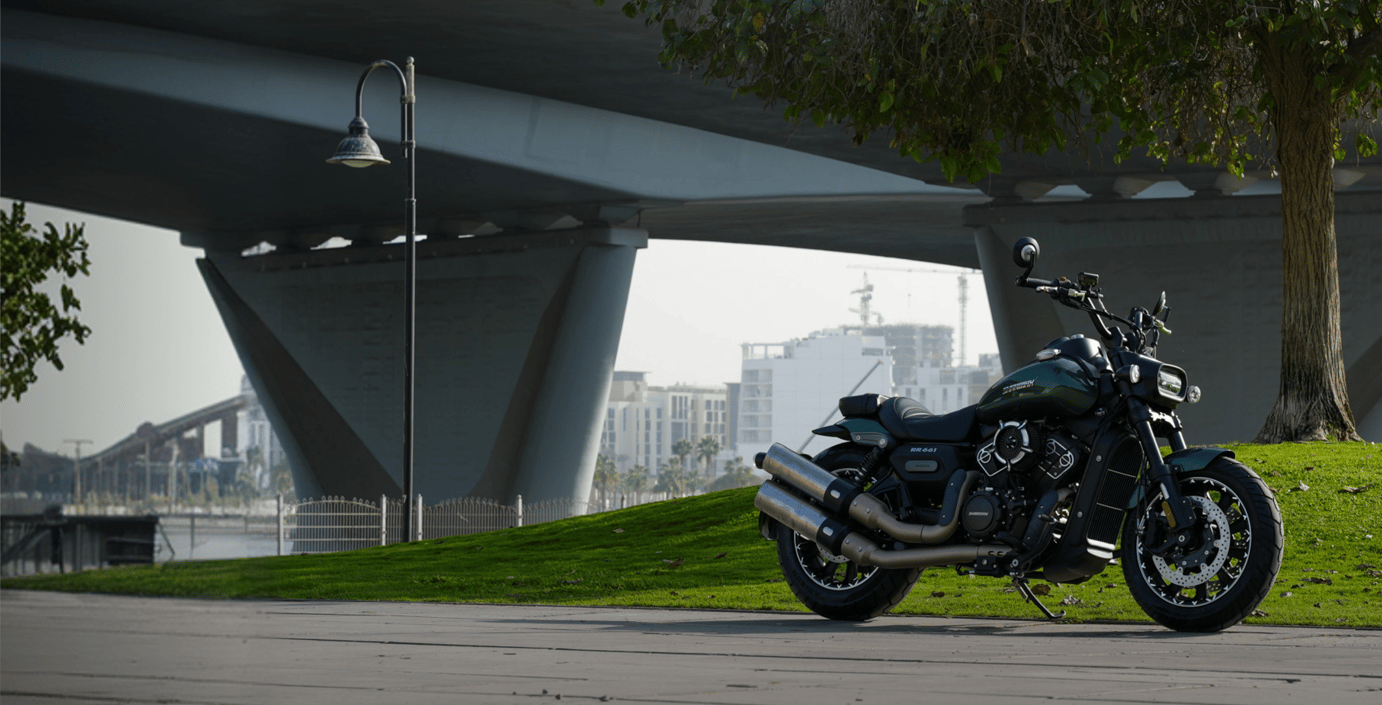
How much fuel does a quad bike use in the UAE?
Find out how much fuel a quad bike uses in the UAE, what affects ATV fuel consumption, and how to estimate fuel needs for desert rides. Compare three Sharmax quad bikes and learn practical ways to reduce fuel use.
20 Nov 2026
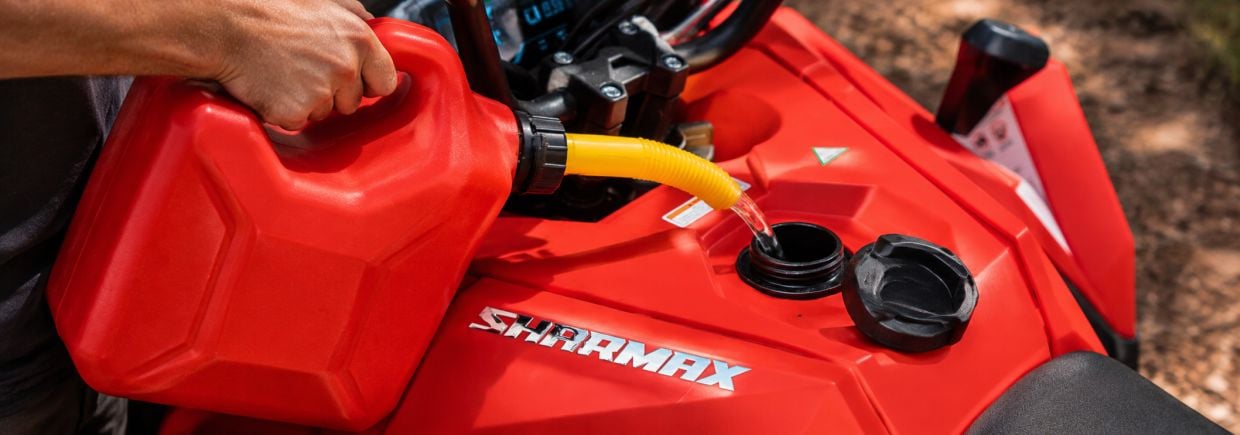
Planning a quad bike ride in the desert or mountains? Knowing how much fuel you may need makes it easier to choose your route and prepare for the trip.
Fuel consumption varies between models and riding conditions. Whether you’re comparing ATVs for sale or getting ready for your next ride, here’s what affects fuel use and how to estimate it.
How much fuel does a quad bike use on average?
Quad bike fuel consumption can vary considerably. A compact youth quad used on easy terrain will have different fuel needs from a large 4WD ATV carrying equipment across soft sand.
As one example, a mid-range utility quad can use around 4–6 litres per 100 km. The figure may be higher or lower depending on the ATV, terrain, load and riding style.
It also helps to think about how long the engine runs, not just the distance covered. Slow, technical riding or long periods with the engine idling can use fuel without adding many kilometres to the trip.
What affects quad bike fuel consumption?
Engine size and power
A larger engine often needs more fuel, especially when it’s working hard. However, engine size alone doesn’t tell the whole story: the quad’s weight, transmission and the way it’s ridden matter too.
For example, a compact quad used for short practice sessions has different fuel demands from a powerful utility ATV used for longer trips or outdoor work.
Terrain and riding conditions
A firm, level track is generally easier on the engine than soft sand or a steep climb. In deeper sand, the wheels encounter more resistance, so the quad may need more power to keep moving.
That means a 30 km ride across compact tracks may use less fuel than a 30 km ride through demanding dunes.
2WD and 4WD
A 4WD system can provide extra traction on loose or uneven ground, but it can also increase fuel use when engaged. The difference depends on the ATV and the conditions.
The extra traction can be useful when the route gets difficult. Our guide to choosing an ATV for sand and desert riding explains what else to consider for these routes.
Rider weight and load
A quad carrying a rider, passenger and equipment has more weight to move than the same vehicle carrying only a rider. The difference becomes more noticeable on climbs, soft ground or long trips.
Always check that the quad is designed for a passenger before taking someone with you, and stay within its approved load capacity.
Riding style and maintenance
Frequent hard acceleration, long periods of idling and riding with a heavily loaded engine can all increase fuel use. Poor maintenance can also make the ATV work less efficiently.
Keeping the air filter clean, checking tyre pressure and following the service schedule can help your quad perform as it should.
Sharmax quad bikes: Three models to compare
These three petrol quad bikes show how different ATVs can be in size and purpose. Along with fuel consumption, think about who will ride the quad and where it will be used.
| Model | Engine size | Type | Suited to |
|---|---|---|---|
| Cross 180 RX | 149cc | Compact youth quad | Light trails and supervised riding |
| Force 425 Cyber | 287cc | 4WD utility and recreational ATV | Mixed terrain and outdoor tasks |
| Force 1100 EFI EPS | 976cc | Full-size 4WD utility ATV | Demanding routes and heavier work |
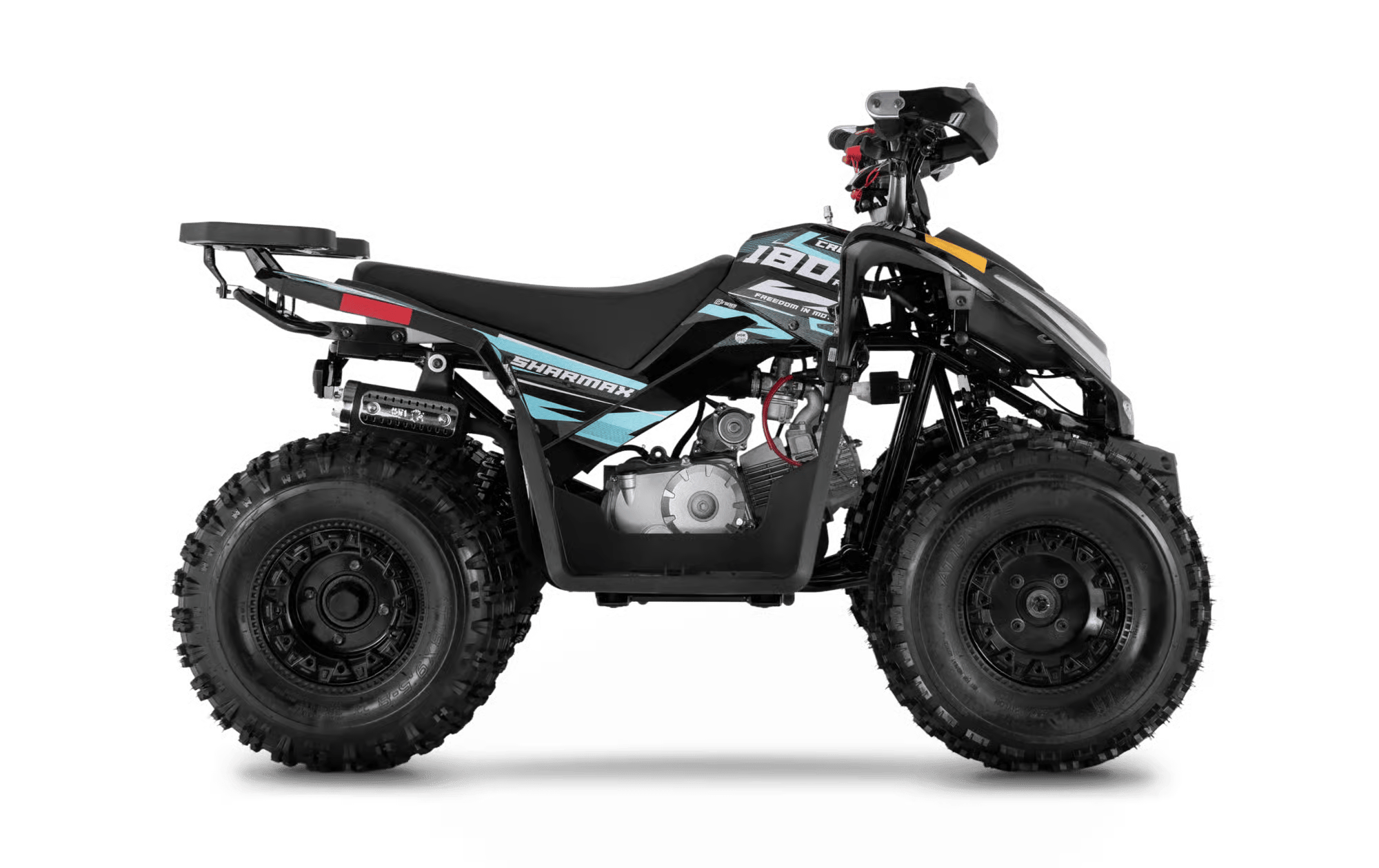
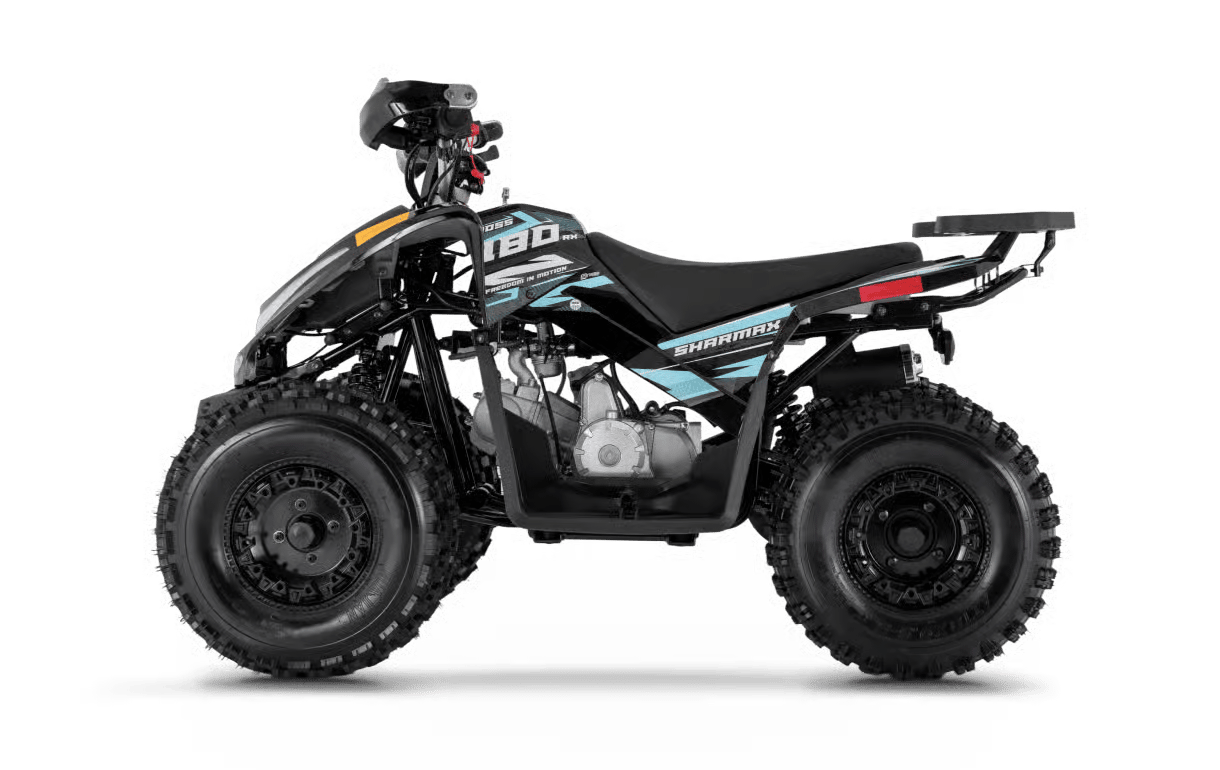
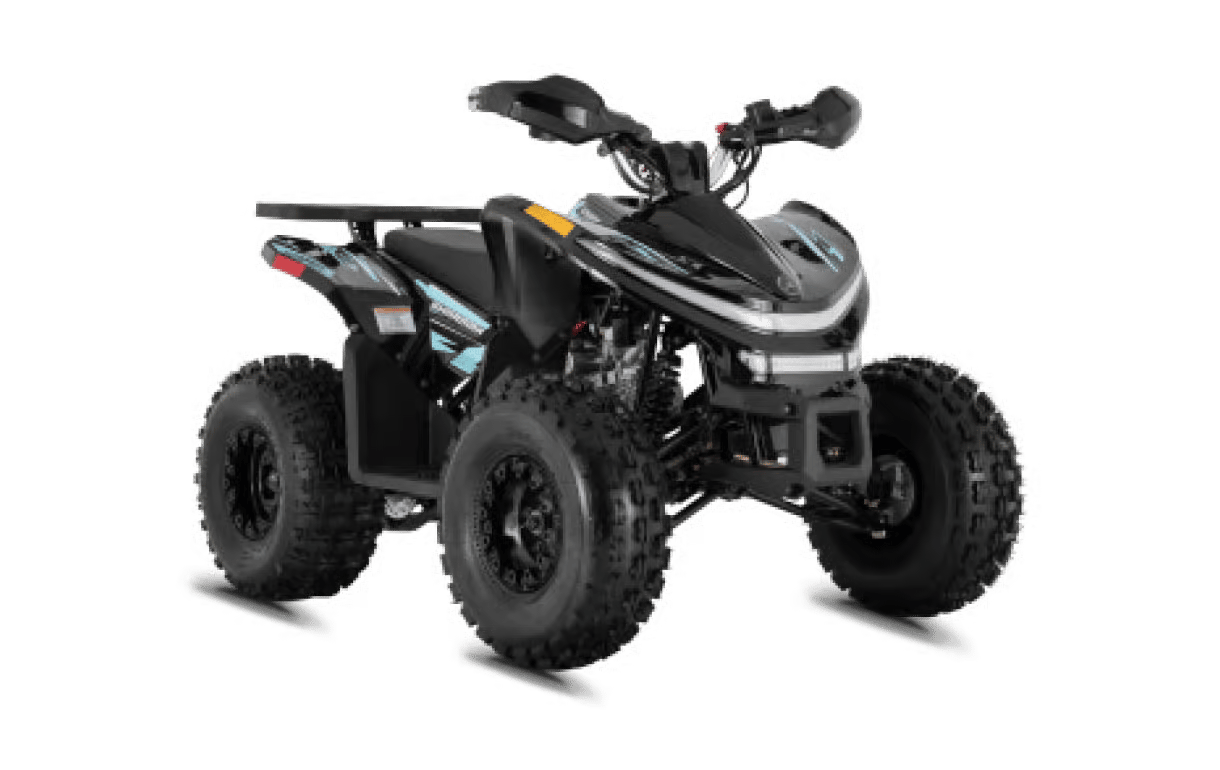
Cross 180 RX
– a compact quad for younger riders
The Cross 180 RX is a compact quad designed for light off-road riding. Its smaller engine and dimensions make it a different kind of vehicle from a full-size utility ATV.
It’s an option to consider
for a young rider learning to handle a quad on suitable terrain. Check the manufacturer’s rider guidance and make sure the rider can reach the controls comfortably.
Power (hp)
16
Drive type
2WD
Ground clearance (mm)
150
Fuel tank capacity (L)
3.5
Fuel consumption (L/100 km)
2–3
Dry weight (kg)
80
Displacement (cc)
149
Force 425 Cyber
– a versatile mid-range option
The Force 425 Cyber is designed for riders who want a balance between recreational riding and practical use. Its selectable drive modes make it worth considering for mixed terrain, while its utility features add flexibility for outdoor tasks.
A useful starting figure for this type of ride is around 4–6 L/100 km, although actual consumption depends on how and where the ATV is used.


Displacement (cc)
287
Power (hp)
27
Fuel tank capacity (L)
14
Fuel consumption (L/100 km)
4–6
Ground clearance (mm)
270
Dry weight (kg)
275
Drive type
2WD / 4WD / 4WD Lock
Force 1100 EFI EPS
– a powerful ATV for demanding use
The Force 1100 EFI EPS is the most powerful quad in this comparison. It’s aimed at experienced riders who want a full-size 4WD ATV for challenging routes and practical outdoor work.
Its larger engine and equipment provide a different level of capability from the compact Cross or mid-range Force 425. When planning a longer trip, allow for the terrain, the weight you’re carrying and the extra fuel the ride may require.
Summing up: The Cross 180 RX is the compact choice for a young rider, the Force 425 Cyber offers a balance for mixed use, and the Force 1100 suits riders who need a more powerful utility ATV. Choose based on the rider and the job first, then compare fuel use as part of the running costs.


Displacement (cc)
976
Drive type
Selectable 2WD / 4WD
Ground clearance (mm)
340
Fuel tank capacity (L)
25
Fuel consumption (L/100 km)
13–15
Dry weight (kg)
415
Power (hp)
92.5
How much fuel should you plan for a quad bike ride?
You can estimate fuel for a route with a simple calculation:
Distance in kilometres ÷ 100 × fuel consumption in L/100 km = estimated litres needed
For example, if you plan a 60 km ride and your ATV uses approximately 6 L/100 km:
60 ÷ 100 × 6 = 3.6 litres
That is an estimate for the ride under the assumed conditions. Soft sand, climbs, extra weight or a longer route can increase the amount needed, so plan a suitable reserve and check your refuelling options before setting off.
For a more accurate estimate for your own quad, fill the tank, note the distance travelled and measure how much fuel you need to refill it. Repeat this over several rides in similar conditions to build a useful picture of your ATV’s consumption.
How can you reduce quad bike fuel consumption?
A few habits can help you get more from a tank:
- Maintain your quad regularly. Follow the service schedule and keep the air filter in good condition.
- Check tire pressure. Use the pressure recommended for your ATV and riding conditions.
- Avoid unnecessary weight. Carry the equipment you need, but don’t overload the quad.
- Ride smoothly. Avoid repeated hard acceleration when it isn’t needed.
- Plan your route. Consider the distance, terrain and available refuelling points before you leave.
Which quad bike is right for your riding needs?
Fuel economy is useful to compare, but the right ATV also needs to suit your experience and the terrain.
For short recreational rides, a smaller quad may be all you need. If you regularly ride on mixed terrain or use your ATV for outdoor work, a 4WD utility model may offer features you’ll appreciate even if its running costs are higher.
For more help comparing your options, read our guide to choosing the best quad bike for your budget in the UAE.
Final thoughts
Quad bike fuel consumption depends on much more than engine size. The same ATV can use different amounts of fuel on a firm track, a mountain route or a ride through soft sand.
Choose a quad that fits the rider and the way you plan to use it, then include fuel and servicing in your budget. Ready to compare models? Browse our ATVs for sale in the UAE or visit a Sharmax showroom in Dubai, Abu Dhabi, Sharjah or Ras Al Khaimah.